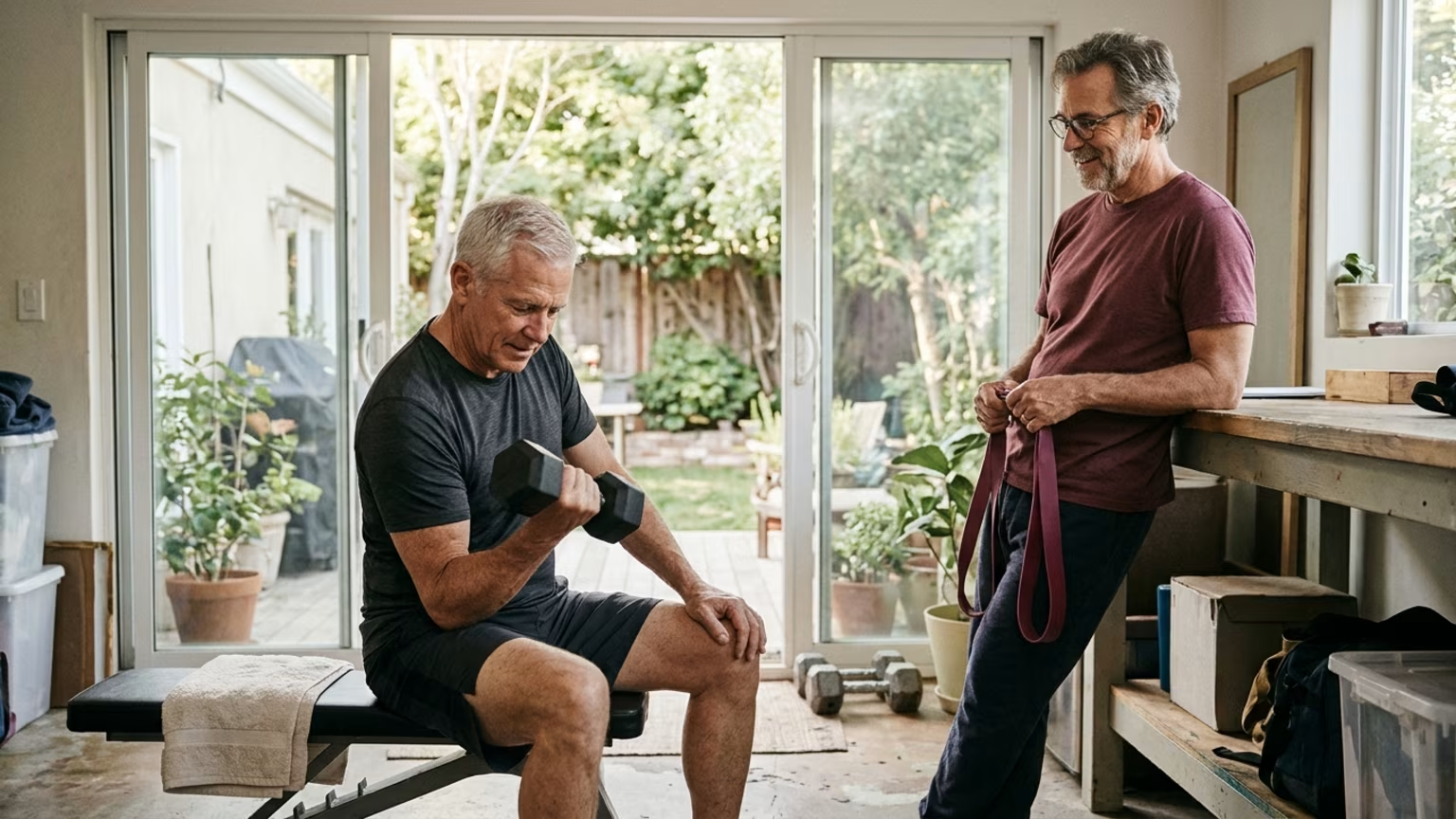

A sarcopenia review reported strength gains and modest body changes. Read how the evidence informs training priorities after 35.





On 2026-11-13, BIOENGINEER.ORG published a report on a review of resistance training in older adults with sarcopenia, describing improvements in strength and walking ability alongside modest changes in lean and fat mass.
The review brought together 25 randomized controlled trials involving 1,302 adults with sarcopenia, according to the report. Its findings covered physical performance and body composition rather than treating muscle size as the only meaningful outcome.
The reported results favored resistance training across several measures:
These are standardized effect sizes, not percentage improvements or changes in kilograms. They express findings on a shared statistical scale. Read them as the review’s way of combining results rather than as a forecast for your next training block.
Different outcomes also answer different questions. Strength and walking measures concern physical capability. Lean mass and fat mass concern body composition. Including both makes this a broader health story than a before-and-after photograph.
These trials concerned older adults diagnosed with sarcopenia. Trial mean ages ranged from 60.4 to 87.1 years, according to the report. The findings are not gay-specific and do not directly establish expected outcomes for healthy men in their 30s, 40s or 50s.
The report rated body-composition evidence as moderate certainty. Functional outcomes, including strength and walking measures, were rated low or very low certainty. It also noted potential publication bias for several functional outcomes and variation in diagnostic criteria, training approaches and reporting.
A related review of exercise and nutritional interventions, published on 2026-11-01, reported benefits across some strength and physical-performance outcomes but judged overall certainty limited. It called for confirmation in high-quality trials. Research is continuing without settling precise intervention comparisons or prescriptions.
The news report says the resistance-training trials documented no serious exercise-induced adverse events and described transient muscle soreness. That is a description of trial reporting, not a promise of risk-free exercise for an individual.
For a man over 35, the useful response is to broaden what counts as progress. Let the findings put strength and everyday movement alongside body composition when you review your priorities. A smaller number on the scale should not be the only result allowed to matter.
Start by naming the role you want strength to play in your life. You might value training performance. You might care more about maintaining walking ability. You might want a body-composition change without allowing that goal to crowd out physical capability.
The review’s grip and walking outcomes make those priorities relevant to this discussion. They keep attention on what a body does rather than only how much muscle it appears to carry. For someone thinking about health span, that is a more useful lens than treating this as another fat-loss headline.
Write down appearance and function as separate aims if both matter to you. This gives you a clearer question when reviewing your routine: are you making room for the outcomes you actually value? GayFitLab’s goal-setting guidance for adult life offers a place to think through those priorities.
The report’s small lean-mass increase and modest fat-mass reduction sit alongside its nonsignificant pooled weight findings. That combination matters when deciding how to judge training. Weight change and the full value of resistance work are not interchangeable.
For your own record-keeping, keep body-weight observations separate from notes about strength and training performance. The purpose is not to make every signal positive. It is to avoid asking a single measurement to answer several different questions.
GayFitLab’s coverage of tracking body changes beyond weight takes up that distinction. Use it as context for organizing your observations rather than as a demand to monitor every detail of your body. A useful record should serve your goals rather than turn your week into a physical audit.
The practical scheduling question is straightforward: where does strength work belong in your actual routine? If you already train, look at whether your stated priorities match the place resistance work occupies. If you are weighing a new routine, make strength part of that discussion rather than starting with a promise about rapid weight change.
This is a decision about priorities before it is a decision about exercises. Think about the time you can realistically protect and the kind of training setting that suits you. Let those preferences shape your planning rather than treating commitment as a willingness to organize your entire life around training.
A routine also needs to fit an adult life. Work and relationships do not become less legitimate because you have a physique goal. The aim is to give strength a clear role without turning fitness into the measure of your commitment to aging well.
If health or physical ability is a concern, take the decision about a suitable routine to a qualified clinician or exercise professional. Bring a clear description of your goals and present activity. Ask how resistance work could fit your situation and how progress would be reviewed.
That conversation can distinguish a performance priority from an appearance preference. It can also clarify what matters most to you before you invest in a program marketed around sarcopenia. A diagnosis-specific headline should not become a reason to label yourself or choose treatment.
Ask questions about expected progress in terms you understand. A useful discussion should connect your priorities with a plan suited to you rather than a marketing promise. The decision is not simply whether a program sounds scientific, but whether its purpose matches the support you need.
Looking good is a valid reason to care about training. It does not need to compete with strength or long-term capability. Nor does this evidence create a preferred body type for gay men as they age.
A leaner appearance may matter to you. So may feeling physically capable enough to participate in the life you want. Neither preference needs to become a test of masculinity or belonging.
GayFitLab’s discussion of physique goals without self-judgment provides a related perspective. The point here is not to talk anyone out of caring about appearance. It is to keep that interest connected to a fuller definition of doing well.
Give resistance training a place in your planning and judge its purpose through strength and everyday capability alongside appearance, rather than through weight loss alone.
Giving resistance training a defined place in the week brings a practical planning choice into GayFitLab’s coverage of fitness and healthy aging. For gay men 35+ faced with conflicting body-composition advice, its research-led editorial supports clearer judgments about strength and appearance without presenting one physique as the standard.
Stay connected for research-led guidance on fitness, body composition, skin, grooming, vitality, sexual wellbeing, relationships and healthy aging. Clear ideas for gay men 35+ who want to look good, feel strong and age with confidence.



Build habits and systems that support clear thinking, steady energy and long term capacity throughout a demanding career.
explore the Blog

