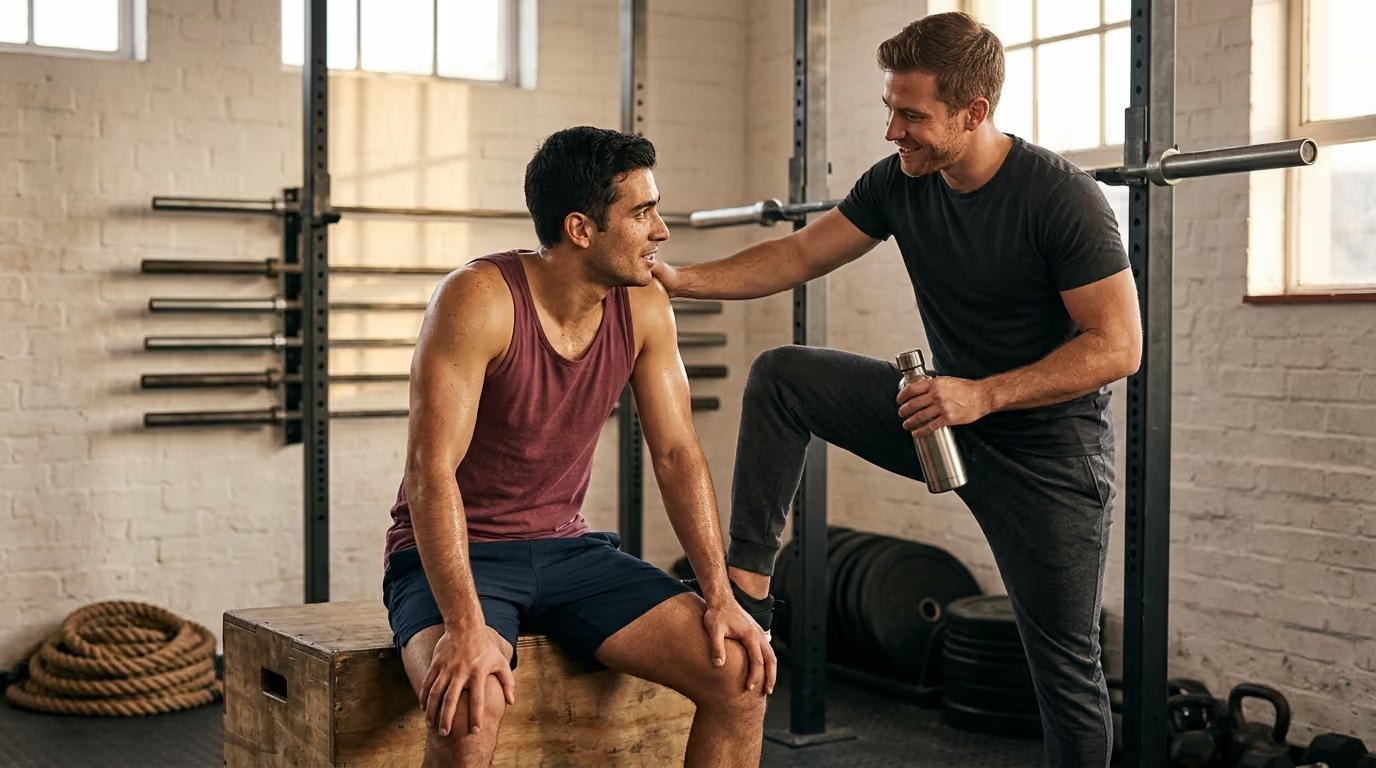

Staring at the gym mirror while questioning your progress highlights the need for a balanced framework that aligns physique goals with mental well-being.





You finish a demanding set of Romanian deadlifts, check your form in the floor-to-ceiling mirror, and feel an immediate wave of frustration. Your lifts are progressing, your energy is steady, and your consistency over the last six months has been exceptional. Yet the reflection looks somehow inadequate. The lighting exaggerates a soft spot on your lower waist, your chest seems smaller than it did yesterday, and the satisfaction of moving heavy weight vanishes. Within minutes, you are recalculating your daily calorie intake and wondering if you should add twenty minutes of high-intensity intervals before leaving the gym.
This scenario is common among dedicated lifters. Resistance training builds physical capability, improves metabolic health, and creates clear changes in body composition. At the same time, gym environments, fitness media, and social platforms can turn training into a relentless cycle of surveillance and self-criticism. Pursuing a muscular, lean physique is a valid personal preference. The challenge arises when aesthetic progress becomes the sole price of admission for self-worth.
A sustainable framework does not require abandoning physique goals or pretending that appearance does not matter. It requires building psychological flexibility alongside physical strength. By learning how body image operates across cognitive, behavioral, and cultural dimensions, you can maintain high training standards without letting appearance anxiety dictate your life.
Body image is not a single, static feeling about your physical form. Researchers define it as a multidimensional construct comprising perceptual, cognitive, affective, behavioral, and sociocultural components. Perceptual body image involves how you visualize your size and shape. Cognitive body image refers to your underlying beliefs about your attractiveness, muscularity, and social evaluation. The affective dimension encompasses the emotions you feel when evaluating yourself, ranging from pride to shame. The behavioral dimension includes observable actions like mirror checking, reassurance seeking, or compensatory exercise. Sociocultural factors include the ideals transmitted through peers, media, and athletic subcultures.
Because body image contains these distinct layers, a person can experience conflicting responses at the same time. You might acknowledge that your squat numbers are rising while simultaneously feeling intense anxiety about your abdominal definition. You might receive compliments on your physical development while privately engaging in compulsive body checking before every shower.
Research indicates that body dissatisfaction is widespread in weight training environments. A systematic review of resistance training populations found that mean body image dissatisfaction reached 56.5% across twenty-three studies. In that analysis, dissatisfaction averaged 59.2% in men and 57.3% in women. The same review reported that symptoms of muscle dysmorphia appeared in 42.4% of participants. These figures reflect survey responses rather than formal clinical diagnoses, but they show that training frequently does not automatically produce body security.
At the same time, systematic reviews confirm that resistance training holds strong potential to improve body image. Structured lifting can increase feelings of physical competence, elevate self-efficacy, and reduce depressive symptoms. Eight out of eleven studies in one published review found significant improvements across multiple dimensions of body image following resistance training programs. Physical adaptations can improve how you feel in your clothes and how you carry yourself.
The critical insight from the literature is that exercise is not a guaranteed psychological cure. The mental outcome depends heavily on your underlying motivation, behavioral flexibility, and relationship with food. When training is driven by self-punishment or appearance anxiety, physical progress often fails to resolve internal dissatisfaction. When training is approached as a way to build capacity and express vitality, psychological health tends to improve alongside physical performance.
Modern fitness culture is organized around comparison. Social comparison theory explains that people naturally evaluate their abilities, opinions, and appearance relative to others. Lateral comparison occurs when you compare yourself to true peers with similar backgrounds, ages, and training histories. Downward comparison involves looking at those perceived as less fit, which can provide temporary reassurance. Upward comparison happens when you compare your physique to individuals you perceive as leaner, more muscular, or more aesthetically gifted.
Fitness social media drives frequent upward comparison. Systematic reviews examining fitspiration content reveal that exposure to idealized physiques consistently correlates with increased body dissatisfaction. Content analyses of fitness platforms demonstrate that a vast majority of popular posts feature extreme leanness, significant muscularity, and sexualized framing.
These images present an engineered reality. Influencers and fitness models showcase peak conditioning achieved through strategic lighting, targeted posing, dynamic muscular pumps, dehydration protocols, and digital retouching. Many utilize performance-enhancing compounds without disclosure. When you scroll through these images between working sets, your brain treats them as normal baselines for athletic achievement.
Evaluating yourself against an optimized snapshot creates chronic dissatisfaction. You are comparing your unpumped, rested, ordinary Tuesday physique to someone else's highlight reel. This dynamic fuels body surveillance, which is the habitual monitoring of your physical self from the perspective of an outside observer.
Body surveillance leads directly to body checking behaviors. Common checking patterns include:
Checking behaviors provide brief, transient relief from anxiety. When you glance in the mirror and see acceptable muscle fullness, your nervous system relaxes for a short window. That relief quickly fades, creating an urge to check again an hour later. Over time, the checking habit reinforces the belief that your physical state is unstable and requires constant vigilance.
Aging introduces physical changes that interact directly with physique standards. After age 35, the body experiences subtle shifts in recovery capacity, connective tissue elasticity, joint tolerance, and hormonal baselines. Muscle protein synthesis becomes slightly less responsive to small protein doses, requiring closer attention to nutrient distribution. Fat distribution patterns can shift, with visceral fat accumulating more readily during periods of surplus energy.
These metabolic and structural shifts are normal aspects of adult life, not signs of physical decline or personal failure. You can build significant muscle, drop excess fat, and achieve excellent conditioning well into your forties, fifties, and beyond through structured resistance training programming. The psychological challenge lies in how you interpret these natural adaptations.
Many lifters in their late thirties and forties interpret normal changes as an aesthetic emergency. If a training block that produced rapid fat loss at twenty-five yields slower adjustments at forty, panic can set in. Lifters often respond by slashing calories or adding excessive cardio, which strains recovery and elevates systemic fatigue.
Aging also alters your available time and energy. Career responsibilities, long-term relationships, family commitments, and financial management demand cognitive resources. Maintaining a rigid bodybuilding routine that requires twelve hours of weekly gym time and precise meal prep becomes increasingly difficult. When adult responsibilities force adjustments to your routine, a rigid mindset interprets those adjustments as weakness.
A mature approach requires integrating longevity and healthy aging strategies into your physique vision. Your training should support joint longevity, cardiovascular stamina, sleep quality, and daily energy. When you treat your body as a high-performance system designed to function for decades, short-term aesthetic fluctuations lose their power to disrupt your emotional balance.
Cultural context shapes how appearance standards are experienced. In gay male communities, physical presentation carries heavy social and romantic currency. Historical, social, and subcultural dynamics have long placed a high premium on muscularity, leanness, and visible youth.
Aesthetic categorization within gay culture can intensify self-surveillance. Terms based on body size, hair distribution, and muscularity create explicit categories where social belonging can feel tied to physical metrics. Digital dating and hookup platforms rely on photographic self-presentation, reducing complex personalities to thumbnail images. Algorithms reward high contrast, muscular definition, and shirtless posing, amplifying the pressure to maintain low body fat year-round.
Social environments like summer resort destinations, circuit events, pool parties, and urban nightlife often feature an elevated baseline of muscular development. In these settings, upward social comparison happens in real time. If your sense of personal value is tethered to having the most defined physique in the room, social gatherings become evaluative gauntlets rather than spaces for connection.
Navigating these environments requires separating sexual desirability and personal style from fundamental human worth. Admiring a well-developed physique, wanting to look attractive, and refining your appearance are completely healthy desires. The hazard occurs when you believe that intimacy, respect, and community belonging are conditional upon reaching an extreme body fat percentage.
Cultivating authentic confidence and relationship dynamics involves recognizing that physical aesthetics represent only one dimension of attraction. Charisma, conversational depth, emotional maturity, professional capability, and warmth consistently outlast temporary physique peaks. When you participate in gay social spaces with a grounded sense of self, you can enjoy nightlife, travel, and dating without feeling like your body is on trial.
Wanting to build a larger back, develop fuller shoulders, or lean down for a beach holiday is entirely normal. Progressive ambition drives athletic achievement and personal growth. The difference between healthy pursuit and psychological distress lies in behavioral flexibility, emotional regulation, and functional consequences.
The American Psychiatric Association classifies muscle dysmorphia within the diagnostic criteria for body dysmorphic disorder. The defining feature is a persistent preoccupation with the belief that one's body is too small, frail, or insufficiently muscular, even when the individual is objectively muscular or athletic.
Body dysmorphic disorder involves repetitive behaviors such as mirror checking, excessive grooming, skin picking, and constant comparison. These behaviors cause clinically significant distress or impairment in social, occupational, or relational functioning. The International OCD Foundation highlights that individuals struggling with muscle dysmorphia often experience severe quality-of-life impairments, elevated rates of depression, and a heightened risk of dangerous substance use.
Having ambitious muscle-building goals is not pathology. Muscle dysmorphia is present only when the pursuit becomes disabling, obsessive, and destructive. Warning signs include:
Compulsive exercise is not defined by training volume alone. A professional athlete trains for hours daily without having an exercise addiction. Compulsive exercise involves an inability to control the behavior and continuing to train despite clear physical, psychological, or social harm.
Research examining compulsive exercise indicates that it frequently serves two primary functions: controlling body weight and regulating negative emotional states. When exercise becomes your sole mechanism for managing stress, anxiety, or sadness, taking a rest day feels like removing your only psychological safety net.
A meta-analysis evaluating exercise addiction identified moderate associations between compulsive exercise patterns, eating disorders, obsessive-compulsive symptoms, depression, and perceived stress. Training becomes compensatory, viewed as a transaction to "earn" food or burn off guilt from eating.
To evaluate your relationship with lifting, consider how you respond to these practical questions:
If you can answer yes to these questions, your physique goals are likely resting on a healthy, flexible foundation. If these scenarios provoke significant anxiety, your training may be serving as an avoidance strategy for underlying appearance fears.
To pursue physical changes without compromising mental health, organize your training around a three-layer goal architecture. This model prevents aesthetic targets from eclipsing your broader life values.
Outcome goals describe the specific physical or performance milestones you want to reach. Examples include adding half an inch to your upper arms, reducing your waist circumference, or bench pressing two hundred and twenty-five pounds for five repetitions.
Outcome goals provide direction and excitement, but they are not entirely under your direct control. Your genetics, limb leverage, skeletal structure, age, endocrine health, and injury history influence how quickly your body responds. Treat outcome goals as creative projects rather than moral verdicts. A project has trade-offs, can be paused, and can be adjusted without invalidating your self-worth.
Process goals are the daily, actionable behaviors that drive physical adaptation. These variables remain within your direct control:
Process goals build a sense of mastery. When you evaluate success by whether you executed your planned habits rather than whether your abs appeared leaner this morning, your day-to-day motivation stabilizes.
Values represent your overarching philosophy of living. They answer why you train in the first place. Core values might include maintaining vitality, staying physically capable of travel, expressing personal style, building resilience, and preserving long-term mobility.
The fundamental rule of this framework is that Layer 1 and Layer 2 must never permanently compromise Layer 3. A training plan that delivers visible abdominal definition while destroying your relationships, disrupting your sleep, and provoking constant social anxiety is a failed program. When conflicts arise between an aesthetic outcome and a core life value, the life value must take precedence.
Relying exclusively on the scale and the mirror creates an unstable feedback loop. Body weight fluctuates daily based on hydration, sodium intake, carbohydrate storage, and intestinal transit time. Visual assessments change under different light sources and camera angles.
Track a diversified set of metrics to evaluate your physical development:
Two evidence-based psychological concepts offer powerful alternatives to appearance-obsessed training: body appreciation and functionality appreciation.
Body appreciation involves accepting, respecting, and holding favorable attitudes toward your body, regardless of whether it matches an idealized aesthetic. It does not mean believing you look flawless. It means treating your physical self with care, adequate fuel, and respect even on days when you dislike your reflection.
A meta-analysis of two hundred and forty published papers revealed that body appreciation is strongly associated with positive psychological outcomes. Across the included studies, higher body appreciation correlated with:
The vast majority of studies in this literature are cross-sectional, meaning they show strong correlations rather than absolute proof of causation. Even so, cultivating appreciation creates an internal environment where physique goals can be pursued from self-respect rather than self-disgust.
Functionality appreciation means actively valuing and respecting what your body can do. This includes physical capacities like strength, endurance, balance, and mobility, alongside basic physiological functions like breathing, sensory perception, and healing from exertion.
A systematic review and meta-analysis of fifty-six studies established that functionality appreciation is consistently linked to lower body dissatisfaction, fewer eating disorder symptoms, and superior overall well-being. Research evaluating functionality-focused interventions, including structured writing exercises, confirms that directing attention to physical capabilities improves body esteem and reduces appearance distress.
Focusing on functionality does not mean you must abandon aesthetic desires. You can happily work toward broader deltoids while simultaneously appreciating your shoulder joints for pressing pain-free. Functionality appreciation anchors your perspective so that a minor visual imperfection does not ruin your day.
For many people, forcing enthusiastic positivity about their physical appearance feels hollow and unreal. If you wake up feeling bloated and uncomfortable, telling yourself in the mirror that your body is gorgeous often provokes internal skepticism.
Body neutrality offers a realistic alternative. Neutrality accepts that your body is a vehicle for your life, not a continuous art installation. A neutral perspective recognizes physical reality without attaching catastrophic meaning to it:
Body neutrality removes the emotional urgency from physical changes. Your appearance stops being a daily crisis that demands immediate correction.
Integrating mental flexibility into your lifting routine requires clear, actionable boundaries. Use these practical strategies to protect your mindset while continuing to train hard.
When appearance panic hits, automatic thoughts take over. Writing down an anxiety management plan ahead of time creates a cognitive pause:
Tracking body metrics can provide useful data, but it can also feed compulsive surveillance. Before weighing yourself, taking body measurements, or taking physique photos, ask yourself:
If checking your waist or stepping on the scale serves only to manage anxiety, skip the measurement. Use data to inform long-term trends, not to pass daily judgment on your worth.
Systematic reviews on social media and body image confirm that visual platforms heavily influence appearance satisfaction. Take deliberate control of your digital feed:
Checking your physique twenty times a day keeps your nervous system in a state of high vigilance. Implement structural boundaries around reflective surfaces:
Precommitment reduces emotional decision-making when fatigue or insecurity peaks:
While the scientific literature provides valuable guidance on resistance training, body image, and mental health, several important limitations exist across current studies.
First, a substantial portion of the research examining body appreciation, functionality appreciation, and social media exposure is cross-sectional. Cross-sectional studies collect data at a single point in time, establishing correlations rather than proving cause and effect. Longitudinal studies that follow lifters over multiple years are needed to determine how specific training styles influence body image trajectories across adulthood.
Second, research samples in resistance training and body image studies often feature high demographic homogeneity. Many published investigations focus primarily on college-aged participants or competitive bodybuilders. High-quality data looking specifically at older adults, sexual minorities, and non-competitive recreational lifters remains limited.
Third, measurement methods for exercise addiction, muscle dysmorphia symptoms, and body dissatisfaction vary significantly across studies. Different questionnaires use different scoring thresholds, making it difficult to establish precise population prevalence rates. A high score on a symptom questionnaire should never be confused with a formal clinical diagnosis conducted by a licensed mental health professional.
Recognizing these research boundaries prevents overgeneralizing study findings. Science provides useful models and correlations, but your individual response to training, nutrition, and psychological reframes requires thoughtful personal observation.
Revisit this resource whenever you notice your training shifting from a source of strength into a source of stress. Specific moments to reread these frameworks include:
Building a powerful, athletic physique is a rewarding pursuit that can enhance your vitality, confidence, and daily energy for decades. True physical mastery means developing a body that serves your life, supported by a mindset strong enough to let you enjoy it.
Stay connected for research-led guidance on fitness, body composition, skin, grooming, vitality, sexual wellbeing, relationships and healthy aging. Clear ideas for gay men 35+ who want to look good, feel strong and age with confidence.


Build habits and systems that support clear thinking, steady energy and long term capacity throughout a demanding career.
explore the Blog