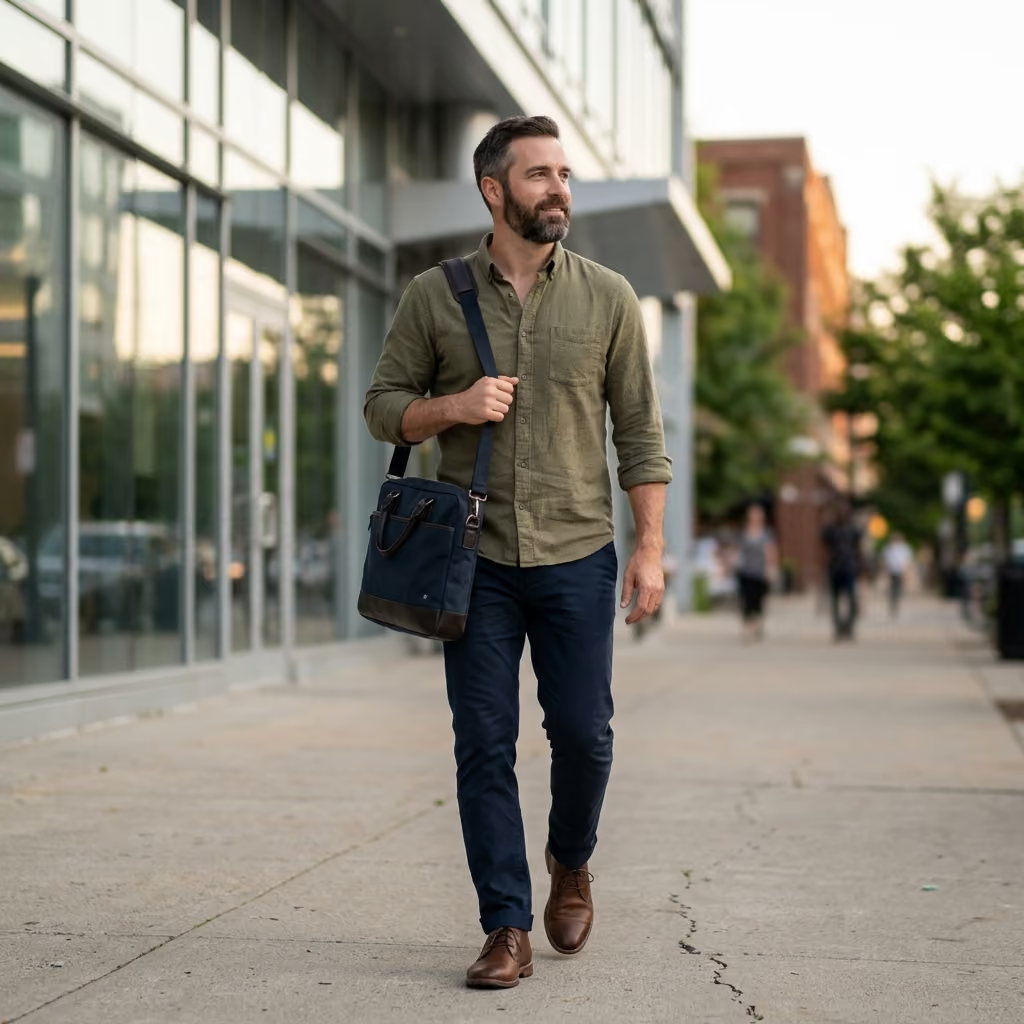
Neurologist Dr. Faye Begeti challenges the rigid eight-hour sleep rule, highlighting individualized rest and mental engagement for long-term cognitive health.





On October 4, 2026, the Hindustan Times published a retrospective report on January 2025 comments from neurologist Dr. Faye Begeti, who challenged the rigid eight-hour sleep rule during an appearance on the Vision of Health podcast hosted by Dr. Frankie Jackson-Spence.
Understanding how sleep supports long-term vitality requires looking beyond simplified rules. Begeti approached sleep as a highly individualized biological requirement rather than a universal mandate. Her discussion provided a framework for evaluating daily habits against long-term cognitive function.
Mainstream fitness culture often treats exactly eight hours of sleep as an absolute requirement for muscle recovery and physical optimization. This rigid standard can create unnecessary anxiety for men who naturally function well on slightly less rest. A man might track his sleep cycles obsessively and view any night under eight hours as a biological failure. This approach turns rest into a stressful performance metric rather than a natural recovery process.
The medical consensus presents a much broader picture of adequate recovery. NIH recommendations vary by age, calling for at least seven hours for adults aged 18 to 60. The agency advises seven to nine hours for adults aged 61 to 64, and seven to eight hours for adults 65 and older. This guidance establishes a practical public health baseline rather than an exact nightly scorecard. Begeti’s perspective aligns with this flexibility by framing eight hours as a statistical average.
For a gay man over 35 trying to maintain his physical and mental vitality, this perspective shifts the focus from rigid tracking to practical functioning. Building a sustainable health routine means looking at exactly how lifestyle choices interact over the years. Rather than forcing a specific sleep duration, a man should evaluate how his rest supports his daily energy and cognitive clarity. Healthspan relies on consistent, restorative habits that fit an individual life. If sleep problems persist and affect daily routines, seeking a clinician’s guidance is a necessary next step.
While Begeti uses six or 11 hours as examples of variation, these figures should not be interpreted as a reason to routinely undersleep. The NIH clearly states that adults who sleep under seven hours may face more health issues than those who sleep seven or more hours. A man in his 40s or 50s can use the NIH minimum of seven hours as a sensible starting point. From there, he can observe his own physical response to determine his optimal range. Finding a sustainable pattern helps prevent the exhaustion that comes from chronic undersleeping. You can read more about longevity and healthy aging to understand how these baselines support long-term goals.
Treating sleep as an individualized metric allows for a more sustainable approach to physical recovery. Tracking functional capability and energy levels provides better feedback than staring at a sleep tracking application every morning. A man who feels rested and alert on seven hours does not need to force himself back into bed to hit an arbitrary eight-hour target. This pragmatic view helps eliminate the frustration that often accompanies age-related changes in sleep architecture.
Brain health extends far beyond the time spent in bed. Begeti positions sleep alongside ongoing mental engagement as part of a comprehensive approach to cognitive reserve. Developing a new skill, learning a language, or painting can provide the necessary intellectual challenge to keep the brain active. These are not medical treatments, but they represent a proactive approach to maintaining mental sharpness over the long term. Pursuing challenging hobbies keeps the mind active and engaged outside of professional obligations.
Finding activities that require sustained attention and learning can be particularly valuable for men entering their middle years. Taking up painting or a new language forces the brain to form new connections. This continuous learning process builds the cognitive reserve that Begeti suggests may offer protection against age-related decline. Integrating these hobbies into a weekly routine means that mental fitness receives deliberate attention alongside physical health.
Maintaining social connections is another critical component of cognitive engagement for men as they age. A robust social life provides constant, dynamic mental stimulation that solitary activities simply cannot replicate. Engaging with friends, romantic partners, and the broader community challenges the brain to process complex emotional and verbal information. Connecting with others remains a central pillar of confidence and relationships at any age.
Combining this social engagement with a structured daily routine supports both cognitive and physical health. Begeti recommends keeping a consistent wake time and seeking morning outdoor exposure when possible to anchor the day. Stepping outside for morning light helps reinforce the body's natural rhythms. Integrating these steady habits helps build a comprehensive approach to vitality and sexual wellbeing, as well-regulated sleep cycles heavily influence hormonal balance and energy.
A comprehensive approach requires looking at lifestyle factors collectively rather than isolating sleep as the only variable. Stress and alcohol can negatively impact brain health, meaning that managing these variables is just as important as getting adequate rest. High stress levels can disrupt sleep quality and limit the restorative value of the hours spent in bed. By adjusting alcohol intake and finding effective ways to manage daily stress, a man can further protect his cognitive reserve.
Reducing alcohol consumption often leads to immediate improvements in sleep architecture and morning clarity. Many men find that even moderate alcohol intake can cause fragmented sleep and increased grogginess. Addressing these lifestyle factors collectively creates a stronger foundation for healthy aging. Building this daily resilience contributes to lasting confidence and physical capability over the years.
Aging naturally alters how the body approaches both physical recovery and cognitive rest. For a gay man navigating these changes, understanding the NIH recommendations provides a structural advantage. Knowing that the guidance shifts to seven to nine hours for adults aged 61 to 64, and seven to eight hours for adults 65 and older, validates the physical changes many men experience. This progression shows that sleep architecture evolves, and rigid expectations from a man's twenties no longer apply in his fifties or sixties.
Adjusting to these physiological shifts requires patience and a willingness to step away from youthful benchmarks. Rather than viewing lighter or shorter sleep as a failure, an aging man can recognize it as a normal biological progression. The goal is to maximize the restorative quality of the sleep obtained. This perspective helps alleviate the age panic often found in youth-focused media, replacing it with a mature understanding of long-term health. A man can stay active, sharp and capable without pretending his biology remains static.
When Begeti points to learning a language or developing a new skill, she highlights the importance of sustained intellectual challenge. Many men reach a point in their careers where daily tasks become routine and no longer stretch their cognitive capacities. This professional plateau can lead to mental stagnation if not countered with deliberate external challenges. Actively seeking out difficult, engaging hobbies forces the brain to adapt and grow over time.
This active learning process requires the brain to recruit new neural pathways. Whether it is mastering a complex recipe, learning an instrument, or studying a new language, the key is the continuous effort required. These challenges build the cognitive reserve that Begeti identifies as potentially protective. Incorporating these activities into a balanced lifestyle means that mental fitness receives the same deliberate attention as physical training.
Older gay men often face conflicting advice about how to maintain their appearance and energy levels as they age. While much of the focus goes toward targeted nutrition and training, cognitive health and sleep quality play an equally significant role in how a man looks and feels. Accepting that individual sleep needs vary allows a man to build a recovery routine that actually works for his specific body type and schedule. The focus should always remain on consistent, healthy habits rather than chasing an idealized metric promoted on social media.
Finding a reliable recovery routine supports ongoing efforts toward better strength and body composition. Muscles require adequate rest to repair, and the brain requires adequate rest to maintain hormonal balance and focus. By combining physical training with the cognitive engagement Begeti recommends, a man can support his total healthspan. This balanced approach rejects anti-aging panic in favor of sustainable, evidence-based practices that improve the quality of daily life. A well-rested body responds better to training, digests food more efficiently, and maintains a sharper physical appearance.
A man over 35 should treat age-appropriate public health guidelines as a baseline while combining consistent sleep with regular mental and social engagement.
Combining restorative sleep with active mental engagement helps an aging man preserve his physical and cognitive vitality over time. Conflicting advice about fitness, body composition and metabolism after 35 frequently complicates these lifestyle adjustments, a challenge GayFitLab solves by translating credible evidence into clear, stylish and practical guidance without age panic. Explore Resources
Stay connected for research-led guidance on fitness, body composition, skin, grooming, vitality, sexual wellbeing, relationships and healthy aging. Clear ideas for gay men 35+ who want to look good, feel strong and age with confidence.



Build habits and systems that support clear thinking, steady energy and long term capacity throughout a demanding career.
explore the Blog