
Psychological reports reveal how active social schedules often mask functional loneliness. Learn why gay men over 35 should prioritize deep, candid friendships.





On September 15, 2026, the Journals of Gerontology: Series B published a study detailing how daily social network characteristics impact older adults. This research arrived alongside widespread psychological reports outlining functional loneliness, a state where individuals maintain highly active social schedules but remain completely emotionally isolated.
Recent clinical findings and expert psychological observations reveal a clear distinction between social activity and genuine human connection:
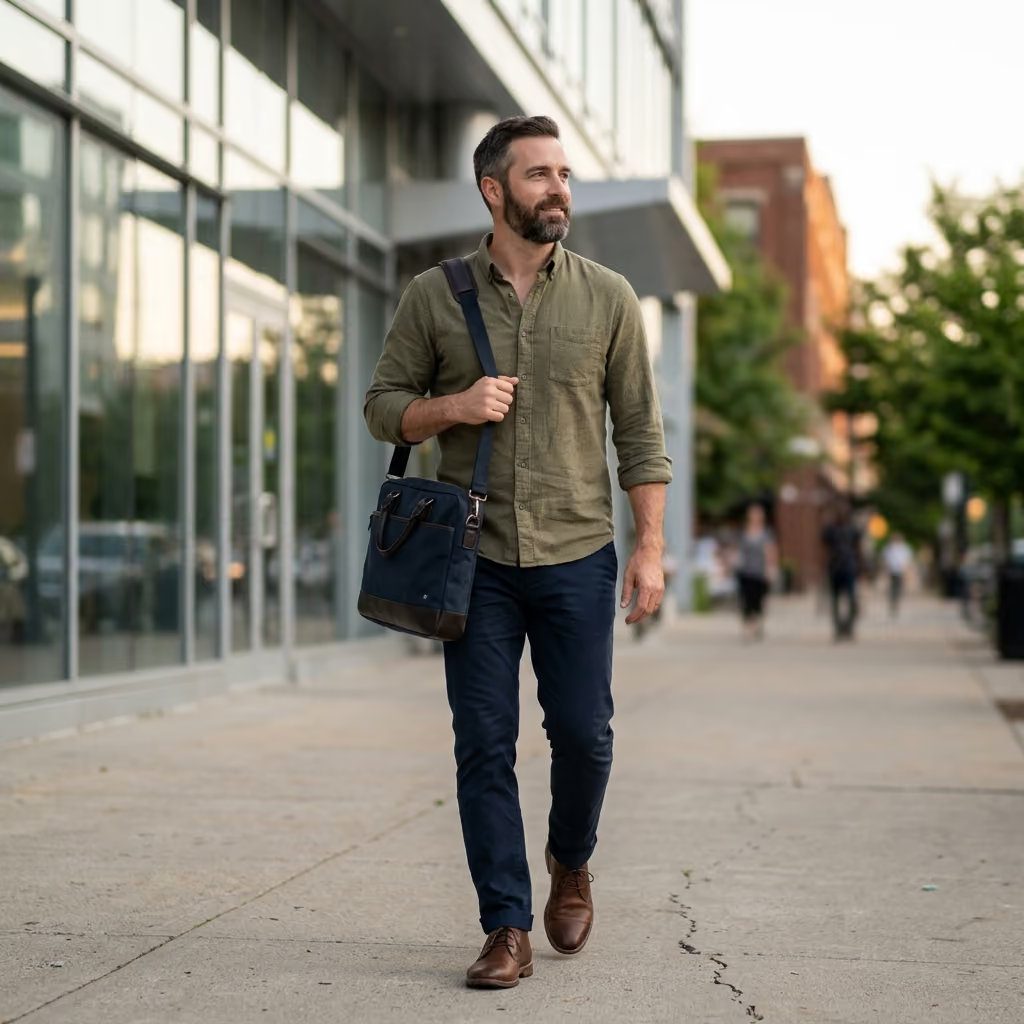
Many gay men over 35 maintain aggressive social calendars. They transition seamlessly from morning training sessions to demanding professional environments. Evening schedules often involve community events, running clubs, or networking dinners. This frequent social exposure creates a convincing illusion of community.
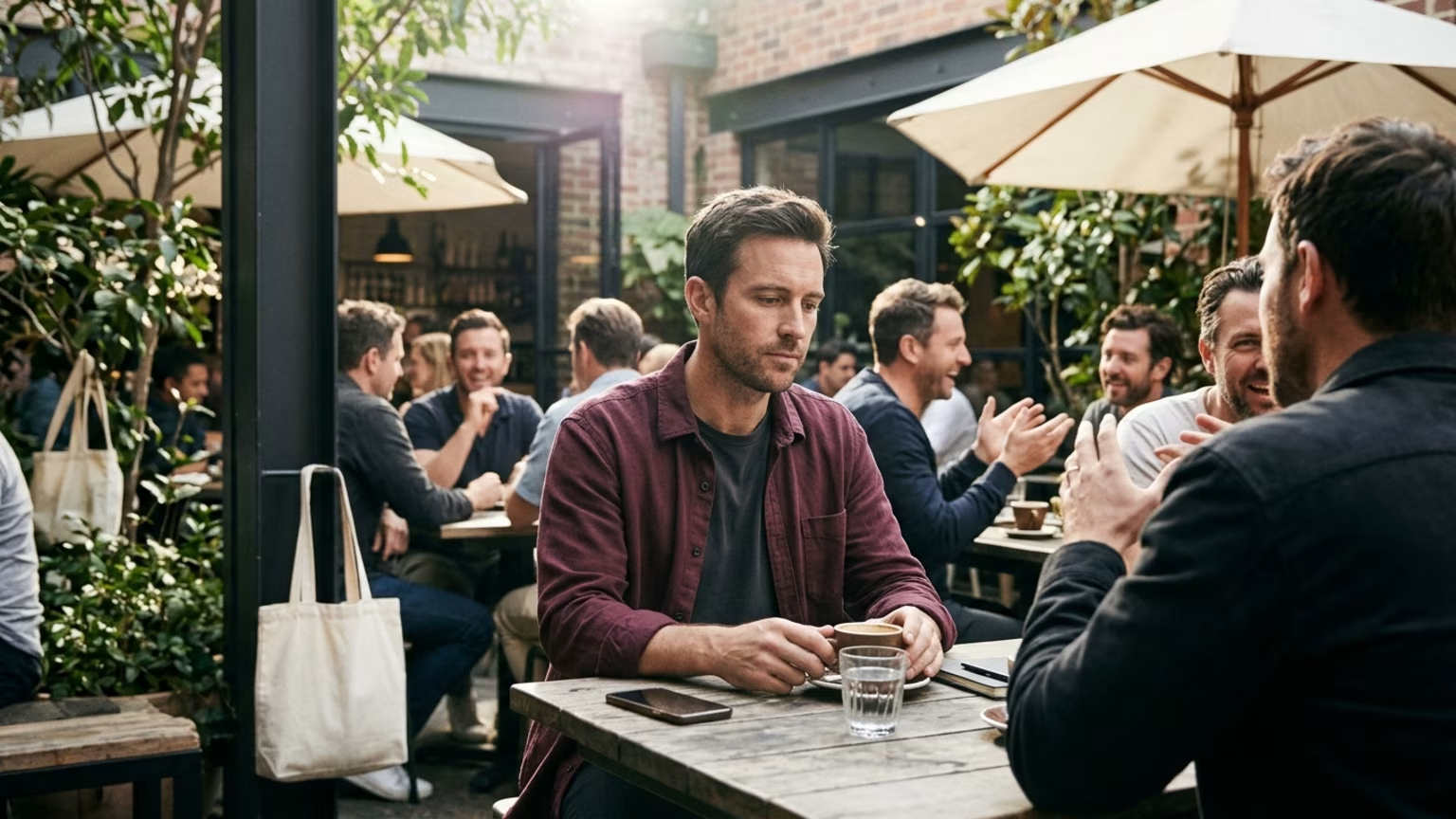
Psychologist Denise Orellano argues that people can be highly connected in practical or digital terms while remaining completely emotionally disconnected. A man might interact with dozens of people daily without ever experiencing true vulnerability. These practical relationships help individuals coordinate plans or share information efficiently. However, they rarely provide the emotional safety required to process real life challenges.
Experts frequently point to cases that illustrate this modern social paradox. One recent report highlighted a 38-year-old single technology specialist with an incredibly full life. She maintained dedicated groups for the gym, work, university, and running. Yet amid this constant activity, she admitted she did not know whom she would call if a true emergency happened.
This scenario resonates deeply with gay men navigating the midlife transition. It is easy to accumulate acquaintances who share specific interests or aesthetic goals. Yet relying solely on activity partners leaves a critical gap in long-term emotional support. When practical ties substitute for deep bonds, functional loneliness takes root.
The science of social connection suggests that volume does not equal value. The 2026 study published in the Journals of Gerontology: Series B provides crucial context for aging gay men. Researchers analyzed pooled data from the U.S. Health and Retirement Study spanning 2006 to 2022. They found that older adults in same-sex unions reported a noticeably higher proportion of friends in their close networks.
This reliance on chosen family is a familiar concept for many gay men. However, the study also revealed a distinct gender difference within these chosen networks. Men in same-sex couples actually had smaller close networks than men in different-sex couples. While their overall social networks were comparable in size, the innermost circle of trust was remarkably small.
This data highlights a critical reality for aging gay men. Since the inner circle is smaller, the emotional quality of those few friendships dictates a man's overall psychological resilience. Relying on a small network of close friends places immense importance on mutual trust and candid communication. If those few close ties lack genuine depth, a man is highly vulnerable to functional loneliness.
Furthermore, larger social networks serve a different psychological purpose entirely. A separate 2026 study found that larger, diverse networks were associated with more momentary social engagement. Conversely, stronger affective ties were linked to less explicit socializing. This indicates that people with deep relationships do not need constant social exposure to feel fulfilled.
Understanding functional loneliness requires analyzing how we actually spend time with friends. Practical ties are built around shared activities. Two men might spot each other at the gym four days a week. They might discuss training splits, dietary adjustments, or weekend plans. This interaction provides baseline social engagement.
However, a shared interest in strength and body composition does not automatically generate emotional intimacy. Silvia Álava Sordo notes that relationships can function perfectly for sports or planning without ever building genuine trust. When a career crisis or health scare occurs, a gym buddy might not be equipped to offer serious support.
The danger lies in mistaking practical contacts for emotional confidants. Sociologist Eric Klinenberg observes that individuals strongly value their autonomy while still fundamentally needing community. Men often lean into practical relationships because these ties demand less vulnerability. An activity-based friendship allows a man to remain autonomous and guarded while satisfying his baseline need for human contact.
Over time, this preference for shallow interaction compounds into functional loneliness. A man wakes up at 45, realizes his calendar is full, and feels entirely unseen. Addressing this requires deliberate behavioral changes. Men must intentionally shift select relationships from the practical column into the emotional column.
Breaking the cycle of functional loneliness involves changing how friends communicate. Denise Orellano recommends opening space for more honest conversations within existing relationships. This does not require meeting new people or expanding a social circle. It requires demanding more substance from the people already present in your life.
The transition from practical contact to confidant requires deliberate vulnerability. Men over 35 often avoid discussing aging fears, dating frustrations, or career anxiety. Sharing these specific worries signals trust. When one person introduces a candid topic, it creates permission for mutual reciprocity.
Psychologist Lucía Argibay points out the critical importance of feeling seen, heard, and validated by another person. True validation rarely happens over text messages or social media comments. Texting strips away the physical context required for empathy. Digital communication prioritizes speed over substance.
Face-to-face interaction offers vital interpersonal cues that text messages completely omit. Gestures, comfortable silences, and direct eye contact build psychological safety. These physical markers of attention communicate that a friend is genuinely present and invested in the conversation.
Applying these psychological concepts to daily life requires clear behavioral boundaries. The first step involves curating the environment where socializing happens. Loud restaurants or crowded bars actively discourage vulnerable conversation. Men seeking deeper connections should select quiet, private environments that allow unhurried face-to-face time.
Eliminating digital distractions is another mandatory step. Leaving phones in a pocket or another room signals absolute attention. When a man checks his screen during a conversation, he instantly fractures the emotional connection. Device-free shared time forces both individuals to remain present with each other.
Consistency also plays a major role in developing trust. Regularly scheduled, private meetings build a reliable foundation for honesty. Instead of attending three different group dinners, a man might prioritize one long coffee date with a single friend. This specific shift reduces momentary social engagement while drastically increasing affective strength.
Building a fulfilling life after 35 requires prioritizing quality over quantity. Expanding a social calendar is a superficial fix for a deep emotional deficit. Navigating the complexities of confidence and relationships demands a solid foundation of chosen family. Investing heavily in a few trusted individuals provides the long-term resilience required for healthy aging.
The impact of functional loneliness extends far beyond momentary sadness. Psychological reports associate close relationships with lower rates of depression. Maintaining trusted confidants provides a psychological buffer against daily stress. When men verbalize their anxieties, they actively reduce their physiological stress responses.
Furthermore, these social reports point to associations between close ties and cardiovascular health. Chronic emotional isolation can elevate cortisol levels over time. Prolonged stress hormone exposure negatively impacts heart health and overall metabolic function. While an active social calendar might encourage physical movement, only genuine emotional support downregulates chronic stress.
Experts also link strong affective relationships to a reduction in cognitive decline. Engaging in complex, emotionally nuanced conversations stimulates the brain differently than superficial banter. Discussing deep personal matters requires empathy, memory recall, and active listening. These cognitive demands help maintain mental acuity as men age.
It is crucial to recognize the limits of these reported associations. The exact mechanisms linking conversational depth to disease prevention remain complex. A single deep conversation will not immediately reverse cardiovascular disease or cure clinical depression. Still, consistent emotional support forms one crucial pillar of a comprehensive strategy for longevity and healthy aging.
For many gay men, the concept of community changes radically after 35. During their twenties, community often revolves around large group gatherings, nightlife, and broad social exposure. These environments prioritize high-energy interactions and rapid social networking. This phase of life naturally encourages wide, diverse social circles.
As men enter their late thirties and forties, their psychological needs shift. The energy required to maintain dozens of superficial connections becomes exhausting. The fear of missing out often keeps men tethered to these exhausting routines. They continue attending large events, hoping to extract meaningful connection from a fundamentally superficial environment.
This behavioral loop directly fuels functional loneliness. A man might post photos from a crowded weekend event while feeling entirely disconnected from the people surrounding him. The digital validation received from a wide network cannot replace physical presence. Recognizing this disparity is the first step toward building a sustainable midlife social strategy.
Shifting focus requires accepting that a smaller social circle is not a sign of failure. In fact, deliberate social curation is a marker of adult maturity. Choosing to stay home and host one friend for dinner is a strategic investment in long-term wellbeing. It replaces the anxiety of social performance with the comfort of actual intimacy.
Functional loneliness also affects men who are actively dating or in relationships. A common mistake among gay men is expecting a romantic partner to satisfy every emotional need. Placing this massive burden on one individual often damages the romantic relationship itself. A healthy life requires a diversified portfolio of emotional support.
The 2026 data on older same-sex unions highlights the structural importance of friendships. Since older men in same-sex couples maintain smaller close networks, their non-romantic friendships carry immense weight. These friends provide external perspectives, separate social outlets, and objective advice. Without these external confidants, a romantic partnership can become suffocating.
Single gay men face a different but related challenge. They sometimes treat dating as the only valid avenue for deep connection. A single man might endure endless superficial dates while neglecting his platonic friendships. This approach leaves him completely isolated when romantic prospects fail to materialize.
Cultivating deep platonic friendships provides a stable emotional baseline. When a man feels fully supported by his friends, he approaches dating with far less desperation. He can evaluate romantic partners clearly, without relying on them to rescue him from functional loneliness. This emotional stability naturally improves his overall confidence and social presence.
One major obstacle to overcoming functional loneliness is the cultural preference for casual positivity. In many social circles, complaining or expressing vulnerability is viewed as a burden. Men are socially conditioned to present a flawless, competent exterior at all times. They answer genuine questions about their wellbeing with standard, dismissive responses.
This constant performance creates a massive barrier to true intimacy. When a man pretends everything is perfect, he denies his friends the opportunity to offer support. Vulnerability requires the courage to admit when a career path feels stagnant or a relationship feels broken. Revealing these imperfections allows a friendship to move past the superficial stage.
Taking the first step toward vulnerability often feels deeply uncomfortable. A man might worry that revealing his anxiety will alienate his practical contacts. Some superficial friendships might fade when tested with real emotional weight. Yet losing a shallow connection simply creates space for a much stronger bond to form.
Focusing on emotional honesty transforms a busy social life into a deeply rewarding one. Men who prioritize candid conversations build resilient networks capable of withstanding the realities of aging. This deliberate approach guarantees that an active calendar actually reflects a genuinely connected life.
Gay men over 35 should prioritize deliberate, face-to-face time with a few trusted confidants over endlessly expanding their social calendars to build true emotional resilience.
Shifting select relationships from practical gym contacts into deep emotional confidants requires a man to carefully manage his daily schedule. Conflicting advice about fitness, body composition and metabolism after 35 frequently complicates these lifestyle adjustments, a challenge GayFitLab solves by translating credible evidence into clear, stylish and practical guidance without age panic. Explore Resources
Stay connected for research-led guidance on fitness, body composition, skin, grooming, vitality, sexual wellbeing, relationships and healthy aging. Clear ideas for gay men 35+ who want to look good, feel strong and age with confidence.





Build habits and systems that support clear thinking, steady energy and long term capacity throughout a demanding career.
explore the Blog