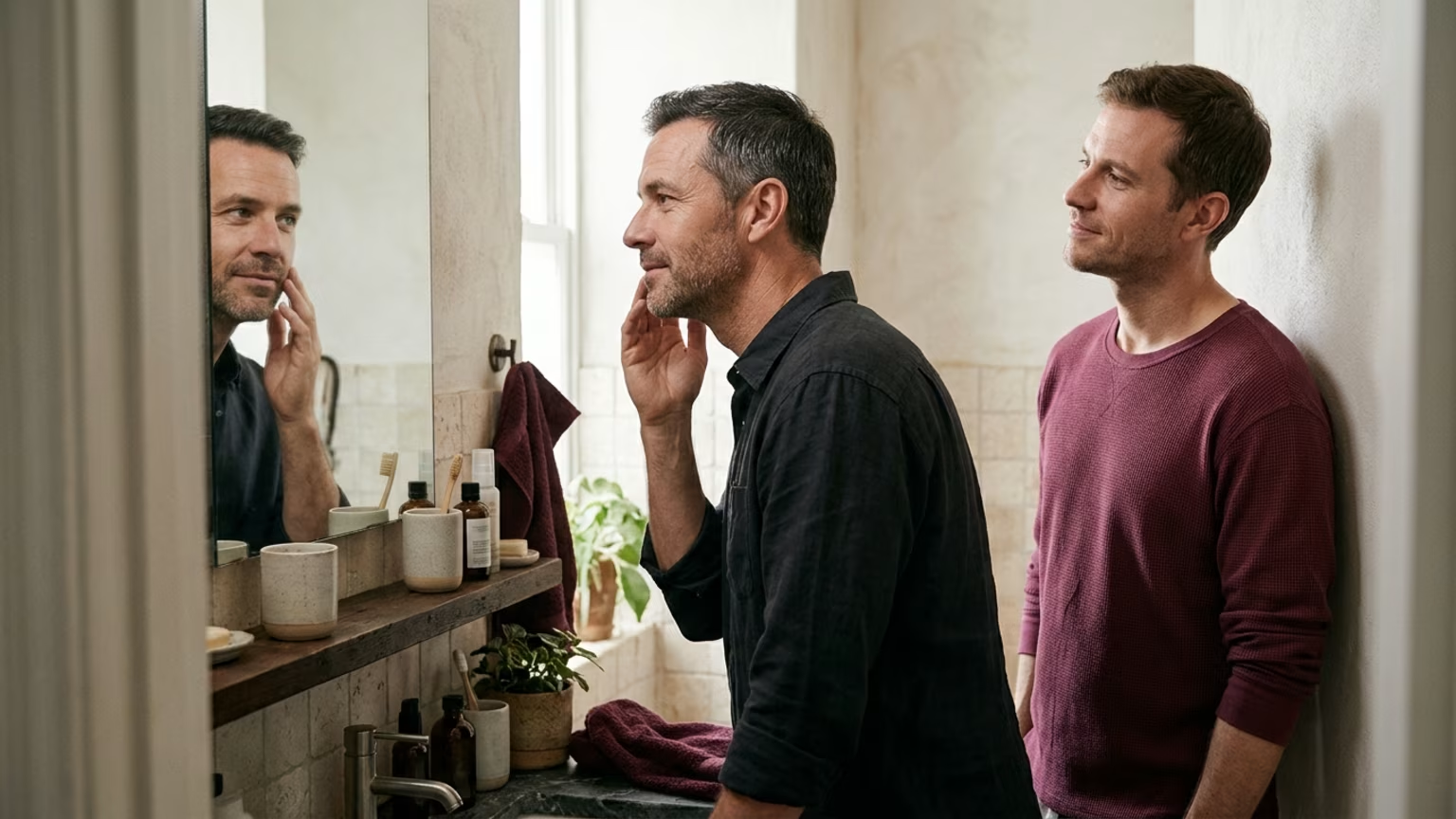

Understand dryness, fine lines and uneven tone after 35, with AAD-backed routine care and reasons to discuss persistent symptoms with a dermatologist.





Dryness, fine lines and uneven tone are familiar concerns as skin ages; persistent or painful dryness and ongoing irritation deserve a dermatologist conversation. The American Academy of Dermatology (AAD) recommends a foundation of gentle cleansing, moisturizer and sun protection.
Here, “after 35” describes the reader rather than a deadline for changing his face. The useful distinction is between an appearance preference and a concern that needs professional assessment. Looking polished can matter without making every visible change a medical problem.
The AAD says skin becomes drier with age and recommends daily moisturizer to help trap water in the skin. Its guidance also favors washing with a mild cleanser rather than scrubbing.
Dryness is a reason to review the basics before treating the situation as a demand for a more ambitious anti-aging routine. Gentle cleansing and regular moisturizer have clear roles in the AAD’s advice. Adding complexity is not the goal of that guidance.
For a conversation about dryness, comfort is a useful starting point. Describe whether the concern is mainly how your skin looks or whether it also feels irritated or painful. That gives the discussion a purpose beyond “looking older” and keeps symptoms separate from cosmetic preferences.
Yes, the AAD says moisturizer can make fine lines less noticeable by trapping water in the skin. Hydration therefore has a place in appearance care without making visible lines something everyone must correct.
Wanting a smoother-looking face is valid. So is being comfortable with visible lines and caring mainly about dryness. Neither preference needs to become a judgment about how well someone is aging.
Before comparing products, name the outcome you actually value. “My skin feels comfortable” and “I would like these lines to be less noticeable” are different goals. Keeping that distinction clear makes it easier to ask a useful question rather than accepting every promise on the shelf.
The AAD identifies sun exposure as a contributor to premature aging that includes wrinkles, age spots, loose skin and a blotchy or ruddy complexion. These changes are associated with accumulated sun damage, but that does not establish the cause of an individual area of uneven skin.
“Uneven tone” is a description rather than a diagnosis. In a consultation, describing the area that concerns you is a better starting point than arriving with a cosmetic product already selected. A question about color does not have to become an immediate decision about treatment.
Sun protection also belongs in this conversation without turning it into a judgment about past choices. The useful question is what deserves a place in routine care now. Appearance goals can follow from that discussion rather than lead it by default.
The AAD recommends broad-spectrum, water-resistant sunscreen with SPF 30 or higher on skin not covered by clothing. Its advice also includes seeking shade and wearing protective clothing.
The practical information is the sunscreen standard and where protection is needed. Those details deserve more attention than language about looking younger. Sun protection can be part of everyday grooming whether someone is interested in cosmetic treatment or not.
The recommendation also places sunscreen alongside shade and clothing rather than presenting a bottle as the entire plan. This keeps the conversation focused on useful protection instead of asking one product to carry every hope about future appearance.
A birthday alone is not a useful reason to replace every product; the AAD’s guidance for people in their 40s and 50s centers on sun protection, moisturizer and gentle cleansing. Those fundamentals provide a clearer starting point than building a routine around the word “anti-aging.”
A routine review can begin with a simple question: what is each product meant to do? In the guidance discussed here, cleansing is gentle and moisturizer helps retain water. Sun protection addresses exposure rather than acting as a promise to preserve a particular age.
GayFitLab’s guide to building a focused everyday routine is a related place to continue reading. The editorial priority is a routine with understandable purposes, not a shelf that looks more advanced. There is no need to make product collecting a measure of how seriously you take your appearance.
Match the claim to a specific outcome rather than treating “anti-aging” as a result in itself. The AAD cautions that creams, gels and lotions cannot address every sign of aging skin.
A product promise is easier to assess when the goal is clear. Less noticeable fine lines is a defined appearance goal. A broad promise to make skin “younger” leaves much more room for interpretation.
For GayFitLab, the useful editorial distinction is between a supported benefit and a marketing ambition. Wanting to look good does not require accepting vague language as evidence. A dermatologist conversation can also start with the result you want rather than the product you have been encouraged to buy.
Yes, professional advice can be part of informed decision-making about appearance rather than a response to fear about aging. A consultation can center on persistent dryness or a cosmetic goal without treating every line as something that needs correction.
A focused discussion might distinguish comfort from appearance: is dryness the main concern, or is the goal a change in visible texture or tone? That is a discussion framework, not a diagnosis or a recommendation for a particular treatment.
If a procedure is already part of your thinking, reading about questions behind laser and microneedling comparisons can help frame the next conversation. The personal decision belongs with qualified care. There is no obligation to turn an interest in grooming into a treatment plan.
The AAD-based guidance distinguishes routine care from dryness and irritation that warrant professional input. Reasons to arrange a conversation include:
These indicators are reasons to seek assessment, not a way to identify a condition at home. Keep the symptom question separate from the shopping question. Professional input is more useful than continuing to choose products around an assumed explanation.
Skin tolerance is a useful next topic: how to keep care centered on comfort rather than collecting more active products. The physiological starting point is water retention, which explains why the AAD gives moisturizer a place in routine care.
Continue with GayFitLab’s guide to persistent redness and sensitivity. Use that reading to sharpen the distinction between an appearance goal and a symptom worth discussing with a dermatologist. The next step need not be a stronger product; it can be a better question.
Deciding whether to keep a simple routine or seek dermatology advice starts with a clear goal; GayFitLab puts that choice in an evidence-led skin-care context. Its editorial is written for gay men 35+ who value their appearance but need help judging product claims rather than another promise of younger skin.
Stay connected for research-led guidance on fitness, body composition, skin, grooming, vitality, sexual wellbeing, relationships and healthy aging. Clear ideas for gay men 35+ who want to look good, feel strong and age with confidence.





Build habits and systems that support clear thinking, steady energy and long term capacity throughout a demanding career.
explore the Blog