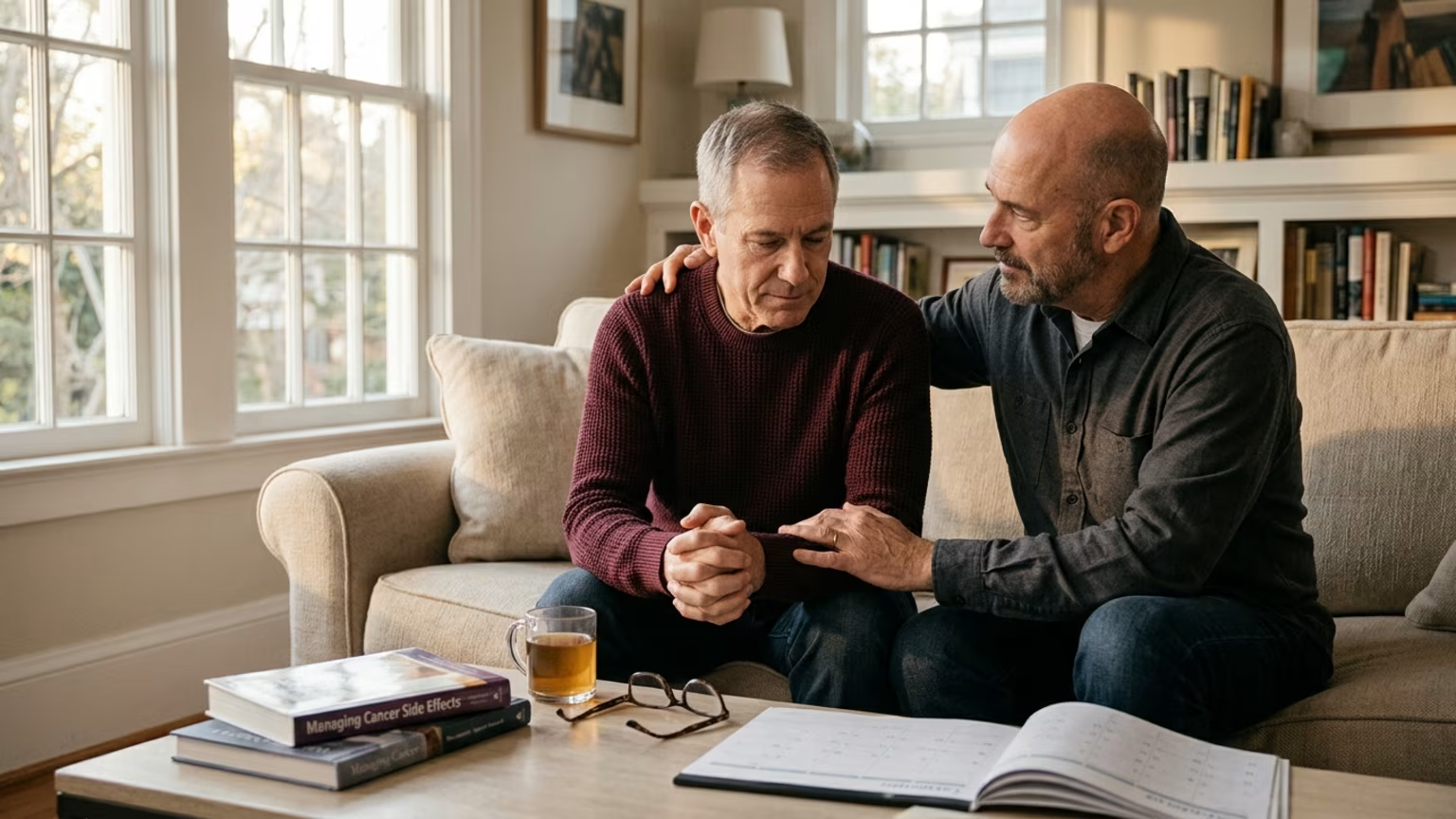

An analysis of over 20,000 men reveals long-term differences in erectile and urinary side effects between prostate cancer surgery and radiation.





On September 25, 2026, Medical Xpress and the American College of Surgeons reported on a national analysis of more than 20,000 men showing distinct long-term differences in sexual and urinary side effects between prostate cancer surgery and radiation.
The observational study reviewed records from the TriNetX Research Network, following men for a median of five years and up to 20 years. The data revealed clear variations in reported outcomes based on the chosen intervention.
For a gay man over 35 prioritizing both his physical longevity and his sexual wellbeing, these findings highlight a complex clinical landscape. Prostate cancer interventions are rarely simple choices. The senior author of the analysis, Jeffrey P. Weiss, noted that both treatments can affect urinary and sexual function. He stated that patients must balance these risks against the potential for a cure.
The reported rates of erectile dysfunction are highly relevant for men evaluating their aesthetic and physical vitality. Preserving intimacy and sexual confidence is a valid priority for many men as they age. A practical approach to sexual wellbeing and vitality often requires direct communication with medical professionals. Understanding that 35 percent of men in the surgical group reported erectile dysfunction can help set realistic expectations before undergoing treatment.
However, these figures represent an observational analysis rather than a direct prediction for any individual. The study matched groups with more than 10,000 men each, and about 17 percent of the patients were Black. While propensity matching helps align demographic and health characteristics, observational research cannot prove that a specific treatment definitively caused an outcome.
The analysis associated radiation with a 45 percent higher rate of death from any cause at a given point during follow-up. While this figure sounds significant, it requires careful interpretation. The data points strictly to all-cause mortality, which was 7.8 percent in the radiation group and 6.5 percent in the surgery group.
This mortality outcome is not a measure of prostate-cancer-specific death. The American College of Surgeons release noted that other differences between patients could have influenced the results. Men should not view this all-cause mortality difference as conclusive evidence that radiation is a more dangerous intervention for the cancer itself. Evaluating these statistics is a critical part of healthy aging and longevity, where broad lifestyle factors play a massive role.
The lack of cancer-specific survival data means the analysis leaves several questions unanswered. Future research will need to examine whether the treatments result in different rates of cancer recurrence. Men weighing their options must discuss their specific health circumstances and cancer severity with their treating team.
Urinary outcomes heavily influence a man's daily confidence, physical comfort, and ability to stay active. The data shows that neither intervention is completely free of long-term consequences. Surgery was associated with significantly higher rates of urinary incontinence. Conversely, radiation was linked to higher rates of bladder inflammation and prostate pain.
These daily quality-of-life factors require serious consideration. A man engaged in strength training or regular fitness routines might find incontinence particularly disruptive. Finding the right balance of physical capability and disease management is a cornerstone of strength and functional fitness planning. Men should ask their clinical team how each specific risk applies to their personal lifestyle and movement goals.
Urinary retention and blood in the urine were also slightly more common after radiation. These symptoms can cause distress and require further medical management. Transparency with a clinician is necessary to build a realistic timeline for recovery.
The findings were presented at the American College of Surgeons Clinical Congress 2026 Scientific Forum in Washington. The abstract, titled Radiation Therapy versus Radical Prostatectomy: A Propensity-Matched Analysis of Mortality and Long-Term Urologic Sequelae, highlights the ongoing debate in urologic oncology. The release stated that a program committee selected the abstract, but it had not yet been peer reviewed.
This context is critical for men evaluating the evidence. Medical science evolves continuously, and observational studies often serve as stepping stones for deeper clinical trials. Men making decisions today must rely on this emerging data while acknowledging its limitations. Integrating these facts into a broader commitment to vitality means staying informed without jumping to absolute conclusions.
Readers should approach the erectile dysfunction statistics as broad trends rather than certain outcomes. The American College of Surgeons release did not detail how function changed over time or how many men fully recovered. Individual results will depend heavily on baseline health, surgical technique, and the specific radiation protocol used.
A diagnosis of localized prostate cancer forces a man to rapidly absorb complex medical information. The initial reaction often centers entirely on survival, pushing quality-of-life concerns to the background. As the data from the TriNetX Research Network demonstrates, surviving the disease is only one part of the journey. The long-term effects on sexual capability and urinary control dictate the daily reality of the years that follow.
Gay men face unique social and relational dynamics that make sexual function a highly sensitive topic. Medical literature frequently assumes a heterosexual context for sexual recovery. Discussing the exact mechanics of expected sexual side effects with a urologist requires direct and unambiguous communication. Men must advocate for their specific needs when evaluating the 13.9 percent erectile dysfunction rate associated with radiation against the 35 percent rate associated with surgery.
Clinicians can offer localized statistics based on their own practice outcomes. Patients should ask how the national observational data compares to the results achieved by their specific surgical or radiation oncology teams. Finding a physician who understands the nuances of male intimacy is a vital step in preserving sexual wellbeing.
Understanding how to read medical news is a crucial skill for men managing their health after 35. The 45 percent higher rate of death from any cause associated with radiation is a prime example of an easily misunderstood statistic. Because the study was not a randomized controlled trial, the groups may have had underlying differences that influenced their survival. Patients chosen for radiation often have different baseline health profiles than those cleared for surgery.
Recognizing these clinical nuances prevents unnecessary panic. A localized prostate cancer diagnosis has a very high survival rate overall. The focus of medical consultation should remain on matching the intervention to the patient's individual biology. The ACS abstract provides valuable demographic data, including the representation of Black men, which adds necessary diversity to the findings.
Each treatment carries a specific physical burden. While urinary tract infections affected 7.4 percent of the surgical group, radiation patients faced unique risks like inflammation of the prostate gland. Evaluating these granular details allows a man to prepare a realistic recovery protocol. A well-structured approach to fitness and nutrition can support the body through this process.
The median follow-up of five years in the TriNetX analysis provides a window into the chronic nature of these side effects. Some men in the study were followed for up to 20 years. This extended timeline underscores that prostate cancer treatment is not a brief interruption. It is a permanent shift in physiological management.
Recovery requires patience and a willingness to utilize supportive therapies. Men experiencing erectile dysfunction after surgery may need to investigate pharmacological support or mechanical interventions. The data does not separate temporary symptoms from permanent changes. This ambiguity highlights the need for ongoing medical relationships.
Managing urinary complications also demands consistent clinical support. Obstructive urinary complications affected a small but significant percentage of both groups. These physical challenges can disrupt sleep, exercise, and social engagement. Men must factor these potential disruptions into their long-term professional and personal planning.
A prostate cancer diagnosis fundamentally challenges a man's perception of his physical resilience. The narrative around male aging often ignores the reality of managing serious medical conditions. Integrating the physical changes brought on by treatment requires a robust psychological framework. Confidence after prostate cancer relies on adapting to new physical realities rather than mourning past capabilities.
The data from Medical Xpress and the American College of Surgeons offers a starting point for acceptance. Knowing that thousands of men manage these exact side effects can reduce the isolation of recovery. The choice between surgery and radiation is deeply personal. There is no universally superior path, only the path that best aligns with an individual's priorities.
Evaluating the long-term sequelae of prostate cancer interventions requires building a collaborative team. A single urologist or oncologist cannot manage every aspect of a man's recovery. Integrating pelvic floor physical therapy can play a significant role in mitigating urinary incontinence. Men should seek out specialists who focus on post-operative physical rehabilitation.
The psychological impact of erectile dysfunction and urinary changes also warrants professional support. The emotional weight of navigating these side effects can strain relationships and diminish social confidence. Connecting with mental health professionals who understand the specific challenges of gay men aging can provide necessary grounding. The goal is to create a comprehensive support structure before the intervention takes place.
By preparing for the outcomes detailed in the TriNetX analysis, men can reclaim a sense of control. The data empowers patients to ask pointed questions about their expected trajectory. Knowledge is the most effective tool for maintaining vitality through major medical transitions.
Men evaluating localized prostate cancer treatments should use this observational data to drive highly specific conversations with their clinicians about their personal urinary and sexual priorities.
Selecting a prostate cancer intervention requires a man to manage his physical rehabilitation and intimacy adjustments long after the initial procedure concludes. Generic men's health content that ignores relevant gay social and sexual-health context often leaves aging men without reliable frameworks for these nuanced conversations. GayFitLab solves this by translating credible evidence into practical guidance, helping men navigate major physiological shifts while maintaining their confidence.
Stay connected for research-led guidance on fitness, body composition, skin, grooming, vitality, sexual wellbeing, relationships and healthy aging. Clear ideas for gay men 35+ who want to look good, feel strong and age with confidence.




Build habits and systems that support clear thinking, steady energy and long term capacity throughout a demanding career.
explore the Blog