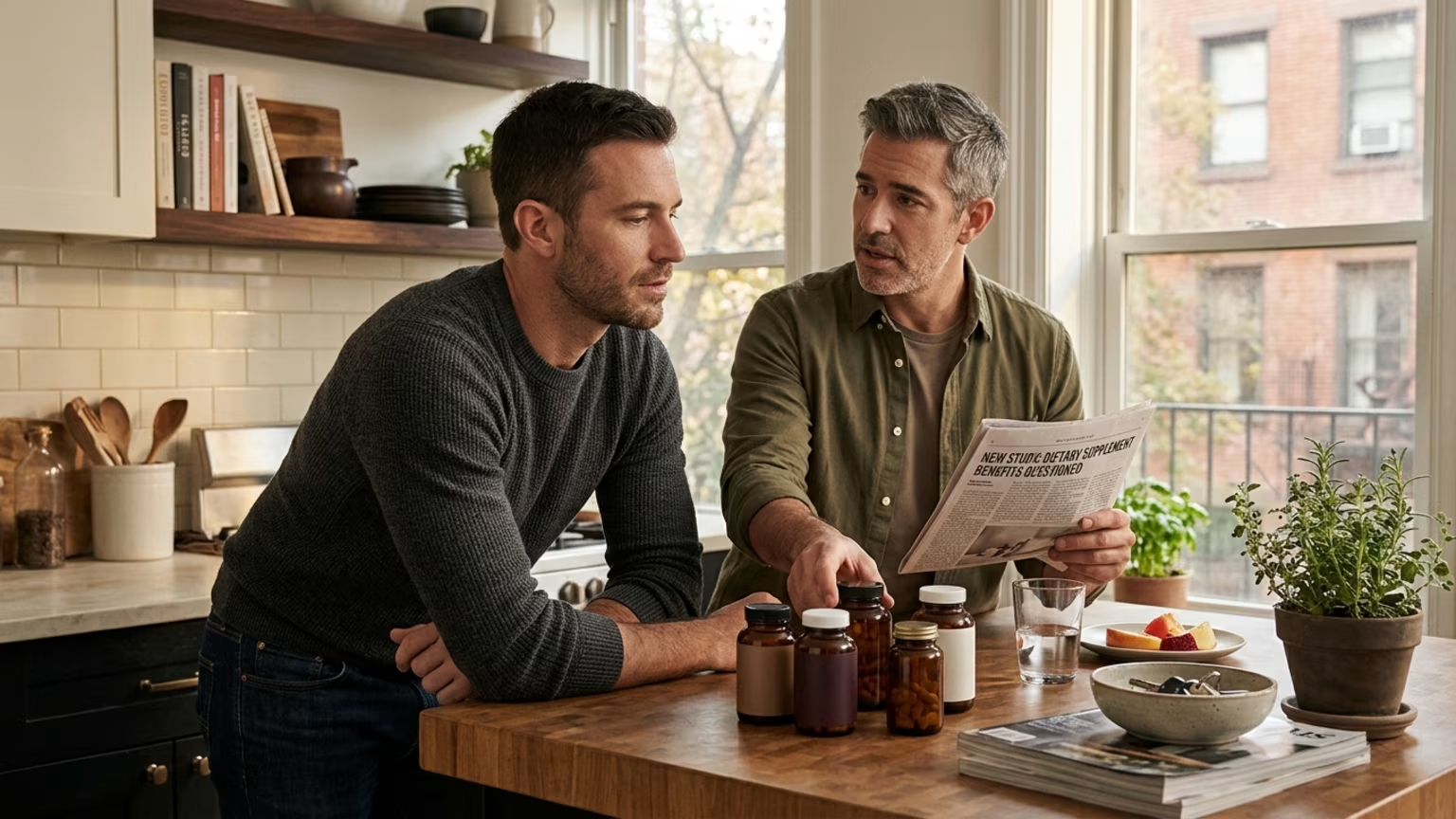

A recent investigation shows most dietary supplements offer no proven benefits for healthy men. Learn how to evaluate clinical data and optimize your routine.





On September 27, 2026, BikeRadar published a comprehensive report concluding that most dietary supplements offer no demonstrated benefit for people who are already healthy. The article, updated on October 2, summarizes findings from British doctor and broadcaster Xand van Tulleken regarding the rapid growth of the global wellness industry.
Van Tulleken conducted his investigation across China, the United States, and Europe to understand the current wellness market. BikeRadar describes this global supplements business as a $146 billion-a-year industry. Van Tulleken published his findings in a book titled Make Me Well: A Quest to Understand the Confusing World of Wellness. The investigation identified the following core data points regarding popular health products:
Many men build complex supplement regimens based on advice passed around the gym floor. These routines often assume that consuming multiple capsules will automatically improve muscle recovery and overall health. The recent findings challenge this popular approach directly. Van Tulleken argues that supplement marketing heavily exploits consumer hope and associations with actual medicine.
The $146 billion-a-year market size reflects a massive consumer desire for quick health solutions. This financial scale allows companies to fund extensive marketing campaigns that saturate social media feeds. Wellness brands present their supplements as critical components of a modern fitness routine. This constant exposure normalizes the idea that a healthy diet alone is simply not enough.
Companies package their mixtures in sleek containers that mimic pharmaceutical precision. This creates a false sense of medical legitimacy for products lacking human testing or regulatory approval. Legitimate medicines must prove their efficacy before reaching the market. The wellness industry flourishes without any equivalent requirement.
Consumers frequently struggle to verify the underlying scientific studies for these popular products. Paywalls often block access to full research papers, making public scrutiny difficult. Influencers and podcasters frequently advertise or sell these items directly to their audiences. This dynamic means that promotional summaries easily overshadow the actual clinical data.
Publication bias creates another significant blind spot for the casual consumer. If negative findings remain hidden, the public only sees a highly favorable picture of a product. Van Tulleken points out that this skews perception heavily toward presumed effectiveness. He advises readers to actively examine who funded a study and evaluate any commercial interests involved.
The marketing of collagen provides a clear example of this disconnect. Gym circles frequently push collagen as a necessary component for youthful skin and joint health. BikeRadar reports that a 2025 review found no evidence that it prevents skin aging. The critical factor in that review was accounting for industry funding, which often tilts results favorably.
For a gay man over 35 balancing fitness and long-term health, these findings offer a clear mandate to simplify. There is a strong temptation to adopt every new compound endorsed by wellness media. You should not assume a marketing claim applies to you simply because a product is popular. A measured approach separates proven clinical needs from aspirational wellness habits.
The key distinction lies between addressing a documented shortfall and taking a pill for general insurance. The article uses vitamin B12 for vegans as a prime example of a legitimate need. Similarly, supplementing vitamin D makes sense during a UK winter with low sunlight. Taking supplements to correct clear gaps is entirely different from consuming unproven stacks blindly.
Gay men navigating midlife often face intense social pressure to maintain a youthful appearance. This pressure makes the community an ideal target for aggressive supplement marketing and anti-aging claims. Recognizing the lack of evidence behind most of these products can save both money and frustration. You can redirect those financial resources toward sustainable practices with proven clinical backing.
When optimizing your nutrition and metabolism, focus on evidence rather than marketing volume. Van Tulleken identifies creatine, beetroot juice, and caffeine as products showing actual effectiveness. Men focused on strength and body composition can view these as targeted tools rather than universal requirements. These select compounds have actual data supporting their use in specific contexts.
The wellness market heavily targets men seeking longevity and healthy aging with unverified products. Before adding new items to a large daily regimen, consult a qualified health professional. Ask them directly if there is a documented reason for you to take a particular product. They can help you identify genuine shortfalls without relying on the wellness industry's inflated promises.
Your foundational health should always rely on a sound diet and consistent lifestyle habits. Supplements cannot replace proper food intake, adequate sleep, and regular training. When researching skin and aesthetic longevity, look past influencer endorsements and seek independent clinical studies. Be mindful of positive wellness stories receiving disproportionate attention while inconclusive results remain unpublished.
A diet rich in whole foods provides complex nutrient profiles that isolated supplements cannot replicate. Your body absorbs and utilizes vitamins from actual food far more efficiently than from synthetic powders. The goal is to build physical resilience through consistent lifestyle fundamentals rather than unproven capsules. Supplements should serve only as targeted corrections for specific medical issues.
If you suspect a deficiency because of fatigue or slower recovery, blood testing offers a clear path forward. A doctor can identify exact nutritional gaps and recommend appropriate interventions. You can then address these specific issues with precise, medical-grade treatments. This evidence-based approach removes the guesswork and protects you from fraudulent commercial claims.
The current media landscape makes it difficult to separate fact from promotional content. Positive wellness stories frequently dominate headlines because they offer simple solutions to complex aging processes. Studies showing that a supplement failed to produce results rarely gain traction online. This imbalance distorts public perception of what is actually necessary for health.
Protecting your physical resources requires a healthy degree of skepticism toward new product claims. If a podcaster claims a new supplement will completely change your sleep, look for the underlying clinical trials. Check if the research was independently funded or if the manufacturer paid for the study. Proceed with caution when the data is hidden behind a paywall or difficult to verify.
Van Tulleken's findings provide a necessary reality check for anyone overwhelmed by wellness marketing. The investigation confirms that true health maintenance relies on basic principles rather than expensive synthetic stacks. Consumers hold the power to reject poorly evidenced products by simply demanding better clinical proof. Making informed choices ultimately leads to better physical outcomes and a more sustainable daily routine.
Men balancing training and longevity should build their health around a sound diet while questioning the funding and clinical necessity of any supplement they take.
Prioritizing evidence-based medical advice over unproven supplement stacks requires an aging man to evaluate clinical data critically before making consumer purchases. Lack of adult, non-stereotyped coverage of dating, relationships, confidence and community frequently complicates midlife routines, a problem GayFitLab solves by translating credible evidence into clear, stylish and practical guidance.
Stay connected for research-led guidance on fitness, body composition, skin, grooming, vitality, sexual wellbeing, relationships and healthy aging. Clear ideas for gay men 35+ who want to look good, feel strong and age with confidence.





Build habits and systems that support clear thinking, steady energy and long term capacity throughout a demanding career.
explore the Blog