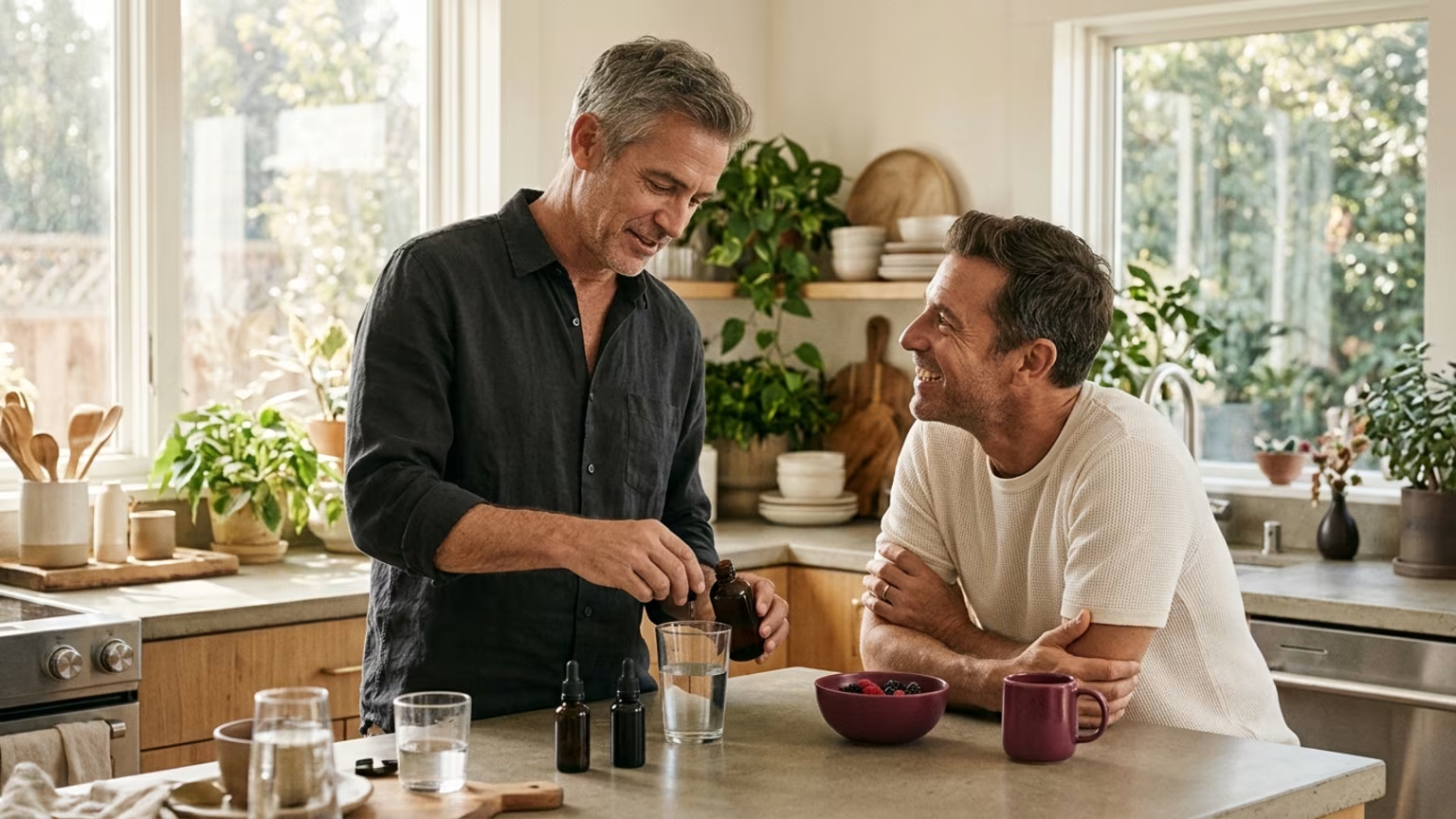

A closer look at Hims & Hers Peptides+, its compounded products and the evidence questions behind claims about energy, recovery and healthy aging.





On November 18, 2026, Hims & Hers announced Peptides+ with up to five U.S.-compounded treatments. In same-day reporting, CNBC examined the launch alongside gaps in human evidence and questions about safety and clinical oversight.
The clearest biological findings in CNBC’s coverage concern individual ingredients and specific outcomes. They do not support treating everything sold under a longevity label as one scientific category:
These distinctions matter because the product being offered is the relevant medical decision. Evidence about an ingredient does not automatically answer questions about every formulation or method of administration. A finding about weight also answers a different question from a claim about recovery or energy.
According to CNBC, the launch includes sermorelin, NAD+ and glutathione. Vitamin B12 and L-carnitine complete the offering.
Sermorelin is a peptide. NAD+ is a coenzyme and vitamin B12 is a vitamin. L-carnitine is an amino-acid derivative. The company describes glutathione as an antioxidant.
Peptides+ is therefore a product name rather than a precise description of every ingredient. The practical reading is to separate the name of the service from the science supporting each proposed treatment.
CNBC reported that none of the specific compounded launch products is FDA-approved. Certain prescription forms of vitamin B12 and L-carnitine have FDA-approved medical uses, but that does not give these compounded formulations the same approval status.
The regulatory backdrop also needs careful reading. CNBC reported that an HHS policy issued in October said the FDA would not take enforcement action against specified parties compounding and dispensing six unapproved peptides while formal rules were under review. That policy is not formal approval of those peptides or of Hims’ five launch formulations.
Company descriptions of sourcing and pharmacy arrangements are separate from FDA review of a product’s safety and efficacy. Each answers a different question.
According to CNBC, the FDA received adverse-event reports involving at least 30 patients who received compounded intravenous glutathione from different pharmacies. The products were administered alone or with other ingredients.
CNBC reported that the glutathione linked to those reports came from one wholesaler and was labeled as dietary-supplement grade. It also reported that two Texas pharmacies recalled injectable glutathione products because of elevated endotoxin levels.
Those reports concern other compounded products. They do not establish that Hims’ formulation will cause the same problems. They are a reason to ask precise questions about ingredient sourcing and pharmacy quality controls rather than relying on the ingredient’s familiar name.
In its newsroom announcement, Hims says access begins with a clinical visit. A licensed provider assesses an eligible customer’s needs before a personalized plan may be prescribed.
CNBC also reported plans for provider assessments and follow-up communications. Its coverage said the company’s Care+ offering includes twice-yearly lab testing and access to peptide-trained providers. Those are service features rather than evidence establishing long-term safety or effectiveness.
Hims chief medical officer Anant Vinjamoori acknowledged to CNBC that the company does not yet have the level of data it would normally expect for compounds like these. He said the company sees an opportunity and responsibility to build understanding.
Tufts chemistry professor Joshua Kritzer questioned whether online-only supervision was sufficient for an unapproved prescription treatment. UC Davis Health professor Paul Knoepfler told CNBC that dosing had not been established and raised concerns about uncertain risks, including possible immune responses. He also said more physician contact can help patients understand the risks and unknowns.
The distinction is straightforward: access to a clinician and evidence for a treatment are separate requirements. Neither should be used as a substitute for the other.
Hims says it plans to add BPC-157 and TB-500 in line with regulatory standards. These are not part of the five-treatment launch list.
CNBC reported that most research on those substances has been conducted in animals rather than humans. Their appearance in an expansion plan is therefore not evidence of established human recovery benefits.
For a gay man interested in strength or energy, the useful response is neither automatic enthusiasm nor dismissal of every ingredient. It is to connect a specific concern with a specific medical question.
The reporting does not establish distinct benefits or risks for gay men or for adults over 35 as a group. Neither age nor sexual orientation creates a medical indication for these offerings.
Wanting to feel capable through a working day is a legitimate priority. So is wanting a body or appearance that feels good to inhabit. Those goals deserve a clearer conversation than a broad promise of longevity.
“Better recovery” can sound concrete while leaving the desired outcome undefined. The useful starting point for a consultation is the actual change in energy or physical capability that prompted interest in treatment.
If recovery is the concern, ask about evidence for recovery. If body composition is the concern, ask about that outcome instead. A result in one area should not become an answer to every other goal attached to the product.
Changes in sleep or daily energy also belong in a conversation with a qualified clinician. A product launch should not become the explanation for a personal health concern before that concern has been assessed.
The research supports bringing focused questions to that discussion:
These questions are not a demand to become your own pharmacologist. They keep the consultation centered on the proposed medical treatment rather than the appeal of the category.
The same standard belongs in discussions of biological-age scores: a scientific-looking number or label still needs a clear relationship to an outcome that matters.
Because Hims describes assessment and follow-up as part of its service, readers can ask what those terms mean for their own plan. The relevant details include who reviews concerns and what contact is available between scheduled assessments.
Product-quality questions also belong here. Ask which pharmacy supplies the formulation and what quality controls apply. Ask how adverse events are reported and handled.
A clear explanation should distinguish the clinician’s role from the pharmacy’s role and the company’s role. This keeps responsibility visible rather than leaving “physician oversight” as an undefined reassurance.
There is no need to pretend that appearance is irrelevant to healthy aging. There is also no need to accept a medical claim because it speaks to a real concern about looking tired or feeling less physically capable.
The useful editorial standard is respect for the goal and scrutiny of the proposed solution. That principle also applies when skincare borrows longevity language. Wanting an aesthetic result does not lower the standard of evidence it deserves.
For daily life, this launch is best treated as a consultation topic rather than an automatic addition to a routine. Bring the concern that matters to a qualified clinician and ask for an explanation tied to that concern. Keep personal treatment decisions separate from the excitement surrounding a new service.
Treat Peptides+ as a reason to ask a qualified clinician for product-specific evidence and a clear follow-up plan, not as a reason to automatically add a compounded longevity treatment to your routine.
Slower recovery leaves the individual and his clinician with the daily decisions; GayFitLab brings research-led reporting to the claims surrounding those choices. Its healthy-aging coverage gives gay men 35+ context for changes in energy, sleep and physical capability while treating strength and appearance as compatible with a full adult life.
Stay connected for research-led guidance on fitness, body composition, skin, grooming, vitality, sexual wellbeing, relationships and healthy aging. Clear ideas for gay men 35+ who want to look good, feel strong and age with confidence.



Build habits and systems that support clear thinking, steady energy and long term capacity throughout a demanding career.
explore the Blog

