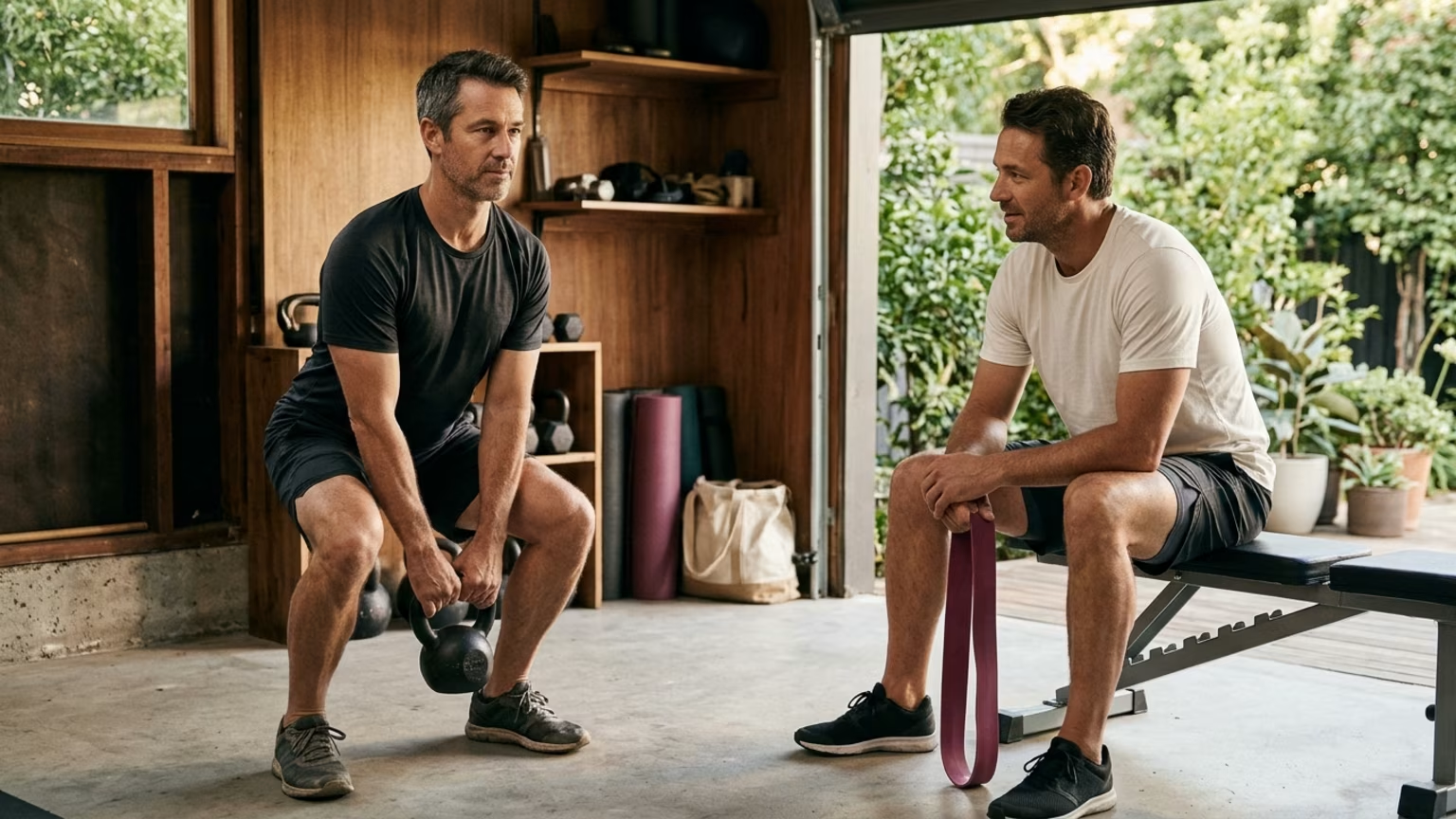

Heavier lifting can support strength without making every workout a test. A research-led guide to loads, effort and joint-aware training after 35.





A strength workout does not need a personal record to be worth doing.
The record-first approach starts with a faulty premise: training only counts when you demonstrate something you have never done before. More weight becomes the verdict on the entire session. Anything less feels like standing still.
That confuses training with testing. A personal record describes a performance. It does not describe every useful session that belongs in a strength program.
The evidence supports a broader view. The 2026 American College of Sports Medicine (ACSM) position stand synthesized 137 systematic reviews covering more than 30,000 participants. It found that resistance training improved strength and muscle size compared with no exercise.
The benefits also included power, endurance and several measures of physical function. Gait speed and balance were among the outcomes that improved. The research case for lifting is bigger than the largest number in a training log.
A record-first mindset can also impose a narrow idea of what your body is for. If your goal is to remain capable while looking good, a heavier lift is one possible achievement rather than the whole assignment. You do not have to choose between caring about appearance and caring about your future health.
For gay men over 35, that distinction deserves space without another story about fighting age. Wanting stronger legs or a different body composition is legitimate. Making every workout a referendum on whether you are still young is an editorial standard worth rejecting.
A logbook remains useful. The better question is whether it supports a broader view of training data or reduces the session to a pass or fail.
The physiological reality worth planning around is your current capacity and joint tolerance, not an assumed birthday deadline. The practical distinction is between what training asks of the body and what that body currently tolerates.
The ACSM review covered healthy adults aged 18 and older. It did not report a gay-men-specific analysis or establish an age-35 threshold for changing loads. Its exact findings require caution when applied to health conditions or injuries, and it did not establish one ideal repetition count or effort level for everyone.
That means neither “always go heavier” nor “stop lifting heavy after 35” follows from this evidence. Age alone is not the training prescription. Health and training history belong in the decision.
The American Academy of Orthopaedic Surgeons (AAOS) offers a relevant physiological distinction. People with chronic joint or tendon injuries may not tolerate heavier weights and fewer repetitions. Its guidance describes building toward heavier work after starting with lighter weights and more repetitions.
This is not an argument that joint symptoms make strength training off limits. The National Institutes of Health (NIH) lists strengthening with weights or bands among exercise options for osteoarthritis. It describes exercise as potentially reducing pain and stiffness while improving flexibility, strength and endurance.
NIH also advises starting slowly and discussing a new program with a doctor. Significant joint symptoms or health concerns call for qualified clinical guidance before starting or changing training. They are not a useful setting for proving commitment through a heavier lift.
The different approach is therefore individualization rather than automatic retreat. A training plan should account for the body doing the work instead of assuming that every body must follow the same route.
A healthspan-focused framework gives training a longer purpose: building capability that matters beyond the gym. It can include muscle size and appearance without making either a measure of personal worth.
The practical shift is to choose training variables for the intended goal. Load matters, but it does not need to carry the entire meaning of progress.
Heavier lifting deserves a place in this conversation. The ACSM review found that loads of at least 80% of one-repetition maximum favored strength outcomes. Rejecting record chasing does not require pretending that lighter and heavier training produce identical results.
But that finding is not an instruction to test your maximum or make every exercise heavy. It identifies a training variable associated with better strength outcomes. It does not turn each session into a competition.
The same review linked higher weekly training volume with muscle growth. That distinction matters when someone says they want to “get stronger” but also means they want more muscle. The plan should reflect the goal rather than treating a heavier weight as the answer to every question.
The useful conversation is about why a load belongs in the program. “Because it is heavier than last time” is not a complete explanation.
A cautious application of the NIH and AAOS guidance is to begin with manageable resistance and a controlled movement variation. Progression then follows the individual's capacity and comfort. This is an editorial framework for applying the guidance, not a tested universal workout protocol.
For someone with chronic joint or tendon problems, AAOS describes lighter weights with more repetitions as a possible starting approach. Heavier weights with fewer repetitions may not be tolerated. That makes repetition choice part of adapting training rather than a test of seriousness.
Useful planning questions include:
Different bodies do not need to earn their place in strength training by using identical loads. The same applies to different training histories. A sound explanation for an exercise choice matters more than copying somebody else's numbers.
When professional support is useful, look for a trainer who can explain those choices. Personal clinical questions still belong with an appropriate healthcare professional.
The ACSM review did not find consistent benefits from taking sets to momentary muscle fatigue. That directly challenges the idea that every set must become a final test of effort.
The practical implication is permission to adjust effort without treating the session as wasted. A set can belong in a progressive training plan without becoming an attempt to prove your limit.
This also changes the language around a workout. “Was the effort appropriate for the plan?” is a more useful question than “Did I empty the tank?” The first asks whether the work served its purpose. The second makes exhaustion the standard before the purpose has even been discussed.
Training can be demanding without becoming theatrical. There is no need to turn visible struggle into the only acceptable evidence of commitment.
ACSM supports progressive resistance training with training variables selected for the desired adaptations. Progression still matters. The alternative to constant testing is not an indefinitely unchanged program.
The distinction is between planning an increase and demanding proof of improvement at every session. Within this framework, greater resistance is an option when capacity and comfort support it. It is not a debt owed to the logbook.
A useful record can therefore include more than weight alone. The exercise variation and repetitions provide context. Notes about manageability and joint comfort help explain why the next decision might be an increase or a change of approach.
Those notes are decision aids rather than proof of a physiological improvement. Their purpose is to keep the plan connected to the person following it. A session without a record does not need to be renamed a breakthrough to have a place in that plan.
The World Health Organization states that any amount of physical activity is better than none and that muscle-strengthening activity benefits everyone. That is a useful counterweight to the idea that only exceptional workouts count.
A longevity-minded approach is an editorial priority rather than a promise about lifespan. It values strength and physical function without demanding a younger identity. Appearance goals can remain part of the picture.
That makes a fitness routine that fits adult life a legitimate ambition rather than a consolation prize. The aim is not to avoid effort. It is to give effort a purpose beyond winning today's session.
Build strength for your life, not a verdict from your logbook.
Record chasing can turn strength advice into a contest; GayFitLab keeps its coverage grounded in credible evidence rather than age-based fitness promises. For gay men 35+ sorting through contradictory messages about muscle and metabolism, its editorial connects appearance goals with long-term health without treating youth as the standard.
Stay connected for research-led guidance on fitness, body composition, skin, grooming, vitality, sexual wellbeing, relationships and healthy aging. Clear ideas for gay men 35+ who want to look good, feel strong and age with confidence.



Build habits and systems that support clear thinking, steady energy and long term capacity throughout a demanding career.
explore the Blog

