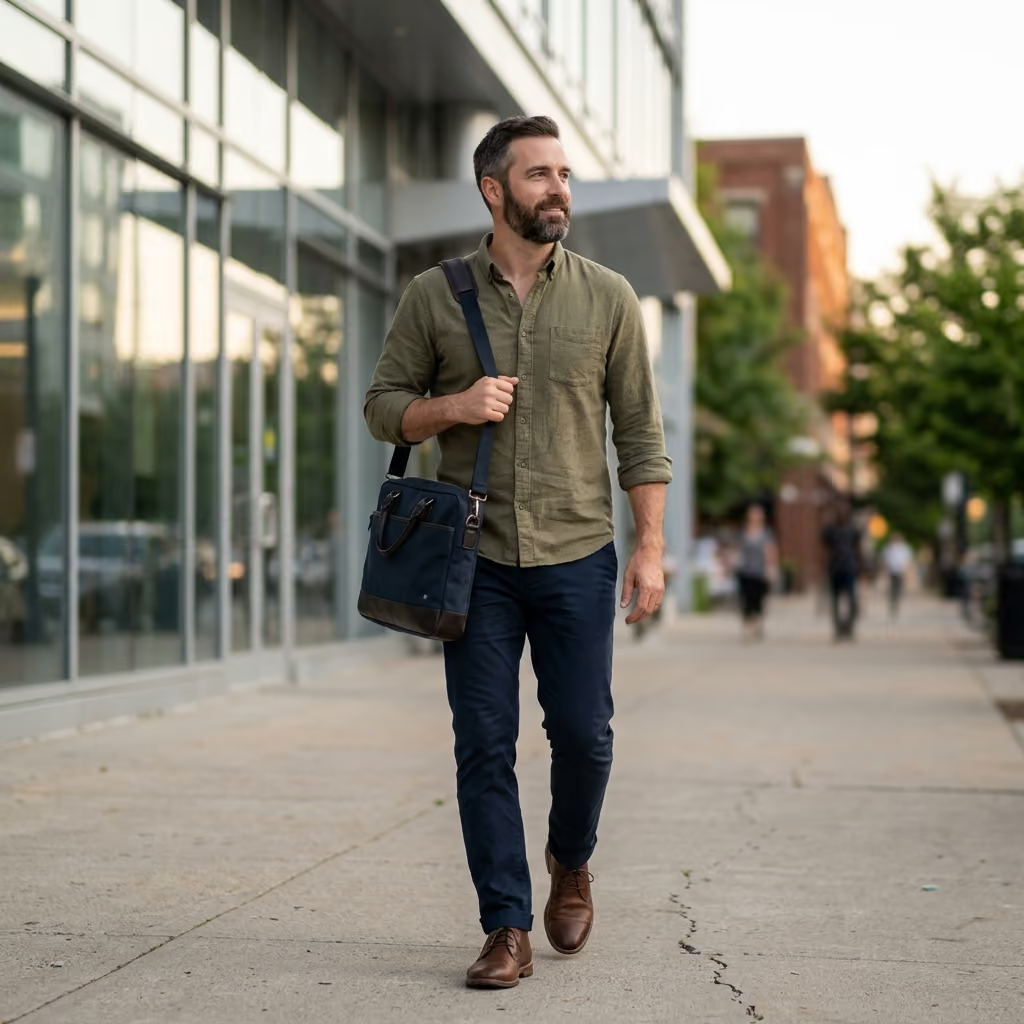

After age 35, a three-tier workout system featuring flexible floor, standard, and ceiling routines preserves lifelong mobility and strength without causing chronic burnout.





Rigid adherence to an uncompromising workout program is often the fastest route to physical burnout and abandonment. Most fitness advice treats consistency as unbroken daily perfection. It demands that you complete every planned workout at high intensity, regardless of whether you slept four hours, worked sixty hours, or are caring for an aging parent. This all-or-nothing mindset causes many men to abandon physical activity entirely whenever life disrupts their schedule.
True consistency means something very different. It is the practice of repeatedly returning to health-supporting movement across changing circumstances. You adjust your training dose, intensity, and exercise selection to match your current recovery capacity. When you view movement through this lens, a ten-minute walk or two brief strength sets are not failed workouts. They are strategic, protective actions that keep your habits intact while supporting long-term healthspan.
Public health guidelines provide clear targets for physical activity. The World Health Organization recommends that adults accumulate 150 to 300 minutes of moderate-intensity aerobic physical activity weekly, or 75 to 150 minutes of vigorous-intensity aerobic physical activity. These guidelines also recommend muscle-strengthening activities that involve all major muscle groups on two or more days per week. For older adults, guidelines advise multicomponent physical activity that emphasizes functional balance and strength training on three or more days per week.
The scientific literature shows that meaningful health benefits begin far below these full targets. Replacing sedentary time with physical activity of any intensity yields measurable physiological benefits. A massive national cohort study of over 416,000 adults demonstrated that just one hour per week of moderate-to-vigorous physical activity was linked to significant reductions in mortality risk. Additional risk reductions accrued up to roughly three hours per week. Combining that aerobic work with one to two weekly resistance sessions provided an additional protective effect.
When it comes to building and preserving strength, the minimum dose required for progress is surprisingly low. Systematic reviews of resistance training show that performing a single set per exercise one to three times weekly produces significant gains in muscular strength. While multi-set programs produce greater total adaptations over time, a single challenging set provides a substantial portion of the possible strength stimulus. Beginners and returning lifters can make reliable strength progress on as little as one structured session per week for their first two to three months.
A systematic review and meta-analysis published in 2022 established that regular muscle-strengthening exercise is associated with a 15 percent lower risk of all-cause mortality compared to doing no strength training. Resistance training directly improves physical performance, single-rep maximums, and chair-stand capability in adults as they age. Training does not require complex splits or hours in the gym to protect your functional independence and metabolic health.
Aging is a normal biological process rather than a medical pathology or personal failure. The physiological environment changes after age 35 in ways that make rigid, high-volume training programs increasingly counterproductive. Recovery capacity becomes the primary limiting factor for progress.
Connective tissues, including tendons, ligaments, and joint capsules, experience subtle reductions in collagen synthesis and hydration. These structural changes mean that joints take longer to adapt to mechanical load than muscular tissue. If you increase training volume or intensity too aggressively after a period of inactivity, connective tissues may develop overuse irritation before your muscles experience fatigue. A flexible program respects joint recovery by moderating training spikes and varying movement patterns.
Muscle protein synthesis dynamics also shift over time. Maintaining lean muscle mass requires consistent mechanical tension and adequate dietary protein, yet recovery between maximal lifting bouts lengthens. The autonomic nervous system becomes more sensitive to cumulative lifestyle stress. High workloads, emotional pressure, poor sleep, and intense exercise all draw from the exact same systemic recovery pool.
Sleep architecture changes with age as well. Deep slow-wave sleep naturally declines, which can alter nighttime tissue repair. Data from the Centers for Disease Control and Prevention indicates that more than one-third of adults regularly sleep less than the recommended seven to nine hours per night. Chronic short sleep elevates systemic inflammation, reduces insulin sensitivity, and impairs neuromuscular coordination. Training at high volume during severe sleep deficits increases injury risk without providing meaningful physical adaptations.
To maintain long-term physical capability, you need a training system that adapts to your fluctuating energy and time. A fixed seven-day split breaks the moment life gets complicated. A capacity-based framework uses three distinct operational modes: the floor, the standard, and the ceiling.
The floor represents the absolute minimum viable dose of movement. Its purpose is not to maximize athletic performance or optimize body composition. The floor exists to protect your movement baseline, maintain your identity as an active person, and prevent physical deconditioning during times of extreme stress.
A floor routine takes between ten and twenty minutes. It requires minimal or no equipment. It focuses on maintaining joint mobility, preserving basic muscle recruitment, and providing light cardiovascular stimulation.
Executing your floor routine during a crisis prevents the friction of starting over from scratch later. Completing one brief session during an overwhelming week is infinitely more valuable than abandoning training for two months.
The standard routine is your default program during ordinary life. This is the level of training you can sustain indefinitely when work, sleep, and personal obligations are relatively stable.
The standard tier aligns with major public health targets:
This baseline supports metabolic health, protects bone mineral density, and preserves functional strength without dominating your weekly calendar. You can review our detailed approaches to strength and body composition training for additional program structures.
The ceiling represents the upper limit of your training volume. You only deploy this tier when your life circumstances provide surplus energy, low emotional stress, excellent nutrition, and consistent sleep.
A ceiling phase might include three to four demanding lifting sessions per week, high-intensity interval training, or specific preparation for an athletic event. It requires substantial recovery resources.
The ceiling should always be treated as a temporary, optional phase rather than the benchmark of success. When life demands increase, you deliberately scale down to your standard or floor routine without guilt.
Gay men often navigate unique cultural environments that can complicate exercise consistency. Urban gay social life frequently revolves around late-night events, travel weekends, circuit festivals, and active dating scenes. These commitments often compete directly with traditional, rigid fitness schedules.
Body image pressures can be intense within gay communities. Many men feel subtle or overt expectations to maintain lean, hyper-muscular physiques well into midlife and beyond. This pressure often drives a toxic cycle of overtraining followed by physical exhaustion and complete disengagement. You can learn more about finding balance in our guide to sustainable health and vitality.
A mature approach to fitness decouples exercise from physical shame or aesthetic panic. Looking good and feeling capable are healthy, valid goals. Chasing an unsustainable physique through extreme regimens, however, undermines long-term healthspan and drains energy from relationships, work, and personal growth.
Your training system must accommodate social seasons. During periods with heavy social calendars, pride events, or dating sprints, you can consciously drop to a floor or standard routine. You can integrate active social options, such as walk-and-talk dates, group hikes, or recreational sports. Movement should support your life, intimacy, and community connection rather than isolate you from them. Discover more perspectives on building lasting confidence in our section on gay men's relationships and community.
A flexible system relies on modular components that you can assemble based on available time and equipment. Instead of tracking isolated muscle groups, organize your training around functional movement patterns.
Strength training after 35 should prioritize movement competence, joint integrity, and force production. Select one exercise from each fundamental pattern to construct a session.
During a standard week, perform two to three sets of six to ten repetitions for each movement, leaving one to two reps in reserve. During a floor week, perform exactly one set of each pattern using moderate resistance. Move through the exercises with minimal setup time to finish the workout in fifteen minutes.
Aerobic fitness does not require exhausting daily treadmill sessions. Cardiovascular health can be accumulated through varied, low-stress movement across the week.
Accumulating easy aerobic volume supports mitochondrial density, reduces resting blood pressure, and improves heart rate recovery without generating heavy joint fatigue.
Balance and mobility are essential capabilities for active aging. The WHO and CDC emphasize multicomponent balance training for adults to preserve coordination and prevent falls later in life.
Incorporate simple balance challenges into daily life:
Recovery is an active component of training adaptation. Without sufficient rest, exercise creates breakdown rather than physical progress.
Prioritize consistent sleep hygiene by maintaining a dark, cool room and consistent sleep schedules. Ensure adequate daily hydration and protein intake to support muscle repair. If you experience systemic fatigue, joint achiness, or poor sleep, schedule an active recovery day involving light walking and mobility instead of forced high-intensity training. Explore our detailed resources on longevity and healthy aging strategies to optimize your recovery habits.
Life disruptions are predictable events. A robust fitness framework anticipates common disruptions and provides pre-planned adjustments.
When professional deadlines demand sixty-hour weeks, attempting a high-volume lifting split leads straight to exhaustion. High work stress elevates resting cortisol and drains mental focus.
Shift immediately to your floor program. Execute two 20-minute full-body sessions per week using moderate loads. Take a ten-minute walk outside after lunch to clear your head and accumulate aerobic volume. Do not attempt personal records, and stop every set well before technical failure. The sole objective is preserving strength and movement patterns until the work crunch subsides.
Caring for an ill partner, parent, or family member creates unpredictable schedules and emotional strain. You may not be able to visit a gym or predict when you will have free time.
Use home-based bodyweight and resistance band movements. Perform single sets of chair squats, doorway rows, and push-ups in brief five-minute blocks throughout the day. Accumulate walking whenever running errands or attending appointments. Accept that your workouts will be fragmented, and recognize that these short bouts successfully preserve your functional capacity.
Frequent business or leisure travel disrupts circadian rhythms and removes access to familiar equipment. Hotel gyms are often sparse or crowded.
Rely on a simple hotel room circuit:
Walk through airports and explore travel destinations on foot to easily meet your baseline aerobic goals.
Returning to intense exercise too quickly after an infection can prolong fatigue and increase the risk of complications. Sports medicine literature provides clear guidance on returning to physical activity safely.
Never exercise while fever, chills, body aches, or systemic symptoms are present. Rest completely and allow your immune system to resolve the infection. Once fever and systemic symptoms have fully cleared for at least 48 hours, begin with gentle walking.
Resume formal training at 50 percent of your previous volume and intensity. Gradually increase the training load over seven to fourteen days as your energy dictates. If you experience chest pain, shortness of breath, heart palpitations, or unexplained dizziness, stop exercising and seek immediate medical evaluation.
Building lasting fitness requires changing how you evaluate success. Traditional fitness marketing measures value through short-term aesthetic changes, workout streaks, and crushing exhaustion. A healthy aging model focuses on sustained functional capabilities and lifelong resilience.
Measure your progress by tracking meaningful capabilities:
Physical activity is an investment in your future autonomy, sexual wellbeing, and mental vitality. When you remove rigid expectations, exercise transforms from an exhausting chore into a dependable physical anchor.
While the scientific literature strongly supports regular physical activity, it is important to understand the boundaries of the evidence. Much of the large-scale data linking specific exercise doses to mortality reduction comes from observational cohort studies. These studies demonstrate powerful population-level associations, but they cannot prove direct causation or guarantee identical outcomes for every individual.
Systematic reviews confirming the efficacy of single-set training show that low-volume programs reliably build strength. However, the magnitude of muscle hypertrophy and peak athletic performance from minimal doses is generally lower than what multi-set programs achieve. If your specific goal is maximal muscle size or competitive performance, a minimal-dose approach serves as an effective holding pattern rather than an optimal long-term strategy.
Individual responses to exercise volume vary widely based on genetics, baseline fitness, chronic health conditions, and lifestyle stress. Commercial fitness trends often oversimplify the science by promoting extreme shortcuts or unverified longevity hacks. No single study provides an absolute, universal exercise prescription. The sensible approach is to use established evidence as a flexible guide while tuning your actual volume to your personal capacity.
Sustainable fitness is built by protecting your movement floor during difficult seasons so you can thrive when life opens up again.
Stay connected for research-led guidance on fitness, body composition, skin, grooming, vitality, sexual wellbeing, relationships and healthy aging. Clear ideas for gay men 35+ who want to look good, feel strong and age with confidence.


Build habits and systems that support clear thinking, steady energy and long term capacity throughout a demanding career.
explore the Blog