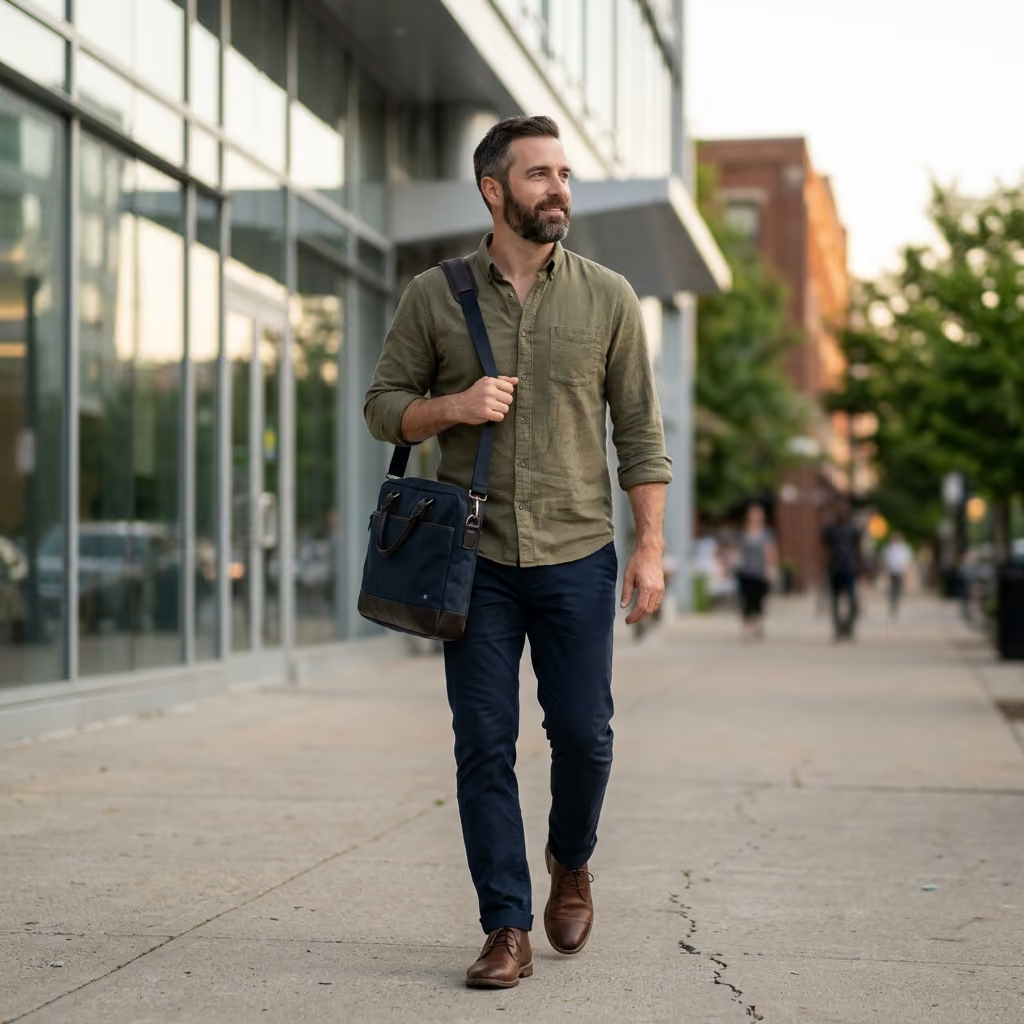
A practical guide for gay men 35+ to current profile photos, a natural bio, clear dating intentions and boundaries without oversharing.





Create an authentic dating profile with current, recognizable photos and plain-language intentions, while keeping control of what you share.
A 2026 Flinders University study surveyed 578 Australian men about dating-app use and wellbeing. Its university news release reported lower anxiety among sexual-minority men using both mainstream and gay-specific apps than among those using only one type. Researcher Zac Bowman also pointed to differences in app interfaces and image sharing, including the possibility of unsolicited messages, as potential influences on user experience.
The average participant was 34. The finding is an association, not proof that adding apps reduces anxiety. Neither that survey nor the small China-based relationship study discussed below establishes a successful photo mix or bio formula for gay men over 35. The suggestions here are editorial choices for self-representation, not promises of matches.
Choose photos that look like the person someone would meet now. Your expression and presentation can be polished or casual, provided they feel representative rather than like a role you need to maintain.
A flattering photograph can still be honest. The useful editorial test is whether you recognize your present self in it, rather than whether it matches an imagined ideal of what a man your age should look like.
If an image no longer represents you, choose another without turning that decision into a judgement about your attractiveness. There is no obligation to make every photograph communicate youth or fitness. Aim for an introduction you would feel comfortable standing behind.
No. Body-focused photos are a personal presentation choice, not a requirement for being honest about yourself. You can make your body visible without making it the entire subject of your profile.
The Flinders researchers suggested that developers reduce emphasis on appearance and sexual objectification and introduce safeguards. That recommendation offers a useful editorial counterpoint to treating your physique as the whole introduction.
A dressed photograph is not evasive. A shirtless photograph is not a declaration that you only want something casual. Let your words carry your intentions instead of asking a body image to explain them.
Your presentation does not need to meet a masculinity test. If a softer or more traditionally masculine style feels like you, it belongs on the same terms. The relevant choice is whether you recognize yourself, not whether you fit a single version of gay desirability.
Write in language you would feel comfortable using in a conversation. A short description can name what interests you and what kind of connection you are open to without trying to account for your entire life.
As a wording option: “I enjoy conversations that get past work. Open to dating and seeing what develops.” Replace that example with something you would actually say, rather than borrowing a personality that sounds appealing on screen.
You do not have to sound relentlessly witty or impressively busy. An ordinary sentence that feels yours is a legitimate choice. Leave room for a conversation instead of treating the bio as an audition for every possible reader.
If you read your draft aloud and it sounds unlike you, a simpler version is a reasonable option. The goal here is not an impressive writing sample. It is language you would be happy to continue using after a match.
Name your current intention in plain language, whether that is a relationship or companionship or something casual. If you are uncertain, say what you are open to now without promising a destination.
Possible wording includes “Relationship-minded and happy to take my time” or “Looking for something casual with direct communication.” Another option is “Open to companionship and dates while I work out whether I want a relationship.” These are examples to adapt, not labels you need to keep forever.
Companionship does not need to be presented as a lesser ambition. Casual interest does not need to be dressed up as relationship intent. Give the connection you actually want the same plain treatment you would give the one you think others expect.
For a broader editorial framework, read about making dating intentions fit your existing life. Your profile can describe an honest starting position without turning it into a promise about someone you have not met.
Share what you are comfortable making public, not everything that might eventually matter in a close connection. Authenticity means representing yourself honestly; it does not require strangers to have immediate access to every part of your life.
You can distinguish between what belongs on a public profile and what you would rather discuss after matching. You can also keep some information private. A boundary does not need an accompanying personal history to count as a boundary.
Try wording such as “I share more once we have talked.” Keep it factual rather than apologetic. The point is to describe your pace, not to persuade every reader that they would choose the same one.
There can be a difference between being seen and being available for every question. A public profile can leave parts of your life unmentioned without turning them into secrets you owe strangers an explanation for. Keep that distinction when choosing what belongs on screen.
State what you prefer in direct, neutral language. A boundary can explain how you want to communicate or what you are willing to share without making a judgement about people who prefer something different.
“I prefer a conversation before sharing more photos” is one possible phrasing. “I will say when I am comfortable taking this further” is another. Neither needs a defensive explanation or an insult aimed at someone with different preferences.
Keep the profile focused on the boundaries relevant to starting contact. More personal questions can remain part of a later conversation. You do not have to anticipate every possible interaction in the space available.
Treat a profile as an introduction, not proof of identity or intentions. Let your judgement develop through conversation without making any single photograph or polished answer carry more certainty than it deserves.
As an editorial approach, ask about what matters to the connection you are considering. You can clarify an unclear intention and keep your own disclosure at a pace you choose. Someone else's apparent openness does not create an obligation to match it.
The same principle applies to your own profile: represent yourself honestly without promising that a stranger can understand you completely from a screen. Allow the introduction to stay an introduction.
Make your profile consistent with the agreements in your relationship and the connection you are offering. Discuss visibility and app use with your partner rather than expecting profile wording to settle those questions by itself.
In a study of 23 Chinese gay men, researchers examined dating apps within existing intimate relationships. Its abstract described profile updates and online activity as signals that could feature in suspicion or conflict, followed by negotiation over explanations or rules.
The practical editorial question is what those signals mean within your own agreements. You might discuss what being visible on an app means and whether a profile change needs a conversation. If your relationship arrangement is relevant to what you are offering someone new, describe it plainly rather than leaving that person to infer it.
A profile edit is not the right tool for every concern. Consider consulting a qualified mental-health clinician or another healthcare professional about:
These are reasons to seek support, not a diagnostic checklist. You do not need to settle on a label before asking for help with an experience that troubles you.
Research anxiety and the body's stress response next, rather than searching for another profile formula. Start with our coverage of platform fit and app-related anxiety. Bring questions about your own distress to a qualified healthcare professional; keep decisions about photographs and wording focused on whether they represent you.
A dating profile built around imagined approval leaves little room for personal boundaries; GayFitLab approaches that tension through evidence-led writing about relationships. For men past 35 seeking thoughtful dating coverage, its relationship editorial makes room for confidence and community without prescribing a standard body or romantic arrangement.
Stay connected for research-led guidance on fitness, body composition, skin, grooming, vitality, sexual wellbeing, relationships and healthy aging. Clear ideas for gay men 35+ who want to look good, feel strong and age with confidence.




Build habits and systems that support clear thinking, steady energy and long term capacity throughout a demanding career.
explore the Blog