
Sustainable physical capacity and lasting fitness return through a structured framework that guides safe progression after injury, illness, or severe workplace burnout.





You wake up on a Tuesday morning feeling the first clear break in symptoms after three weeks of viral fatigue, a nagging shoulder impingement, or a relentless work deadline. Your immediate instinct is to make up for lost time. You pack your gym bag, schedule four heavy workouts for the week, cut your calories to shed inactivity weight, and vow to push through the lingering sluggishness. By Thursday afternoon, your joint aches, your brain feels foggy, your sleep falls apart, and you are forced back onto the couch for another week of forced rest.
This boom-and-bust pattern is one of the most common traps in adult fitness. When a setback occurs, most men treat the problem as a temporary lack of discipline rather than a fundamental shift in physiological tolerance. They attempt to jump straight from total rest back to peak training volume.
A sustainable return requires a different mental model. Rebuilding your baseline is not a motivation contest. It is a structured capacity-rebuilding process designed to restore what your body and mind can reliably handle.
By treating physical, occupational, and emotional stress as a unified biological load, you can construct a clear path back to strength. The goal is not just surviving a single hard workout. The goal is restoring repeatable, resilient performance that supports your long-term health and daily life.
Capacity represents the total volume of physical, mental, emotional, and occupational demand you can tolerate and recover from repeatedly. It is helpful to distinguish between different tiers of capacity:
When you experience an acute infection, a structural injury, or sustained workplace exhaustion, your repeatable capacity drops significantly. If you immediately apply your former training volume to this reduced base, you create an acute overload.
Guidance from health agencies like the National Institute for Health and Care Excellence (NICE) highlights that physical exercise cannot be evaluated in isolation from cognitive, emotional, and social activities. All of these demands draw on the exact same pool of physiological reserves. A demanding board meeting, an intense interpersonal conflict, and a set of heavy barbell squats all register as systemic strain on the central nervous system.
When you attempt to resume hard training while your occupational or emotional demands remain elevated, the overall demand exceeds your system's recovery threshold. This triggers an immediate setback, characterized by disturbed sleep architecture, persistent muscle soreness, systemic inflammation, and rapid cognitive fatigue.
The individual responds by stopping all activity, which further degrades baseline physical conditioning and mental confidence. The next time they feel slightly better, they repeat the same aggressive re-entry, locking themselves into a chronic cycle of overexertion and collapse.
Breaking this cycle requires replacing calendar-based expectations with criterion-based progressions. In sports medicine literature, consensus statements from the British Journal of Sports Medicine define recovery as a progressive continuum. This framework advances from initial participation to structured training, and finally to full performance. Each stage requires demonstrated tolerance before the next layer of volume or intensity is added.
Recovering from illness, tissue damage, or prolonged exhaustion looks remarkably different in your late thirties, forties, and fifties than it did in your early twenties. Normal physiological aging alters the rate of tissue remodeling, metabolic flexibility, and neuroendocrine signaling. Understanding these changes allows you to plan your training without viewing normal biology as a personal failure.
Connective tissues, including tendons, ligaments, and articular cartilage, experience a gradual reduction in collagen synthesis and hydration with age. Tendons become less compliant, which means they absorb rapid changes in training volume with less elasticity. If you step away from the gym for six weeks due to illness, your muscular strength often returns faster than your tendon tolerance. Rushing back into high-load or high-impact training frequently produces secondary tendon pain, not because the muscle cannot lift the weight, but because the tendon matrix needs more time to adapt to mechanical load.
Hormonal dynamics and muscle protein synthesis also shift over time. Baseline testosterone levels and growth hormone secretion follow a gradual downward trajectory, while muscle tissue exhibits a degree of anabolic resistance. This means older muscle requires a more precise protein stimulus and longer recovery intervals between high-intensity sessions to achieve the same muscular adaptations. When you are rebuilding after a layoff, pushing high volume on back-to-back days creates an unfavorable balance between muscle breakdown and repair.
Systemic recovery capacity is further influenced by changes in sleep architecture. Deep slow-wave sleep naturally decreases with age, reducing the nightly window for physical tissue restoration and cellular waste clearance in the brain.
At the same time, life after 35 typically brings heightened professional responsibilities, financial management, long-term relationships, or caregiving obligations. These life factors create a higher baseline of daily cognitive load. When you combine reduced sleep efficiency with elevated daily responsibilities, your baseline functional reserve is smaller. A return-to-training plan must respect these biological realities by prioritizing gradual volume increments, sufficient recovery intervals, and consistent sleep.
To rebuild your physical baseline safely, you can organize your progression into six distinct phases. This systematic ladder ensures you establish consistent tolerance at each stage before adding further physical or cognitive stress.
The primary goal of Level 0 is halting systemic depletion and removing acute aggravating factors. During acute illness or severe burnout, attempting to maintain your normal routine creates unnecessary physiological strain.
Priorities include:
Once acute symptoms subside, Level 1 reintroduces movement at a volume far below your historic maximum. The purpose here is not to trigger muscular hypertrophy or cardiovascular adaptation. The goal is testing how your nervous system and peripheral tissues tolerate light physical activity.
Appropriate activities include:
Level 2 tests whether your initial movement dose can be maintained consistently across several days. A single successful workout does not prove that your body is fully recovered. You must establish that the workload is repeatable without causing delayed fatigue, joint pain, or sleep disruption over a forty-eight-hour window.
You should perform the exact same light walking or mobility routine three to four times in a week. If your resting energy levels remain stable, your sleep is undisturbed, and your mood is steady, you have established a reliable baseline. If you notice rising exhaustion or joint stiffness, you must remain at this stage until stability returns.
After establishing a repeatable foundation, you can begin adding structured demand. The golden rule of Level 3 is to change only one training variable at a time.
Choose one of the following adjustments per week:
Never increase training intensity, overall session volume, and weekly frequency simultaneously. Isolating your variables allows you to quickly identify what caused any sudden flare-up in symptoms.
Integration is the phase where most fitness programs stumble. An exercise session that feels effortless on a relaxed Sunday morning can easily overwhelm your system when scheduled after an eight-hour workday, a long commute, and poor sleep.
Level 4 combines progressive physical workouts with the full cognitive and social demands of daily life. During this phase, you schedule moderate strength work alongside full workdays.
If total fatigue begins to compromise your sleep or mental focus, you must scale back your training volume temporarily. The goal is ensuring your workouts complement your lifestyle rather than draining your functional reserve.
Level 5 represents a complete return to structured athletic training, challenging workloads, and high-intensity performance. You are no longer merely testing tolerance; you are actively driving adaptations in strength, power, and metabolic conditioning.
A sustainable Level 5 routine includes:
To build structured strength during this phase, review our guide to sustainable strength and body composition.
Returning to exercise after a respiratory infection or systemic illness requires careful physiological management. Exercising while your immune system is actively fighting a pathogen increases systemic inflammation and can prolong recovery.
Published medical consensus on returning to athletic activity emphasizes that training should only resume after all systemic symptoms have fully cleared. You should have zero fever, no generalized muscle body aches, and no persistent malaise before stepping back into the gym.
A common mistake among experienced lifters is assuming that swapping cardiovascular training for heavy weightlifting is safe during an infection. Published clinical reviews specifically warn against substituting resistance exercise for endurance work while recovering from systemic illness. Heavy resistance training places high demands on the central nervous system and immune resources. Lifting heavy weights with an active or resolving infection can quickly trigger symptom relapses.
When you are clinically cleared to resume exercise, begin with low-intensity cardiovascular movement. Start with easy walking or stationary cycling where your breathing remains conversational.
Use simple conversational anchors to govern your effort:
Keep your initial sessions in Levels 1 and 2 for the first week. Only advance to moderate resistance training once you have verified that low-intensity cardiovascular work produces no delayed fatigue or elevated resting heart rate over the following forty-eight hours.
If you notice lingering shortness of breath, unusual heart palpitations, or severe post-workout exhaustion, pause training immediately and consult a physician. For deeper insights on cardiovascular monitoring and baseline health, explore our resources on longevity and healthy aging.
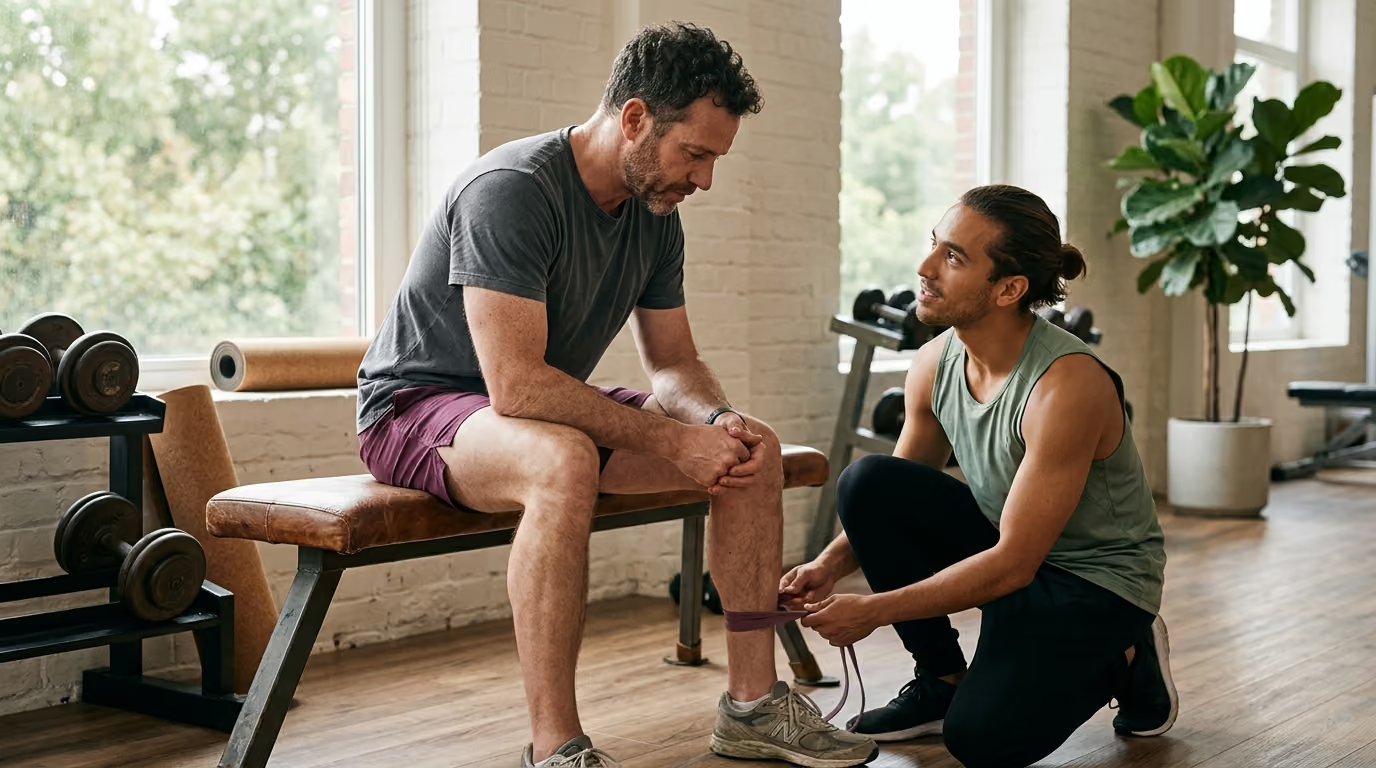
Recovering from a soft-tissue injury or joint issue requires shifting away from binary thinking. You do not need to choose between complete immobilization and aggressive, painful workouts. Modern rehabilitation relies on progressive, symptom-informed loading.
When evaluating training sensations around a healing joint, it is vital to distinguish between acceptable mechanical feedback and harmful pain signals.
Mild, familiar sensations that stay below a three on a ten-point discomfort scale, do not alter your movement mechanics, and resolve within an hour after exercise are generally manageable.
Conversely, sharp pain, sensations that progressively worsen with each set, pain that causes you to limp or compensate, or soreness that disrupts your sleep that night indicate excessive tissue loading.
Avoid the common trap known as the healthy-side illusion. Maintaining training on your uninjured limbs is an excellent strategy to preserve systemic fitness and support neural drive through the cross-education effect.
However, performing a heavy set of single-leg presses on your uninjured leg does not mean your injured knee is ready for bilateral squats. Tissue capacity is local. Tendons, ligaments, and stabilizing muscles must be rebuilt through specific, graded exposures before they can handle complex movement patterns.
Sports medicine researchers have explored tracking training load through the acute-to-chronic workload ratio. This model compares the exercise volume performed in the current week against the rolling average of the preceding four weeks.
While not a rigid mathematical rule that guarantees safety, it serves as a valuable conceptual reminder: large, sudden spikes in weekly training volume significantly increase the likelihood of reinjury. Keep your weekly volume increases small, predictable, and steady.
Physical training is often prescribed as a simple cure for stress, but when dealing with severe burnout, intense exercise can easily worsen your condition. The World Health Organization classifies burnout in the ICD-11 as an occupational phenomenon resulting from chronic workplace stress that has not been successfully managed.
Burnout is defined by three specific dimensions:
Because burnout is rooted in systemic workplace dynamics, you cannot solve it through physical exercise, dietary supplements, or better personal time management alone. Adding exhausting high-intensity interval training or heavy powerlifting to an already overwhelmed nervous system increases your total biological load.
During the initial stages of burnout recovery, physical exercise should serve as a tool for nervous system regulation rather than a platform for athletic achievement.
A sustainable return to work mirrors a phased return to athletic training. Occupational health guidelines recommend a graded exposure to professional demands.
An illustrative phased model might involve working forty percent of normal hours in the first week, progressing to fifty percent in the second, seventy-five percent in the third, and returning to full hours only when tolerance is proven.
Throughout this process, task complexity must be managed carefully. A person recovering from burnout may handle routine administrative work without issue, but they may quickly become overwhelmed by high-stakes negotiations, rapid task-switching, or lengthy group meetings.
Structure your cognitive workload using progressive blocks:
If you find that work stress is consistently draining your energy and straining your personal life, explore our articles on confidence, relationships, and vitality.
Sleep and nutrition provide the essential biological resources required to rebuild physical capacity. Without sufficient caloric fuel, adequate protein, and consistent rest, any return-to-training program will quickly stall.
Data from the Centers for Disease Control and Prevention indicates that 30.5% of adults sleep fewer than the recommended seven hours per night. Chronic sleep deprivation is strongly linked to hypertension, cardiovascular disease, impaired glucose metabolism, depression, and elevated soft-tissue injury risk.
Sleep is not a passive break between workouts; it is the primary physiological state during which cellular repair, growth hormone release, and motor learning take place.
If your sleep drops below seven hours due to travel, work stress, or insomnia, do not attempt to compensate by forcing a high-intensity workout. Instead, reduce your training volume, focus on light active recovery, and protect your bedtime routine.
Nutrition during a rebuilding phase requires avoiding the common reflex to aggressively cut calories. Men often feel frustrated by changes in body composition following an injury or illness, leading them to combine heavy workouts with severe calorie deficits.
This approach starves healing tissues of the energy required for synthesis and repair, significantly increasing the likelihood of another physical breakdown.
Position stands from the International Society of Sports Nutrition state that consuming 1.4 to 2.0 grams of protein per kilogram of body weight daily is optimal for building and maintaining lean muscle mass in exercising individuals. Distribute this protein evenly across three to four meals throughout the day. Ensure you consume sufficient complex carbohydrates to support thyroid function, replenish glycogen stores, and fuel your nervous system.
During periods of low physical capacity, simplify your nutrition to minimize meal preparation effort:
For detailed meal planning frameworks, read our comprehensive guide on nutrition and metabolism.
Navigating recovery involves managing unique social environments, aesthetic pressures, and cultural expectations. Gay male culture frequently places high value on physical appearance, muscularity, and leanness. When an illness, soft-tissue injury, or career disruption forces a break from training, it can trigger deep anxieties about body image, desirability, and social relevance.
These aesthetic pressures often drive men over 35 to rush back into aggressive gym routines before their bodies have fully healed. A temporary shift in body composition is a natural, expected response to physical recovery, not an irreversible personal failure.
Attempting to diet aggressively while recovering from an injury or illness impairs cellular repair, increases systemic cortisol, and prolongs your time away from peak fitness. True long-term vitality means prioritizing functional capacity and tissue health over short-term aesthetic validation.
Social environments and nightlife can also introduce hidden physical demands. Weekend circuit events, high-energy dance parties, extended travel, and late-night socializing place heavy demands on your cardiovascular and nervous systems.
If you are currently rebuilding from post-viral fatigue or occupational burnout, spending six hours on your feet in a loud, crowded venue can deplete your energy reserves just as quickly as a heavy leg workout.
To navigate social recovery effectively:
Balancing aesthetic goals, active social lives, and long-term health is a central focus of GayFitLab. By making conscious, research-backed choices, you can stay socially connected without compromising your physical recovery.
To take the guesswork out of your progression, implement simple self-monitoring systems. Tracking a few key recovery metrics prevents you from relying on subjective motivation, helping you make smart, data-driven adjustments each morning.
Use this rapid daily assessment to determine your training intensity before stepping into the gym:
During periods of intense work travel, family disruption, or mild symptom flare-ups, replace your normal routine with a structured minimum viable day. This keeps your positive habits intact without draining your limited capacity.
An illustrative minimum viable day includes:
While minor muscle soreness is a normal part of training, certain symptoms require immediate medical evaluation. Preparticipation screening guidelines from the American College of Sports Medicine identify key red flags that warrant pausing your training and consulting a healthcare professional:
For an extensive library of evidence-based health and fitness guides, visit our vitality and longevity resources.
While the principles of progressive loading and graded recovery are well supported by sports medicine research, specific areas of health science still present meaningful limitations. Understanding these boundaries prevents you from relying on oversimplified advice or unproven commercial claims.
First, the research surrounding post-viral fatigue syndromes and myalgic encephalomyelitis/chronic fatigue syndrome (ME/CFS) demonstrates that standard progressive exercise is not appropriate for everyone.
Guidance from NICE emphasizes that individuals suffering from post-exertional malaise experience significant symptom worsening after physical or cognitive exertion. For these individuals, forcing progressive exercise can lead to long-term health setbacks. Recovery in these cases requires individualized energy management and symptom-contingent pacing under specialized medical supervision.
Second, tracking tools like the acute-to-chronic workload ratio should be viewed as helpful conceptual models rather than absolute injury-prevention formulas.
While monitoring training volume across rolling four-week windows provides useful structure, scientific literature has shown that a single mathematical ratio cannot account for individual differences in genetics, sleep quality, psychological stress, or nutritional status. Use workload monitoring as a guide, not a rigid guarantee.
Finally, broad public-health recommendations, such as the World Health Organization guidelines recommending 150 to 300 minutes of moderate aerobic activity and two strength sessions weekly, represent long-term targets for healthy populations.
They are not realistic starting points for individuals recovering from prolonged illness, severe burnout, or major surgery. Your initial re-entry must be scaled to your current personal baseline, with volume increasing only as your body demonstrates clear tolerance.
Revisit this playbook whenever you face a major disruption to your normal routine: after an unexpected viral illness, during rehabilitation from a sports injury, or when navigating demanding career deadlines. Return to the Capacity Ladder to objectively assess your current level, choose your starting point, and rebuild your baseline step by step.
True athletic resilience is not built by ignoring your body's distress signals to force a workout. It is built by systematically managing your total load, respecting biological recovery timelines, and consistently applying manageable efforts over time.
Stay connected for research-led guidance on fitness, body composition, skin, grooming, vitality, sexual wellbeing, relationships and healthy aging. Clear ideas for gay men 35+ who want to look good, feel strong and age with confidence.


Build habits and systems that support clear thinking, steady energy and long term capacity throughout a demanding career.
explore the Blog