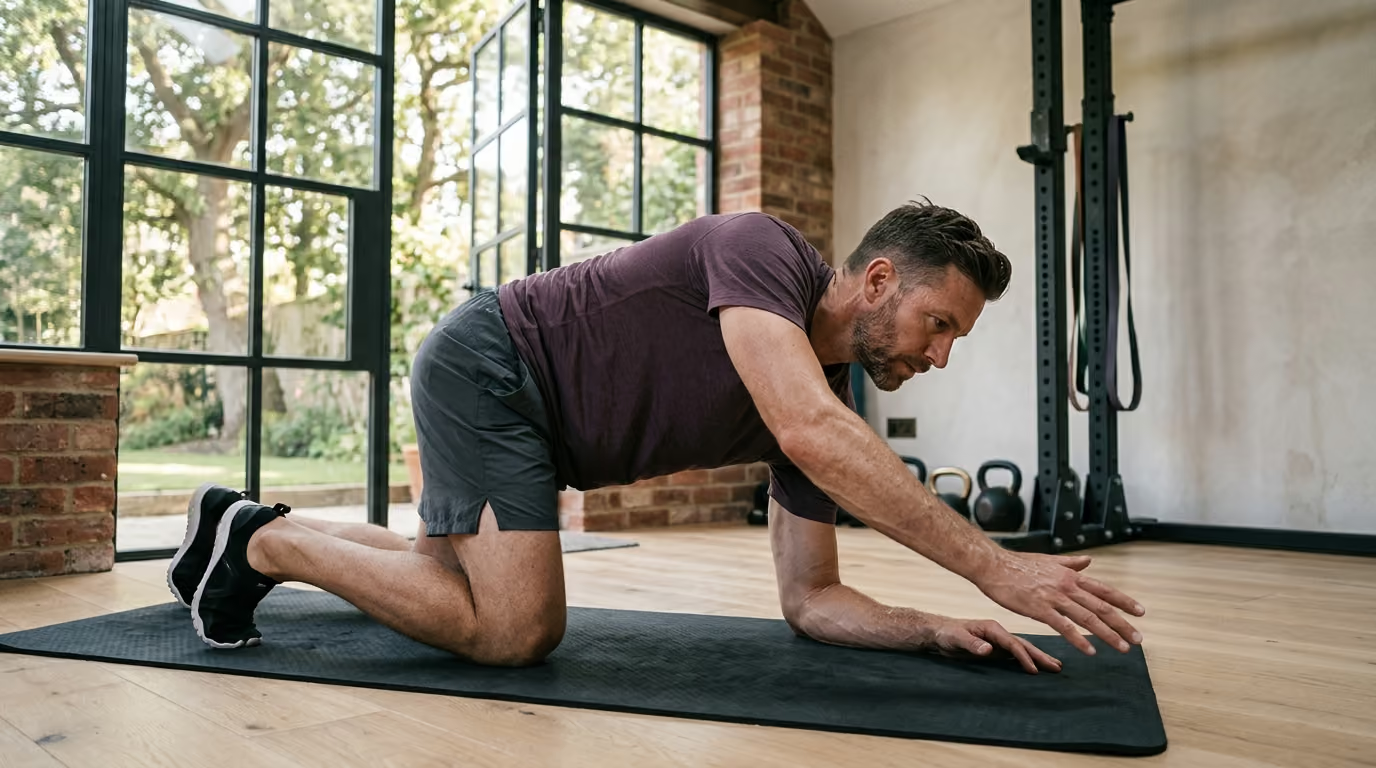

Longevity training for men over 35 combines progressive strength, cardiovascular conditioning and dynamic mobility to build lasting functional reserve and reduce mortality risks.





Many men over 35 find themselves searching the same frustrating question online late at night. They want to know how to train for strength and stay lean without wrecking their joints, burning out their nervous system, or spending ten hours a week in the gym. The fitness advice they find is almost always split into extremes. One camp promotes punishing high-intensity workouts designed for twenty-year-olds. The other camp promotes gentle maintenance that fails to build real physical reserve.
A third way exists. It treats exercise as a long-term capacity-building system rather than a short-term vanity project. By organizing your physical routine around cardiovascular health, muscle architecture, joint mobility and structured recovery, you build a body that looks sharp, feels resilient and performs well for decades.
This guide delivers a clear, evidence-based training architecture built specifically for the realities of life after 35. You will learn the science of functional reserve, the three core training pillars, and how to adapt weekly templates when work, travel, or minor injuries disrupt your schedule.
Physical activity is one of the most powerful tools available for extending healthy lifespan. The World Health Organization and the U.S. Physical Activity Guidelines establish a clear baseline for adult health. Every adult should accumulate 150 to 300 minutes of moderate-intensity aerobic physical activity, 75 to 150 minutes of vigorous-intensity aerobic physical activity, or an equivalent combination each week. The guidelines also state that adults should perform muscle-strengthening activities that involve all major muscle groups on two or more days per week.
Cardiorespiratory fitness, measured as the body's ability to transport and use oxygen during sustained exertion, shows a direct relationship with long-term survival. Cardiorespiratory capacity is often measured in metabolic equivalents, or METs. One MET represents the energy cost of sitting quietly at rest.
Large-scale research highlights why building an aerobic engine matters. A major dose-response meta-analysis published in the British Journal of Sports Medicine demonstrated that every one-MET increase in cardiorespiratory fitness was associated with approximately a 12 percent reduction in all-cause mortality. The same one-MET increase was associated with a 13 percent reduction in cardiovascular mortality and a 7 percent reduction in cancer mortality. A classic cohort analysis published in JAMA mirrored these findings, reporting a 13 percent lower risk of all-cause mortality and a 15 percent lower risk of cardiovascular events per one-MET improvement in exercise capacity.
These numbers represent observational associations across broad populations rather than guaranteed personal outcomes. Yet they reinforce a fundamental truth. Higher aerobic capacity provides a deep buffer against metabolic decline, cardiovascular disease and physical frailty.
Muscular strength provides an equally critical protective layer. Strength is the capacity of the neuromuscular system to produce force against external resistance. It determines your ability to carry heavy luggage, climb flights of stairs without fatigue, and get up from the floor with ease. Research shows that maintaining muscle mass and force production directly supports insulin sensitivity, resting metabolic rate and physical independence. Resistance training also protects bone integrity, though the mechanisms require nuanced understanding.
In middle-aged and older men, resistance exercise combined with impact loading provides a potent mechanical stimulus for bone remodeling. A review of exercise interventions found that resistance training alone or paired with impact activities helped preserve bone mineral density in older men, while simple walking interventions showed limited bone-building effects.
Strength training becomes even more decisive when addressing sarcopenia, the age-related loss of muscle mass and strength. A meta-analysis examining adults over 70 with sarcopenia found that engaging in more than 10 weeks of progressive resistance training produced significant improvements in grip strength, isometric leg strength, chair-stand performance and total skeletal muscle mass.
Building physical reserve is not about preparing for athletic competition. It is about creating a physiological buffer that keeps you capable, energetic and structurally sound throughout your thirties, fifties and beyond. You can read more about integrating these habits in our healthy aging strategies.
Aging is not a sudden medical crisis. It is a slow biological shift that rewards intelligent preparation and consistent habits. After age 35, several natural physiological changes alter how your body responds to exercise, rest and nutritional inputs. Understanding these shifts allows you to adapt your program rather than getting frustrated by unexpected plateaus or lingering aches.
Connective tissues undergo structural changes over time. Tendons and ligaments experience reduced water retention and slower collagen turnover. This means that while your muscular system can still handle heavy loads, your tendons take longer to adapt to rapid spikes in volume or intensity. Tendonitis and joint irritation become more common when training loads increase too quickly without adequate rest.
Muscle protein synthesis also exhibits subtle changes. The muscle tissue becomes slightly less responsive to small doses of amino acids, a phenomenon researchers term anabolic resistance. Overcoming this requires adequate dietary protein distributed across the day, paired with progressive mechanical tension from resistance training.
Hormonal profiles shift gradually as well. Resting levels of testosterone, growth hormone and insulin-like growth factor decline at modest, steady rates. These shifts do not prevent men over 35 from building dense muscle or shedding visceral fat. However, they reduce the margin for error regarding sleep deprivation, chronic psychological stress and alcohol intake.
Metabolic rate often slows during midlife, but research demonstrates this is primarily driven by drops in daily movement and loss of active muscle tissue rather than an irreversible internal shutdown. Maintaining muscle mass and daily step counts preserves insulin sensitivity and metabolic flexibility. Reviewing our metabolic health and nutrition articles can help you balance your dietary intake alongside these physiological shifts.
Your nervous system and immune system also require longer recovery windows after unaccustomed physical stress. In your twenties, a grueling workout might leave you sore for twenty-four hours. After 35, that same session might impair your sleep, increase resting heart rate, and depress force production for three full days. Sustainable programming treats recovery as an active physiological process rather than an afterthought.
A longevity-focused fitness plan requires a structured system rather than a random collection of workouts. When you organize your training around five complementary components, you build a balanced routine that protects your health while respecting your time.
The engine represents your cardiorespiratory infrastructure. It includes your heart stroke volume, capillary density within working muscles, mitochondrial density, and lung capacity. A robust aerobic engine clears metabolic byproducts efficiently, lowers resting blood pressure, and allows you to recover quickly between sets of heavy lifting or demanding days at work.
Building the engine requires regular exposure to steady aerobic work where your heart rate remains elevated but controlled. It also benefits from occasional higher-intensity efforts that challenge your peak oxygen consumption.
The structure encompasses your contractile muscle tissue, bone matrix, tendons, ligaments and joint capsules. Without consistent mechanical loading, bone density declines and muscle fibers atrophy, leading to joint vulnerability and poor posture.
Building the structure requires progressive resistance training through full, controlled ranges of motion. You load basic human movement patterns using weights, machines or bodyweight resistance. This reinforces the skeletal frame against compressive forces and builds muscular armor.
Movement represents usable mobility, spatial awareness, balance and movement quality. Having large muscles or high aerobic capacity is of limited value if your hips cannot move freely, your thoracic spine is locked, or you lack the balance to navigate uneven surfaces.
Movement training teaches your joints to express strength at their end ranges of motion. It includes multi-planar work, single-leg stability, controlled rotations and balance challenges that keep your nervous system agile.
Recovery is the biological window where training adaptations actually occur. Lifting weights breaks down muscle proteins and depletes glycogen; cardiovascular exercise creates metabolic fatigue and cellular stress. Your body only rebuilds stronger if it receives adequate raw materials, low baseline inflammation and sufficient deep sleep.
Managing recovery means tracking total life stress, prioritizing sleep hygiene, staying hydrated, and matching your weekly workout volume to your current recovery capacity.
Continuity is the ability to sustain your physical practice across months, years and decades. Life after 35 includes professional obligations, family commitments, travel, social events and unexpected periods of illness or fatigue.
A rigid training routine that falls apart whenever your schedule changes is fundamentally flawed. Continuity relies on modular workouts, minimum effective doses, and the wisdom to scale your effort without quitting altogether. Consistency over years always outperforms sporadic perfection.
Physical activity and body image occupy a distinct space within gay men's culture. For many gay men, the gym has historically served as a space for community, self-expression, physical empowerment and social connection. Understanding these cultural dimensions helps you build a healthy, sustainable relationship with exercise that enhances your life rather than fueling anxiety.
Research from the American Heart Association examining sexual minority health shows that gay and bisexual men report unique physical activity patterns. Studies indicate that sexual-minority men often report higher participation in fitness activities compared to heterosexual peers, frequently driven by heightened social emphasis on muscularity and leanness. At the same time, large-scale population data show that rates of insufficient physical activity are remarkably similar across orientations, with 32.5 percent of gay men and 32.7 percent of heterosexual men failing to meet standard baseline activity targets.
The pressure to conform to rigid physical standards within urban gay social environments can be intense. Men over 35 often encounter social settings where youth and extreme muscularity are celebrated as the primary markers of value. This environment can push men into extreme workout regimens, chronic caloric restriction, or the unmonitored use of performance-enhancing compounds that place heavy stress on cardiovascular and hepatic systems.
A mature longevity approach does not ask you to abandon your aesthetic goals. Wanting to look lean, athletic and well-proportioned is entirely normal and valid. Looking great in your clothes and feeling desirable are rewarding aspects of physical fitness. However, an intelligent blueprint aligns visual goals with internal health markers.
When your training supports deep cardiovascular health, stable joints, strong bones and steady daily energy, your aesthetic appearance becomes the natural byproduct of a high-functioning body. Exercise shifts from being a tool for seeking external validation to an act of personal preservation and vitality. Exploring our male vitality and sexual health resources can provide additional perspective on maintaining long-term physical confidence.
Executing a balanced program requires breaking your training down into three practical pillars. Each pillar addresses specific physiological needs and builds upon the others.
Strength training after 35 should prioritize compound movements that build full-body force while minimizing joint wear. You can execute these patterns using barbells, dumbbells, cables, machines or your own body weight.
Focus on training between 2 and 4 sets per exercise, keeping the repetitions between 6 and 12 for most compound lifts. Maintain a technical reserve on almost every set, stopping 1 to 2 repetitions short of absolute failure. This delivers the necessary mechanical tension to build muscle and bone while preventing structural breakdown and excessive nervous system fatigue. Discover more foundational techniques in our collection of strength and body composition resources.
Your cardiovascular routine should not consist entirely of exhausting high-intensity intervals. High-intensity work creates significant central fatigue that competes with your strength training recovery. A well-designed aerobic program uses a polarized distribution of effort.
Dedicate roughly 75 to 80 percent of your weekly aerobic minutes to Zone 2 base training. This can include brisk walking on an incline, outdoor cycling, rowing, or using an elliptical trainer. In Zone 2, you should be able to speak in short sentences without gasping for breath. The remaining 20 percent of your cardio volume can be dedicated to tempo intervals or short sprint-interval sessions on a stationary bike or rowing machine.
Mobility is not passive flexibility. Stretching a cold muscle on the floor does very little to improve your movement quality or protect you from injury. Mobility is the ability to actively control your joints through a full range of motion under load.
Incorporate dynamic mobility into every warm-up and intersperse balance challenges throughout your week. Work on ankle dorsiflexion, hip extension and internal rotation, thoracic spine rotation, and single-leg balance drills. Single-leg exercises like Bulgarian split squats and step-downs train strength, hip stability and dynamic balance simultaneously.
To make this blueprint operational, you need clear templates that fit your current level of fitness and available weekly time. Below are three adaptable frameworks designed for different situations.
This template is ideal for men starting a structured routine, individuals with intense work schedules, or those establishing a consistent habit.
This template balances dedicated strength progression with structured aerobic intervals and targeted mobility for experienced trainees.
When recovering from an illness, joint flare-up, or period of forced inactivity, never jump directly back into your full routine. Use this four-stage progression to rebuild work capacity safely.
Spend at least 7 to 10 days in each stage before progressing to the next. If you experience sharp joint discomfort, systemic fatigue, or lingering inflammation, remain at your current stage or drop back one level. Always seek professional medical evaluation for acute or persistent musculoskeletal symptoms.
Your body does not adapt to training in the gym. It adapts during the hours spent sleeping, eating and resting between sessions. Creating an active recovery protocol protects your joints and ensures steady strength improvements.
Sleep is the single most potent recovery variable under your control. During slow-wave deep sleep, your body releases pulses of human growth hormone, synthesizes new muscle proteins, and clears metabolic waste from brain tissues.
Aim for 7 to 9 hours of quality sleep every night. Keep your sleeping environment dark, cool and quiet. Cut off heavy caffeine intake at least eight hours before bedtime and avoid consuming alcohol close to sleep, as alcohol destroys REM sleep quality and impairs overnight muscle protein synthesis.
Psychological stress from work, relationships or financial demands activates the sympathetic nervous system and raises cortisol levels. When chronic psychological stress is paired with aggressive workout volume, total physiological load exceeds your body's adaptive capacity.
On weeks where professional demands or emotional stressors peak, intentionally dial back your gym volume by 30 percent. A maintenance workout preserves your strength while giving your nervous system the breathing room it needs to recover.
Support your physical output by consuming adequate protein, prioritizing roughly 0.7 to 1.0 grams of high-quality protein per pound of target body weight daily. Stay hydrated by drinking water consistently throughout the day, especially before and after cardiovascular sessions. High water volume inside muscle cells is an essential signal for protein synthesis and cellular health.
A research-led publication must remain completely transparent about where clinical evidence is definitive, and where it remains limited, observational or mixed.
First, while the data linking cardiorespiratory fitness (METs) to lower mortality is vast and consistent across millions of patient-years, these studies are primarily observational cohort analyses. They establish strong statistical associations rather than direct, randomized causal proof that moving from 8 METs to 9 METs will automatically extend your life by an exact number of years. High fitness levels often correlate with other healthy behaviors, including better nutrition, non-smoking status, and higher socioeconomic stability.
Second, the evidence regarding resistance training and bone mineral density in older adults shows meaningful variation across studies. While some systematic reviews confirm that heavy resistance training paired with impact loading preserves bone mass in middle-aged men, other comprehensive reviews found neutral effects on bone density in specific older populations. Resistance training alone may not always reverse established severe osteoporosis without complementary nutritional, hormonal or medical therapies.
Third, studies investigating physical activity and body ideals among gay and bisexual men rely largely on self-reported survey data and localized convenience sampling. These studies provide valuable cultural insights, but they may over-represent urban men who actively participate in gym culture or LGBTQ+ community organizations.
Recognizing these scientific boundaries allows you to approach your fitness with realistic expectations. Exercise is a foundational pillar of healthspan and functional capacity, but it operates as part of an integrated lifestyle alongside sleep, nutrition, healthcare and social connection.
Building a resilient, capable body does not require overhauling your entire life overnight. Use this straightforward checklist to establish your longevity routine this week:
By treating your physical training as a long-term capacity-building system, you protect your joints, build functional muscle, and secure the vital energy needed to thrive through every decade ahead.
Stay connected for research-led guidance on fitness, body composition, skin, grooming, vitality, sexual wellbeing, relationships and healthy aging. Clear ideas for gay men 35+ who want to look good, feel strong and age with confidence.


Build habits and systems that support clear thinking, steady energy and long term capacity throughout a demanding career.
explore the Blog