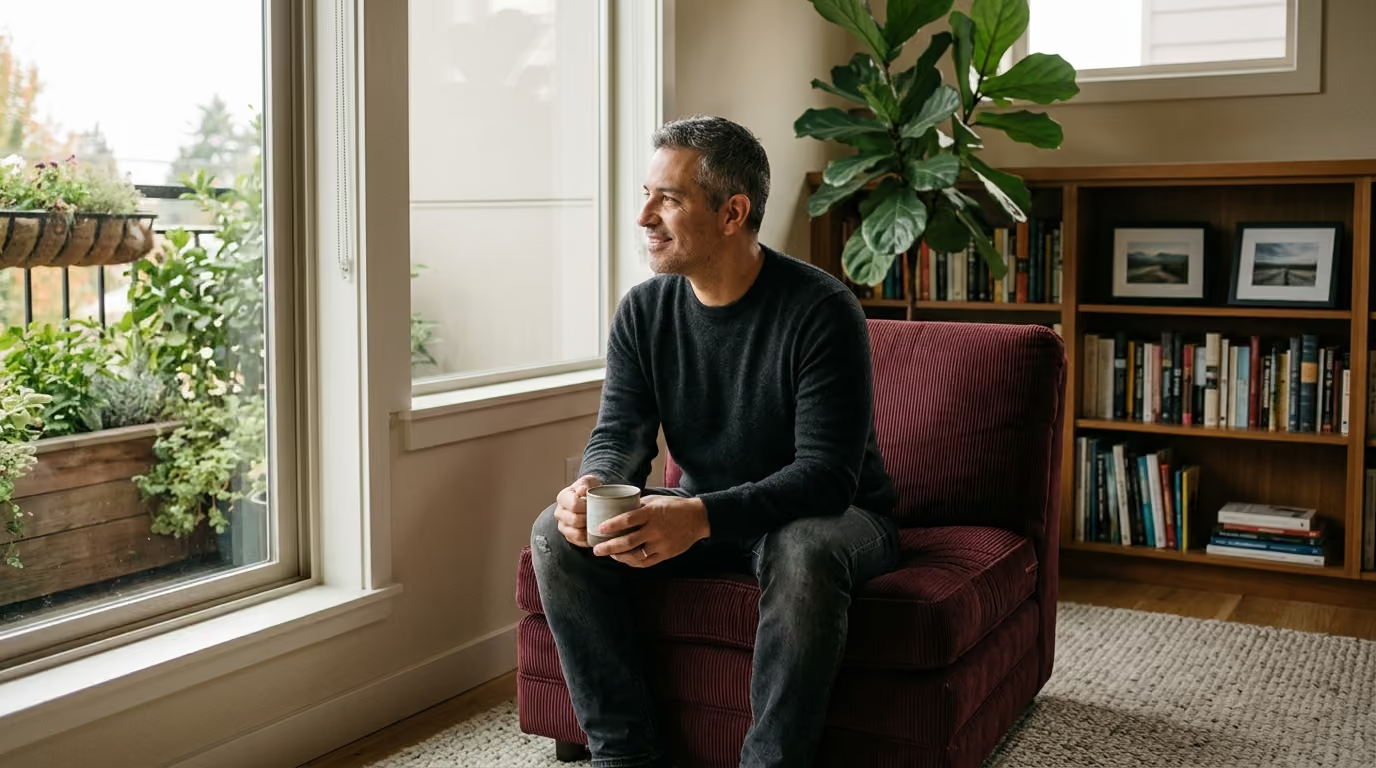

Aging gay men often mistake midlife exhaustion for simple burnout, but true nervous system resilience requires mastering minority-stress regulation and somatic recovery practices.





If you are in immediate danger, call 911. For 24/7 support, call or text 988 and press 1 for the Veterans Crisis Line, or text 838255.
Most wellness culture treats stress resilience as a tool for endurance. You are told to meditate, track your sleep, and optimize your morning routine so you can tolerate more pressure, work longer hours, and absorb higher levels of friction. That framing turns recovery into another performance metric. It assumes your nervous system is a machine that requires better maintenance rather than a biological system demanding genuine relief.
For gay men over 35, this productivity-first approach falls short. Midlife brings distinct physical shifts, evolving professional responsibilities, and changing relationship dynamics. It also carries the cumulative weight of minority stress, which can quietly shape how your nervous system responds to daily challenges. True resilience is not the ability to absorb endless punishment without breaking. It is the capacity to regulate your nervous system, recover your energy, enforce firm boundaries, and protect your long-term healthspan.
Building sustainable resilience requires looking at the biological, psychological, and social forces that govern your recovery. When you understand how chronic stress alters physiology over time, you can stop treating fatigue or anxiety as personal failures. You can build practical systems that protect your vitality for decades to come.
Stress is not an abstract mental state. It is a full-body mobilization protocol orchestrated by your autonomic nervous system and neuroendocrine pathways. When you encounter a perceived threat or high demand, your sympathetic nervous system initiates rapid physiological changes. Heart rate accelerates, blood vessels constrict in non-vital organs, skeletal muscles tense, and adrenal glands release cortisol and catecholamines.
This mobilization is an adaptive biological survival mechanism. Short-term activation helps you solve problems, meet deadlines, and navigate immediate crises. The problem arises when mobilization becomes chronic and regulation fails to occur.
Your autonomic nervous system operates through three primary states:
When demands remain relentless, your body accumulates what researchers call allostatic load. Allostatic load refers to the cumulative physiological toll of repeated adaptations to chronic stress. Over years, sustained exposure to stress hormones can alter inflammatory pathways, disrupt vascular function, impair glucose regulation, and degrade sleep architecture.
Consumer wearables often claim to measure allostatic load directly through heart-rate variability (HRV) and resting pulse metrics. These devices offer helpful clues about recovery trends, but they are not diagnostic tools. A low HRV score on a Tuesday morning can reflect a late dinner, moderate alcohol consumption, an impending viral infection, or an intense workout. It does not mean your nervous system is permanently damaged.
Clinical research links long-term stress exposure to increased risks for cardiovascular disease and mood disorders. These conditions are known contributors to premature cognitive decline and accelerated biological aging. Protecting your healthspan requires moving beyond passive tracking to active, systematic down-regulation.
Age 35 represents a meaningful inflection point in biological and social development. While not a sudden medical boundary, entering your late thirties and early forties alters how your body processes physical and psychological loads. Recovery margins narrow, and the physiological buffers that absorbed poor sleep or chronic tension in your twenties begin to recede.
Physical recovery slows due to gradual changes in hormonal profiles, tissue elasticity, and mitochondrial efficiency. Sleep becomes more fragile. The Centers for Disease Control and Prevention notes that healthy adults require at least seven hours of restful sleep per night to maintain metabolic and cognitive health. After 35, sleep fragmentation increases, deep slow-wave sleep naturally decreases, and nighttime awakenings become more frequent under stress.
Midlife also brings a distinct combination of structural responsibilities. Gay men in this age bracket frequently manage peak career pressures while navigating complex family dynamics. You may find yourself caring for aging biological parents, managing complex financial obligations, or confronting professional ageism.
These obligations often collide with a phenomenon known as recovery debt. Recovery debt is the accumulated deficit created by continually postponing rest, nutrition, medical care, and emotional processing. A weekend on the couch cannot erase six consecutive months of severe sleep restriction and emotional overextension.
Understanding these age-related shifts prevents you from framing normal biological changes as personal weakness. Aging demands a more sophisticated approach to energy management. When you honor your body's evolving requirements, you can maintain high physical performance and mental clarity without burning out.
Resilience models built for the general public often ignore minority stress. Developed by psychiatric epidemiologist Ilan Meyer, minority stress theory explains how chronic social stigma, prejudice, and systemic marginalization create unique, additive stress burdens for sexual minorities. This is not a personal deficit; it is an environmental exposure that taxes physiological reserves.
Minority stressors operate on two distinct levels:
Chronic vigilance is particularly exhausting for the nervous system. Even in progressive environments, gay men often run background assessments of their physical and social safety. You evaluate whether it is safe to mention your partner to a new colleague, hold hands in public, or correct a physician who makes heteronormative assumptions. This subconscious monitoring keeps the sympathetic nervous system quietly engaged throughout the day.
Coming out is not a single milestone completed in youth. Disclosure must be evaluated repeatedly in new workplaces, medical facilities, neighborhoods, and social circles. Research published in the Journal of Aging and Health shows that internalized stigma and lifetime victimization correlate with higher rates of chronic physical conditions and depression among midlife and older sexual minorities.
These dynamics interact with ordinary life pressures. When an aging parent falls ill, a gay man may face medical staff who do not recognize his partner's authority. In the corporate world, advancing into executive leadership may trigger old anxieties about identity concealment. Recognizing these intersectional pressures allows you to address the root causes of exhaustion rather than blaming yourself for feeling drained.
You can learn more about protecting your vitality by exploring our evidence-based longevity and healthy aging guides.
To navigate complex stress patterns effectively, you need an actionable, repeatable protocol. The REGULATE framework provides a structured pathway from acute physiological arousal back to cognitive clarity and behavioral control.
Track your personal somatic markers before full cognitive distress sets in. Early signs often include jaw clenching, shallow thoracic breathing, sudden gastrointestinal discomfort, obsessive inbox checking, or sharp irritability. Identifying these early cues allows you to intervene before reaching severe autonomic dysregulation.
Ask yourself a direct grounding question: Am I in immediate physical danger right now? If you are experiencing severe chest pain, acute neurological symptoms, or profound mental health crises, seek immediate emergency medical care. If physical safety is intact, remind your nervous system that the current demand is not an acute existential threat.
Engage concrete physiological tools to interrupt the sympathetic surge. Utilize slow, controlled breathing, physical sensory orientation, or brief isometric muscle releases. The objective is not to force instant bliss, but to bring your arousal back inside your window of tolerance so your prefrontal cortex can resume rational decision-making.
Examine whether your stress response is being magnified by identity-related factors. Ask yourself if you are anticipating rejection, managing concealment fatigue, navigating microaggressions, or confronting ageism within your social circle. Naming the specific minority stressor strips away vague self-blame and clarifies the true origin of your emotional activation.
Identify what environmental inputs need immediate reduction. This might involve closing work communications at a fixed hour, exiting a hostile digital forum, declining unpaid emotional labor, or removing yourself from an unsupportive family interaction. Boundaries act as structural shields that protect your physiological recovery.
Reach out to a trusted partner, close friend, chosen family member, or affirming mental health clinician. Co-regulation is a powerful biological antidote to isolation and minority stress. A ten-minute honest conversation with an emotionally safe peer can rapidly lower heart rate and reduce circulating stress hormones.
Reinforce your core physiological habits during high-friction periods. Ensure you hit your seven-hour sleep target, consume sufficient micronutrient-dense meals, maintain hydration, and avoid relying on alcohol or stimulants to manage your mood. Protecting baseline physical health prevents minor stress from snowballing into systemic exhaustion.
Review what interventions actually restored your capacity over the preceding two weeks. Discard practices that added guilt, excessive financial cost, or unnecessary logistical complexity. Keep your recovery protocols streamlined, realistic, and tailored to your actual daily routine.
For deeper insights on aligning physical habits with mental clarity, read our comprehensive coverage of strength and body composition.
Cognitive reframing alone cannot resolve physical tension. When your body is in an activated state, top-down logic rarely calms the amygdala. You need bottom-up somatic tools that directly signal safety to the autonomic nervous system via the vagus nerve.
A systematic review published in Frontiers in Human Neuroscience demonstrated that voluntary slow breathing significantly increases vagally mediated heart-rate variability and promotes immediate parasympathetic dominance. A meta-analysis examining 31 clinical trials confirmed that slow breathing reduces resting heart rate and systolic blood pressure while lowering subjective emotional distress.
Sit upright with your spine supported and your feet flat on the floor. Inhale gently through your nose for a count of four seconds, allowing your diaphragm and lower ribs to expand. Exhale slowly through your nose or pursed lips for a count of six to eight seconds. Maintain a pace of roughly five to six breaths per minute for three to five continuous minutes.
If breath-focused exercises trigger panic, air hunger, or respiratory discomfort, discontinue the practice immediately. Somatic grounding can also be achieved through external sensory engagement.
Look around your physical space and deliberately identify five distinct objects you can see. Notice four separate textures you can physically touch with your hands. Listen for three distinct sounds occurring in your immediate environment. Identify two scents present in the air, and notice one taste in your mouth.
When acute stress paralyzes your workflow, write out short answers to these seven prompts on a physical sheet of paper:
Recovery must also be structured across multiple domains. Do not rely exclusively on passive rest, such as sitting on the sofa watching television. Incorporate active recovery like brisk walking or mobility drills, relational recovery through affirming dinners with chosen family, and meaning-based recovery through creative pursuits, activism, or volunteering.
Boundaries are often misunderstood as aggressive ultimatums designed to control other people's actions. In reality, a boundary is an internal decision regarding your own limits, time, energy, and physical presence. Boundaries clarify what you will and will not tolerate, protecting your nervous system from unsustainable demands.
For gay men, boundary setting carries historical complexity. Many grew up learning to appease unsupportive environments by becoming hyper-accommodating, successful, and agreeable. This survival strategy of people-pleasing can persist into midlife as an inability to say no to professional overload, toxic friendships, or unsupportive biological family members.
Having direct, pre-formulated language prevents you from freezing or over-explaining when you need to protect your capacity.
Setting boundaries involves an initial spike in acute anxiety, especially if you have a history of appeasing others to secure safety. That temporary discomfort is far less damaging to your long-term health than the chronic, debilitating resentment that follows endless self-abandonment.
You can explore more strategies for building personal resilience by reviewing our resources on confidence, relationships, and community.
Social isolation is an independent, major risk factor for chronic disease and early mortality. A landmark advisory from the U.S. Surgeon General highlighted that chronic loneliness increases the risk of premature death from all causes by 26 percent and social isolation increases it by 29 percent. Poor social connection is also associated with a 29 percent higher risk of heart disease, a 32 percent higher risk of stroke, and elevated rates of depression and cognitive decline.
For gay men over 35, social architecture requires active curation. Research shows that older sexual minorities are less likely to have biological children and more likely to live alone than their heterosexual peers. Chosen family, networks of close friends, former partners, mentors, and community peers, serves as a vital protective buffer against minority stress and physical isolation.
Maintaining these networks requires deliberate investment. Passive digital scrolling and dating apps rarely fulfill the evolutionary human need for safe, in-person social connection. Regular, shared rituals such as weekly group dinners, recreational sports leagues, book clubs, or community volunteering provide structured environments where you can drop hyper-vigilance and experience authentic belonging.
When stress overwhelms your personal coping tools, professional mental health support is crucial. The American Psychological Association emphasizes that psychologists working with sexual minority clients must practice affirmative care. Affirming therapy views same-sex attraction and diverse relationship structures as normal, healthy variations of human experience.
An affirming therapist should be fluent in the dynamics of internalized homophobia, concealment fatigue, sexualized substance use, and the long-term emotional impact of the HIV epidemic. Do not settle for a clinician who merely tolerates your identity. Seek out providers who understand how sexual orientation intersects with midlife aging, career development, and physical vitality.
Every gay man navigates a distinct combination of biological, social, and psychological stressors. The following illustrative models show how the principles in this guide translate into real-world intervention strategies.
A 42-year-old corporate director sleeps five hours a night, works intense hours, and pushes himself through aggressive high-intensity interval training to manage his constant anxiety. He lives with quiet fears that taking time off will stall his advancement, and he continually monitors how openly he speaks about his husband in executive meetings.
His resilience plan does not involve squeezing in another productivity technique. Instead, he implements a strict digital cutoff at 7:00 PM, reduces his training frequency from six heavy sessions to four balanced workouts, and begins working with an LGBTQ-affirming executive coach. His focus shifts from sheer output to autonomic regulation, protecting his sleep and cardiovascular recovery.
A 49-year-old man navigates the end of a twelve-year relationship. He realizes that nearly his entire social circle was tied to his ex-partner. Feeling profoundly isolated, he begins drinking heavily on weekends and spending hours compulsively scrolling dating apps late at night, resulting in fragmented sleep and poor workplace focus.
His intervention avoids moralizing about his coping habits. He schedules a clinical evaluation to assess his sleep and alcohol intake, establishes a consistent morning wake-up routine, and joins a weekly queer hiking group. By creating structured, in-person social connections, he breaks the cycle of digital isolation and rebuilds his independent support system.
A 55-year-old gay man takes on primary caregiving duties for his elderly mother, who suffers from cognitive decline. His biological siblings provide minimal help, while his mother frequently makes dismissive comments regarding his long-term partner. He feels constant guilt, stops exercising, and develops persistent gastrointestinal issues and insomnia.
His recovery strategy requires structural boundaries. He engages a family mediator to distribute caregiving costs and responsibilities among his siblings, sets clear limits on how many days a week he provides hands-on care, and arranges professional respite services. He and his partner schedule protected weekly dates where caregiving discussions are off-limits, allowing his nervous system time to decompress.
A 38-year-old man postpones necessary preventive screenings and dental work for years following an encounter with a homophobic healthcare provider in his twenties. He interprets minor physical symptoms as catastrophic illnesses but avoids making appointments due to anticipatory panic.
His pathway forward involves identifying a verified, LGBTQ-competent primary care practice through local community directories. Before his initial visit, he sends a written note outlining his medical history and communication preferences. He brings a trusted friend to the waiting room for co-regulation, turning medical care from a threatening ordeal into an empowering health maintenance routine.
A 45-year-old man trains twice a day, rigidly restricts his carbohydrate intake, and experiences severe panic if he misses a single workout. He views this extreme discipline as evidence of peak resilience, yet he suffers from chronic joint pain, chronically low energy, and social isolation.
His situation illustrates how fitness routines can cross the line from health-promoting habits into compulsive emotional coping mechanisms. He works with a sports dietitian and a therapist specializing in male body image to address underlying fears of aging and physical vulnerability. He transitions to a balanced resistance program that incorporates full rest days, restoring his endocrine health and social life.
To optimize your nutritional intake alongside your training, explore our science-based guides on nutrition and metabolism.
Self-guided resilience tools have inherent boundaries. Deep breathing, sleep optimization, and boundary setting are vital skills, but they cannot dismantle systemic workplace discrimination, eliminate socioeconomic hardship, or cure clinical mood disorders. Framing resilience entirely as an individual responsibility is both inaccurate and unhelpful.
Physical symptoms must not be automatically dismissed as stress or anxiety. Midlife brings meaningful medical shifts that require rigorous clinical investigation:
If you experience persistent despair, panic attacks that disrupt basic functioning, intrusive trauma flashbacks, or an inability to manage substance use, seek professional medical and psychological evaluation. Stress-resilience practices are meant to complement comprehensive medical care, not replace it.
If you are experiencing a mental health emergency, acute distress, or thoughts of self-harm, immediate professional help is available. In the United States and Canada, call or text 988 to connect with the Suicide & Crisis Lifeline (Veterans can press 1, or text 838255). If you are in immediate physical danger, call 911 or visit your nearest emergency department.
For specialized support tailored to LGBTQ+ individuals, you can contact The Trevor Project by calling 866-488-7386 or texting START to 678-678, or reach the LGBT National Hotline at 888-843-4564. If you have concerns about personal safety or means, collaborate closely with a trusted physician, therapist, or loved one to secure your environment.
Resilience is not an endless performance of strength, but the ongoing practice of honoring your limits, restoring your biology, and choosing a sustainable path forward.
Stay connected for research-led guidance on fitness, body composition, skin, grooming, vitality, sexual wellbeing, relationships and healthy aging. Clear ideas for gay men 35+ who want to look good, feel strong and age with confidence.


Build habits and systems that support clear thinking, steady energy and long term capacity throughout a demanding career.
explore the Blog