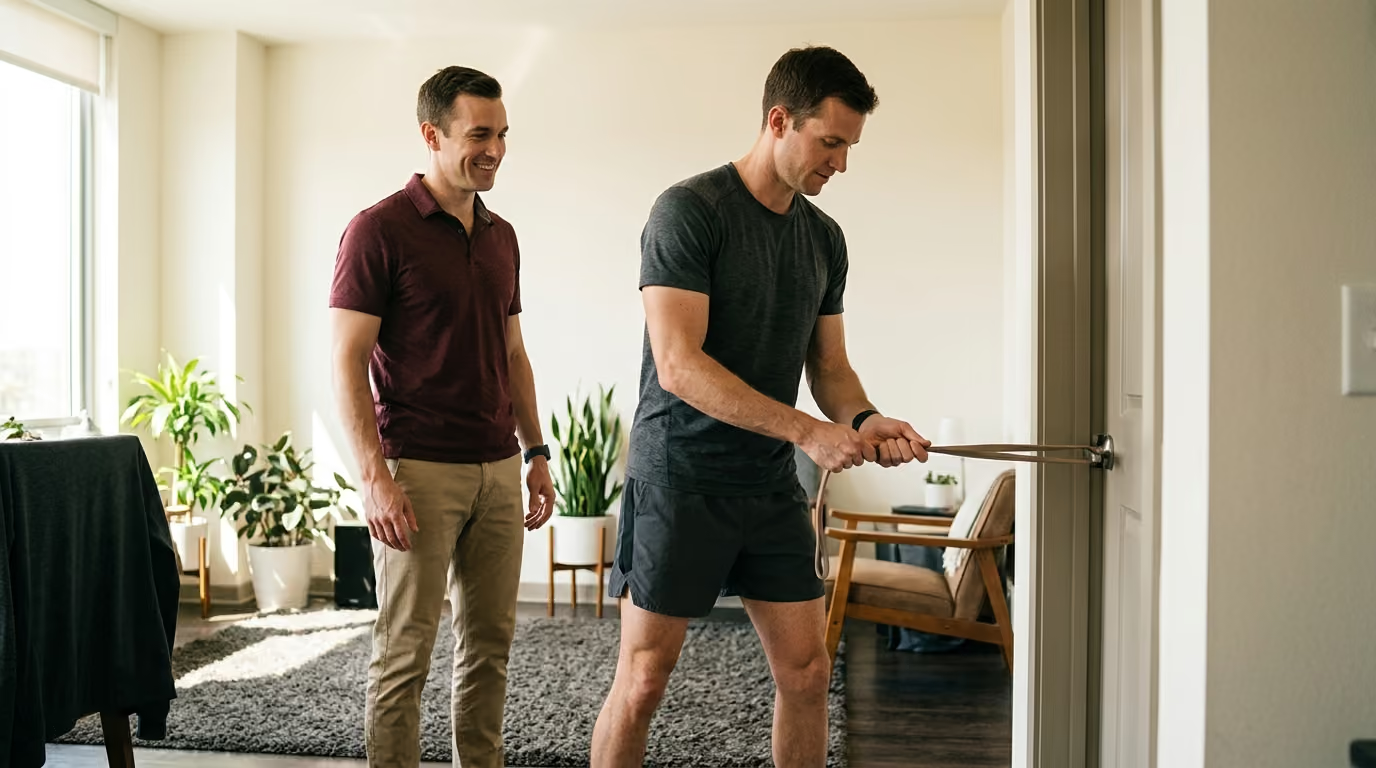

Random gym routines often fail to build balance, but structured movement patterns and periodized training reliably create a lean, athletic, and proportionate physique.





You stand in front of the mirror after a long week of work and three heavy gym sessions. You notice that while your arm measurements have increased, your lower back feels constantly fatigued and your shoulders sit slightly forward. Your suits fit tightly across the upper chest, yet your movement on the tennis court or during a weekend hike feels sluggish rather than athletic.
Many active men reach a point where conventional bodybuilding splits or random high-intensity workouts stop delivering balanced outcomes. Building a physical structure that looks balanced and performs reliably requires moving beyond simple exercise collections. It demands a systematic framework that integrates muscular balance, absolute strength, power, conditioning, movement quality, and sustainable body composition.
An athletic, proportionate physique is not a single visual template. It is a state of physical capacity where visual form reflects real movement capability, structural balance, and long-term joint health.
credible evidence shows that visual proportion is the relationship between different muscular regions rather than the total size of any single muscle group. Visual structure is governed by your underlying skeletal framework, including clavicle width, pelvic breadth, rib cage depth, and muscle insertion points. While exercise cannot alter bone length or tendon attachment sites, progressive resistance training changes muscle cross-sectional area to build symmetry and structural balance across major joint complexes.
Research compiled in sports science literature demonstrates that structured resistance programs reliably increase lean muscle mass. Systematic reviews of resistance training interventions indicate average muscle mass gains of approximately 1.5 kilograms across varied study groups, though individual genetic responses differ widely. To direct this growth toward a balanced appearance, training must organize around primary human movement patterns rather than isolated muscle groups.
The primary movement patterns include:
The American College of Sports Medicine recommends training with loads of at least 80 percent of one-repetition maximum when primary strength development is the objective. For muscle hypertrophy, the guidelines highlight loading ranges between 1 and 12 repetition maximums within periodized programs, with a strong focus on the 6 to 12 repetition range. Recent updated guidance from exercise science authorities identifies approximately 10 weekly sets per target muscle group as an effective baseline for muscle growth.
Strength, hypertrophy, power, and metabolic endurance are related physical qualities, but they operate on distinct physiological mechanisms. Absolute strength relies heavily on neurological coordination, motor unit recruitment, and joint lever efficiency. Hypertrophy depends on total volume, mechanical tension, and adequate metabolic stress. Power requires force produced at high velocities, while cardiovascular endurance relies on mitochondrial density and stroke volume.
Physical adaptations change as the body moves past age 35. Muscle tissue retains its ability to hypertrophy and gain strength throughout mature adulthood, but recovery rates between intense sessions often slow down. Tendon elasticity, collagen synthesis, and joint cartilage resilience gradually decline over time.
Metabolic shifts after 35 are frequently driven by gradual reductions in daily spontaneous physical activity and unmanaged loss of muscle mass, rather than sudden metabolic collapse. Sustaining lean muscle tissue becomes essential for supporting daily energy expenditure, insulin sensitivity, and systemic health. Hormonal profiles undergo subtle changes, making stress management, sleep hygiene, and total recovery as important as training load.
Joint tolerance becomes a primary factor in exercise selection. Training protocols that work at age 22, such as maximal daily lifting or ignoring minor joint irritation, often lead to chronic inflammation or overuse injuries after 35. Exercises must fit your individual skeletal structure rather than forcing your joints into fixed positions.
A mature training program shifts focus toward long-term capability. The goal moves away from chasing maximal single-repetition lifts at any cost toward building structural strength, movement control, and visual balance that lasts for decades.
Translating physical capability into everyday life means enjoying high physical function alongside an athletic appearance. An athletic, proportionate physique alters how your clothes fit, how easily you carry heavy luggage, and how comfortably you handle spontaneous physical activities like skiing, cycling, or ocean swimming.
A balanced physical structure improves daily movement quality and posture. Strengthening the upper back, posterior shoulder girdle, gluteals, and core muscles counteracts the forward-slouched posture caused by extended desk work and screen time. Standing with natural alignment alters your physical presence, conveying confidence in personal and professional environments.
Physical capability directly supports energy levels, confidence, and vitality and sexual wellbeing. Improved cardiovascular output and muscular stamina enhance physical intimacy, daily stamina, and evening energy reserves. Feeling physically capable fosters genuine self-assurance that carries over into social interactions.
Visual leanness alone does not equate to high work capacity. An excessively lean body created through chronic severe restriction often results in persistent fatigue, low mood, lost libido, and diminished physical power. True physical athletic balance combines moderate body fat levels with high functional output and reliable everyday resilience.
Within many gay social environments, visual physical appearance carries significant social weight. Popular gay media often promotes narrow body ideals, alternating between hyper-lean fitness profiles or extreme muscularity. These narrow standards can create body dissatisfaction or lead to extreme, unsustainable training behaviors.
A mature approach replaces external body trends with personalized physical development. Building an athletic structure allows you to shape a balanced physique without forcing your body into an artificial standard. Focusing on proportions respects individual bone structure, limb length, and natural muscular shapes.
Focusing on the visual frame emphasizes specific anatomical regions:
This focus builds a strong silhouette while maintaining real athletic power. Emphasizing shoulder breadth, upper back depth, and gluteal development enhances physical proportions while directly protecting shoulder, spine, and hip joints.
Building a proportionate and athletic body requires structuring key training variables: volume, frequency, intensity, exercise choice, and fatigue management.
Training frequency should match your personal schedule and recovery capacity:
When total weekly volume is kept equal, training frequency alone does not dramatically alter overall muscle gains. Distributing your weekly work across three or four sessions keeps individual workouts shorter, maintains set quality, and reduces joint fatigue. A comprehensive strength and body composition training strategy relies on consistent execution over many months rather than extreme individual workouts.
For most trained adults, targeting 8 to 12 hard sets per major muscle group per week serves as an effective starting zone. You should count both direct sets (such as leg extensions for quadriceps) and indirect sets (such as heavy compound squats) when tracking weekly workloads.
Proximity to failure is best measured using Repetitions in Reserve (RIR):
The double-progression method offers a safe, predictable way to drive ongoing progress:
Cardiovascular conditioning preserves heart health, increases everyday stamina, supports metabolic health, and aids recovery between intense lifting sets. Misconceptions persist that cardio inherently destroys muscle mass, but research shows that endurance and strength work can easily coexist when properly structured.
Systematic reviews on concurrent training indicate that combining cardio and strength work can slightly reduce maximal explosive power or rate of force development compared to strength training alone. However, whole-muscle growth remains largely unaffected when total volume is properly managed. Research shows high-impact running causes higher muscle damage and potential interference with lower-body strength gains compared to low-impact options like cycling, rowing, or incline walking.
World Health Organization physical activity guidelines recommend that adults complete 150 to 300 minutes of moderate-intensity aerobic work, or 75 to 150 minutes of vigorous physical activity weekly, along with muscle-strengthening work on two or more days.
To optimize concurrent training:
The following templates illustrate how to structure training sessions around athletic movement patterns and balanced physical development.
This setup suits men who want to combine lifting with active weekend sports, running, or outdoor activities.
This schedule split separates upper and lower body training to allow higher set volumes while keeping session times under 60 minutes.
Training provides the physical stimulus, but proper nutrition, restorative sleep, and fatigue management govern your results. Aligning your diet with your training goals supports clean energy, lean muscle retention, and ongoing physical progress.
The International Society of Sports Nutrition recommends a daily protein intake between 1.4 and 2.0 grams per kilogram of total body weight for active adults looking to build or maintain muscle. To support muscle protein synthesis, distribute this intake across three or four main meals, consuming approximately 0.25 to 0.40 grams of protein per kilogram of body weight at each sitting. Integrating a sustainable nutrition and metabolic strategy supports body composition changes without needing extreme restrictive diets.
When managing body fat, aim for a gradual weight loss rate of 0.5 to 1.0 percent of total body weight per week. Slower fat loss helps preserve hard-won lean muscle tissue and keeps training performance high, which is especially vital for leaner individuals.
Maintaining an excessively aggressive energy deficit can cause noticeable physiological drawbacks:
Consistently getting adequate sleep is essential for physical repair and athletic recovery. Expert consensus guidelines recommend that active adults get 7 to 9 hours of uninterrupted sleep per night. Sleep deprivation reduces muscular force output, impairs glucose processing, and disrupts recovery hormones.
Plan a deload week every 6 to 10 weeks, or adjust training whenever several fatigue signals appear together. During a deload, reduce total working sets by 50 percent while keeping the loads moderate. This periodic reduction lets joint structures repair, clears built-up neural fatigue, and sets you up for long-term progress. Supporting recovery is a core part of long-term longevity and healthy aging.
While sports science provides clear guidelines for strength and hypertrophy, several common claims rest on limited or mixed evidence. Knowing these boundaries helps you avoid wasting effort on unproven fitness trends.
Fitness marketing often claims that specific corrective exercises can permanently alter posture and relieve body pain. However, systematic reviews examining exercise interventions for postural alignment show limited, low-to-moderate quality evidence. While targeted exercise can strengthen postural muscles and expand joint range of motion, standing alignment does not directly predict back or joint pain. Posture is dynamic and variable, so holding a rigid, exaggerated posture all day is neither necessary nor helpful.
Commercial bioelectrical impedance analysis (BIA) scales and handheld scanners are widely used, but their daily readings are often inaccurate. Measurement outputs fluctuate significantly based on body hydration levels, dietary sodium, glycogen storage, room temperature, and recent exercise. Treat consumer body-fat percentages as general trend indicators over several months rather than absolute, precise facts.
Exercise guidelines provide reliable population averages, but individual responses to volume, loading, and recovery vary based on genetics, training history, age, sleep quality, and daily stress levels. A workout volume that produces rapid progress for one person might cause joint irritation for another. Successful long-term training requires adjusting general guidelines to fit your real-world recovery rates and joint tolerances.
Building an athletic, proportionate physique requires managing movement quality, strength development, cardiovascular health, and body composition within a sustainable system. True proportion reflects structural balance, functional power, and long-term joint health tailored to your body type, rather than chasing a single rigid physical ideal.
Review this guide whenever you are planning a new training phase, recovering from a period of high stress, adjusting your workout volume after age 35, or seeking to balance aesthetic goals with overall physical capability. Access additional structured workouts and articles through our curated strength and fitness resources.
Focus your efforts on consistent execution across major movement patterns, manage your training volume to match your recovery capacity, and measure your success through lasting strength, daily energy, and improved functional movement.
Stay connected for research-led guidance on fitness, body composition, skin, grooming, vitality, sexual wellbeing, relationships and healthy aging. Clear ideas for gay men 35+ who want to look good, feel strong and age with confidence.


Build habits and systems that support clear thinking, steady energy and long term capacity throughout a demanding career.
explore the Blog