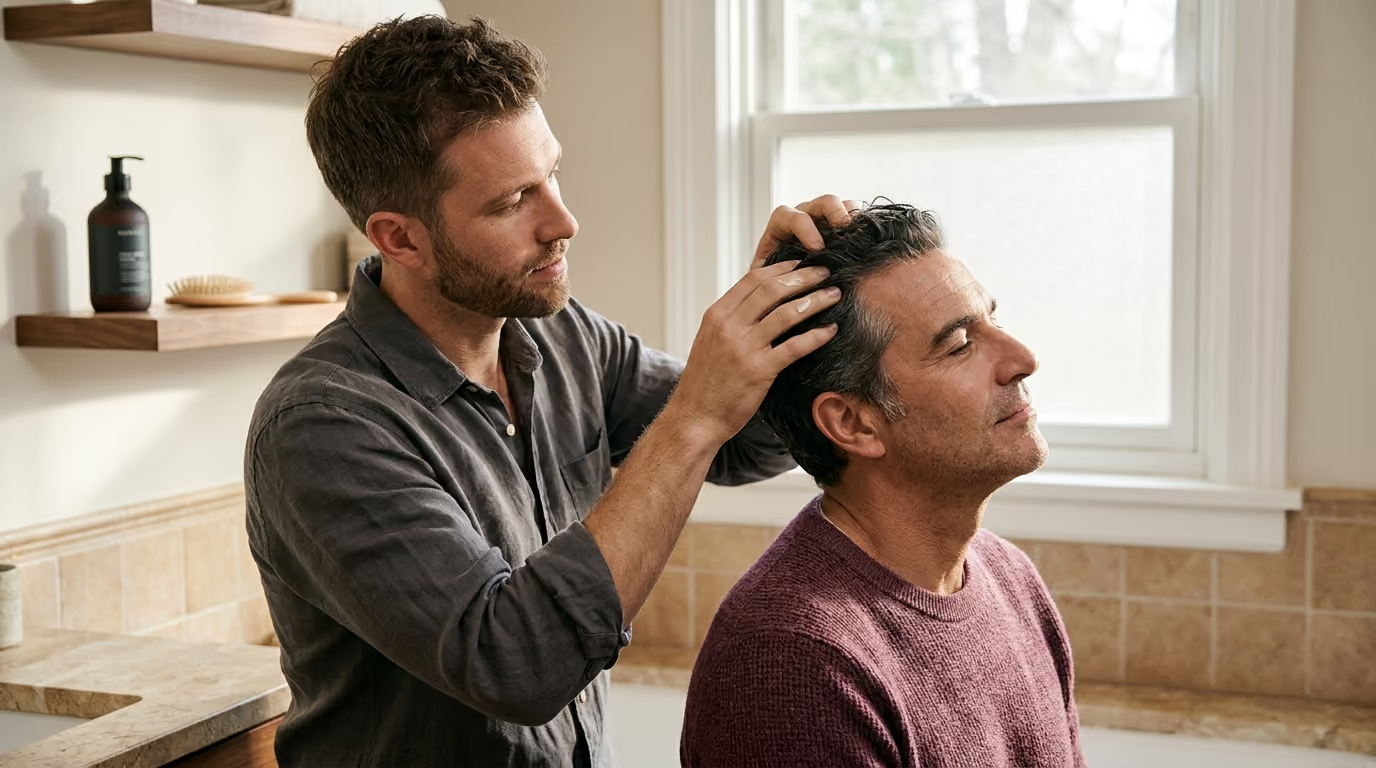

Targeted relief from dandruff and flaking begins with identifying your specific scalp condition and choosing proven active ingredients matched to your hair texture.





Scalp health is fundamentally skin barrier management rather than a superficial question of hair hygiene. It is not an aesthetic afterthought or a problem solved by aggressive scrubbing. True scalp health represents a balanced skin barrier, normal follicular activity, and controlled microbial flora across the crown. When this environment falls out of balance, visible flaking is often the first sign. Yet visible flaking is merely a symptom, not a medical diagnosis.
Many men spend years cycling through random grocery store bottles without understanding the physiological mechanisms behind their irritation. Flaking can stem from mild fungal proliferation, chronic systemic inflammation, follicular bacterial infection, or allergic responses to grooming products. This guide details the biological foundations of the scalp, breaks down the differential causes of flakes and itch, analyzes active pharmacological ingredients, and outlines structured maintenance strategies for long-term scalp and hair vitality.
Clinical dermatology views the scalp as specialized, highly vascularized skin with a dense concentration of terminal hair follicles and large sebaceous glands. Because of this high lipid output, the scalp supports a distinct microbiome. The most prominent resident organism is the lipophilic yeast known as Malassezia.
In healthy skin, Malassezia lives commensally without triggering an immune response. In susceptible individuals, however, this yeast metabolizes scalp sebum into free fatty acids, such as oleic acid. These fatty acids irritate the stratum corneum, disrupting the epidermal barrier. Research published in dermatological literature indicates that dandruff affects approximately 50 percent of the adult population worldwide.
Epidemiological reviews separate simple dandruff from clinical seborrhoeic dermatitis. Dandruff, historically termed pityriasis capitis, represents the uninflamed, mild end of the spectrum. It presents as fine, diffuse, white or grayish flakes across hair-bearing areas without clinical redness. Seborrhoeic dermatitis represents the inflammatory progression. It produces erythematous patches, thick yellowish greasy scale, burning sensations, and pronounced itching. Seborrhoeic dermatitis frequently extends beyond the scalp into the eyebrows, nasolabial folds, retroauricular areas, beard zone, and mid-chest.
Clinical studies establish that seborrhoeic dermatitis is not caused simply by poor personal hygiene. It results from a tripartite interaction involving sebaceous gland activity, microbial colonization, and an individual inflammatory vulnerability. For those seeking comprehensive skin and grooming guides, recognizing that dandruff is a chronic condition rather than a temporary hygiene failure is the first step toward effective management.
Scalp physiology changes with age across cellular, hormonal, and structural dimensions. After age 35, the rate of epidermal cell turnover begins to slow down. The lipid composition of the stratum corneum shifts, leading to reduced natural moisture retention and an altered barrier defense.
Sebum production also begins a gradual decline after peak output in early adulthood. While decreased sebum can reduce oiliness for some men, it often makes the scalp skin more vulnerable to dryness, irritation, and environmental stress. At the same time, individual hair fibers undergo progressive changes. Follicles produce hair with reduced diameter and altered cuticle integrity, making the hair shaft more fragile.
As hair follicles lose melanocytes and transition to gray or white hair, the texture of the hair fiber alters significantly. Gray hair is typically coarser, more brittle, and less pliable than pigmented hair. This textural shift complicates grooming routines. Formulations that effectively treat stubborn scalp flakes can severely dry out aging, graying hair strands.
Microcirculation to the scalp also shows subtle reductions over time. Slower capillary perfusion can delay skin healing after mechanical trauma, such as scratching or aggressive combing. Understanding these age-related shifts helps men adjust their routines without viewing normal biological aging as a personal failure. Maintaining a balanced scalp environment supports overall aesthetic longevity, a key focus within modern healthy aging strategies.
Differentiating between scalp conditions is crucial because treatments that relieve one disorder can worsen another. Flaking on the shoulders is a shared symptom across several distinct pathologies.
Dandruff is characterized by small, loose, non-adherent flakes scattered throughout the hair. The underlying skin exhibits no clinically visible erythema or swelling. Itching is either absent or mild.
Seborrhoeic dermatitis introduces active cutaneous inflammation. The scale appears thicker, waxy, and yellowish due to sebum accumulation. The underlying scalp exhibits distinct redness and warmth. Patients frequently report burning, prickling, or severe itching that worsens during periods of stress, fatigue, or dry winter weather.
Scalp psoriasis is an autoimmune condition characterized by hyperproliferation of keratinocytes. The skin renews itself in days rather than weeks, leading to an accumulation of dense, silvery-white scales over thick, well-demarcated red or violaceous plaques.
Several clear features distinguish psoriasis from seborrhoeic dermatitis:
Attempting to aggressively scrape or peel psoriatic plaques triggers the Koebner phenomenon. Mechanical trauma induces new inflammatory lesions, expanding the plaque and increasing the risk of hair loss. Scale must be softened chemically rather than removed by force.
When scalp irritation does not fit the classic patterns of dandruff or psoriasis, other dermatological conditions must be evaluated. Misdiagnosing these presentations often leads to ineffective or damaging interventions.
Scalp folliculitis is an inflammatory disorder centered directly on the hair follicles. It presents as small, discrete, itchy or tender pustules and red bumps, often resembling acne across the scalp. Folliculitis is frequently aggravated by friction, occlusion from athletic headwear, sweating, or bacterial overgrowth, particularly Staphylococcus aureus.
Unlike dandruff, folliculitis presents with localized follicular tenderness rather than diffuse scaling. Applying rich hair oils or heavy styling waxes to folliculitis can worsen follicular occlusion, accelerating pustule formation.
Tinea capitis is a true dermatophyte fungal infection of the scalp skin and hair shafts. While common in pediatric populations, it occurs in adults and presents a serious diagnostic consideration. Tinea capitis causes irregular, scaly patches accompanied by localized alopecia, where hairs break off at the surface to leave visible black dots.
In severe inflammatory variants, tinea capitis forms a swollen, boggy, purulent mass known as a kerion. Standard over-the-counter anti-dandruff shampoos cannot clear an active tinea capitis infection within the hair shaft. It requires medical diagnosis via fungal culture or Wood lamp examination, followed by oral antifungal medications.
Allergic and irritant contact dermatitis occur when the scalp or surrounding skin reacts to external chemicals. Offending agents include synthetic fragrances, botanical extracts, essential oils, preservatives like methylisothiazolinone, and paraphenylenediamine found in permanent hair dyes.
Contact dermatitis displays a characteristic rinse-off distribution. While the thick scalp skin may show mild flaking or itching, severe inflammation often appears along the hairline, posterior ear folds, and down the lateral neck. If a new hair product is followed by burning, swelling, or a spreading red rash, contact allergy is the probable trigger.
Navigating the pharmacy aisle requires understanding pharmacological mechanisms rather than buying into marketing claims. Medicated scalp ingredients fall into distinct functional categories.
Antifungal compounds directly reduce Malassezia yeast populations on the scalp, lowering the inflammatory free fatty acids that cause epidermal disruption.
Keratolytics do not target yeast directly. Instead, they break down intercellular cement within the stratum corneum, helping shed thick, adherent scale.
These compounds target cellular proliferation and underlying immune activation within the dermal layers.
Washing frequency must be tailored to individual sebum production, hair shaft diameter, curl pattern, and exercise habits. The rigid belief that daily washing is universally destructive is medically incorrect, as is the claim that infrequent washing cures flaking.
Men with fine, straight hair shafts have higher follicular density and faster sebum spread across the scalp surface. Sebum accumulation provides abundant substrate for Malassezia, accelerating flake formation and inflammation.
These individuals benefit from frequent or daily washing. A gentle, non-medicated cleanser can be used on most days, alternating with an active anti-dandruff shampoo two to three times per week to keep fungal proliferation and oiliness in check.
Curly and tightly coiled hair structures prevent sebum from traveling easily down the hair shaft. The scalp may produce oil, but the hair fibers remain prone to extreme dryness and mechanical breakage.
Frequent use of clarifying or medicated shampoos can strip the hair fiber, causing cuticle damage and frizz. Men with textured hair should limit medicated shampoo applications to once or twice weekly. The product must be targeted strictly at the scalp skin, followed by deep conditioning along the hair lengths.
Bleaching, chemical straightening, and permanent dyes increase the porosity of the hair fiber, making it fragile. When treating scalp conditions in chemically processed or mature hair, use medicated solutions carefully.
Alternating a therapeutic shampoo with a sulfate-free, hydrating cleanser protects the hair matrix while managing scalp barrier health. The table below outlines how to balance washing frequency across common scalp profiles.
The most common reason for over-the-counter anti-dandruff treatment failure is improper application technique. Many people wash their hair fibers rather than treating their scalp skin, rinsing the active ingredients away before they can exert a pharmacological effect.
To achieve therapeutic benefits, follow a structured six-step process:
If symptoms resolve, transition to a maintenance cadence. Discontinuing an antifungal shampoo entirely often results in a rapid relapse of seborrhoeic dermatitis. Using the therapeutic wash once weekly or once every two weeks maintains fungal suppression and prevents flare-ups.
Men frequently combine active grooming routines with high-hold styling products, pomades, dry shampoos, and frequent barbering. These habits can interact with underlying scalp conditions, creating complex patterns of irritation.
Heavy styling waxes, clays containing high concentrations of petrolatum, and alcohol-heavy setting sprays leave residues that adhere to both the hair shaft and the scalp. Dry shampoos, which rely on starches and clays to absorb surface sebum, do not cleanse the scalp. Instead, they form a dense, particulate paste when mixed with sweat and natural oils.
This layer can plug follicular openings, trap environmental debris, and create an anaerobic microenvironment favorable for bacterial folliculitis. Product buildup mimics dandruff by producing grayish, powdery debris when combed through.
A thorough product audit helps distinguish buildup from genuine dermatitis:
Contemporary grooming trends among stylish men often involve precision fades, tight clippers against the skin, and deliberate beard shaping. Clipper friction can irritate the scalp barrier, especially when instruments are sanitized with harsh chemical disinfectants that leave residual irritants.
Furthermore, seborrhoeic dermatitis frequently crosses the structural boundaries of the face. It commonly manifests simultaneously along the temporal scalp hairline, through the sideburns, within the eyebrows, and across the beard area beneath dense facial hair. Treating the scalp while ignoring active fungal reservoirs in the beard leads to continuous reinfection across facial margins. Men managing facial hair must apply therapeutic antifungal cleansers to both the beard skin and the scalp.
Exploring modern grooming confidence means maintaining clean lines without compromising the underlying skin barrier through aggressive clipper work or occlusive beard balms.
Itching is a primary symptom of scalp inflammation, but scratching provides only fleeting neurological relief while causing severe tissue damage. The mechanical action of fingernails excoriates the epidermis, releases pro-inflammatory histamine and cytokines, and damages fragile hair roots.
In individuals with scalp psoriasis, scratching induces plaque expansion via the Koebner response. In seborrhoeic dermatitis or folliculitis, fingernails introduce environmental bacteria, transforming a sterile inflammatory state into a secondary bacterial infection with purulent crusting.
Breaking this cycle requires treating the source of inflammation pharmacologically, applying cool compresses to soothe acute itch, and keeping fingernails trimmed smooth to minimize nighttime trauma.
While mild dandruff responds well to over-the-counter protocols, several red-flag symptoms necessitate a comprehensive clinical evaluation by a board-certified dermatologist. Self-treating complex dermatological diseases with grocery store products delays effective therapy and increases the risk of permanent follicular damage.
Seek formal medical evaluation if you experience any of the following presentations:
Dermatologists utilize specialized diagnostic tools, including trichoscopy, fungal scrapings for microscopic evaluation, bacterial cultures, and targeted punch biopsies to establish an accurate diagnosis. Accessing dedicated skin and hair longevity resources ensures you stay informed with research-backed clinical insights rather than commercial wellness myths.
While clinical trials provide strong support for standard antifungal and anti-inflammatory therapies, several areas of consumer scalp care lack rigorous evidence.
Natural oils, such as tea tree oil, rosemary oil, and coconut oil, are widely marketed as universal scalp remedies. While tea tree oil exhibits mild in vitro antimicrobial properties, clinical trial data regarding its efficacy compared to standard ketoconazole remains limited and of variable quality. Many natural botanical oils contain complex terpenes that carry a high risk of causing allergic contact dermatitis. Applying pure, undiluted essential oils to an inflamed scalp frequently worsens barrier disruption.
Similarly, mechanical scalp scrubbers, vibrating massagers, and exfoliating brushes are heavily promoted across commercial media. Current dermatological literature provides no high-quality evidence that physical scalp exfoliation improves long-term clinical outcomes in seborrhoeic dermatitis or psoriasis. In many instances, physical scrubbing causes micro-trauma, aggravating inflammatory cascades.
Dietary modifications are also surrounded by unsubstantiated claims. While severe systemic deficiencies can alter skin barrier function, robust clinical trials demonstrating that specific diets, sugar elimination, or generic wellness supplements reliably cure chronic seborrhoeic dermatitis remain lacking. Systemic medical therapies, targeted topicals, and evidence-based cleansing routines remain the primary validated interventions.
Standard anti-dandruff shampoos containing ketoconazole, zinc pyrithione, or selenium sulfide do not cause physiological hair loss. In fact, reducing scalp inflammation often stabilizes the hair growth environment. If you notice hairs in the drain while washing, these are typically telogen-phase hairs that were already detached within the follicle and released by the mechanical action of lathering. If persistent, patchy shedding occurs, consult a physician to evaluate for conditions like telogen effluvium, alopecia areata, or tinea capitis.
Medicated shampoos, particularly those containing selenium sulfide, coal tar, or high-pH surfactants, can strip cosmetic hair dye or alter the tone of bleached, platinum, or gray hair. To protect your color, apply the medicated shampoo strictly to the scalp skin using your fingertips. After the contact period, rinse thoroughly and immediately follow with a color-safe, deeply hydrating conditioner on the mid-lengths and
ends.
Seborrhoeic dermatitis is a chronic, relapsing condition driven by an individual's natural sebum production and immune response to normal scalp yeast. Medicated shampoos suppress the yeast and calm inflammation during active use, but they do not permanently alter your underlying genetic or immunological profile. Once symptoms clear, you must maintain a low-frequency maintenance schedule, such as using an active shampoo once weekly, to prevent Malassezia populations from rebounding.
True dry scalp is simply xerosis, presenting as tiny, dry, white flakes without redness, greasy texture, or significant inflammation, often improving rapidly with gentle, hydrating shampoos and reduced water temperature. Dandruff is an inflammatory response to yeast, producing larger, oily, yellowish or grayish flakes that adhere to the scalp and hair, accompanied by persistent itching and erythema. If moisturizing products fail to resolve the flaking within two weeks, an underlying inflammatory condition like dandruff is likely present.
A healthy scalp requires treating the skin beneath your hair with the same diagnostic rigor, gentle handling, and active ingredient awareness you apply to the rest of your skin. Recognize visible flaking as a signal to balance your epidermal barrier, adjust active ingredients, and seek medical clarity when persistent symptoms arise.
Stay connected for research-led guidance on fitness, body composition, skin, grooming, vitality, sexual wellbeing, relationships and healthy aging. Clear ideas for gay men 35+ who want to look good, feel strong and age with confidence.


Build habits and systems that support clear thinking, steady energy and long term capacity throughout a demanding career.
explore the Blog