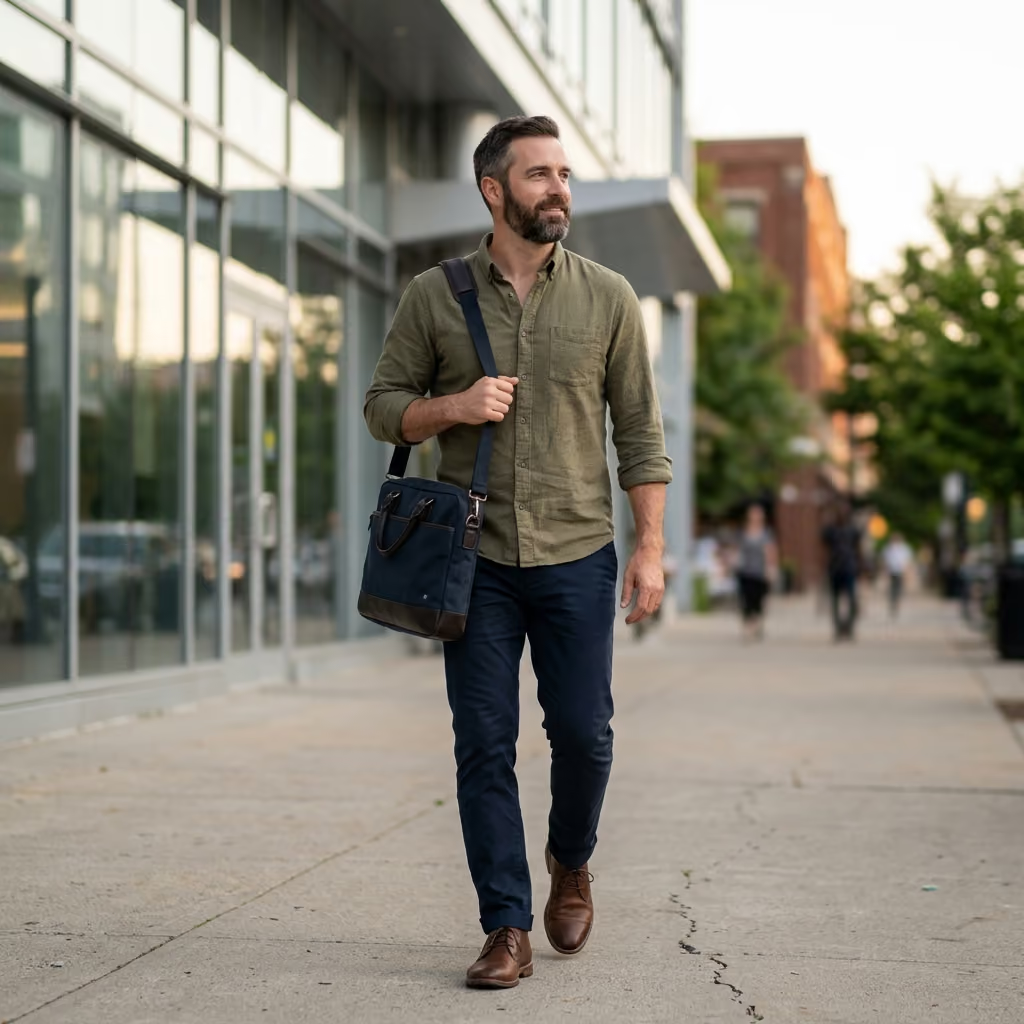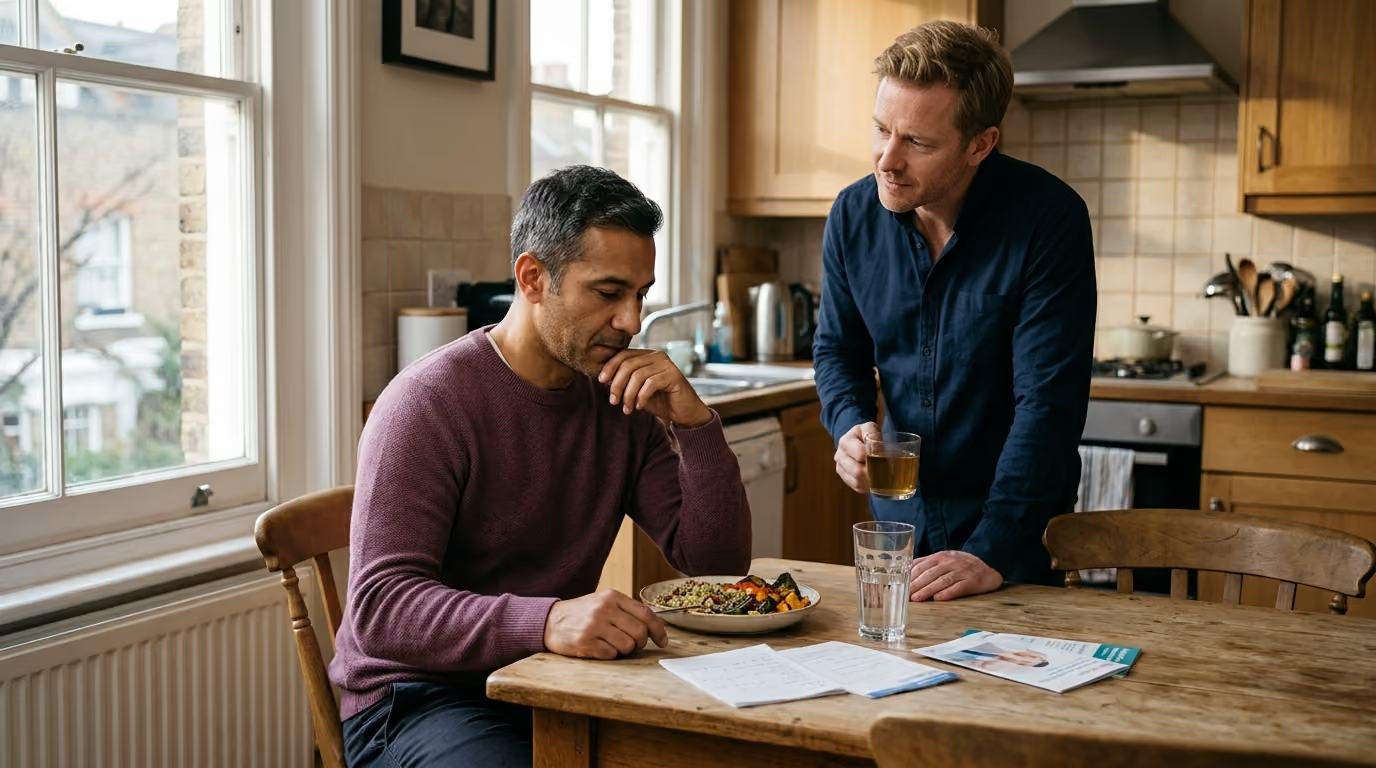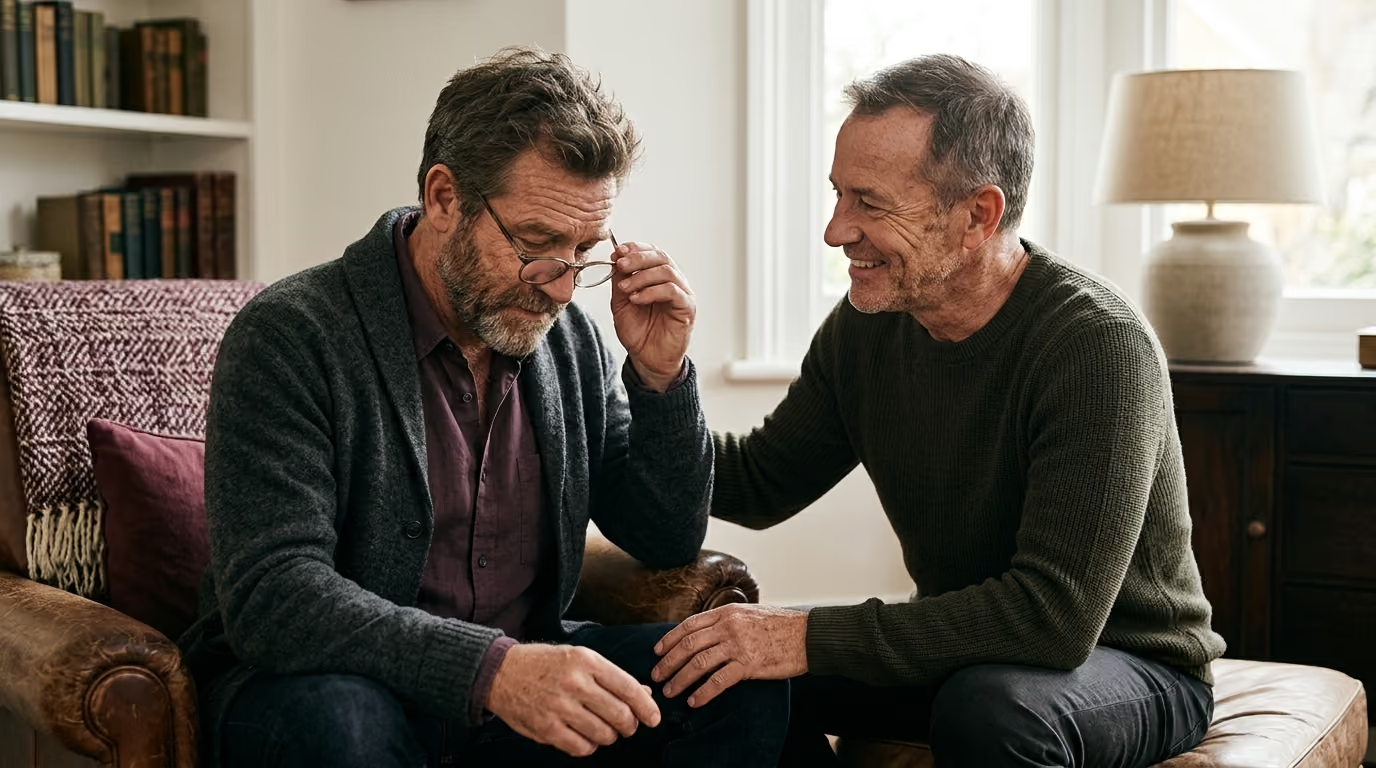

Three low-pressure gathering formats give gay men structured tools to overcome midlife social isolation and build lasting community belonging.





Most social advice given to gay men encourages personal performance. Men are told to project confidence, attend more crowded circuit parties, dress sharper, or download newer dating apps. When loneliness persists, it is frequently treated as an individual failure of charisma, attractiveness, or effort.
That perspective misunderstands how human connection actually functions. Belonging is not a reward for being exceptionally entertaining or physically flawless. It is the predictable outcome of functional social infrastructure.
Building community does not require vast wealth, an extroverted personality, or a massive pre-existing network. It requires simple, repeatable formats where men know what to expect, how to participate, and how to return. When you shift your perspective from performing for an audience to designing low-pressure shared routines, gathering other gay men becomes sustainable, protective, and deeply rewarding.
Social connection is a fundamental pillar of human survival and physical health. Data cited by the U.S. Surgeon General indicates that approximately half of American adults report measurable feelings of loneliness. According to government summaries on public health, severe loneliness and social isolation increase the risk of premature mortality by roughly 26% and 29%, respectively. Furthermore, adults who report strong perceptions of community belonging are 2.6 times more likely to report good or excellent health compared to those with weak social ties.
To design better community formats, hosts must understand the clinical difference between objective social isolation and subjective loneliness. As defined in research from the Centers for Disease Control and Prevention, social isolation relates to the quantifiable absence of social contact, group memberships, and relational roles. Loneliness is the subjective distress felt when one's existing connections fail to meet emotional needs.
A gay man can attend packed venues four nights a week and remain intensely lonely. Conversely, a man living alone with a modest network can feel completely supported if his contacts are reliable. Research confirms that community life provides value not through overwhelming volume, but through structure, safety, and mutual recognition.
Social connection also relies on the accumulation of weak ties. Sociological evidence shows that early-stage community develops through recurring, low-intensity contact with acquaintances, neighbours, and activity partners. You do not need to find an instant best friend or a romantic partner at a first gathering. Simply recognizing a familiar face from a monthly walk establishes a baseline of safety that allows deeper bonds to form over time.
For gay men, shared spaces can also link directly to vital health literacy. Public health data indicates that higher social engagement within gay and LGBTQ+ networks is associated with higher rates of regular routine screening and preventive healthcare use, including PrEP. Trusted community spaces serve as channels for practical information, mutual aid, and reduced stigma around health management.
Social landscapes change significantly for gay men as they enter midlife. In early adulthood, nightlife, shared housing, and large peer groups often provide a default social structure. After age 35, those automatic environments begin to recede.
Work schedules become more demanding, and energy management becomes a daily consideration. Men frequently pair off into long-term partnerships, migrate to quieter neighbourhoods, or focus on career stabilization. The casual, spontaneous hangouts that defined earlier years require conscious scheduling and clearer boundaries.
Many gay men over 35 also choose to reduce their alcohol intake or step back from late-night party scenes entirely. When commercial venues stop serving as the primary living room of your social life, a sudden void can emerge. Without intentional alternatives, this life transition can feel like sudden social contraction.
Normal physical and psychological transitions should not be interpreted as social decline. Aging into midlife offers greater emotional maturity, clearer personal boundaries, and refined interests. Gay men in this demographic often seek calm, intellectual stimulation, shared hobbies, and reciprocal support rather than chaotic social validation. You can learn more about managing these decades through our guide to healthy aging and longevity.
Hosting gatherings tailored to this life stage addresses a structural deficit. When you create organized events that respect busy schedules, conclude at reasonable hours, and provide substance, you serve an audience of men who want connection without physical exhaustion.
Public health research shows that LGBTQ+ people experience elevated rates of anxiety, depression, and social disconnection compared to heterosexual peers. These disparities are rooted in minority stress, which represents the chronic strain of navigating social stigma, discrimination, and rejection.
While community connection can buffer against minority stress, research also demonstrates a complex reality. Socializing within LGBTQ+ spaces can simultaneously offer validation and expose individuals to intraminority stigma. Intraminority stigma involves subtle hierarchies, body shaming, ageism, racism, and status competition that operate inside marginalized groups.
Gay community spaces often inadvertently elevate specific body types, income levels, and aesthetic presentations. Men who do not match these narrow ideals may experience alienation inside spaces that advertise themselves as safe havens. Research indicates that racial minority men in particular can face unique stressors when navigating mainstream gay spaces that ignore racial dynamics.
A competent host acknowledges these dynamics rather than assuming good intentions are enough. True inclusion requires building gatherings that actively neutralize status games.
Belonging can be measured across four clear parameters:
When you deliberately design events around these four anchors, you counteract intraminority stigma. You offer an environment where men can lower their psychological defences and interact as whole humans.
To build social infrastructure that lasts, you need an operational framework. The REPEAT model is a reliable system designed to remove social friction, lower attendance anxiety, and build community without exhausting the organizer.
Community requires temporal predictability. When an event happens at irregular, unannounced intervals, prospective guests must spend cognitive energy wondering if the group still exists. Regularity removes the psychological barrier of initiating plans.
Choose a fixed cadence:
Consistency allows participants to integrate your gathering into their personal calendars months in advance. It also signals that missing a single session carries no social penalty, because another session is already scheduled.
Vague invitations create acute social anxiety. A casual text message saying "we should all hang out sometime" forces the recipient to decode logistics, assess social risk, and negotiate details. Clear invitations answer all logistical questions before they can be asked.
Every invitation must clearly state:
When logistical ambiguity is eliminated, hesitant individuals are far more likely to show up.
Unstructured mingling can be intimidating for newcomers, introverts, and neurodivergent men. Forcing a group of strangers to stand in a circle and make continuous small talk creates immediate performance pressure.
Pair your gathering with a parallel activity. Walking a known route, following a recipe, touring an exhibit, or playing a casual game provides a secondary focus for attention. Shared activities reduce the intensity of unbroken eye contact and supply natural, immediate topics of conversation.
Examine your event logistics through the lens of diverse physical, financial, and psychological needs. A gathering cannot foster true belonging if it quietly excludes people based on cost, physical ability, or lifestyle choices.
Evaluate your space for wheelchair accessibility, non-gendered or private restrooms, and sensible transit links. Ensure financial barriers are minimized by hosting in public parks, free cultural spaces, or low-cost venues. Always provide appealing non-alcoholic beverages, and establish a firm policy regarding personal photography consent.
An event should not evaporate the moment guests depart. A brief, polite follow-up message closes the social loop and establishes continuity.
Send a message within 24 to 48 hours thanking attendees for their presence. Mention the date and location of the next scheduled gathering. If a participant mentioned a specific interest, article, or local resource during the event, send a brief link. This simple practice turns an isolated event into an ongoing social sequence.
If a gathering relies entirely on one person's charisma and labour, the host will eventually burn out. A thriving community requires distributed responsibility.
Gradually invite regular attendees to take on modest tasks:
Distributing tasks gives participants a genuine sense of investment. The group transforms from "your event" into a shared collective asset.
Hosting does not mean throwing lavish cocktail parties. The most effective formats are modest, repeatable, and clearly bounded in time and scope.
Walking groups are the most accessible entry point for community building. They require no equipment, cost nothing, and allow participants to rotate conversational partners naturally throughout the route.
Select a level park loop, waterfront path, or quiet architectural neighbourhood. Announce the exact distance, expected terrain, and accessible restroom stops in advance.
Begin with a five-minute greeting at a visible public landmark. Walk at a pace that allows unlaboured conversation. Conclude at an optional outdoor café or bakery where participants can sit if their schedules allow, while granting full permission for busy attendees to depart immediately.
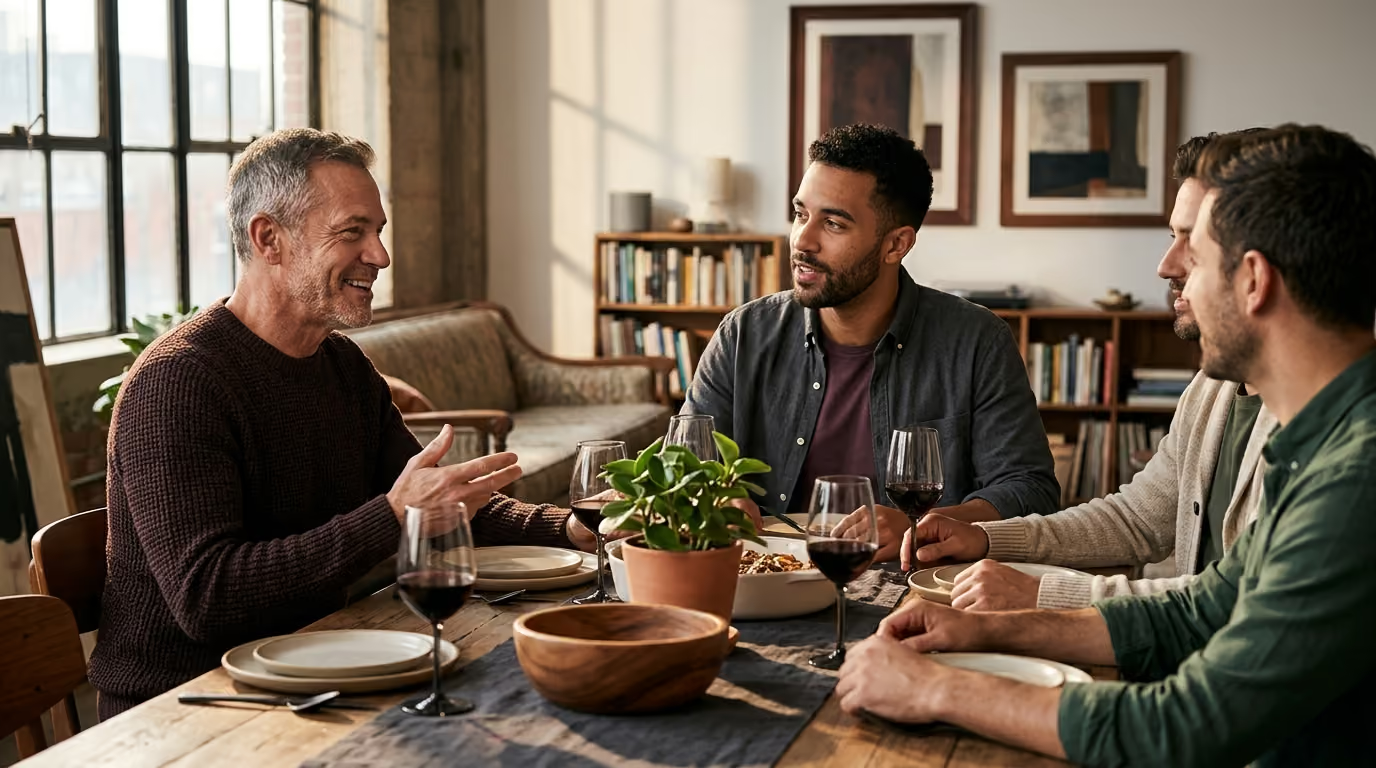
Shared meals build intimacy, but high-end restaurants and complex multi-course cooking introduce financial and logistical strain. Keep dinners grounded, structured, and affordable.
Limit attendance to six or eight men to allow a single, unified conversation around a table. A simple soup, pasta bake, taco spread, or coordinated potluck keeps costs predictable.
State the exact start and end times on the invitation, such as 6:30 PM to 9:00 PM. Establishing a firm end time relieves guests of the awkward burden of figuring out when it is polite to leave.
Attending a film screening, gallery opening, museum exhibit, or lecture gives participants a rich, shared intellectual experience. However, cultural outings fail to build connection if attendees simply sit silently in the dark and disperse.
Always design cultural outings in two distinct phases:
The shared event provides an immediate, common reference point. Even introverted men will find conversation easy during the second phase because they have just experienced the same stimulus together.
Physical exercise is an exceptional vehicle for connection, but traditional gay sports leagues or gym environments can sometimes feel intensely competitive or hyper-aestheticized. A low-pressure fitness gathering prioritizes joint mobility, general health, and mutual encouragement. If you want to explore physical training principles further, review our materials on physical fitness and functional strength.
Organize a weekend morning mobility routine, a casual cycling loop, or a beginner-friendly calisthenics circuit in a public park. Clearly state that the session is non-competitive and suitable for all fitness levels.
Emphasize functional longevity and longevity-focused movement over performance metrics. Providing clear regressions for every exercise ensures that no participant feels embarrassed or physically overmatched.
Many gay men hesitate to attend events because they assume everyone else will arrive in established couples or tight cliques. An event explicitly designed for solo arrivals eliminates that psychological fear.
Feature this exact phrase prominently on your invitation: "This gathering is designed specifically for people attending on their own. You do not need to know anyone in advance."
Station a dedicated greeter at the door to welcome each man immediately, introduce him to one other person, and hand him a beverage. Use simple conversation prompts to jumpstart early interactions, and rotate small groups after twenty minutes to prevent clumping.
Never underestimate the power of gathering just three to five men. Micro-gatherings carry almost zero logistical overhead, minimize sensory overload, and allow for genuine conversational depth.
A casual Saturday morning coffee, an evening board game session, or a quiet breakfast at a neighbourhood diner creates a relaxed environment where everyone is guaranteed to be heard. Micro-gatherings are especially valuable for men navigating major life transitions, grief, or social fatigue.
In many urban gay environments, social interaction can feel uncomfortably like a job interview or a dating audition. Men are rapidly screened with a familiar checklist: "What neighbourhood do you live in? What do you do for work? Who do you know? Are you single?"
This rapid sorting triggers defensiveness. A skilled host designs a conversational environment that bypasses professional status, romantic availability, and material assets.
Use prompts that invite reflection without demanding private disclosures:
Offer opt-in depth. Make it clear that light, humorous conversation and thoughtful, serious reflections are equally welcome. Never force every guest to answer a question if they prefer to listen quietly.
When introducing two guests to one another, connect them using shared interests or neutral facts rather than sensitive personal disclosures. Say: "Marcus, meet David. David has been restoring mid-century furniture, and Marcus was just talking about woodworking tools."
Never disclose a guest's relationship status, HIV status, sobriety journey, employment challenges, or level of family outness. Protecting personal boundaries preserves trust and emotional safety across the entire group. If you wish to read further on interpersonal communication, check our guide to building adult relationships.
Even well-intentioned gatherings can falter if common social dynamics are ignored. Anticipating standard pitfalls allows you to preserve group cohesion and keep your hosting practice sustainable.
Do not position yourself as the central performer who must keep everyone entertained with wit and charm. If the gathering relies on your continuous high energy, you will quickly experience hosting fatigue.
Lean heavily on the structure of the event. A well-planned walk, an engaging cultural exhibition, or a shared cooking task carries the social momentum for you. Your primary job is simply to open the door, make introductions, and keep time.
Do not take cancellations personally. Adults manage demanding jobs, unexpected family duties, financial pressures, chronic illness, and social anxiety. A cancellation is almost never a personal rejection of the host.
Expect a standard 20% to 30% drop-off rate for free, informal gatherings. Greet those who arrive with warmth, and avoid guilt-tripping absent members when they return to future events.
More is not always better. When a casual gathering exceeds 15 or 20 people in a tight space, natural conversation fractures into insular cliques, leaving newcomers stranded along the perimeter.
Cap your RSVPs to match the physical realities of your space. If a gathering grows too large, consider splitting the group into parallel cohorts or establishing a second recurring date.
Relying exclusively on bars or alcohol-heavy settings creates an invisible barrier for sober men, those in recovery, and anyone prioritizing metabolic health.
Ensure that alcohol is never the required ticket for entry. Host daytime gatherings, hold events in outdoor public parks, and always provide thoughtful non-alcoholic options, such as sparkling water with citrus or premium herbal teas.
Never photograph attendees or post group images to social media without explicit, unanimous consent. Many gay men navigate professional environments, religious backgrounds, or international families where public visibility carries genuine risk.
Establish a clear photography policy at the start of your gathering. Designating events as private, camera-free spaces gives men the freedom to relax completely without worrying about digital exposure.
Gay community life encompasses romance, dating, sex, activism, professional networking, and platonic friendship. Friction arises when attendees operate under conflicting assumptions about the event's purpose.
State the social focus clearly in your advance communication. Using labels like "friendship-focused," "sober and social," or "discussion-based" ensures that all participants arrive with aligned intentions.
If interpersonal friction or boundary violations occur, address the issue promptly. The host must protect vulnerable attendees rather than forcing the affected person to manage the confrontation alone.
Evaluating community health requires looking beyond raw attendance headcounts. A packed room can be socially hollow, while a gathering of four men can generate lifelong stability and mutual support.
Monitor qualitative indicators of belonging:
Periodically gather light, anonymous feedback by asking simple questions: "Did you feel expected and welcome? Was the timing and cost reasonable? Is there an outing format you would like to see next?"
This feedback loop ensures that your community infrastructure evolves alongside the actual needs of its members. You can find more comprehensive perspectives in our library of resources on social connection and community health.
While sociological and public health data offer clear guideposts, it is essential to recognize the limits of current research. Most studies on LGBTQ+ loneliness and community connectedness rely on cross-sectional surveys or self-selected participant pools.
Much of the literature has historically focused on young adults or specific urban epicentres, leaving suburban, rural, and older midlife populations understudied. Furthermore, public health studies often evaluate formal support organizations or nightlife venues, with less empirical data available on informal, self-hosted micro-gatherings.
Research confirms that community connection correlates strongly with improved mental and physical health markers. However, connection cannot single-handedly resolve deep clinical depression, complex trauma, or systemic economic challenges. Hosting gatherings is a potent form of social hygiene, but it operates alongside, rather than as a substitute for, professional mental health care.
Recognizing these research boundaries keeps your community efforts grounded and realistic. You are not building a clinical intervention or a perfect social utopia. You are simply establishing a reliable, decent environment where adult men can get to know one another without pretence. Explore our complete work on gay men's wellbeing at GayFitLab.
True belonging in gay community life is built through patient, dependable routines that allow familiarity and trust to grow naturally over time.
Stay connected for research-led guidance on fitness, body composition, skin, grooming, vitality, sexual wellbeing, relationships and healthy aging. Clear ideas for gay men 35+ who want to look good, feel strong and age with confidence.


Build habits and systems that support clear thinking, steady energy and long term capacity throughout a demanding career.
explore the Blog