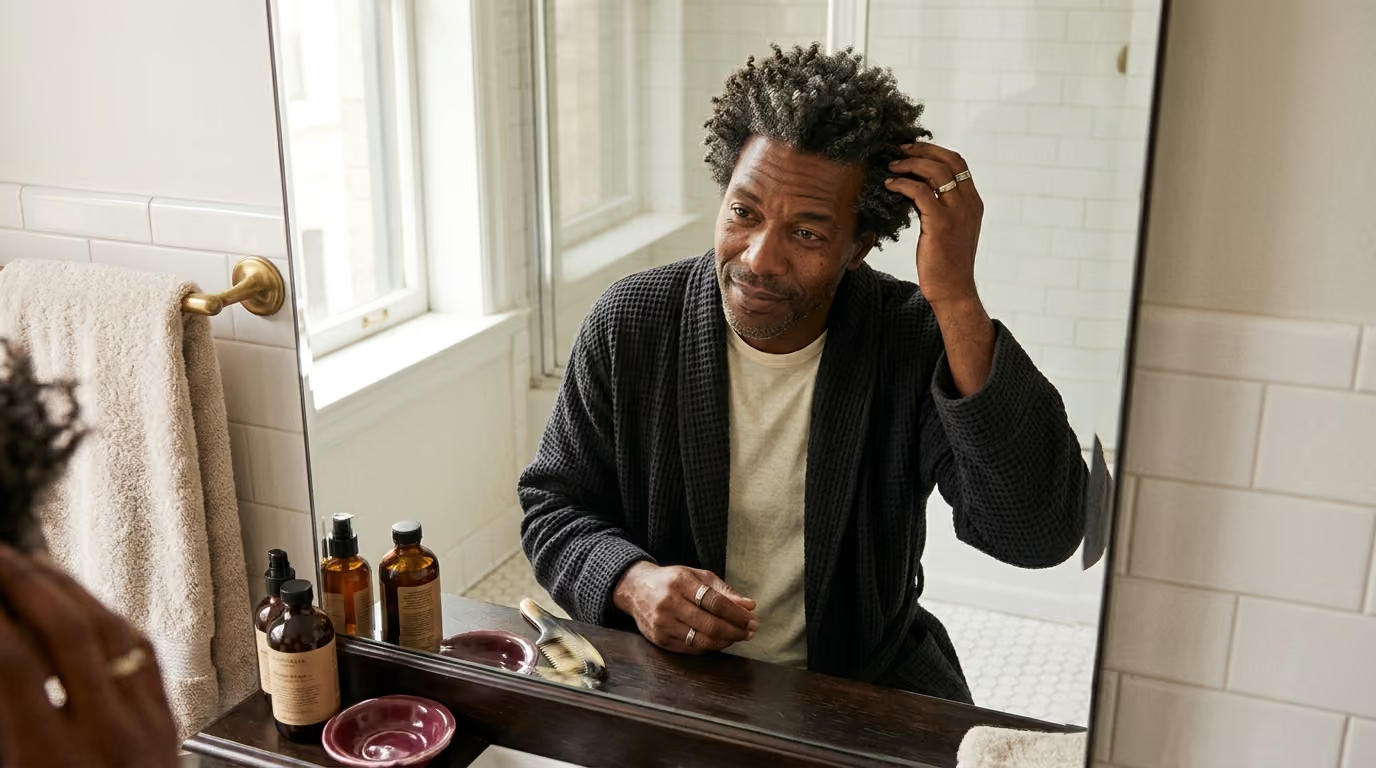

Stronger, well-hydrated textured hair after 35 comes from evidence-based wash routines, targeted scalp care, and low-tension styling tailored to mature biology.





You step out of the shower, look in the mirror, and notice your hair behaves differently than it did five years ago. The curl pattern looks less uniform. The edges around your temples feel slightly thinner after a month of wearing your hair braided back. Products that used to provide instant definition now leave your strands feeling dry or weighed down.
Managing textured hair after 35 requires a shift in perspective. Hair care advice aimed at younger audiences often focuses on rigid styling routines, heavy butters, or chasing temporary definition. Mature hair requires an approach built on fiber preservation, scalp health, mechanical caution, and an understanding of how follicles change over time.
Caring for waves, curls, coils, and tight zig-zag patterns is not about finding a single miracle bottle. It is about understanding the physical structure of your strands and responding to biological shifts with intention.
Textured hair has a unique physical geometry. Straight hair shafts emerge from round follicles and have a relatively uniform circular cross-section. Curly, coily, and tightly textured hairs grow from elliptical or curved follicles. This creates an asymmetrical, flattened oval shaft that twists as it grows.
Every bend, curve, and twist along a curly hair fiber represents a potential point of structural vulnerability. Cuticle scales, which lie flat like roof shingles on straight hair, tend to lift slightly at these turn points. This lifted cuticle structure allows moisture to escape more easily. It also makes the fiber more susceptible to mechanical friction during combing, washing, and styling.
The natural twists along the shaft also make it difficult for sebum to travel down the length of the strand. Sebum is the protective oil produced by your scalp's sebaceous glands. On straight hair, sebum moves smoothly down the shaft through capillary action and brushing. On textured hair, sebum pools near the scalp, leaving the mid-lengths and ends dry and exposed.
Hair pattern and hair condition are entirely different properties. Pattern refers to the visible shape of the fiber, ranging from wide waves to tight coils. Condition refers to the integrity of the cuticle, the strength of the cortex, internal moisture retention, and tensile elasticity.
A person with tight coils can have remarkably healthy, resilient hair. Someone with loose curls may have fragile, highly porous, damaged strands from bleach or thermal tools. Assuming that curl tightness automatically equals fragility or strength leads to poor grooming choices.
Hair is composed of two primary structures: the shaft and the follicle. The hair shaft is the non-living keratinized fiber exposed to the elements. The follicle is the living mini-organ seated within the dermis of the scalp.
Conditioners, leave-in treatments, and oils interact strictly with the hair shaft. They smooth cuticles, reduce surface friction, and temporarily replace lost surface lipids. They cannot alter the living follicle beneath the skin. When hair thinning, recession, or shedding occurs, addressing the shaft alone will never solve the underlying issue.
Porosity describes how readily your hair absorbs and releases moisture. Low-porosity hair has tightly bound cuticle layers that resist water penetration but retain hydration once saturated. High-porosity hair has lifted, fragmented, or missing cuticles that absorb water instantly yet lose it just as fast. Porosity is shaped by genetics, but it increases dramatically with sun exposure, chemical treatments, heat styling, and physical weathering.
Aging is a biological process that influences every tissue in the body, including hair follicles. Turning 35 is not a sudden cliff, but it serves as a meaningful life-stage marker where cumulative cellular shifts become visible.
Research published in the British Journal of Dermatology demonstrates that hair aging involves three core changes: a reduction in the duration of the active growth phase, a reduction in individual shaft diameter, and a longer resting interval between shedding and new growth.
As the anagen growth phase shortens, individual strands fall out before reaching their previous maximum length. The telogen resting phase lengthens, meaning follicles sit empty for longer periods before producing replacement fibers. This creates a gradual, subtle drop in overall visual density across the scalp.
In a comprehensive life-cycle study, researchers found that average hair fiber diameter increases from early adulthood until peaking in the early-to-mid thirties. After this window, individual fiber diameter begins a steady, gradual decline.
When individual hair shafts become finer, the entire head of hair feels less dense, even if the total follicle count has not drastically dropped. Finer textured fibers possess less tensile strength. They snap more easily under mechanical tension, heat exposure, and chemical processing. Styles that your hair tolerated without issue at age twenty-five may cause noticeable breakage at forty.
The scalp also undergoes distinct physiological changes. Sebum production decreases as androgen levels fluctuate and sebaceous gland output slows. For individuals with textured hair, who already experience uneven sebum distribution, this drop in natural oil makes the hair feel drier, rougher, and more brittle.
Gray hair introduces another layer of mechanical change. As melanocytes within the follicle cease pigment production, the internal architecture of the cortex alters. Gray fibers frequently emerge with an irregular cross-sectional shape, a thicker cuticle layer, and an altered protein structure.
This makes gray textured hair feel wiry, coarse, and resistant to moisture absorption. These fibers often refuse to blend smoothly into surrounding curls, requiring adjusted conditioning and lower manipulation.
Follicular miniaturization becomes more prevalent after 35. Driven by genetic sensitivity to dihydrotestosterone alongside local micro-inflammation, vulnerable follicles produce progressively finer, shorter hairs over successive cycles. Recognizing these shifts helps you adjust your grooming habits before minor fiber stress turns into noticeable hair loss. You can explore broader healthy aging approaches to better understand how whole-body vitality connects to skin and follicle longevity.
One of the most frequent mistakes men make is assuming all hair found in the sink or shower drain represents the same problem. To protect your hair, you must distinguish between normal shedding, mechanical breakage, and true follicular loss.
Shedding is a normal biological event. Humans shed between 50 and 100 hairs per day as follicles cycle out of the telogen phase. A shed hair is easy to identify: it is full-length and features a tiny, smooth white bulb at the root end.
Because textured hair catches and holds loose strands within its coil structure, people who wash their hair once a week often see hundreds of shed hairs release at once during wash day. This sudden release can look alarming, but it often represents normal accumulated shedding over seven days rather than active hair loss.
Breakage occurs when the hair fiber snaps somewhere along its shaft. Broken hairs are shorter than your full strand length, lack a root bulb, and frequently feature frayed, split, or white fractured ends.
Breakage is driven by external stressors: rough detangling, friction from cotton pillowcases, dry combing, excessive heat, chemical straighteners, and heavy tension. When breakage outpaces your natural growth rate, your hair seems to stop growing entirely, even though your follicles are producing new length at normal speeds.
Follicular hair loss involves changes within the follicle itself. The hair shaft may remain strong, but the follicle produces finer fibers, stops producing fibers, or undergoes inflammatory destruction.
Pattern hair loss presents as a gradual widening of the part line, thinning at the crown, or progressive recession at the temples. A study in the British Journal of Dermatology noted that hair density declines steadily from roughly 293 hairs per square centimeter at age 35 to 211 hairs per square centimeter by age 70. When density declines across the central scalp, topical leave-in conditioners cannot correct the problem.
Traction alopecia is another serious concern for individuals with textured hair. It results from continuous, prolonged physical pulling on the follicle from tight braids, cornrows, twists, high-tension ponytails, dreadlocks, or tightly applied hair systems.
The American Academy of Dermatology warns that chronic tension inflames the follicle, leading to broken hairs around the hairline, small follicular pustules, scalp tenderness, and eventual permanent scarring. When caught early, traction alopecia is reversible by removing the tension. If ignored, the follicle scarred over, causing permanent hair loss.
The textured hair industry often misuses the term moisture. Understanding what actually hydrates a hair fiber prevents product buildup, greasy residue, and persistent dryness.
Water is the only true moisturizer. Hair fibers absorb water molecules into the cortex, which increases elasticity and allows the keratin chains to flex without snapping. Hair products do not contain magical hydrating agents; they provide ingredients that help the fiber attract, absorb, and hold onto water, or reduce the friction that strips it away.
Conditioning ingredients serve specific physical functions:
Applying pure oil directly to dry, parched hair does not hydrate it. Raw oils are hydrophobic; they repel water. When you layer heavy oils over dry fibers, you create a barrier that prevents future water from penetrating during washing. The result is hair that feels simultaneously greasy on the outside and brittle on the inside.
True hydration requires saturating the hair with water, applying a water-based leave-in conditioner formulated with humectants and fatty alcohols, and sealing with a light layer of emollient to slow moisture loss.
Shrinkage is another fundamental property of textured hair. When curly and coily fibers get wet and dry naturally, they contract into their natural geometry. Hair may appear 50 to 80 percent shorter than its actual stretched length.
Shrinkage is a sign of healthy hair elasticity and intact protein structure, not a defect or damage. Fighting shrinkage through aggressive heat stretching or harsh tension breaks the internal disulfide bonds of the fiber, leading to chronic weakness.
The real challenge with shrinkage is that contracted coils easily interlock, forming tiny fairy knots or single-strand knots. These knots catch on combs and neighboring hairs, snapping fibers during routine styling. Managing shrinkage is about keeping fibers aligned, lubricated, and detangled in gentle sections, rather than forcing them to remain straight.
Building a functional wash day requires aligning your routine with your scalp environment and styling habits. An effective regimen cleanses the scalp skin without depleting the hair shaft of protective lipids.
The American Academy of Dermatology notes that tight curls and coils do not require daily shampooing. However, leaving the scalp unwashed for weeks causes sebum, sweat, exfoliated skin cells, and product residues to accumulate.
This accumulation disrupts the scalp microbiome and fosters the overgrowth of Malassezia yeasts, triggering inflammation, itching, and seborrheic dermatitis. A baseline washing interval of every one to two weeks works well for most textured hair, adjusted based on physical activity, sweating, and styling load.
An evidence-aligned wash day follows a methodical sequence:
First, section your hair into four or six manageable quadrants. Working in sections prevents loose, wet strands from tangling together and reduces the mechanical force needed to work through the hair.
Second, apply a sulfate-free, moisturizing shampoo directly to your scalp skin. Massage gently with the pads of your fingers, never your fingernails. Allow the suds to run down the lengths of your strands during rinsing rather than vigorously bunching and rubbing your ends together.
If you use heavy pomades, edge controls, or styling waxes, incorporate a clarifying shampoo every three to four washes. Clarifying removes stubborn polymer buildup that blocks hydration.
Third, apply a generous amount of rinse-out conditioner containing fatty alcohols, such as cetyl or stearyl alcohol, along the entire length of your hair. The American Academy of Dermatology recommends conditioning curly hair from root to tip, rather than only on the ends.
Fourth, detangle while your hair is fully saturated with conditioner. The conditioner provides the physical slip required for combs and fingers to glide through knots without ripping the cuticle.
Use a wide-toothed comb, a flexible detangling brush, or your fingers, starting at the tips and slowly working upward toward the roots. Never dry-brush curly or textured hair. The American Academy of Dermatology warns that dry brushing tears delicate curl patterns, snaps fibers, and creates severe surface frizz.
Fifth, rinse thoroughly with lukewarm water. Hot water can dry the scalp skin, while cold water provides no proven benefit for cuticle closure and makes product rinsing difficult.
Sixth, apply your water-based leave-in conditioner while your hair is still wet or damp. Blot excess moisture with a microfiber towel or a smooth cotton shirt. Avoid aggressive rubbing with rough terrycloth towels, as the coarse loops act like microscopic sandpaper against lifted cuticle scales.
Product selection should match your strand diameter rather than marketing buzzwords. If you have fine textured hair, heavy shea butter, thick castor oil, and dense pomades will weigh your coils down, causing them to look flat and attract dust. Fine strands thrive on lightweight lotions, liquid leave-ins, and light oils like argan or jojoba.
If you have coarse, thick, highly porous hair, your strands can handle richer creams, botanical butters, and medium-hold styling gels. For more insights on selecting high-performance grooming formulas, read our dedicated skin and grooming guides.
Protective styling is widely discussed in textured hair communities, but its primary purpose is often misunderstood. A style is protective only if it reduces daily manipulation and environmental exposure without introducing dangerous tension, heavy weight, or prolonged neglect.
When braids, twists, or cornrows are pulled too tight, they cease to be protective. Excessive pulling generates mechanical stress at the follicular junction. If a style causes headaches, throbbing, stinging, or small red bumps along your hairline, it is damaging your hair.
Research evaluating chemical straighteners and styling practices indicates that cumulative risk is real. Combining previous relaxer treatments with tight cornrow braiding multiplies the likelihood of developing traction alopecia.
Chemicals weaken the internal protein bonds of the cortex, making the fiber far less capable of handling mechanical pull. If your hair is color-treated, graying, or chemically processed, your tolerance for tension is significantly reduced.
Follow these low-tension principles to keep your hair and follicles intact:
Thermal styling requires strict moderation. Flat irons, blow dryers, and hot combs alter hair by temporarily breaking hydrogen bonds within the cortex.
However, high heat can melt the natural lipids of the cuticle and degrade structural keratin proteins. Clinical reviews recommend keeping hot tools below 175 degrees Celsius (347 degrees Fahrenheit), using them no more than once per week, and applying them exclusively to completely dry hair with a dedicated heat protectant.
Applying a hot iron to damp or wet hair causes moisture trapped inside the cortex to boil rapidly into steam. This produces bubble hair deformity, an irreversible condition where internal voids cause the strand to shatter.
Textured hair care for gay men carries specific social, aesthetic, and cultural dynamics. From gym routines and pool parties to active dating lives and high grooming standards, textured hair is constantly exposed to factors that challenge fiber health.
Physical fitness is central to many gay men's lifestyle routines. Frequent workouts generate sweat, which contains sodium chloride and lactic acid. When sweat dries on the scalp, the salt crystallizes, leaving the hair feeling stiff and rough while irritating the scalp skin.
Rinsing your scalp with plain water or using a light cleansing conditioner between full wash days removes sweat crystals without stripping natural lipids. If you swim regularly, chlorine and copper in pool water bind aggressively to porous curls, causing severe brittleness. Wet your hair thoroughly with fresh tap water and apply a light leave-in conditioner before entering the pool to reduce chemical absorption, and always shampoo afterward.
Barbershop culture also plays an important role in personal presentation. The crisp edge-up, sharp temple taper, and clean fade are staple aesthetic choices.
However, aggressive clipper work, sharp razor lineups, and frequent alcohol-based aftershaves can cause folliculitis barbae and hairline recession. Alcohol splashes dry out adjacent curls, while shaving against the natural curl grain pushes curved hair tips back into the skin, producing painful ingrown bumps.
Talk openly with your barber. Request clippers rather than straight razors along fragile hairline edges, ask for alcohol-free witch hazel or soothing balms after cutting, and avoid pulling the hair taut during detailing.
Navigating dating and personal image after 35 can sometimes bring pressure to hide normal aging. Gay culture often places a heavy premium on youthful aesthetics, leading some men to reach for quick fixes like continuous tight hair systems, aggressive hair dyes, or tight buns to conceal thinning crowns.
Embracing the maturity of your hair, including natural gray streaks and changing textures, creates an authentic, refined look. Gray textured hair looks striking when properly conditioned and shaped by a skilled stylist. Maintaining healthy, well-groomed, natural coils projects sophistication and confidence. For more on navigating personal image and self-assurance as you age, explore our confidence and presentation resources.
Textured hair care is not one-size-fits-all. Several common missteps and complex edge cases require nuanced management.
Fine coils create a visual illusion: the hair may look thick and dense overall, but each individual strand has a narrow diameter. Fine coils are vulnerable to mechanical breakage.
Avoid heavy, sticky styling waxes and thick butters that require vigorous rubbing to remove. Use lightweight leave-in sprays, detangle with your fingers or wide tools, and handle wet hair gently.
Transitioning from chemically straightened hair back to natural texture, or managing relaxed hair between touch-ups, creates a high-risk area called the line of demarcation. This is the exact point where natural curly growth meets the relaxed, chemically straightened shaft.
The two textures have different elasticity, moisture levels, and tensile strength. Bending, brushing, or pulling the hair causes it to snap easily at this junction.
Apply deep conditioning treatments generously to this line, avoid fine-toothed combs, and do not overlap chemical relaxers onto previously treated hair.
Lifting melanin pigment with bleach damages the protective cuticle layer and breaks internal disulfide protein bonds. Bleached textured hair is high in porosity, loses moisture quickly, and tangles easily.
If you color your hair, reduce thermal styling entirely, incorporate protein-fortified deep conditioners to temporarily reinforce the fiber, and prioritize protective moisture layering.
When a person with textured hair experiences severe flaking and itching, their first instinct is often to apply heavy raw oils, such as coconut or olive oil, directly to the scalp. If the flaking is caused by seborrheic dermatitis, this makes the problem worse.
The yeast Malassezia feeds directly on specific fatty acid chains found in plant oils, multiplying rapidly and increasing inflammation. If you have greasy scales, redness, or persistent itching, use an active medicated shampoo containing ketoconazole, zinc pyrithione, or selenium sulfide.
Apply the medicated lather directly to the scalp skin and let it sit for five to ten minutes before rinsing, as recommended by dermatologists. Keep heavy styling products off your scalp tissue.
The textured hair industry is filled with aggressive marketing, proprietary trends, and bold promises. Separating scientific evidence from commercial hype protects both your wallet and your hair.
The popular letter-and-number curl classification system (ranging from 2A to 4C) is a helpful conversational tool, but it has no diagnostic medical value. The system describes only the visual shape of dry hair.
It tells you nothing about strand diameter, porosity, density, cuticle health, elasticity, or scalp conditions. Two people with identical "4A" curl patterns may require completely different routines if one has coarse, low-porosity hair and the other has fine, bleached, high-porosity strands. Relying entirely on curl typing to choose products is ineffective.
"Clean," "organic," and "all-natural" labels are unregulated marketing terms. A botanical essential oil or natural plant extract can cause contact dermatitis, allergic irritation, and scalp sensitivity just as easily as a synthetic ingredient.
Conversely, cosmetic-grade silicones and synthetic conditioning polymers are rigorously tested, highly effective slip agents that prevent mechanical breakage during detangling. Judge a product by how your scalp and hair respond, not by clean-beauty branding.
Dietary supplements advertised for hair growth have limited clinical support in well-nourished adults. Unless a blood test confirms a clinical deficiency in iron, ferritin, vitamin D, or zinc, mega-dosing biotin or multi-ingredient hair gummies will not accelerate growth or prevent genetic thinning.
Excessive biotin intake can also interfere with critical clinical laboratory tests, including cardiac troponin and thyroid hormone panels.
Hair oils and greases do not stimulate follicle activity or speed up biological hair growth. While lubricating the hair shaft helps retain length by preventing split ends, oils do not alter follicular cycling beneath the skin. Avoid applying heavy oils to your scalp in the hope of curing thinning.
Bond-repair treatments and protein masks provide real, measurable benefits for chemically damaged hair by temporarily patching fractured areas of the cortex. However, they cannot permanently rebuild broken disulfide bonds back to their virgin state. They are temporary structural supports that wash out over time, requiring ongoing gentle care.
Not every hair concern can be solved in the grooming aisle. Knowing when to transition from cosmetic care to clinical evaluation saves your follicles from irreversible damage.
Consult a board-certified dermatologist, preferably one experienced in textured hair and scalp disorders, if you notice any of the following signs:
A dermatologist can perform a physical examination, dermoscopy (trichoscopy), blood work, or a small scalp biopsy to accurately diagnose the root cause.
Early diagnosis is essential. Conditions like traction alopecia, central centrifugal cicatricial alopecia (CCCA), and androgenetic alopecia respond well to medical interventions such as topical or oral minoxidil, anti-inflammatory therapies, and anti-androgens when caught early. Once a follicle undergoes complete fibrotic scarring, regrowth is no longer possible.
For broader guidance on preserving your aesthetic wellness and vitality through science-backed routines, consult our aesthetic longevity resources.
Review this guide whenever you experience a major change in your hair routine, such as transitioning to a new hairstyle, moving to a different climate, or introducing color processing. It is also wise to revisit these principles if you notice increased breakage, changing curl texture, or scalp irritation after turning a new chronological corner.
Healthy textured hair after 35 requires balancing gentle scalp cleansing, deep hydration, mechanical caution, and early medical attention for changing density. Caring for your curls is an ongoing practice of preserving the physical fiber you have while protecting the living follicles that shape your look for years to come.
Stay connected for research-led guidance on fitness, body composition, skin, grooming, vitality, sexual wellbeing, relationships and healthy aging. Clear ideas for gay men 35+ who want to look good, feel strong and age with confidence.


Build habits and systems that support clear thinking, steady energy and long term capacity throughout a demanding career.
explore the Blog