
Lifelong physical vitality and functional independence become achievable through practical fitness, sleep, and nutrition strategies tailored for gay men over 35.





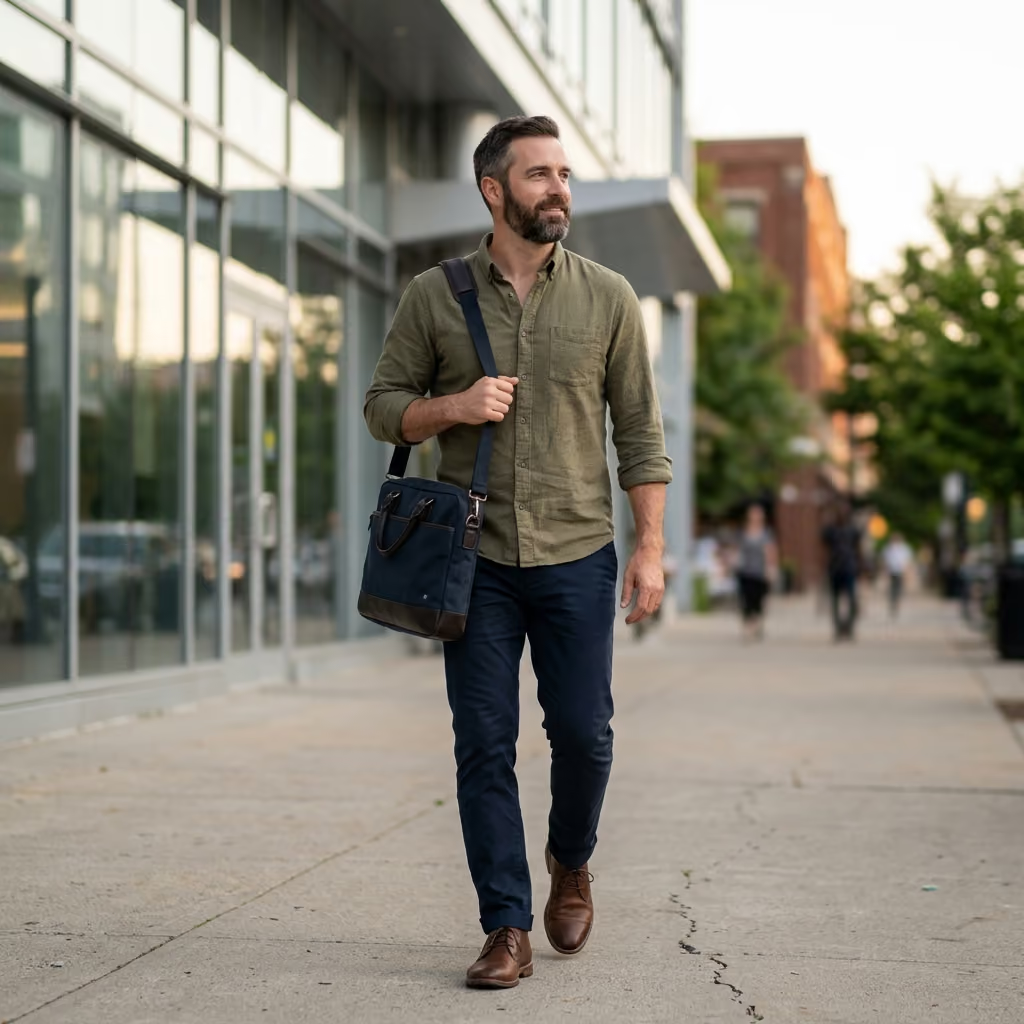
You step out of the gym on a Saturday afternoon after a solid workout. For years, training was mostly about how a shirt fit or getting ready for summer. Now, past 35, the internal dialogue changes. You still care about looking great, but you also notice changes in your joints, your sleep quality, and how quickly you bounce back from late nights. You want stamina for travel, sharp mental focus at work, and the physical freedom to live on your own terms for decades.
Extending your healthspan means shifting from short-term aesthetic panic to long-term physical capability. Lifespan is simply the total number of years you live. Healthspan is the period of life you spend free from chronic disability, maintaining the strength, cardiovascular fitness, mental clarity, and social connection needed for an independent life.
Chasing age reversal through unproven supplements or extreme routines often leads to injury and frustration. A sustainable approach focuses on the biological and social foundations that keep you capable, attractive, and resilient across your lifetime.
Credible public health research defines healthspan as your functional longevity. The objective is preserving your physical and cognitive capacity so your quality of life matches your lifespan.
Our organizing framework splits healthspan into six core domains:
These domains reinforce one another. Consistent resistance training protects bone density and improves insulin sensitivity. Better metabolic health supports cardiovascular function and sexual vitality. Strong social bonds lower stress hormones and protect long-term brain health.
You can visualize this as a capability ladder. At the base lies your foundation: regular sleep, balanced nutrition, preventive medical care, and mental health support. Above that is capacity: muscular strength, aerobic stamina, and movement quality.
Next comes resilience, which is your ability to handle disruptions like illness, work stress, or travel without physical decline. Independence sits near the top, allowing you to manage your home, enjoy recreation, and maintain an active sex life. At the highest level is meaning: using your preserved physical and mental health to invest in creative projects, relationships, and chosen family.
Looking good remains a valid goal. Looking fit, feeling capable, and staying healthy are complementary outcomes when supported by sound habits. You can learn more about building sustainable physical habits in our longevity and healthy aging guides.
Aging is a normal biological process, not a medical failure. Understanding how your body changes after 35 allows you to adjust your training, recovery, and lifestyle effectively.
Muscle mass begins a gradual decline of roughly three to eight percent per decade after age 30 if you do not perform regular resistance training. This loss of muscle tissue, known as sarcopenia, reduces resting metabolic rate and compromises joint stability. Tendons and ligaments lose water content and elasticity, making them more vulnerable to overuse injuries if volume spikes too quickly.
Metabolic changes also become noticeable. Insulin sensitivity can decline, which makes blood sugar regulation less efficient, especially when paired with a sedentary routine. Visceral fat can accumulate more easily around internal organs, raising baseline systemic inflammation and increasing long-term cardiovascular risks.
Hormonal patterns shift gradually as well. Total and free testosterone levels in men tend to decrease by roughly one percent per year after age 30. This natural shift does not automatically cause fatigue or muscle loss, but poor sleep, chronic stress, and physical inactivity can amplify the symptoms.
Cardiovascular elasticity also decreases over time. Blood vessels become slightly stiffer, which contributes to higher systolic blood pressure if left unchecked. Maximal heart rate declines predictably with age, reducing your theoretical ceiling for peak athletic output.
These biological changes do not mean your physical prime is over. They simply mean your margin for error narrows. The haphazard training and erratic recovery habits that worked in your twenties require smarter adjustments after 35.
Cardiovascular fitness is one of the strongest predictors of long-term survival and functional independence. Strong cardiorespiratory fitness protects your blood vessels, supports brain perfusion, and speeds up recovery between intense activities.
The World Health Organization recommends that adults complete 150 to 300 minutes of moderate-intensity aerobic activity each week, or 75 to 150 minutes of vigorous-intensity activity, or an equivalent combination. Exceeding 300 minutes of moderate activity provides further health benefits.
You do not need complicated laboratory testing to gauge your aerobic intensity. The talk test offers an accurate, practical guide:
A balanced weekly aerobic plan for a man over 35 includes two to three moderate sessions lasting 30 to 45 minutes, along with daily light movement. You can add one optional session of vigorous intervals if your joints and recovery capacity tolerate it well.
A common mistake is completing a 45-minute morning workout and then sitting stationary for the next ten hours. High amounts of sedentary time independently increase cardiometabolic risk, even among regular gym-goers.
The World Health Organization explicitly advises adults of all ages to reduce sedentary behavior and replace it with physical movement of any intensity. Research demonstrates that any amount of physical activity is better than none.
Incorporate practical movement breaks into your workday:
These simple habits accumulate over weeks and months, significantly raising your total daily energy expenditure and protecting vascular health.
Cardiovascular exercise protects your heart, but resistance training protects your musculoskeletal system. Lifting weights maintains muscle mass, strengthens bone mineral density, protects connective tissues, and preserves physical independence.
The World Health Organization recommends muscle-strengthening activities involving all major muscle groups on at least two days per week. Strength serves as functional insurance. It allows you to lift heavy travel bags, stand up easily from low surfaces, prevent falls, and maintain an active sex life well into your sixties and seventies.
For deeper insights into program design, visit our collection on strength and body composition.
A comprehensive strength routine does not require dozens of machines or complicated exercises. Focus your training around fundamental human movement patterns:
Two to three full-body sessions per week provide an optimal stimulus for most men over 35. Perform two to four sets per exercise, keeping your repetitions mostly between six and twelve per set.
Progressive overload is necessary to stimulate muscle adaptation, but it must be applied intelligently to protect aging joints:
If you are returning after an injury or have never lifted weights, consider working with a certified trainer or physical therapist to establish safe mechanics.
Mobility is often confused with passive flexibility. Flexibility is the ability of a muscle to lengthen passively. Mobility is your active, usable range of motion under neurological control.
As joint capsules stiffen with age, maintaining mobility prevents compensations that cause chronic lower back, shoulder, and knee pain. Balance and coordination also decline unless practiced deliberately. The World Health Organization recommends that older adults incorporate varied physical activity that emphasizes functional balance and strength training to enhance functional capacity and prevent falls.
Spend five to ten minutes each day working through basic mobility drills:
Maintaining the ability to sit on the floor and stand up smoothly is a strong practical indicator of musculoskeletal competence and coordination.
Sleep is the biological foundation of recovery, hormone production, tissue repair, and neurological health. Sacrificing sleep to fit in more work, social life, or workouts undermines your healthspan.
The Centers for Disease Control and Prevention recommends that adults aged 18 to 60 sleep at least seven hours per night. The CDC reports that sleeping fewer than seven hours per night is linked to higher rates of obesity, hypertension, diabetes, coronary heart disease, stroke, frequent mental distress, and all-cause mortality. Short sleep also impairs attention, slows reaction times, and increases error rates.
Distinguish between sleep opportunity, which is the time you spend in bed, and sleep duration, which is the time you are actually asleep. To achieve seven solid hours of rest, you generally need an eight-hour sleep window.
Implement these evidence-supported sleep habits:
Urban gay culture often includes late-night social schedules, weekend clubbing, shift work, and higher baseline rates of minority stress. These factors can fragment circadian rhythms.
A common pitfall is using alcohol, cannabis, or over-the-counter sedatives to force sleep after a stimulating evening. While these substances may induce sedation, they disrupt sleep architecture, suppress restorative deep and REM stages, and worsen daytime fatigue.
If you experience loud snoring, wake up gasping, or suffer from severe daytime sleepiness, seek an evaluation for obstructive sleep apnea. Sleep apnea is common, underdiagnosed in active men, and significantly elevates cardiovascular risk when left untreated.
A sustainable nutrition strategy for healthspan avoids extreme restriction. Instead, it prioritizes nutrient density, adequate protein distribution, metabolic regulation, and digestive health.
The Dietary Guidelines for Americans emphasizes consuming nutrient-dense foods across all food groups while staying within appropriate caloric limits. A long-term healthspan eating pattern emphasizes vegetables, fresh fruits, legumes, whole grains, nuts, seeds, and quality lean proteins.
For further reading on optimizing your diet, check our resources on nutrition and metabolism.
Older muscle tissue exhibits anabolic resistance, meaning it requires a stronger amino acid signal to stimulate muscle protein synthesis compared to younger tissue. Active men over 35 generally benefit from consuming between 1.2 and 2.0 grams of protein per kilogram of body weight daily, distributed across three or four meals.
Quality protein sources include:
Spreading your protein intake evenly throughout the day ensures continuous amino acid availability for tissue maintenance and recovery.
Dietary fiber supports gut microbiome diversity, aids in cholesterol elimination, and stabilizes post-meal blood sugar levels. Aim for 30 to 45 grams of total fiber daily from diverse whole plant foods.
Prioritize healthy unsaturated fats from extra virgin olive oil, avocados, nuts, and fatty cold-water fish. These provide essential omega-3 fatty acids that support cardiovascular and neurological health.
In many gay social circles, alcohol serves as the primary social lubricant for dating, nightlife, and community gatherings. However, alcohol carries real physiological costs that increase with age.
The Dietary Guidelines for Americans states that drinking less is better for health than drinking more. For men who choose to drink, guidance recommends limiting consumption to two drinks or fewer on days when alcohol is consumed. Non-drinkers should never start drinking for supposed health benefits.
Alcohol impairs liver function, disrupts sleep quality, raises blood pressure, accelerates facial skin aging, and impairs physical recovery. Transitioning to alcohol-free alternatives or setting strict limits during social events protects both metabolic and cognitive health.
Marketing campaigns often promote costly longevity supplement stacks promising to reverse biological age. Most of these claims rely on preliminary rodent studies or weak observational data.
Supplements cannot compensate for chronic sleep deprivation, a poor diet, or a sedentary lifestyle. Use supplements selectively to correct documented clinical deficiencies, such as vitamin D or vitamin B12, or under the guidance of a physician. Avoid unregulated prohormones or unverified vitality blends that may contain undisclosed compounds harmful to liver and kidney function.
Preventive healthcare shifts the medical focus from treating acute illness to detecting and mitigating risk factors before they cause organ damage.
The U.S. Preventive Services Task Force recommends screening all adults aged 18 and older for hypertension using accurate office blood pressure measurements. Untreated high blood pressure silently damages blood vessels in the brain, kidneys, and heart over decades.
Your regular preventive medical review should evaluate:
The U.S. Preventive Services Task Force also recommends screening for colorectal cancer starting at age 45 or 50, continuing through age 75. Discuss the screening modality with your physician, whether choosing direct visualization methods like colonoscopy or stool-based testing, based on personal and family risk factors.
Sexual wellbeing remains a vital component of quality of life as you age. Maintaining sexual health requires objective, stigma-free screening based on your actual sexual practices.
The Centers for Disease Control and Prevention recommends that sexually active gay, bisexual, and other men who have sex with men undergo HIV screening at least annually. The CDC also recommends annual screening for syphilis, hepatitis B, and hepatitis C based on risk profiles, along with targeted nucleic acid amplification testing for chlamydia and gonorrhea at all anatomical exposure sites, including rectal and pharyngeal swabs.
PrEP (pre-exposure prophylaxis) is a highly effective, evidence-based tool for preventing HIV acquisition. Using PrEP requires regular kidney function monitoring and quarterly STI screenings, ensuring early diagnosis and treatment of asymptomatic infections. Explore our guides on male vitality and sexual wellbeing for broader discussions on sexual longevity.
Due to advances in antiretroviral therapy, people living with HIV are living long, productive lives. Aging with HIV involves managing long-term viral suppression alongside non-AIDS chronic health conditions.
The CDC reports that older adults living with HIV are likely to manage at least one additional chronic condition, such as cardiovascular disease, diabetes, or osteoporosis. The President's Advisory Council on HIV/AIDS highlights that people aging with HIV may experience cardiovascular complications, accelerated bone mineral loss, and cognitive changes earlier than HIV-negative individuals.
If you are aging with HIV, collaborate with your healthcare team to optimize your long-term health:
Modern HIV care treats the whole person, ensuring that viral suppression is matched with proactive cardiometabolic and lifestyle support.
Healthspan is not purely physiological. Psychological resilience, purpose, and deep social relationships are fundamental pillars of physical longevity.
The National Institute on Aging links social isolation and loneliness with substantially higher risks of hypertension, heart disease, obesity, impaired immunity, depression, cognitive decline, Alzheimer's disease, and premature death.
Social isolation refers to an objective lack of social contact, while loneliness is the subjective distress caused by feeling disconnected. A 2025 systemic review published in major medical literature showed that social isolation was associated with a 35 percent increased risk of all-cause mortality, living alone with a 21 percent increase, and loneliness with a 14 percent increase in older adults.
Gay men navigate unique social factors that influence relationship networks over time:
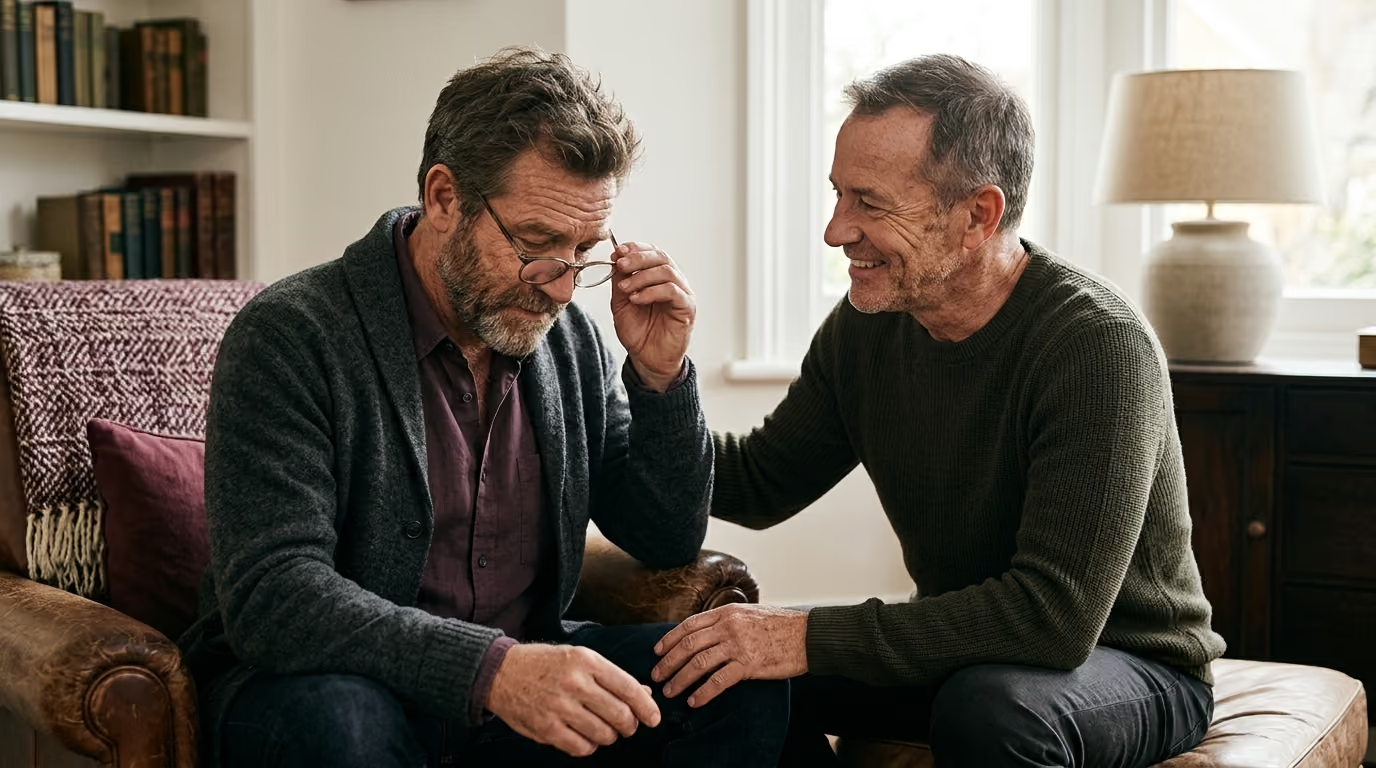
Building chosen family and maintaining intergenerational friendships provides emotional security, shared joy, and practical support during periods of injury or illness. Discover more perspectives in our confidence and relationships section.
Treat social health with the same deliberate consistency you apply to your gym routine:
Every man begins his healthspan journey from a different starting point. The following illustrative models show how to apply these principles across different life circumstances.
A 39-year-old gay man works long hours in a remote corporate role, sits for over nine hours daily, sleeps under six hours a night, and drinks alcohol several nights a week to unwind.
His priority sequence:
The goal is building a sustainable daily routine without overwhelming his work schedule.
A 46-year-old man who spent fifteen years doing heavy, failure-based bodybuilding now suffers from chronic shoulder pain, stiff knees, poor sleep, and anxiety about losing muscle fullness.
His priority sequence:
This model focuses on preserving joint longevity while sustaining muscle mass and cardiorespiratory health.
A 52-year-old man living with HIV maintains an undetectable viral load but experiences rising systolic blood pressure, mild joint stiffness, and concerns regarding bone density.
His priority sequence:
This approach proactively manages chronic health considerations while building musculoskeletal resilience.
A 58-year-old man lives alone, works independently, and feels isolated after moving to a new city where he knows few people outside of dating apps.
His priority sequence:
This intervention focuses on developing reliable social infrastructure alongside physical training.
Balancing work, training, recovery, and social life is simple when you organize your week around clear fundamentals.
Review our comprehensive collection of health and longevity resources to find additional templates tailored to your schedule.
While the benefits of exercise, quality sleep, whole-food nutrition, and social connection are backed by decades of research, other popular longevity interventions lack definitive human evidence.
Be skeptical of these commercially promoted trends:
Stick to foundational habits supported by rigorous evidence rather than chasing expensive, unvalidated longevity trends.
Focus your tracking on objective physical capabilities and health markers rather than obsessing over body fat percentages or mirror vanity metrics.
Ask yourself these practical questions every three to six months:
Return to this framework whenever your routines slip, following a major life transition, after an injury, or during your annual medical checkup. Use it to recalibrate your weekly habits, refocus on the basics, and ensure your daily actions match your long-term healthspan goals.
True healthspan is built through ordinary, evidence-informed habits practiced consistently over decades. Prioritize strength, protect your cardiovascular system, get restorative sleep, maintain preventive screenings, and nurture your chosen family to stay capable, independent, and vital throughout your life.
Stay connected for research-led guidance on fitness, body composition, skin, grooming, vitality, sexual wellbeing, relationships and healthy aging. Clear ideas for gay men 35+ who want to look good, feel strong and age with confidence.


Build habits and systems that support clear thinking, steady energy and long term capacity throughout a demanding career.
explore the Blog