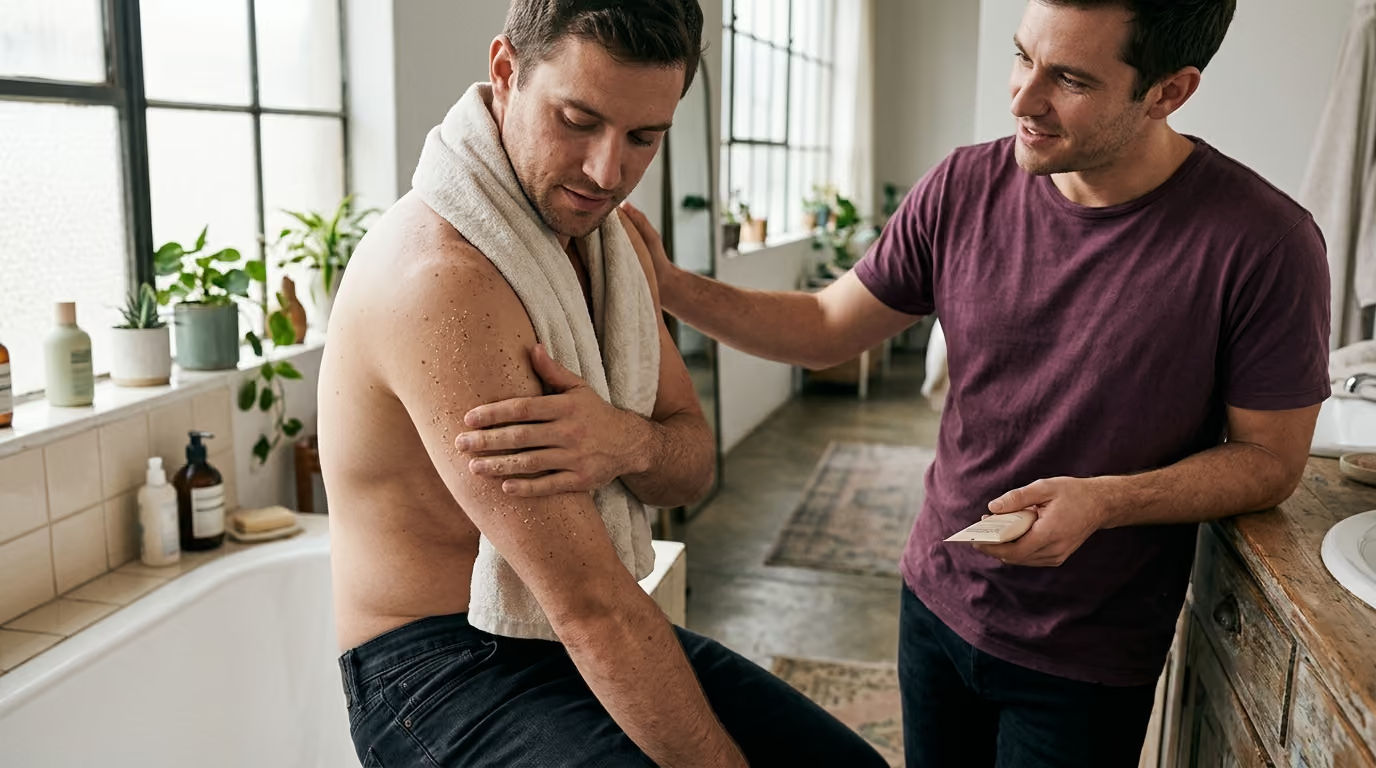

Most red body bumps look like ordinary acne, but correctly diagnosing conditions like folliculitis ensures effective treatment with targeted active ingredients.





Body breakouts are not simply facial acne relocated to the chest or back. They represent a wide spectrum of follicular inflammation, fungal overgrowth, mechanical friction, and sweat gland obstruction. While many people treat every bump on the torso or legs with standard spot treatments, the physical reality requires a more precise diagnostic approach.
Understanding what is happening across your shoulders, chest, groin, buttocks, and thighs is the foundation for lasting skin health. This guide breaks down the biological mechanisms behind body breakouts, practical hygiene frameworks, grooming adjustments, and clinical thresholds for medical evaluation.
The clinical literature confirms that truncal breakouts involve multiple overlapping conditions rather than a single disorder. Acne vulgaris remains a chronic inflammatory condition of the pilosebaceous unit. It develops through four primary mechanisms: follicular hyperkeratinization, excess sebum production, proliferation of Cutibacterium acnes, and local inflammatory cascades.
Research indicates that truncal acne rarely occurs in total isolation. According to narrative reviews on adult and adolescent acne, truncal involvement appears in roughly 30% to 60% of individuals who experience facial acne. Additional clinical reviews note that between 48% and 52% of people with facial acne have concurrent lesions on the back or chest. In one evaluated cohort of adolescents, 10.6% of those with truncal involvement exhibited noticeable scarring.
Global epidemiological data shows that acne remains widely prevalent across populations. Research analyzing the global burden of disease found that the age-standardized prevalence rate of acne vulgaris increased from 8,563.4 per 100,000 people in 1990 to 9,790.5 per 100,000 in 2021.
Beyond acne vulgaris, research identifies several distinct conditions that present with similar red bumps:
Targeting body skin concerns effectively requires matching the intervention to the specific underlying process. Applying drying acne cleansers to friction-induced intertrigo or inflamed hidradenitis can degrade the epidermal barrier and worsen inflammation.
Skin physiology evolves over time. Cellular turnover gradually slows down after age 35, which affects how quickly dead corneocytes shed from follicular openings. When these cells linger on the skin surface, they combine with residual sebum and environmental debris. This dynamic increases the likelihood of follicular plugs across broader body zones.
The structural composition of the dermis also shifts with age. Collagen production declines and the skin barrier retains less natural moisture. While adolescent body breakouts are frequently driven by massive surges in sebum production, adult body breakouts often develop on skin that is simultaneously dehydrated and prone to barrier irritation.
Lifestyle factors in your thirties and forties introduce distinct mechanical stressors. High-volume training, daily gym sessions, athletic compression gear, and demanding professional schedules create prolonged windows of sweat and friction. If you maintain regular strength training routines, your skin regularly encounters heavy occlusion, bench equipment, and athletic fabrics.
Adult skin also exhibits a slower recovery timeline after inflammatory damage. Post-inflammatory hyperpigmentation and micro-scarring resolve far more slowly than they did in earlier decades. Managing adult body breakouts requires balancing active anti-microbial treatments with active barrier protection. Overly aggressive treatments that stripped teenage skin will often cause significant contact dermatitis in adult men.
Accurate identification prevents weeks of ineffective treatment. Because visual overlap is common, examining lesion distribution, uniformity, and accompanying sensations is helpful.
Acne lesions are typically polymorphic, meaning they appear in multiple stages at the same time. You will observe a combination of open comedones (blackheads), closed comedones (whiteheads), inflammatory papules, and occasional pustules or deeper nodules. They primarily populate the central chest, upper shoulders, and upper back. Itching is minimal, but deeper inflammatory lesions may feel tender to the touch.
Unlike acne, folliculitis lesions are monomorphic. Every bump looks virtually identical in size and shape, centered directly around a hair follicle. Bacterial folliculitis often produces tiny, discrete pustules after shaving or friction.
Malassezia folliculitis presents as small, dome-shaped, intensely itchy papules across the upper chest, shoulders, and hairline. It frequently flares during hot, humid weather or after prolonged sweating. Comedones are noticeably absent in classic fungal folliculitis.
Chafing begins as mechanical friction between skin surfaces or between skin and fabric, producing redness, raw stinging, and surface irritation. When moisture, warmth, and friction persist in deep skin folds, intertrigo develops.
Intertrigo presents as symmetrical, red, moist plaques within opposing creases, such as the groin, gluteal cleft, underarms, or inner thighs. Patients report burning and soreness rather than the localized swelling of an acne pustule.
Hidradenitis suppurativa produces deep, firm, painful nodules that recur in the exact same anatomical zones. It favors intertriginous areas such as the axillae, groin, perianal region, and inner thighs.
Over time, these deep nodules can rupture, drain fluid, and develop chronic tracts beneath the skin surface. Recognizing these lesions early is crucial because they require specialized dermatological management rather than standard over-the-counter acne washes.
Translating dermatological science into daily life requires systematic habits around training, grooming, and clothing. The human body generates significant heat and sweat during athletic activity. When that moisture is trapped against the epidermis under synthetic fabrics, mechanical friction quickly damages the protective stratum corneum.
Active individuals encounter specific environmental triggers:
Managing your skin does not require abandoning demanding workouts or technical sportswear. It requires establishing strict hygiene boundaries immediately before, during, and after physical exertion. Addressing these environmental factors clears up a substantial percentage of recurring chest and back breakouts.
Cultural and social practices within the gay community influence how skin interacts with its environment. Body hair management, recreational spaces, intimate encounters, and athletic aesthetics introduce unique dermatological considerations. Exploring evidence-based skin grooming and aesthetics helps maintain clear skin while navigating these settings.
Body hair grooming is widespread among gay men. Whether you trim, shave, wax, or use depilatories on your chest, groin, or back, each method affects follicular integrity. Shaving with multi-blade cartridges cuts hair shafts at sharp angles below the skin surface, increasing the likelihood of ingrown hairs and bacterial entry.
Body hair trimming with electric clippers using a short guard protects the epidermal barrier far better than clean blade shaving. If you prefer complete hair removal, single-edge razors, proper lubricating gels, and shaving in the direction of hair growth minimize micro-trauma.
Recreational community environments also warrant practical attention. Communal wet areas such as steam rooms, saunas, hot tubs, and bathhouses present unique environmental exposures. Hot tubs with improper chemical balances are known vectors for Pseudomonas aeruginosa, the bacterium responsible for hot-tub folliculitis. This condition appears as an abrupt outbreak of itchy pustules over areas covered by swimwear.
Social gear, fetish wear, and nightlife attire present mechanical challenges as well. Harnesses, leather garments, rubber, and heavy synthetic clubwear trap sweat directly against the skin while applying continuous friction across the shoulders, chest, and thighs.
Skin clarity also intersects directly with confidence in sexual spaces. Experiencing recurrent breakouts, red bumps, or chafing across the buttocks, groin, or back can generate hesitation during physical intimacy. Caring for your skin is an integral element of feeling confident in your body, supporting both male vitality and sexual wellbeing and rewarding body confidence and intimate relationships.
Recognizing that body breakouts are manageable physical reactions rather than personal hygiene failures reduces unnecessary shame. A methodical routine restores skin clarity and comfort across every setting.
Selecting products for the body requires understanding the chemical properties of active ingredients and how they behave across thick truncal skin. The stratum corneum on the back and chest is considerably thicker than facial skin, requiring appropriate active concentrations and targeted contact times.
Benzoyl peroxide remains a premier evidence-backed topical agent for inflammatory acne vulgaris. It functions as a broad-spectrum antimicrobial agent by releasing free oxygen radicals, which rapidly reduces populations of Cutibacterium acnes without inducing bacterial resistance.
Guidance from the American Academy of Dermatology highlights that benzoyl peroxide is highly effective for managing back acne when used consistently. Studies indicate that wash formulations work best when lathered and left on the skin for two to five minutes prior to thorough rinsing.
Body washes containing 4% to 10% benzoyl peroxide provide robust antimicrobial coverage. Lower concentrations (around 4% to 5%) offer comparable clinical efficacy to 10% preparations while causing significantly less dryness and skin peeling.
One practical consideration: benzoyl peroxide oxidizes and bleaches colored textiles. Rinsing thoroughly in the shower and utilizing white towels and sleepwear prevents fabric discoloration.
Topical retinoids, such as over-the-counter adapalene or prescription tretinoin and trifarotene, normalize follicular keratinization. By preventing dead cells from adhering together inside the pore, retinoids resolve microcomedones and prevent new lesions from forming.
Retinoids represent the primary therapeutic choice for persistent blackheads, whiteheads, and rough post-inflammatory texture across the shoulders and chest. Because retinoids increase photosensitivity and can cause initial flaking, apply them as a thin layer to dry skin at night, followed by a light, noncomedogenic body moisturizer.
Salicylic acid is a lipid-soluble keratolytic agent that penetrates deep into sebum-filled follicles. It dissolves desmosomes, the cellular glue holding dead corneocytes together, facilitating gentle exfoliation within the pore lining.
Salicylic acid body sprays and washes (typically formulated at 2%) are useful for addressing mild comedonal acne and general follicular roughness across hard-to-reach areas of the back. However, applying salicylic acid to cracked, raw, or chafed skin folds will cause severe burning and irritant contact dermatitis.
When dealing with friction-dominant chafing and intertrigo, standard acne actives must be set aside in favor of pure barrier protection. Petrolatum forms an occlusive barrier that prevents skin-on-skin shear stresses along the inner thighs and buttocks.
Zinc oxide paste provides both a physical friction shield and mild astringent, soothing properties that protect macerated skin from moisture. These barrier products should be targeted strictly to friction points and kept away from acne-prone truncal follicles.
Many commercial body washes marketed as natural or detoxifying contain heavy concentrations of botanical oils, citrus extracts, and fragrance compounds like linalool and limonene. These compounds are frequent culprits behind allergic contact dermatitis and follicular irritation. Effective body care prioritizes fragrance-free, clinically tested formulations over unregulated marketing terminology.
Optimizing your daily routine requires addressing environmental and physical triggers. A dependable strategy follows a three-stage framework: Remove, Rinse, and Protect.
The moment your workout or heavy physical exertion ends, remove damp garments immediately. Do not sit in sweaty compression gear, damp cycling shorts, or unventilated tops while driving home or socializing.
Change into dry clothing if an immediate shower is unavailable. Additionally, eliminate contaminated equipment contact by washing workout clothes after every single wear and wiping down public exercise mats.
Shower promptly following substantial sweating to remove accumulated salt, microbes, and environmental debris. Guidance from public health authorities, including CDC athlete recommendations, underscores immediate post-exercise showering as a fundamental hygiene measure.
Keep shower water warm or lukewarm rather than scalding hot. High water temperatures strip intercellular lipids, weakening the moisture barrier and exacerbating rebound inflammation.
If using a medicated wash like benzoyl peroxide, apply it to affected areas and let it sit for two to five minutes before rinsing completely. When washing your hair, rinse shampoo and conditioner thoroughly and wash your torso afterward to clear residual conditioning agents from your back and shoulders.
After stepping out of the shower, gently pat your skin dry with a clean towel instead of rubbing aggressively. Pay close attention to skin folds, ensuring areas like the groin, underarms, and gluteal crease are dry.
Apply a lightweight, noncomedogenic moisturizer to areas prone to dryness. For zones subject to continuous friction during running or sports, apply an anti-chafing barrier ointment prior to getting dressed.
A common impulse when noticing body bumps is to scrub the skin with abrasive tools. This approach is counterproductive:
Garment selection should prioritize physical function and fabric mechanics over branding:
Different regions of the body feature distinct skin thicknesses, hair densities, and friction exposures. Structuring your routine around anatomical regions ensures targeted, comfortable care.
The chest and upper back contain high concentrations of sebaceous glands, making them classic zones for acne vulgaris and Malassezia folliculitis.
These zones experience constant mechanical friction from backpacks, gym bags, weight belts, and vehicle seats.
Bumps on the buttocks are rarely true acne vulgaris. They most frequently represent bacterial folliculitis, friction-induced keratosis pilaris, or early intertrigo in the gluteal fold.
The groin and thigh folds are vulnerable to friction, maceration, and fungal infections such as tinea cruris.
While mild body breakouts respond well to consistent hygiene and over-the-counter actives, certain symptoms indicate conditions requiring prescription medical intervention. Self-treating complex inflammatory disorders can lead to permanent tissue scarring and progressive infection.
Schedule a consultation with a board-certified dermatologist or primary care provider if you observe any of the following clinical red flags:
For further exploration of evidence-backed skin health principles, review our comprehensive skin and aesthetic guides designed for long-term vitality.
Navigating skin care claims requires separating rigorous clinical trial data from wellness marketing and emerging laboratory hypotheses. Several popular concepts surrounding body skin care currently rest on limited or mixed scientific foundations.
First, the concept of "fungal acne" has become a pervasive catch-all on social media for every small chest or back bump. While Malassezia folliculitis is a well-documented medical condition, self-diagnosis based solely on online images is unreliable.
Malassezia yeast is a normal component of the human cutaneous microbiome. Its mere presence on a skin swab does not prove it is the driving cause of an eruption. Formal clinical evaluation, occasionally including direct microscopic examination or diagnostic treatment trials, is necessary before committing to prolonged antifungal regimens.
Second, the relationship between specific dietary patterns and body breakouts remains an active area of investigation. While high-glycemic-load diets and specific dairy proteins show correlations with facial acne vulgaris in certain populations, robust large-scale clinical trials isolating diet as the primary cause of truncal acne are limited. Dietary adjustments should complement, not replace, core dermatological care.
Third, commercial claims regarding specialized anti-acne fabrics, silver-infused textiles, and topical skin microbiome sprays often outpace verifiable peer-reviewed data. While breathable, low-friction fabrics clearly assist in reducing mechanical irritation, expensive specialty apparel impregnated with antimicrobial metals has not demonstrated consistent superiority over standard, clean, moisture-managing clothing.
Finally, long-term self-treatment with over-the-counter hydrocortisone creams in skin folds carries significant risk. While low-potency topical steroids temporarily quiet itching and redness, prolonged use in thin intertriginous skin causes epidermal atrophy, telangiectasias, and worsening of underlying fungal infections.
Clearer body skin is achieved by identifying whether your breakouts stem from acne, folliculitis, or mechanical chafing, then applying targeted active ingredients and frictionless hygiene habits consistently. Protecting your epidermal barrier while managing sweat, pressure, and microbes prevents inflammation before it begins.
You can use many of the same active ingredients, such as benzoyl peroxide, salicylic acid, and topical retinoids, across your chest and back. However, because truncal skin is thicker, it often tolerates wash-off treatments better and requires larger application volumes than the face. Conversely, avoid applying potent truncal treatments to thin skin folds like the groin or underarms.
Bumps on the buttocks are usually caused by friction, pressure from prolonged sitting, and occlusion from tight clothing rather than poor hygiene. This mechanical stress irritates hair follicles, causing folliculitis or keratosis pilaris. Switching to seamless, breathable underwear, standing periodically, and applying a gentle lactic acid or salicylic acid lotion helps smooth the area.
Skin cells require roughly 28 to 40 days to turn over, and deeper truncal follicles respond slowly to topical treatments. A consistent routine using proven actives like benzoyl peroxide or topical retinoids typically requires six to eight weeks to demonstrate noticeable, sustained clearance.
Attempting to pop body blemishes forces keratin, bacteria, and inflammatory mediators deeper into the dermis. This increases local tissue damage, prolongs healing time, and significantly raises the risk of permanent scarring and dark marks. Applying a warm compress and targeted active ingredients is the safer, more effective course.
Stay connected for research-led guidance on fitness, body composition, skin, grooming, vitality, sexual wellbeing, relationships and healthy aging. Clear ideas for gay men 35+ who want to look good, feel strong and age with confidence.


Build habits and systems that support clear thinking, steady energy and long term capacity throughout a demanding career.
explore the Blog