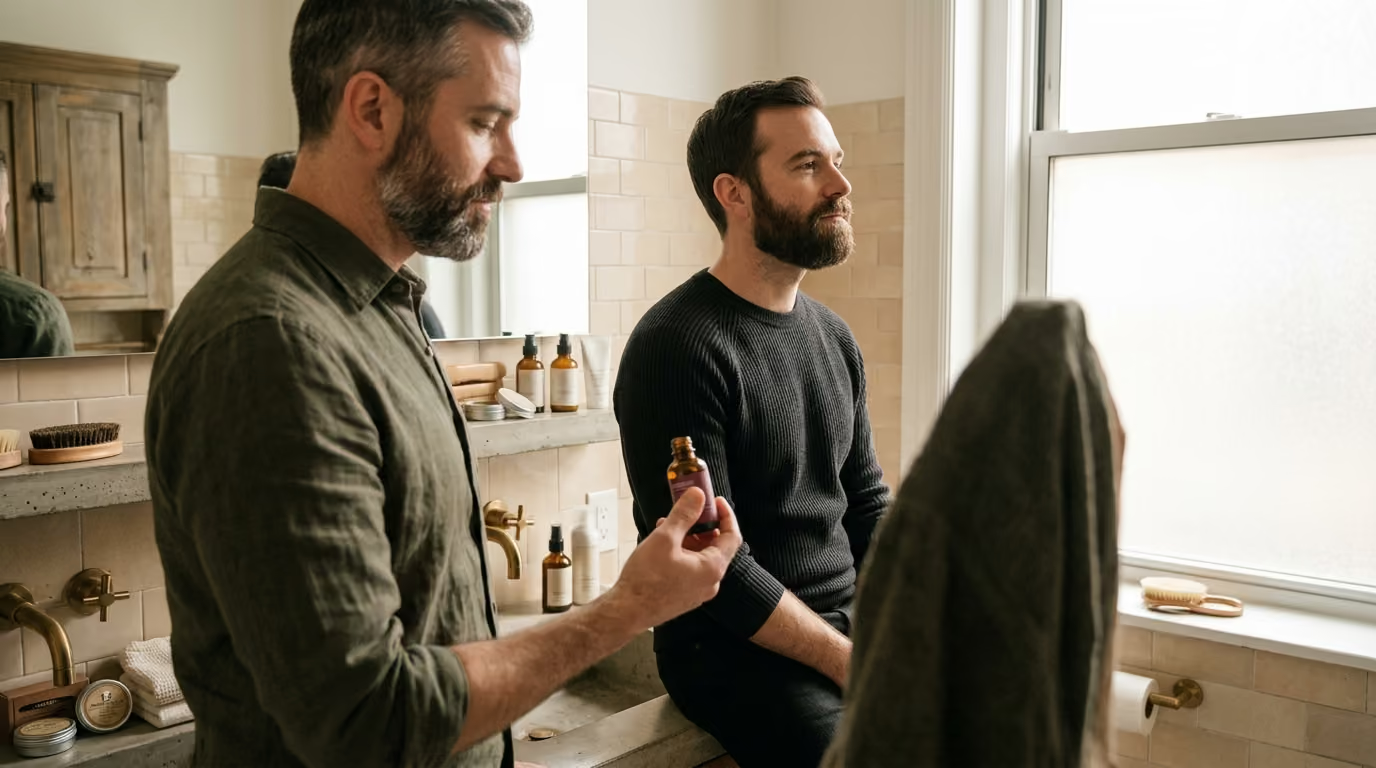

Men over thirty-five can optimize their beard health, skin barrier comfort, gray hair blending, and overall facial style with proven grooming methods.





Many men search online for answers when their facial hair starts acting differently in their late thirties. You might notice sudden itching under your jaw, new patches of flaky skin, or silver hairs appearing unevenly across your chin. This guide provides clear, evidence-backed answers on follicle biology, skin barrier health, precision trimming, and styling strategy.
A great beard relies on three connected systems working together. These systems are the hair shaft, the underlying skin barrier, and the visual geometry of your haircut and neckline. When you understand how these systems interact, maintaining a sharp, comfortable beard becomes straightforward.
Facial hair follicles operate under different biological rules than scalp hair. Beard growth is primarily driven by androgen signaling, specifically testosterone and dihydrotestosterone. Follicles in the lower face respond to these hormones by transforming fine, unpigmented vellus hair into thicker, darker terminal hair.
Research demonstrates that androgens can stimulate facial hair follicles while simultaneously promoting hair thinning on the scalp in men with androgenetic alopecia. Having a dense beard alongside a receding hairline is a common biological outcome rather than a medical contradiction. Follicle sensitivity to circulating hormones varies across different anatomical zones of your head and face.
Follicular density measures the exact number of active follicles per square centimeter of skin. Visual density, however, depends on hair shaft diameter, curl pattern, growth direction, and natural color contrast. Coarse, tightly curled hairs cover more surface area than straight, fine hairs of the exact same follicular count.
Understanding your natural grain is critical for skin comfort. The grain refers to the precise angle and direction at which hair shafts exit the skin surface. Facial hair frequently changes direction along the jawline, Adam's apple, and lower neck. Mapping these directional shifts prevents severe irritation when trimming or shaving edges.
The skin beneath your beard contains a high concentration of sebaceous glands. These glands produce sebum, a natural lipid mixture that lubricates the hair shaft and maintains the skin barrier. When hair grows longer, it wicks sebum away from the skin surface, which can leave the underlying tissue dry if not properly managed.
Aging brings distinct shifts in hair pigmentation, lipid production, and follicle behavior. Population studies show that the average onset of gray hair occurs around 34 years in Caucasian populations and approximately 44 years in Black populations. Studies also indicate that between 6% and 23% of individuals have half their hair turn gray by age 50.
Graying happens when melanocytes within the follicle bulb gradually reduce and eventually cease melanin production. Beard hair often grays at a completely different rate and pattern than scalp hair. You may observe silver patches concentrating first on the chin or sideburns while your mustache remains fully pigmented.
Skin turnover also slows down after age 35. The stratum corneum, which forms your outermost protective skin barrier, retains moisture less efficiently as natural ceramide and lipid synthesis declines. This shift makes the skin beneath your facial hair more prone to dehydration, micro-tears, and flaking.
Hair texture frequently changes alongside loss of pigmentation. Gray hair shafts are often thicker, stiffer, and less pliable than pigmented strands because of structural variations in the hair cuticle and cortex. These wiry hairs can resist traditional styling products and require deliberate hydration to stay manageable. Investing in comprehensive aesthetic longevity and hair care helps maintain hair texture and skin comfort over time.
Skin irritation in the beard area is frequently misdiagnosed by consumers. Men often assume every red bump is an ingrown hair, but multiple distinct dermatological conditions can present on the lower face.
Pseudofolliculitis barbae is a mechanical inflammatory response rather than a primary bacterial infection. It occurs when closely shaved or naturally curved hairs re-enter the skin tissue after exiting the follicle. This condition is especially prevalent in men with curly or coarse facial hair. The American Academy of Dermatology recommends never plucking hairs out of these bumps, as plucking increases deep tissue inflammation and scarring risk.
Folliculitis barbae involves active infection or inflammation within the follicle itself. It is commonly caused by Staphylococcus aureus bacteria entering micro-abrasions created by dull razor blades or contaminated grooming tools. Mild bacterial folliculitis may resolve with targeted topical treatments, but severe or persistent pustules require professional evaluation. Cleaning electric trimmer heads with antiseptic solutions helps prevent recurring bacterial colonization.
Seborrhoeic dermatitis is a chronic, relapsing inflammatory skin condition that targets areas rich in sebaceous glands. Under a beard, it presents as persistent redness, itching, and greasy, yellowish-white scaling. It is associated with an inflammatory reaction to Malassezia yeasts that naturally colonize human skin. The American Academy of Dermatology advises washing affected facial areas with medicated cleansers containing 1% ketoconazole to control yeast proliferation.
Allergic and irritant contact dermatitis develop when grooming formulas damage the barrier or trigger an immune response. Fragrances, drying alcohols, botanical extracts, and preservatives are frequent culprits. Distinguishing between these conditions ensures you apply the correct remedy instead of aggravating the problem with unnecessary products.
Healthy facial hair requires a structured skin care routine that protects the epidermal barrier. Washing your beard with standard body soaps strips protective lipids, leading to intense itching and rebound oil production.
The American Academy of Dermatology recommends washing the face and beard with a gentle, non-comedogenic cleanser. Use circular motions with your fingertips, a soft washcloth, or a gentle cleansing brush to loosen dead cells without abrading the skin. Rinsing thoroughly is vital because trapped soap residue beneath thick facial hair is a primary cause of non-allergic itching.
Moisturization should occur immediately after cleansing while the skin is still slightly damp. Moisturizers work by trapping water in the stratum corneum and repairing compromised lipid bilayers. For men prone to acne or folliculitis, lightweight conditioners or non-comedogenic lotions are ideal. Men with dry skin can benefit from pure, unfragranced facial oils distributed through the hair down to the skin surface.
Sun protection remains non-negotiable for men with facial hair. A standard beard provides partial shade, but it does not block all ultraviolet radiation. Ultraviolet rays penetrate sparse growth, damaging cellular DNA and degrading collagen fibers along the jawline. Apply a broad-spectrum, water-resistant sunscreen with SPF 30 or higher to your nose, cheeks, forehead, neck, and ears every morning.
Grooming tools require regular hygiene to protect the skin barrier. Replace cartridge blades after five to seven shaves to avoid dull edges that tear hair shafts. Wash beard brushes, combs, and electric trimmer guards weekly with warm water and antibacterial soap to eliminate sebum buildup and microbial colonization. Discovering refined skin and grooming routines tailored for mature skin protects your barrier without complicating your morning schedule.
Beard design is an exercise in visual balance and geometry. A well-chosen style accentuates your facial structure, accommodates natural density variations, and fits your maintenance capacity.
Stubble represents the lowest commitment style while offering distinct visual structure. Heavy stubble measures between two and four millimeters in length. It suits men with relatively even follicular distribution across the jaw and chin.
This style minimizes the visual impact of sparse cheek growth because short lengths keep contrast low. Maintaining stubble requires an adjustable electric trimmer used two to three times per week. Men prone to razor bumps benefit from stubble because it eliminates the need for blade-to-skin shaving.
The short boxed beard is an established, sharp style suitable for professional and casual environments. It features trimmed sides that blend smoothly into a slightly denser chin and mustache.
This style works best for men with moderate to strong jawline density. It requires clear definition along the upper cheek line and lower neck. You can establish the neckline by placing two fingers above your Adam's apple and carving a smooth curve toward the angle of your jaw.
A full beard requires substantial follicular density, curl, and deliberate patience. Length typically ranges from one inch to several inches of structured growth.
Visual fullness increases as hair length allows adjacent strands to overlap sparse zones. This style requires daily brushing, regular conditioning, and careful drying to prevent trapped moisture near the skin. Trimming stray hairs with dedicated shears preserves a neat silhouette.
The goatee focuses density exclusively around the mouth and chin while keeping the cheeks clean-shaven or tightly buzzed. It is an exceptional option for men with genetically sparse cheeks but dense chin growth.
This shape draws visual attention toward the center of the lower face. It requires precise symmetry when edging the outer boundaries. Keeping the cheek area cleanly shaved demands consistent technique to avoid local razor irritation.
A standalone mustache or beardstache pairs a prominent upper lip with short stubble across the jaw. This approach bypasses cheek patchiness entirely while providing a distinct aesthetic.
Mustaches require regular combing and edge trimming along the vermilion border of the upper lip. Keep styling waxes away from the delicate nasal base to prevent pore clogging and contact sensitivity.
Adjusting these silhouettes allows you to harmonize your facial features with your grooming goals. As part of a broader commitment to healthy aging strategies, finding a grooming routine that complements your natural bone structure elevates everyday confidence.
Gray facial hair is a natural structural change rather than an aesthetic defect. How you manage silver hair should reflect your personal taste, styling goals, and skin tolerance.
Natural gray patterns often distribute unevenly across the face. Men frequently develop silver patches at the center of the chin or throughout the sideburns long before the mustache changes. This salt-and-pepper contrast adds dimensional depth to short boxed and full beards.
Embracing natural gray requires the least chemical intervention and zero risk of dye-induced contact dermatitis. Keeping beard edges sharply defined prevents gray hair from appearing unkempt. Because gray strands reflect light differently, applying a hydrating balm keeps the beard looking intentional and polished.
Low-contrast blending utilizes semi-permanent dyes or color-depositing cleansers. These formulas coat gray hair translucent, turning white strands into subtle lowlights. This technique avoids the harsh, monochromatic look of full-coverage permanent dyes. It also eliminates obvious line demarcation as new roots emerge.
Full permanent coverage requires strict maintenance and careful skin monitoring. Facial skin absorbs chemicals more readily than the scalp, increasing the risk of allergic contact dermatitis from paraphenylenediamine (PPD) and related compounds. Always conduct a patch test on your inner arm forty-eight hours before applying any dye product to your face. Discontinue use immediately if you experience burning, redness, or swelling.
Dyeing your beard darker creates an illusion of visual density through enhanced contrast against the skin. However, color treatments do not increase actual follicular density or stimulate dormant hair follicles. Approach color management as a styling choice rather than an anti-aging requirement.
Grooming traditions within gay culture carry unique social, aesthetic, and historical significance. Facial hair has long served as a marker of identity, self-expression, and community affiliation.
The evolution of modern gay aesthetics has expanded far beyond rigid subcultural archetypes. Styles like the otter, bear, and silver fox celebrate mature masculinity, body diversity, and natural aging. Facial hair is frequently utilized to signal self-assured style rather than conformity to youthful ideals. Maintaining vitality, grooming standards, and male vitality and hormone health allows mature gay men to navigate social spaces with authentic confidence.
Navigating dating and social environments after 35 often involves balancing personal authenticity with aesthetic refinement. Many gay men experience subtle social pressures regarding physical presentation. Cultivating a well-maintained beard provides an avenue for self-care that honors aging rather than denying it.
Intimacy also introduces practical grooming considerations. Coarse, untrimmed stubble can cause friction burns, micro-abrasions, and barrier disruption on a partner's skin during close contact. Keeping facial hair clean, soft, and properly conditioned demonstrates mutual care and hygiene.
Styling choices should align with your individuality rather than external trends. Whether you prefer a clean mustache, sculpted heavy stubble, or a full silver beard, intentional grooming communicates maturity and self-respect.
The commercial market for beard enhancement is saturated with unverified claims, oils, and dietary supplements. Distinguishing clinical evidence from marketing rhetoric prevents wasted resources and skin irritation.
Scientific research on pharmaceutical facial hair enhancement remains limited compared to scalp hair investigations. Topical minoxidil is widely used off-label for facial hair growth, but regulatory approvals for this specific application vary globally.
A randomized, double-blind, placebo-controlled study evaluated 3% topical minoxidil applied to the beard area in 48 men over a 16-week period. Researchers observed that the minoxidil group achieved higher global photographic scores and a statistically significant increase in hair counts compared to placebo. Reported hair count increases averaged 5.00 hairs in the minoxidil group versus 0.35 hairs in the control group.
A subsequent randomized controlled trial investigated topical minoxidil in 69 transgender men undergoing gender-affirming hormone therapy. Over the study period, the minoxidil cohort demonstrated an average beard density increase of 11.16 hairs per square centimeter compared to 0.08 in the placebo group. Hair diameter increased by 5.37 micrometers in the active group while decreasing slightly in the control group. Mustache density also showed marked improvement, rising by 18.45 hairs per square centimeter in the minoxidil cohort versus 1.74 in the placebo group.
These clinical findings must be interpreted with caution. Minoxidil formulas often contain propylene glycol and alcohol bases that can induce severe facial peeling, burning, and irritant contact dermatitis. Applying minoxidil to facial skin increases systemic absorption, which may cause headaches, dizziness, or blood pressure changes in susceptible individuals.
Supplements marketed for beard growth, such as high-dose biotin, lack robust clinical evidence in individuals without diagnosed nutritional deficiencies. Ingesting excessive biotin can also interfere with critical clinical laboratory tests, including cardiac troponin and thyroid hormone panels.
A sudden, patchy loss of facial hair is not standard thinning. Conditions like alopecia areata barbae present as smooth, round, well-demarcated bald patches caused by autoimmune targeting of follicles. If you experience sudden patchy shedding, rapid redness, pain, or crusting, seek evaluation from a board-certified dermatologist rather than attempting home growth remedies.
Maintaining beard health and aesthetic clarity requires consistent habits rather than elaborate routines. Applying a simple, disciplined weekly schedule ensures long-term comfort and style precision.
Following these fundamental practices supports follicle longevity and healthy skin turnover. Treating your beard and facial skin as an integrated biological system keeps your grooming routine effortless, functional, and visually striking.
Stay connected for research-led guidance on fitness, body composition, skin, grooming, vitality, sexual wellbeing, relationships and healthy aging. Clear ideas for gay men 35+ who want to look good, feel strong and age with confidence.


Build habits and systems that support clear thinking, steady energy and long term capacity throughout a demanding career.
explore the Blog