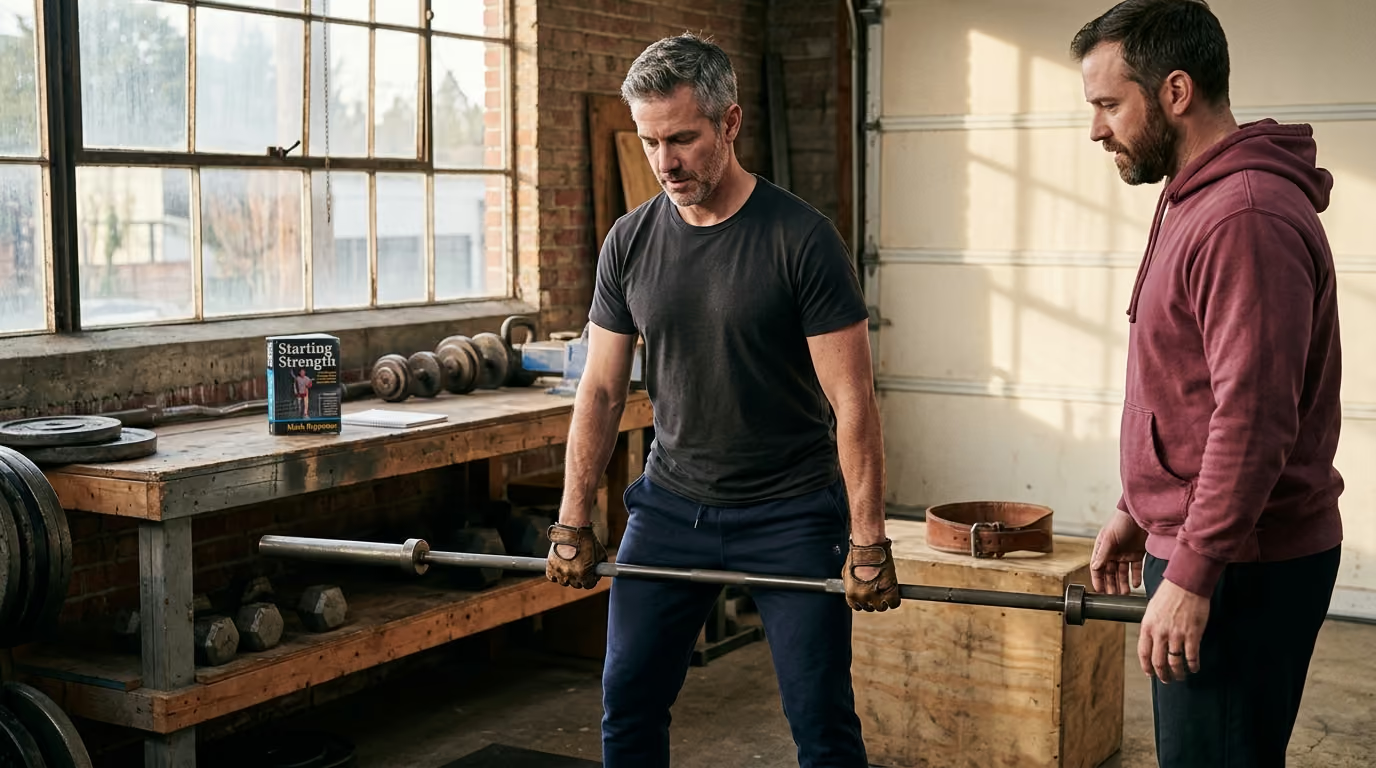

Midlife physical decline seems inevitable, but structured resistance training allows beginners over thirty-five to build functional strength and protect long-term health.





Many men past 35 type a specific question into search engines late at night. They want to know if starting a weightlifting program in midlife is safe, or if they have missed their window to build meaningful muscle. The internet often responds with extreme views. One camp pushes aggressive gym culture that leads straight to joint irritation. The other treats anyone over 35 as fragile, suggesting that light walking is the only sensible option left.
Both perspectives are wrong. Starting resistance training after 35 is one of the most effective choices you can make for physical independence, body composition, metabolic health, and daily energy. Chronological age does not dictate your lifting potential. Your recent training history, current joint health, movement habits, and recovery capacity matter far more.
This guide provides a research-backed blueprint designed for adult beginners. It removes the confusing jargon and shows you how to assess readiness, pick starting weights, master fundamental movement patterns, and progress safely week after week.
The physiological benefits of resistance training across adulthood are well documented. Scientific reviews demonstrate that lifting weights produces adaptations in muscle tissue, bone density, and metabolic function regardless of when you begin. The human neuromuscular system retains its capacity to adapt, grow, and strengthen well into late adulthood.
According to research from the American Heart Association, adults who participate in resistance training show an estimated 15 percent lower risk of all-cause mortality. They also demonstrate a 17 percent lower risk of cardiovascular disease compared to non-lifting peers. A systematic review published in the European Journal of Preventive Medicine found that roughly 60 minutes of weekly resistance exercise was associated with significant reductions in cancer and cardiovascular mortality.
Strength gains in beginner lifters occur quickly. A comprehensive overview of systematic reviews noted that sedentary adults starting resistance training improved their one-repetition maximum strength by an average of 12.8 kilograms over six to twelve weeks. They also added an average of 2.6 repetitions on functional chair-stand tests. These early adaptations stem primarily from neuromuscular learning. Your brain becomes better at recruiting motor units, coordinating stabilization, and firing muscles in smooth sequences.
Public health organizations reflect these findings in their baseline recommendations. The World Health Organization recommends that all adults perform muscle-strengthening activities involving all major muscle groups on at least two days per week. The American College of Sports Medicine supports this framework. ACSM guidelines recommend that novice trainees begin with moderate loads corresponding to an 8 to 12 repetition maximum, completing one to three sets per exercise to build a base of work capacity.
A common misconception is that turning 35 triggers an immediate physical decline. Men often assume their testosterone collapses, their joints dry out, and their muscles stop responding to exercise. Normal aging does involve subtle physiological shifts, but these changes develop gradually over decades rather than appearing overnight.
Muscle mass and maximal force production naturally decrease if muscles remain unused. This age-related loss of muscle tissue, known clinically as sarcopenia, is largely driven by physical inactivity rather than an inevitable biological shutdown. Sedentary living reduces the size and number of fast-twitch muscle fibers. Resistance training provides the mechanical tension required to preserve these fibers, maintaining physical power and metabolic rate.
Connective tissue changes also occur over time. Tendons and ligaments lose some water content and elasticity, which can make them slower to adapt than muscular tissue. While a muscle belly can adapt to new demands within weeks, tendons require consistent, progressive loading over months to increase tensile strength. This physiological reality does not mean you must avoid heavy weights. It simply means your training should emphasize smooth progressions rather than rapid, erratic jumps in load.
Recovery timelines can shift after 35, influenced by sleep quality, cumulative career stress, and metabolic factors. An untrained 40-year-old often needs more time between challenging workouts than an active 20-year-old. When training volume and intensity are managed sensibly, your body repairs tissue, replenishes glycogen, and builds strength just as reliably as it did in earlier years. You can review detailed principles in our longevity and healthy aging resources.
Before picking up a barbell or dumbbell, you need an objective assessment of your current physical starting point. Novice trainees frequently skip this step, choosing a program designed for an advanced athlete and injuring themselves within a fortnight. A structured screening process helps you establish safe boundaries.
The American College of Sports Medicine emphasizes that exercise clearance should be based on four distinct variables. These include your current physical activity habits, known cardiovascular, metabolic, or renal disease, the presence of major symptoms, and your intended exercise intensity. Age alone is not a reason to seek medical clearance.
You should seek medical guidance before starting a program if you experience any of the following warning signs:
To help you decide how to begin, consider this four-tier readiness framework:
You have no concerning cardiovascular or metabolic symptoms. You can perform daily movements like climbing stairs, carrying heavy groceries, and rising from a chair without pain. You are ready to start with standard compound exercises using conservative starting loads.
You manage a stable chronic condition like managed high blood pressure or mild joint stiffness. You have been sedentary for several years, or your current body mass makes certain movements uncomfortable. You should begin with supported machine exercises, higher repetition ranges, and shorter movement arcs before advancing to free weights.
You have a history of orthopedic surgery, recurring back spasms, significant balance difficulties, or joint instability. You should consult a physical therapist or qualified clinical exercise specialist. They can design an individualized entry plan that protects vulnerable joints while strengthening surrounding tissue.
You experience active chest discomfort, unmanaged metabolic conditions, sudden breathlessness, or undiagnosed joint swelling. Cease all planned intense physical exertion. Obtain a comprehensive medical evaluation from a physician before doing any resistance training.
Human movement relies on coordinated movement patterns rather than isolated muscles. Instead of designing a routine around individual body parts like biceps or calves, a balanced beginner program centers on six foundational patterns. Training these patterns builds real-world capability, protects your joints, and creates a balanced physique.
Mastering these movement patterns allows you to swap specific exercises based on your equipment access, mobility restrictions, or structural comfort. You can read more about balancing these movements in our strength and body composition guides.
The squat is a knee-dominant pattern that trains the quadriceps, glutes, and adductors. It mimics sitting down and standing up from a low surface. Beginners do not need to start with a heavy barbell across their shoulders.
Effective variations include:
The hinge is a hip-dominant pattern where the pelvis moves backward while the shins stay relatively vertical. It targets the hamstrings, glutes, and spinal erectors. This movement teaches you how to lift objects from the floor using your hips rather than rounding your lower spine.
Effective variations include:
Horizontal pushing moves resistance away from the chest, strengthening the pectorals, anterior shoulders, and triceps. It develops upper-body pressing power and chest definition.
Effective variations include:
Horizontal pulling draws resistance toward the torso, developing the latissimus dorsi, rhomboids, rear shoulders, and biceps. This pattern balances upper-body posture by strengthening the muscles that support the shoulder blades.
Effective variations include:
Vertical movements drive resistance overhead or pull resistance down from above. Overhead pressing builds shoulder strength and upper chest mass. Vertical pulling widens the upper back and improves grip security.
Effective variations include:
Carrying weight while walking trains the abdominal wall, obliques, hips, and upper back to resist unwanted movement. This pattern provides practical trunk stability without requiring hundreds of traditional sit-ups.
Effective variations include:
The fastest way for a beginner to stall or suffer an injury is picking arbitrary weights based on ego. A 30-kilogram lift might be a warm-up for one person and a maximal effort for another. You must determine your working weights using objective effort markers rather than guesswork.
Beginners should avoid testing their true one-repetition maximum. Taking an exercise to absolute failure, where the weight stops moving despite maximum effort, is unnecessary and creates excessive neural fatigue. Research indicates that training close to failure produces higher levels of acute fatigue and negative perceptual responses without offering superior strength gains for novices.
The most reliable tool for managing lifting effort is the Repetitions in Reserve, or RIR, framework. RIR measures how many additional repetitions you could have performed with sound technique before reaching failure.
For example, if you complete 10 repetitions on the leg press, but know you could have completed 2 more before your form broke down, you operated at 2 RIR.
Beginners should perform most of their working sets between 2 and 4 RIR. This range provides a powerful stimulus for muscle growth and neuromuscular coordination while keeping joint stress low. Stop every set as soon as your lifting speed slows dramatically or your posture alters. This threshold is called technical failure.
Progression should follow a structured method rather than random daily decisions. The double progression model is the most dependable system for adult beginners.
In this system, you establish a repetition bracket, such as 8 to 12 repetitions. You keep the load identical across all sets until you hit the top number of repetitions with clean mechanics. Only then do you increase the weight by the smallest available increment.
Consider this four-week example using a dumbbell chest press:
This method guarantees that you earn the right to lift heavier weights through demonstrated technical competence. If you have an off day due to poor sleep, you simply perform fewer repetitions within your bracket without failing a set.
A novice lifter does not need an elaborate five-day body-part split. Training each major muscle group twice per week with full-body sessions produces superior skill acquisition and fits realistic work schedules. Two focused sessions per week provide a solid stimulus to build strength and preserve lean tissue.
Below is a field-tested two-day program designed to build balanced capability across all major movement patterns.
Begin with a five-minute warm-up of easy stationary cycling followed by arm circles and bodyweight hip hinges.
Allow at least 48 to 72 hours of recovery between Session A and Session B.
If your recovery, schedule, and motivation permit, you can transition to three full-body sessions per week after completing eight weeks of consistent two-day training. Alternate between Session A and Session B across non-consecutive days, such as Monday, Wednesday, and Friday.
Do not add extra sets immediately. Continue with two working sets per exercise. The increased weekly frequency automatically raises your total training volume by 50 percent, which is more than enough to stimulate ongoing adaptations.
Starting a gym routine in midlife carries unique psychological hurdles that standard fitness guides rarely acknowledge. For gay men over 35, entering a weight room can bring up intense body image pressures. Urban gay communities frequently place a heavy cultural emphasis on youthfulness and visible muscularity. This dynamic can make an untrained adult feel self-conscious or out of place.
Weight rooms can feel intimidating when you are unfamiliar with equipment layouts, adjustments, and gym etiquette. Many men worry about being judged by younger or more experienced lifters. Recognizing these social dynamics helps you separate your personal fitness goals from external cultural standards.
A healthy mindset begins by redefining the gym as a practical workshop for your health rather than a stage for validation. Experienced lifters are almost universally focused on their own workouts rather than watching those around them. You have an equal right to take up space, adjust equipment, and learn at your own pace.
If open weight rooms provoke anxiety, several practical options exist:
Your fitness journey is about building personal agency, physical resilience, and vitality for decades to come. Cultivating internal confidence in your movement matters far more than matching any subcultural aesthetic standard. You can explore these topics further in our confidence and relationships section.
Lifting weights provides the stimulus for muscular adaptation, but progress requires proper nutrition and rest. Strength training after 35 should not be viewed solely as a method for burning calories. Its true value lies in signaling your body to build and preserve functional lean mass while improving insulin sensitivity.
Many beginners attempt an aggressive calorie deficit at the exact moment they start lifting. Severe dietary restriction combined with an unaccustomed exercise routine leads to chronic fatigue, poor sleep, joint ache, and eventual burnout. If fat loss is your primary goal, use a modest caloric deficit while keeping your protein intake high. Supervised resistance training combined with moderate nutritional changes effectively reduces body fat percentage while preventing the muscle loss that often accompanies dieting.
The International Society of Sports Nutrition recommends a daily protein intake between 1.4 and 2.0 grams of protein per kilogram of body weight for exercising individuals. For a 80-kilogram man, this translates to roughly 112 to 160 grams of daily protein. Distribute this protein across three or four meals containing whole foods like poultry, fish, eggs, tofu, Greek yogurt, or quality protein powders. You can find detailed meal strategies in our nutrition and metabolism resources.
Recovery management becomes increasingly relevant as life responsibilities expand in your late thirties and beyond. Sleep is your most potent recovery tool. During slow-wave sleep, your body releases growth hormone and repairs the micro-damage created during training. Chronic sleep deprivation elevates cortisol, reduces insulin sensitivity, and increases your perceived exertion during lifting sessions.
Prioritize these basic recovery habits alongside your training:
Understanding how training integrates with systemic health, hormone regulation, and daily energy will help you maintain consistent habits. Discover more insights within our male vitality and sexual wellbeing section.
While the benefits of resistance training are clear, scientific integrity requires recognizing where evidence is limited or nuanced. Generalizing laboratory exercise trials to everyday life requires caution.
A large portion of the literature linking resistance training to reduced mortality is observational. Large cohort studies observe that adults who lift weights live longer, healthier lives. These studies adjust for variables like smoking, income, and diet, but they cannot entirely rule out healthy user bias. People who lift weights regularly may also engage in healthier lifestyle behaviors that contribute to longevity.
Furthermore, many academic training studies use young, college-aged male cohorts or elderly clinical populations with advanced frailty. Healthy, sedentary adults between the ages of 35 and 55 are sometimes underrepresented in dedicated strength-training research. Exercise protocols tested in tightly controlled university laboratories do not always match the messy schedules, recovery constraints, and joint wear of working adults.
Individual variability in response to resistance training is also considerable. Genetic differences in muscle fiber composition, tendon insertion points, and inflammatory signaling mean that two men following the exact same routine will progress at different speeds. Some individuals build noticeable muscle size within weeks, while others primarily gain neural strength with modest visual changes. Avoid comparing your progress to curated fitness influencers whose genetics, age, and lifestyle may differ entirely from your own.
Starting a strength training routine after 35 is an investment in your physical autonomy, daily energy, and long-term health. The goal of your first phase is not to lift heavy weights immediately, but to build consistent habits and master safe movement patterns.
By prioritizing clean technique, respecting your recovery capacity, and progressing gradually, you can build a resilient, capable physique at any age.
Follow these straightforward steps to begin your training routine safely:
Stay connected for research-led guidance on fitness, body composition, skin, grooming, vitality, sexual wellbeing, relationships and healthy aging. Clear ideas for gay men 35+ who want to look good, feel strong and age with confidence.


Build habits and systems that support clear thinking, steady energy and long term capacity throughout a demanding career.
explore the Blog