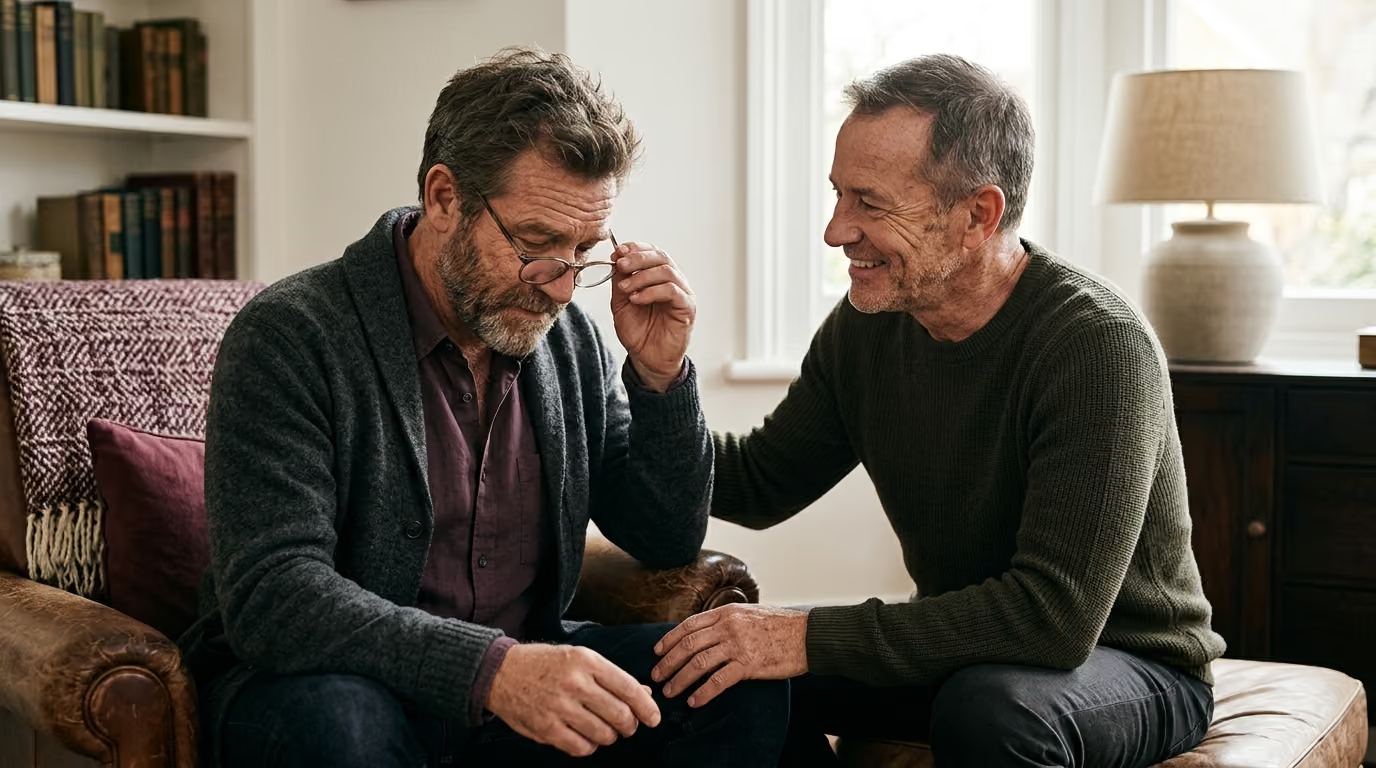

Male desire and arousal rely on interconnected physical, psychological, and relational factors that you can rebuild through clinical techniques, sensate focus, and clear communication.





Sexual desire is not a moral character trait. Arousal is not a simple mechanical test of your masculinity. When sexual interest cools or erections become unpredictable, men often treat the shift as a personal failure. In reality, male sexual response is a complex interaction between vascular health, neurological signaling, hormonal balance, emotional state, and learned habits.
Rebuilding desire and arousal is not about forcing an erection on demand or trying to recreate the spontaneous urges of your late teens. It is a systematic process of removing performance pressure, treating underlying physical factors, and training your attention to register physical pleasure.
Clinical research shows that sexual function involves distinct components that do not always move together. You can experience strong subjective excitement without full genital firmness. You can also experience physical erections during sleep without feeling daytime psychological desire. Understanding these distinctions is the first step toward building a sustainable, satisfying sex life.
The medical literature clearly separates sexual desire from erectile function. Low sexual desire refers to a persistent reduction in motivation or appetite for sexual activity. Erectile dysfunction involves the recurrent inability to achieve or sustain an erection firm enough for satisfactory sexual activity.
According to guidelines from the European Association of Urology, the prevalence of low sexual desire in men ranges from 3 percent to 28 percent across different populations. A large epidemiological survey of 12,646 middle-aged German men identified low desire in 4.7 percent of participants. Erectile difficulties are even more widespread. International epidemiological reviews indicate that approximately 30 to 50 percent of men between the ages of 40 and 70 report some degree of erectile difficulty. Global estimates across all age groups span from 3 percent to over 76 percent depending on the specific diagnostic criteria used.
Clinical research categorizes desire into several distinct patterns:
Many men assume that healthy sex only begins with spontaneous desire. When spontaneous urges become less frequent, they worry that their vitality is gone. Evidence indicates that responsive desire is a normal, healthy pathway for male arousal. You do not need to feel an urgent physical push before you begin interacting. Sexual interest frequently emerges as your body relaxes and experiences enjoyable touch.
The diagnostic guidelines from both the European Association of Urology and the American Urological Association emphasize that male sexual problems rarely have a single cause. Vascular disease, metabolic changes, neurological conditions, relationship friction, mood disorders, and performance anxiety routinely interact. Treating sexual difficulties requires addressing the biological foundation and the psychological environment at the same time.
Aging brings normal physiological shifts that alter how your body produces and maintains arousal. After age 35, blood vessels gradually lose some of their elasticity. Nitric oxide production within the vascular lining decreases, which slows the rate of arterial blood flow into the erectile tissue.
These vascular changes mean that achieving an erection often requires more direct, sustained physical stimulation than it did a decade earlier. The speed of arousal changes, but this does not indicate permanent dysfunction. Normal aging simply shifts the body away from instant visual arousal toward touch-dependent arousal.
Hormone production also shifts gradually over time. Total testosterone levels decline at an average rate of about 1 percent per year after age 30. Sex hormone-binding globulin increases with age, which further reduces the amount of freely available testosterone in circulation.
Clinical guidelines emphasize that age-related testosterone decline is not an automatic cause of sexual dysfunction. The European Association of Urology notes that testosterone therapy provides clear sexual benefits for men with clinical hypogonadism, but shows no benefit for men with normal baseline hormone levels. A diagnosis of testosterone deficiency requires consistent symptoms alongside two separate early-morning fasting blood tests showing total testosterone below 300 ng/dL.
Metabolic health plays a direct role in sexual vitality. Risk factors such as hypertension, elevated blood lipids, obesity, physical inactivity, and insulin resistance impair vascular blood flow. In men with diabetes, erectile difficulties are particularly common, with research showing a high prevalence linked to nerve and blood vessel damage. Because the penile arteries are smaller than the coronary arteries, changes in erection quality can serve as an early indicator of wider cardiovascular health. Managing blood pressure, maintaining metabolic fitness, and protecting blood vessel function are central components of long-term sexual wellbeing.
The human nervous system cannot prioritize sexual arousal and self-defense at the same time. Sexual arousal requires the parasympathetic branch of the autonomic nervous system to dominate, allowing smooth muscles to relax and blood vessels to dilate. When you feel anxious about performance, your sympathetic nervous system activates, releasing adrenaline and constricting peripheral blood vessels.
This biological reaction creates what clinicians call the sexual threat cycle:
Spectatoring is the primary psychological driver of this cycle. When you monitor your firmness, count the minutes, or worry about your partner's judgment, your brain treats the bedroom as an evaluation room. The thoughts pull attention away from sensory input and focus it on threat detection.
Breaking this cycle requires changing the rules of the encounter. When you remove the demand for a specific physical outcome, the brain stops viewing sexual activity as a high-stakes test. Without perceived threat, the parasympathetic nervous system can remain active, allowing natural arousal responses to return.
Sensate focus is an evidence-based behavioral protocol developed by William Masters and Virginia Johnson. It is designed to interrupt spectatoring, eliminate performance demands, and restore sensory awareness. Rather than functioning as foreplay, sensate focus is a structured exposure exercise that retrains the nervous system to experience touch without anxiety.
The protocol moves through distinct stages. Each stage must be practiced several times until both partners feel completely relaxed before moving forward.
In this opening phase, partners take turns giving and receiving physical touch across the entire body, excluding the genitals and breasts. The explicit rule is that intercourse, genital stimulation, and orgasm are forbidden.
If either person notices an erection occurring, it is simply ignored. If anxiety arises, the couple pauses, breathes, and returns to gentle, non-demanding touch.
Once non-genital touching feels comfortable and anxiety-free, genital contact is introduced. The prohibition on intercourse and orgasm remains strictly in place.
Learning that an erection can rise, soften, and rise again without ending the encounter is a critical therapeutic milestone. It breaks the belief that a softening erection represents an emergency.
The final stage gradually reintroduces penetrative or targeted sexual activities, but with full permission to pause or stop at any moment.
By moving through these steps, you condition your body to associate physical intimacy with pleasure and safety rather than scrutiny and tension.
Mindfulness in a sexual context means deliberately anchoring your attention in the present moment without judging what is happening. A scoping review of mindfulness interventions in men's sexual health notes that attention training can reduce performance anxiety, limit catastrophic thinking, and improve sexual satisfaction.
When performance worries appear, men often attempt to push the thoughts away through sheer willpower. This struggle increases mental tension and reinforces the threat response. Mindfulness teaches you to observe intrusive thoughts as temporary mental events rather than urgent facts.
You can build sensory attention through a structured grounding sequence:
Attention training prevents cognitive fusion, which occurs when you treat an anxious thought like "I am going to lose my erection" as an inevitable reality. By redirecting focus to raw sensory input, you provide your nervous system with the biological conditions needed for genuine arousal.
Many men develop rigid sexual habits through decades of solitary masturbation or repetitive sexual routines. When arousal relies on a very narrow set of physical triggers, adjusting to partnered sex can become difficult. Rebuilding arousal requires expanding your behavioral flexibility.
Habitual masturbation often prioritizes speed, high-friction grip, and rapid climax, often paired with rapid visual browsing. This trains the brain to respond only to high-intensity novelty and fast physical mechanics. Partnered intimacy involves slower pacing, variable pressure, emotional exchange, and whole-body interaction.
To build greater arousal flexibility, consider these solo and partnered adjustments:
Learning how to navigate sexual communication and relationship dynamics helps you replace rigid expectations with genuine flexibility. When you no longer view sex as an unchangeable script that must end in simultaneous orgasm, you create space for natural arousal to develop.
Gay men face specific cultural and relational dynamics that can directly influence sexual confidence and desire. While sexual physiology functions the same way regardless of orientation, the social environment shapes how performance pressure shows up in the bedroom.
In gay culture, physical aesthetics, muscularity, and youth are often heavily emphasized. Navigating digital apps and social spaces can heighten body monitoring and appearance-related anxiety. When a man feels self-conscious about his body, weight, or age, he enters sexual situations already in a state of spectatoring.
Rigid role expectations around being exclusively a "top" or a "bottom" can also create intense psychological strain:
Gay relationships also feature diverse relational structures, ranging from long-term monogamy to open partnerships and casual encounters. In long-term relationships, desire differences and habituation are common. When open relationship dynamics exist, comparing sexual performance with casual partners can trigger anxiety at home.
Navigating these challenges requires intentional communication. Describing your preferences, expressing boundaries, and rejecting rigid scripts allows you to engage in intimacy on your own terms. True sexual confidence involves knowing that your value as a partner is not defined by strict adherence to an idealized cultural script.
Behavioral tools and mindfulness are highly effective for performance anxiety, but they should never replace an appropriate medical workup. Persistent changes in desire or erectile reliability warrant clinical evaluation to assess your broader health.
A comprehensive medical assessment for sexual changes should include:
Clinical practice guidelines from the American Urological Association and the European Association of Urology identify phosphodiesterase type 5 (PDE5) inhibitors as first-line medical therapy for erectile dysfunction. Medications such as sildenafil and tadalafil work by enhancing blood flow during sexual stimulation.
It is critical to understand what PDE5 inhibitors do and do not do:
Using medical treatments alongside lifestyle changes that protect your long-term cardiovascular and metabolic health creates the best clinical outcomes. Medications can reduce performance anxiety by restoring physical reliability, while behavioral retraining rebuilds confidence and sensual connection.
Arousal is a downstream reflection of your overall physical health. Sleep quality, physical activity, alcohol consumption, and chronic stress directly influence vascular reactivity, hormone synthesis, and nervous system balance.
Clinical guidelines recommend implementing lifestyle adjustments before or alongside medical treatments for sexual dysfunction:
Integrating healthy habits supports the physical foundation required for consistent arousal, creating energy and physiological resilience that carry directly into your sex life.
Clear communication removes ambiguity, lowers anxiety, and aligns expectations between partners. Many men avoid talking about sexual challenges because they fear awkwardness, rejection, or hurting their partner's feelings.
Using a structured communication model helps keep discussions objective, respectful, and productive.
This simple model categorizes communication into three functional areas:
Evaluative statements create defensiveness and reinforce spectatoring. Replacing judgmental phrasing with collaborative alternatives changes the emotional tone of the bedroom.
Collaborative dialogue normalizes physical fluctuations, transforming potential moments of frustration into opportunities for deeper intimacy and trust. Exploring broader resources on male vitality and sexual wellbeing can offer additional frameworks for maintaining vibrant health and open communication.
While the biological and psychological frameworks for sexual health are well established, several areas of research remain limited, preliminary, or mixed. Maintaining a research-led perspective requires acknowledging where certainty ends.
First, although mindfulness is widely recommended in clinical practice, the research base specifically focusing on men remains relatively small. A systematic review on mindfulness meditation-based therapy identified fifteen studies on sexual function, but only one specifically evaluated erectile dysfunction in men. Broader scoping reviews confirm that while mindfulness reduces anxiety and thought fusion, larger randomized controlled trials are needed to define standardized protocols for male arousal disorders.
Second, the relationship between internet pornography, masturbation frequency, and sexual dysfunction remains debated in the scientific literature. Current evidence does not support claims that pornography inherently causes physiological damage to the brain or autonomic system. Difficulties with arousal are more accurately understood as learned stimulus specificity, performance anxiety, or relational differences rather than a permanent neurological deficit.
Third, the commercial supplement industry heavily promotes over-the-counter "testosterone boosters," herbal aphrodisiacs, and male enhancement pills. Clinical evidence supporting these supplements is weak, inconsistent, and frequently compromised by poor study design. Men should approach unverified commercial products with healthy skepticism and rely on established medical and behavioral pathways.
Selective serotonin reuptake inhibitors (SSRIs) and other psychiatric medications are well-documented contributors to reduced sexual desire, delayed ejaculation, and erectile difficulties. Serotonergic signaling in the brain can dampen dopamine-driven arousal pathways. If you experience sexual side effects from medication, do not stop taking it abruptly. Consult your prescribing physician to discuss adjusting the dose, switching to an alternative medication, or adding a supportive treatment.
Desire discrepancy is one of the most common issues in long-term relationships. It is entirely normal for two people to have different sexual appetites or different mixes of spontaneous and responsive desire. Address the mismatch as a shared logistical challenge rather than a personal fault. Focus on expanding non-demanding physical touch, scheduling dedicated intimacy time without mandatory sexual outcomes, and establishing clear agreements about how to initiate or decline sex comfortably.
While gradual changes in erectile firmness often reflect normal aging or mild vascular changes, sudden erectile dysfunction accompanied by chest pain, shortness of breath, unexplained dizziness, or severe fatigue requires immediate medical evaluation. Shared vascular mechanisms link penile blood flow to coronary circulation. Furthermore, an erection lasting longer than four hours is a medical emergency known as priapism, which requires prompt hospital treatment to prevent tissue injury.
Yes, but this is a reversible behavioral conditioning issue rather than permanent damage. If solo masturbation always involves high speed, tight manual grip, and rapid climax, your nervous system adapts to that specific physical pattern. When you engage with a partner, the touch is naturally softer, warmer, and more variable. You can rebuild responsiveness by consciously slowing down your solo routines, using lubricant, varying your grip, and practicing relaxation without rushing toward ejaculation.
Satisfying sex after 35 is built on physical health, open communication, and attention to pleasure rather than flawless performance. When you remove evaluation from the bedroom and treat your body with patience, desire and arousal can flourish naturally.
Stay connected for research-led guidance on fitness, body composition, skin, grooming, vitality, sexual wellbeing, relationships and healthy aging. Clear ideas for gay men 35+ who want to look good, feel strong and age with confidence.


Build habits and systems that support clear thinking, steady energy and long term capacity throughout a demanding career.
explore the Blog