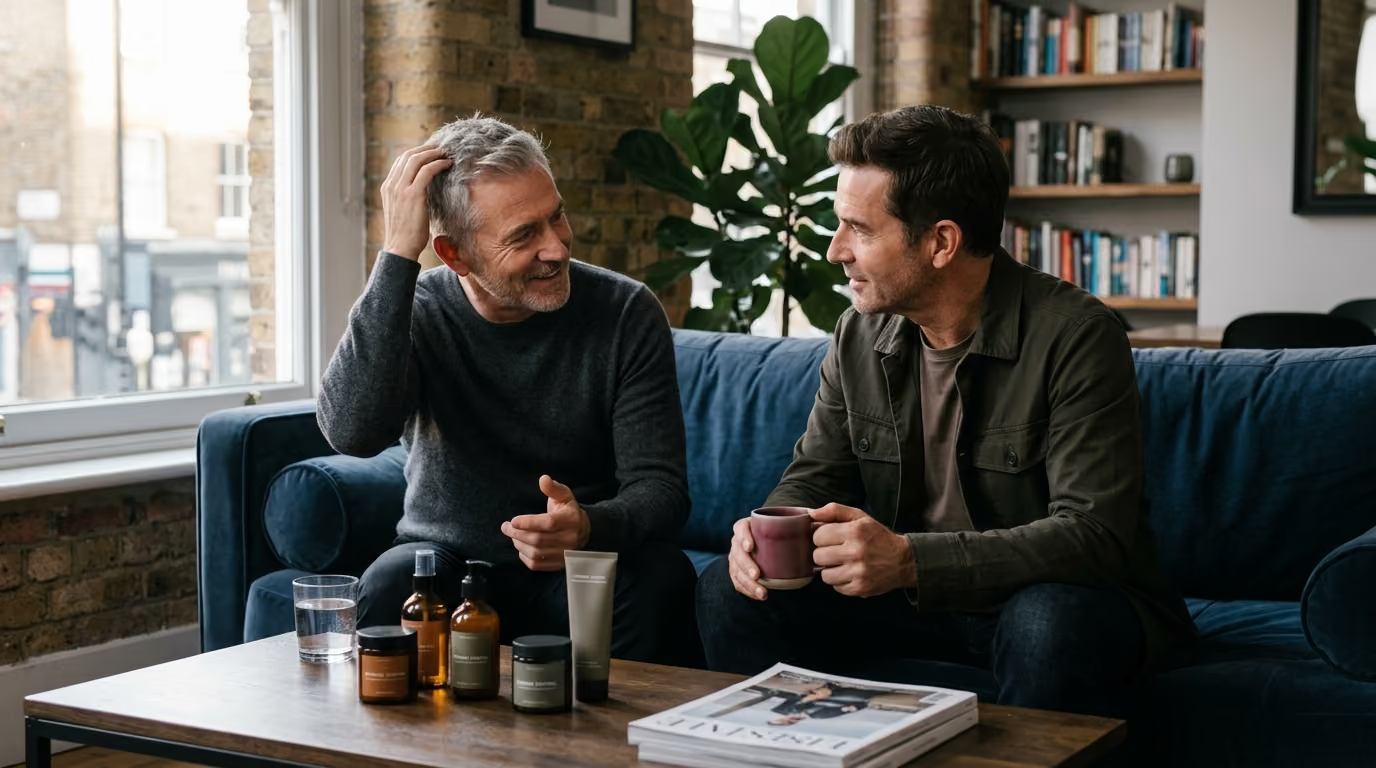

First grey hairs appearing at the temples require the right dye formulas and blending techniques to achieve natural coverage without compromising hair health.





Most men searching for hair colour guidance have typed a specific phrase into a search bar: how to cover grey hair without looking fake. The fear of ending up with an unnaturally dark shoe-polish finish, an irritated red scalp, or obvious orange regrowth stops many men from making changes. Box dyes frequently over-promise and under-deliver, leaving behind flat colour and damaged hair fibres.
Achieving a refined, natural result requires understanding the underlying chemistry of hair dye. Hair colouring is always an exercise in balancing competing outcomes. Every choice involves trade-offs between natural appearance, opacity of coverage, degree of lightening, and ongoing chemical stress to the hair fibre.
This guide breaks down the biological mechanisms of greying, the differences between modern dye systems, techniques for grey blending, and the clinical realities of scalp safety. Whether the goal is subtle silver reduction, total coverage, or complete blonde transformation, these evidence-based principles will help you choose the right path for your hair and lifestyle.
Hair colour is determined by melanin produced by specialised cells called melanocytes located in the hair bulb. These cells synthesise two primary pigment variants: eumelanin, which produces black and brown tones, and pheomelanin, which generates red and yellow hues. The specific ratio and density of these pigments dictate your natural hair depth and undertone.
The appearance of grey hair reflects biological changes within the follicle rather than a surface alteration of the hair shaft. Human hair greying involves a progressive decline in melanogenesis. This process includes decreased tyrosinase activity, impaired melanosome transfer, and programmed cell death of active melanocytes.
Research demonstrates that greying is closely tied to the exhaustion of melanocyte stem cells within the hair follicle niche. When this stem-cell reservoir is depleted, the follicle loses its capacity to generate pigmented fibres, making established physiological greying permanent.
Follicle biology undergoes several shifts after age 35 that influence how hair responds to cosmetic colour:
Colouring grey hair does not treat or reverse follicular aging. It is a cosmetic process that deposits synthetic pigments inside or onto the protein matrix of the hair shaft. Understanding your hair porosity, texture, and pattern of silver strands is the foundation of a successful refined approach to men's grooming and skin health.
The modern hair colour market contains several distinct formulations. Each system relies on specific chemical mechanisms, offers different durability profiles, and imposes varying degrees of structural stress on the hair. Selecting the right product requires matching your personal aesthetic goal to the correct dye technology.
Temporary hair colours consist of large, pre-formed direct dye molecules that cannot penetrate the protective cuticle layer. These pigments adhere weakly to the exterior surface of the hair shaft through electrostatic interactions.
Temporary formulations work best for short-term root camouflage, event-specific styling, or testing a subtle tone adjustment before committing to an oxidative system.
Semi-permanent colours use smaller direct dye molecules that sit on the surface and partially diffuse into the outer layers of the hair cuticle. They do not require an oxidant or developer to develop colour.
Semi-permanent dye is an effective entry point for men who want zero commitment. It will not create a visible line of regrowth as your hair grows out.
Demi-permanent hair colour is an oxidative, deposit-focused system that mixes with a low-volume hydrogen peroxide developer, typically between 5-volume (1.5%) and 10-volume (3%). It uses alkaline agents other than ammonia to gently open the cuticle scales, allowing artificial dye precursors to enter the cortex.
Demi-permanent colour represents the gold standard for men seeking a natural, low-maintenance reduction in grey. It softens silver contrast while preserving multidimensional tonal variation.
Permanent hair colour relies on strong alkalising agents, such as ammonia or ethanolamine, mixed with higher-volume developers (20-volume or higher). The alkaline component swells the hair shaft and raises the cuticle scales, allowing dye intermediates to penetrate deep into the cortex.
Permanent colour is necessary for complete coverage of dense, resistant grey. However, it creates a sharp line of regrowth that requires regular root retouching every 3 to 6 weeks on shorter hairstyles.
Direct dyes are pre-formed colorants that stain the hair instantly on contact without needing a chemical reaction. They wash out progressively because the molecules do not anchor deeply within the cortex.
Oxidative dyes rely on tiny, colourless chemical precursors that penetrate the hair shaft before reacting with hydrogen peroxide. Once inside, they oxidise and bond together to form large, trapped colour molecules. Oxidative systems provide superior longevity and natural depth, but they carry a higher risk of chemical sensitivity and fibre wear.
Many commercial men's dyes are marketed as ammonia-free to appeal to health-conscious consumers. While these formulas avoid the strong scent of traditional ammonia, they are not chemical-free or damage-free.
Ammonia-free products simply substitute alternative alkalising agents, most commonly monoethanolamine (MEA) or aminomethyl propanol (AMP). These alternatives can cling to the hair fibre longer if not thoroughly washed out. Furthermore, ammonia-free oxidative formulas still require hydrogen peroxide and aromatic amines, meaning they carry the same fundamental requirements for patch testing and post-colour care.
Grey blending is the intentional softening of contrast between silver hair and natural pigment, without eliminating every grey strand. The objective is an authentic, multi-tonal finish that avoids the solid, helmet-like look of traditional home dyes.
Natural hair is never monochromatic. A head of dark brown hair contains thousands of individual strands ranging from light caramel to deep espresso. When an opaque permanent dye is applied uniformly across the scalp, it eliminates this natural variation, creating a flat, artificial appearance that looks obviously altered.
The defining feature of grey blending is translucency. Instead of covering white hair with 100% opaque pigment, blending techniques coat silver strands with a sheer veil of colour.
Under natural lighting, unpigmented hairs transform into subtle highlights or soft lowlights that sit two to three shades lighter than the base colour. This tonal variation preserves the visual depth of the haircut while taking the bright edge off prominent grey patches.
Professional colourists rely on specific technical methods to achieve seamless grey blending on men's hair:
Grey hair rarely appears evenly across the scalp. In most men, silver strands concentrate heavily around the temples, sideburns, and front hairline, while the crown remains darker.
Applying heavy pigment directly to the hairline is a major colour mistake. Fine perimeter hairs absorb dye quickly, resulting in dark, stained skin and an artificial, blocked-out border.
A skilled colourist dilutes the formula or reduces processing time around the temples, leaving those areas slightly lighter. This mimics natural male aging patterns, ensuring that the finished result looks authentic rather than painted on.
Lightening hair is chemically distinct from depositing colour. While deposit-only systems add pigment to the fibre, lightening requires the irreversible oxidation and dissolution of your natural melanin granules.
A fundamental rule of cosmetic chemistry is that standard hair dye cannot lift or lighten previously deposited artificial dye. If dark brown dye was applied to your hair last month, applying a blonde box dye over it will not make it lighter. It will only add more pigment, resulting in darker, muddier ends. Removing synthetic dye or lifting natural dark hair requires professional bleaching agents.
Hair bleaching relies on alkaline persulphate salts combined with concentrated hydrogen peroxide. This mixture swells the hair cuticle and generates reactive oxygen species that penetrate deep into the cortex to oxidise melanin.
This oxidative process targets structural proteins alongside melanin granules. Research reveals that severe bleaching alters the fundamental architecture of human hair:
Studies confirm that cuticle swelling, physical porosity, and hair breakage increase significantly with higher peroxide concentrations and extended processing times. Concentration is a primary factor in damage severity.
The American Academy of Dermatology recommends staying within three shades of your natural baseline colour when altering hair depth. Lifting hair more than three levels requires higher concentrations of hydrogen peroxide and extended exposure to persulphate salts, greatly accelerating cuticle degradation.
Moving from dark brown or black hair to a cool platinum or ash blonde requires multiple lifting sessions. On short men's cuts, the hair may tolerate this process because damaged ends are trimmed away frequently. However, for hair longer than two inches, excessive lightening causes noticeable roughness, split ends, and breakage along the shaft.
Bond-building systems containing active ingredients like bis-aminopropyl diglycol dimaleate or maleic acid have changed modern hair lightening. These compounds cross-link broken disulphide bonds during chemical processing, helping preserve structural integrity.
However, bond builders are damage-mitigation tools, not total repair systems. They cannot recreate missing cuticle scales, replace lost structural proteins, or fully reverse deep chemical changes in the hair fibre. Relying on bond builders while repeatedly overlapping bleach onto previously lightened hair will still lead to progressive structural failure.
A successful hair colour does not exist in isolation. It functions as part of a complete visual frame that includes your skin undertone, facial hair, eyebrow density, and haircut architecture. Maintaining balance across these elements is central to healthy aging and personal presentation.
Matching hair colour to your natural skin undertone prevents a washed-out or unnaturally flushed appearance. Complexions generally fall into three tonal categories:
Choosing an artificial shade that clashes with your skin undertone draws negative attention to the hair. For instance, applying a warm, reddish-brown dye to a man with cool, rosy skin highlights facial redness and looks unnatural.
Facial hair differs substantially from scalp hair in diameter, growth rate, cross-sectional shape, and pigment distribution. Most men naturally carry lighter, redder, or greyer hair in their beards than on their heads.
Attempting to dye scalp hair and beard hair to the exact same uniform shade is an immediate visual giveaway. A solid dark beard against a solid dark hairline creates an unnatural, mask-like border around the jaw.
Facial hair dye also carries distinct dermatological risks. Skin around the mouth, upper lip, and jawline is thinner and more vascular than the scalp. Applying standard scalp hair dye containing PPD to facial hair frequently causes contact cheilitis and severe facial swelling. Always use formulations specifically tested and approved for facial hair, or leave the beard natural to maintain balanced contrast.
The cut and style of your hair directly impacts how colour is perceived and how quickly regrowth becomes visible:
Within gay culture, grooming and personal style play a prominent role in social presentation, dating, and community visibility. Aesthetic standards around aging have evolved significantly over the past decade.
The outdated expectation that men must completely hide silver hair to stay attractive has been replaced by a focus on grooming precision, hair health, and authentic style. Visible grey is widely appreciated when it appears healthy, intentional, and paired with a sharp haircut.
Gay men over 35 often lead the way in adopting refined grooming practices, from subtle salon blending to deliberate silver enhancement. The goal is not to chase a teenager's hairline, but to present an energized, well-cared-for version of yourself that reinforces personal confidence and social engagement.
Hair dyes contain biologically active chemical compounds that interact directly with skin. Protecting scalp health requires an understanding of the difference between mild chemical irritation and true allergic sensitisation.
Paraphenylenediamine (PPD) and its chemical derivatives, such as toluene-2,5-diamine sulphate (PTDS), are essential components in most permanent oxidative hair dyes. They allow manufacturers to achieve deep, natural-looking, wash-fast dark shades.
PPD is also a potent, well-documented contact allergen. Sensitisation occurs when the immune system recognises the chemical molecule as a threat following skin exposure. Once sensitised, subsequent contact triggers allergic contact dermatitis, an immune-mediated inflammatory response that typically worsens with each exposure.
Clinical symptoms of PPD allergic contact dermatitis range in severity:
It is vital to distinguish between an irritant reaction and an allergic reaction:
If you develop an itchy rash, facial swelling, or weeping skin after colouring your hair, stop using oxidative dyes immediately and consult a board-certified dermatologist.
The US Food and Drug Administration and the American Academy of Dermatology advise performing a skin patch test before every single application of oxidative hair dye. Sensitisation can develop at any point in life, even after years of using the same product without incident.
Follow this standard clinical protocol 48 hours before your planned colour service:
Pure natural henna derived from the Lawsonia inermis plant produces only red and copper tones. Commercial "black henna" used for temporary body art often contains high, unregulated concentrations of synthetic PPD to achieve a rapid, dark stain.
Exposure to black henna body art is a primary cause of severe, lifelong PPD sensitisation. Men who have received black henna tattoos frequently experience violent allergic reactions if they later use standard permanent hair dye.
Individuals with confirmed PPD allergies must avoid all oxidative hair dyes. While some may tolerate PTDS-based formulas, clinical testing shows that roughly half of PPD-allergic individuals cross-react to PTDS as well.
When applying colour, shield the skin surrounding your hairline to minimize dye absorption and reduce the risk of irritation. Apply a thin layer of white petrolatum or a dimethicone-based barrier balm along the forehead, temples, ears, and nape of the neck. Keep the barrier product strictly on the skin; if smeared across hair strands, it will block dye penetration and create patchy results.
Maintaining healthy hair while using chemical colour requires a structured framework. Protecting the cuticle layer and preventing cumulative structural breakdown is far easier than trying to repair damaged keratin.
Before scheduling a colour service or applying a home kit, evaluate the baseline condition of your scalp and hair:
The single most common mistake in home hair colouring is applying permanent dye over the entire head during every session.
Repeatedly running permanent colour through previously dyed lengths causes progressive cuticle stripping, protein loss, and pigment buildup, leaving ends unnaturally dark, dull, and brittle.
To maintain hair health over time:
What you do in the shower between colour sessions dictates how long your tone lasts and how healthy your hair remains:
Maintaining these timelines prevents unexpected colour shifts and protects the long-term health of your hair, supporting broader aesthetic longevity and hair care goals.
Navigating the men's hair market requires separating proven dermatological science from misleading commercial claims.
A frequent marketing claim in modern wellness is that specific dietary supplements, peptide serums, or herbal tonics can permanently reverse genetic greying.
Current scientific consensus confirms that once follicular melanocyte stem cells are depleted and melanocyte apoptosis occurs, physiological greying cannot be reversed through supplements or topical products. While severe nutritional deficiencies (such as extreme vitamin B12, iron, or copper deficiencies) can cause transient hypopigmentation, correcting these deficiencies only restores colour in rare medical cases. For standard age-related greying, cosmetic colour remains the only effective solution.
Many over-the-counter products claim to target only grey hairs while leaving pigmented strands untouched.
Chemical hair dyes cannot distinguish between a grey hair and a brown hair. Demi-permanent blending products appear to target grey simply because the translucent formula is too sheer to noticeably darken naturally dark hair, while visibly tinting white strands.
Managing expectations is key: blending softens contrast, but it does not selectively alter individual follicles.
Conditioning masks, protein treatments, and bond-building formulations provide valuable cosmetic and structural benefits. They fill microscopic defects, reduce surface friction, improve combability, and temporarily boost elasticity.
However, no cosmetic treatment can physically regrow missing cuticle scales or completely rebuild an intact cortex once hair has been severely over-processed or burned by bleach. Damaged hair can be managed and protected, but true resolution ultimately comes from trimming away compromised lengths as healthy new hair grows in.
Use this practical, evidence-based checklist to guide your grooming choices this week.
Natural-looking hair colour is built on managing contrast and protecting fibre health rather than completely erasing every silver strand. When you match the right dye chemistry to your haircut, complexion, and maintenance routine, you can look sharp and energized without compromising the long-term integrity of your hair or scalp.
Stay connected for research-led guidance on fitness, body composition, skin, grooming, vitality, sexual wellbeing, relationships and healthy aging. Clear ideas for gay men 35+ who want to look good, feel strong and age with confidence.


Build habits and systems that support clear thinking, steady energy and long term capacity throughout a demanding career.
explore the Blog