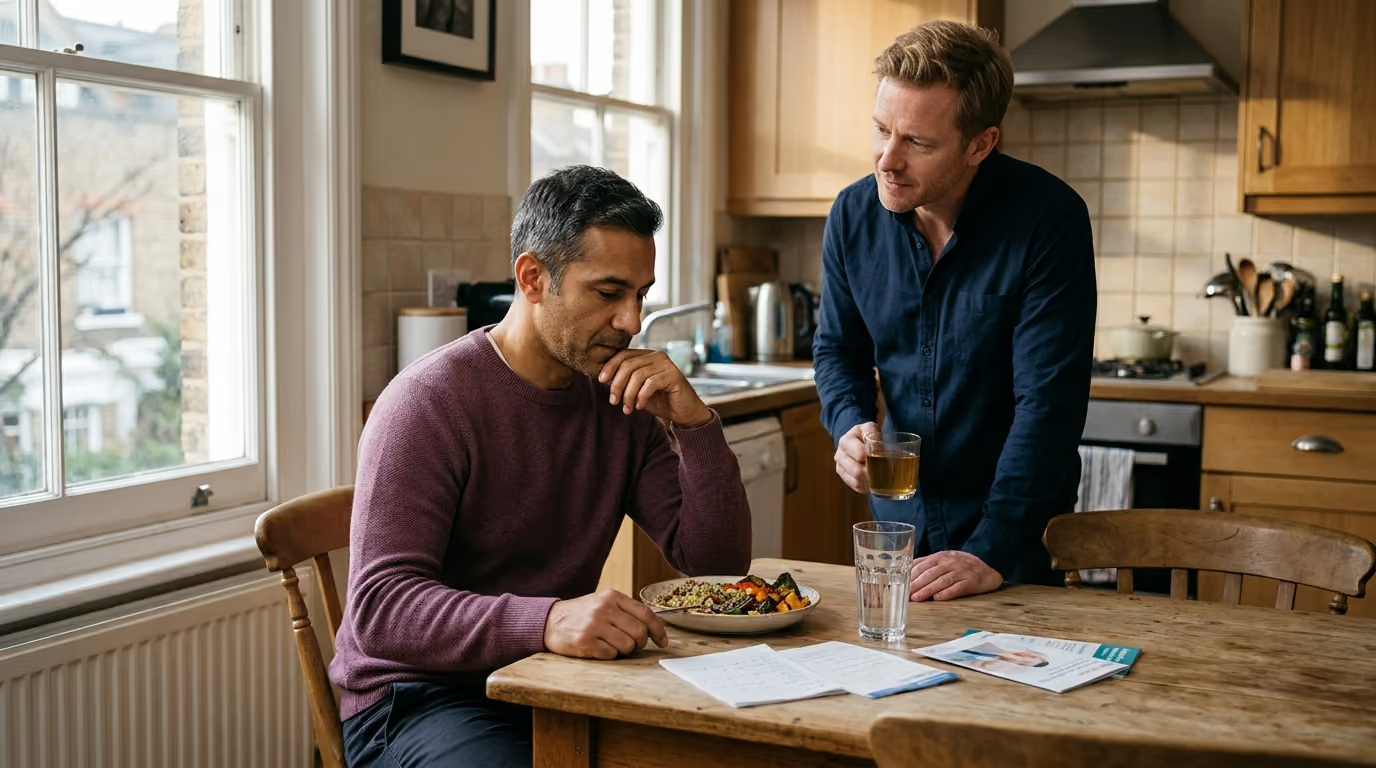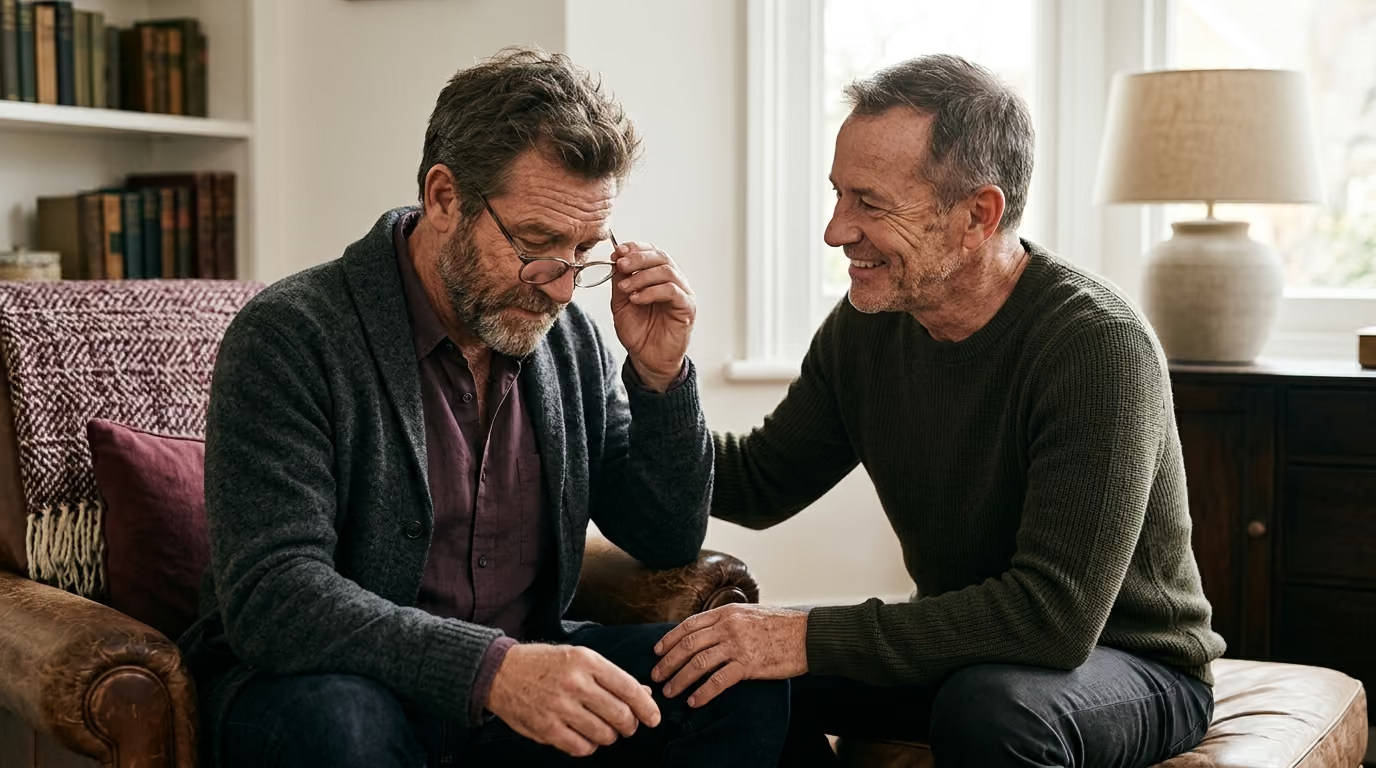

Long-term gay relationships thrive when partners maintain distinct personal identities, private interests, and healthy boundaries alongside their shared emotional connection.





Many men search for how to stop losing themselves in a relationship when a partnership begins to feel consuming. When two lives merge, routines change and social calendars blend. Personal habits, independent friendships, and private fitness routines can quietly fall away. This guide provides a clear roadmap for protecting your identity, maintaining your personal life, and building a durable bond with your partner.
Long-term commitment does not require two men to share every opinion, hobby, and friend. Healthy relationships thrive when partners maintain psychological independence while building a shared life together. Relationship science refers to this balance as differentiation within connection. It is the capacity to remain an individual while staying emotionally close and supportive.
Research in social psychology describes close partnerships through the lens of self-expansion theory. When people enter meaningful relationships, they incorporate elements of their partner's perspectives, resources, and identities into their own lives. This process broadens a person's worldview. Self-expansion can happen through joint experiences, but it also occurs through independent pursuits outside the partnership.
Scientific studies demonstrate that individual autonomy directly supports relationship stability. Research examining relationship autonomy found that feeling autonomous is linked with higher levels of mutual support. Men who feel free to make authentic personal choices are better positioned to offer secure base support to their partners. When personal agency is protected, commitment becomes a conscious choice rather than an obligation driven by dependency.
Support for personal growth requires active involvement. An experimental study on partner support evaluated 58 couples over time. Researchers found that active support for a partner's personal goals improved relationship satisfaction in longer relationships. Passive acceptance was not enough. Intimacy grew when partners actively encouraged individual interests, celebrated solitary achievements, and created practical space for personal development.
Identity management inside a partnership changes as men age. By the time a man reaches his late thirties or forties, his identity is often rooted in established career tracks, financial routines, and distinct social circles. Merging these established patterns with another person requires deliberate calibration.
Middle adulthood brings physical and lifestyle adjustments that influence relationship dynamics. Energy levels, metabolic rates, and sleep requirements shift over time. Maintaining physical conditioning and aesthetic confidence often demands consistent, non-negotiable time blocks. When partners have different sleep habits, recovery needs, or fitness goals, tension can arise over how free time is distributed.
Midlife also changes how men prioritize social connection. Gay men in their thirties, forties, and beyond often shift away from broad nightlife scenes toward smaller circles of close friends. If one partner withdraws from outside friendships, the other partner can unintentionally become his entire social world. This dynamic places heavy emotional weight on a single relationship.
Preserving identity after thirty-five means recognizing that aging brings evolving personal goals. Maintaining separate strength routines, solo hobbies, or quiet personal rituals is not a rejection of a partner. These practices protect individual vitality and emotional balance. You can read more about balancing health, aging, and personal confidence in our guide to male longevity and healthy aging.
Psychological differentiation is the ability to maintain your own sense of identity when emotional pressure rises. A differentiated man can stay connected to his partner without adopting his partner's moods, anxieties, or preferences. He understands where his emotional boundaries end and where his partner's begin.
When differentiation is low, couples experience emotional fusion. In a fused dynamic, an independent plan feels like an act of rejection. A disagreement over politics, food, or aesthetics gets interpreted as a lack of love. One partner's bad day at work dictates the emotional climate of the entire home. Fusion creates an environment where personal space feels dangerous.
Differentiated partners operate with clear boundaries. They can say honest statements without emotional hostility:
Differentiation also protects the relationship from counterdependence. Counterdependent men push partners away, avoid emotional vulnerability, and call it independence. True autonomy is not emotional detachment. True autonomy allows a man to ask for comfort, receive physical affection, and accept support while maintaining his own internal center.
Gay men navigate unique social factors that influence relationship dynamics. Minority stress, historical family rejection, and past experiences of discrimination can lead men to turn their romantic partnerships into defensive shelters. When the outside world feels unsupportive, a boyfriend or husband can easily become a lover, family, best friend, therapist, and sole confidant.
Relying entirely on a partner for social connection creates vulnerability. Data from the Centers for Disease Control and Prevention indicates that gay and bisexual adults report higher rates of loneliness and lower levels of emotional support than heterosexual adults. Williams Institute research also shows that sexual minority adults rely heavily on non-family networks for daily support. When a man drops his personal friendships to focus solely on his partner, he dismantles the chosen family network that provides long-term emotional resilience.
Community connectedness serves as a protective buffer against minority stress. Connecting with queer athletic groups, cultural circles, or professional associations provides validation that a single romantic partner cannot supply. Williams Institute findings indicate that social support levels vary across racial and ethnic groups within the LGBTQ+ community, highlighting diverse community needs. A partner should be a central anchor in your support network, not the entire perimeter.
Managing differences in outness requires explicit boundaries. In Los Angeles County data from the Williams Institute, 52 percent of LGBTQ+ adults were out to all immediate family, while 75 percent were out to LGBTQ+ friends. When one partner is fully out and the other is selective about disclosure, friction can occur. The goal is to negotiate public boundaries respectfully without forcing an artificial timetable or demanding that one partner compromise his safety. Building confidence across different social spheres is explored further in our confidence and relationships resource hub.
Individuality is sustained through daily choices. It shows up in how you spend an open Saturday morning, how you dress, and how you manage your training schedule. Preserving autonomy requires identifying which areas of your daily routine belong entirely to you.
Physical exercise is often an anchor for mental health, body confidence, and stress management. Conflicts emerge when partners possess different fitness levels, aesthetic goals, or athletic commitments. One man may prioritize heavy resistance training four days per week, while his partner prefers weekend hikes or rest.
Autonomy means protecting your physical training without demanding that your partner match your routine. You do not need your partner to join your gym, follow your meal schedule, or run your morning routes. A supportive partner honors the time needed for physical health without offering guilt or passive resistance. Explore our strength training and body composition resources for structured guidance on maintaining personal fitness consistency.
Bodily autonomy extends to personal style, grooming choices, hair length, clothing, and aesthetic expression. It is common for partners to share style feedback, but feedback should never cross into control. Your presentation belongs to you.
Tension occasionally arises when a man alters his personal style later in life. A partner might feel unsettled by a new wardrobe, facial hair change, or tattoo because it represents personal evolution. A healthy dynamic leaves room for style experimentation. Attraction preferences can be communicated kindly, but personal style choices remain an individual right.
Not every hobby needs to become a joint activity. Solitary reading, gaming, creative writing, music production, or solo travel provide essential cognitive variety. These pursuits allow you to develop skills that exist outside your domestic role.
A functional relationship creates room for parallel play and intentional separation. Two men can comfortably occupy the same home while engaged in separate tasks, or spend an entire afternoon in different parts of the city. Solitude restores emotional reserves. When you spend deliberate time alone, you bring fresh ideas, energy, and stories back into the relationship.
Individual freedom requires a fair division of domestic work. A man cannot easily maintain independent friendships, athletic goals, or creative projects if he carries an unfair share of household maintenance. When one partner quietly shoulders the cleaning, cooking, and schedule management, his autonomy is compromised.
Research on same-sex male couples shows that domestic labor is often divided more equitably than in heterosexual pairings. Division is frequently based on interest, scheduling availability, and direct negotiation rather than traditional gender roles. Studies show that when a gap exists between expected and actual divisions of domestic work, relationship quality and mutual affection decline.
Fairness does not always mean a rigid fifty-fifty split of every individual chore. Studies from Australia and New Zealand highlight that couples view their domestic arrangements as fair when communication is flexible and unpaid work is openly recognized. The objective is an equitable distribution of free time. If one partner has ten hours of discretionary leisure per week while the other has two, the arrangement needs immediate adjustment.
Shared power in major decisions directly influences marital health. Research from the University of Texas indicates that perceived equal power predicts higher relationship quality in couples. Power dynamics include several everyday operational areas:
Sexual intimacy in long-term relationships requires navigating changes in desire, personal preferences, and individual libido over time. Autonomy in this area involves understanding your own erotic needs while remaining open and honest with your partner.
Dyadic longitudinal research on same-sex male couples demonstrates that the presence and quality of sexual communication directly improves emotional intimacy and daily relationship satisfaction. Couples who discuss sexual topics openly experience lower levels of unspoken resentment. Silence allows assumptions and insecurities to take root.
Erotic individuality includes honest conversations about personal sexual wellness, masturbation, media consumption, and relationship boundaries. Gay couples structure their commitments in diverse ways, ranging from strict monogamy to negotiated non-monogamy. The fundamental requirement is informed consent and mutual clarity. Unilateral rule changes or undisclosed choices damage trust, while clear, revisited agreements protect connection. If you are navigating changes in physical intimacy, consult our guide to male sexual wellbeing and vitality.
Preserving individuality requires a clear distinction between privacy and secrecy. Healthy relationships require healthy privacy. Destructive relationships are often characterized by either excessive secrecy or invasive control.
Privacy is the right to maintain personal space, private thoughts, personal journals, and independent conversations with close friends. It reflects a secure personal boundary. Secrecy, by contrast, involves intentionally withholding information that directly impacts your partner's health, financial stability, sexual safety, or emotional consent. A private journal is an act of healthy privacy. An undisclosed financial debt or hidden breach of a relationship agreement is secrecy.
Avoid using the language of autonomy to justify emotional avoidance. Autonomy is not a license to disregard agreed commitments, refuse basic accountability, or treat a partner with indifference. True independence operates with integrity, clear communication, and mutual respect.
Every couple should establish clear boundary standards that protect personal freedom while honoring mutual commitments:
If a relationship involves persistent surveillance, isolation from friends, financial restriction, or intimidation, these are warning signs of coercive control rather than mere boundary issues. Anyone facing emotional abuse or intimate partner violence can reach out to LGBTQ+-affirming support services, such as the National Domestic Violence Hotline at 1-800-799-SAFE or local crisis resources, for confidential assistance.
Reclaiming your individuality does not require an overhaul of your entire relationship. Small, deliberate actions can reestablish personal boundaries and bring fresh vitality to your partnership. Review this practical checklist to implement healthy autonomy over the coming week.
A durable long-term relationship does not require you to diminish your identity. It invites two complete, autonomous men to share a life while supporting each other's continued personal growth.
Stay connected for research-led guidance on fitness, body composition, skin, grooming, vitality, sexual wellbeing, relationships and healthy aging. Clear ideas for gay men 35+ who want to look good, feel strong and age with confidence.


Build habits and systems that support clear thinking, steady energy and long term capacity throughout a demanding career.
explore the Blog