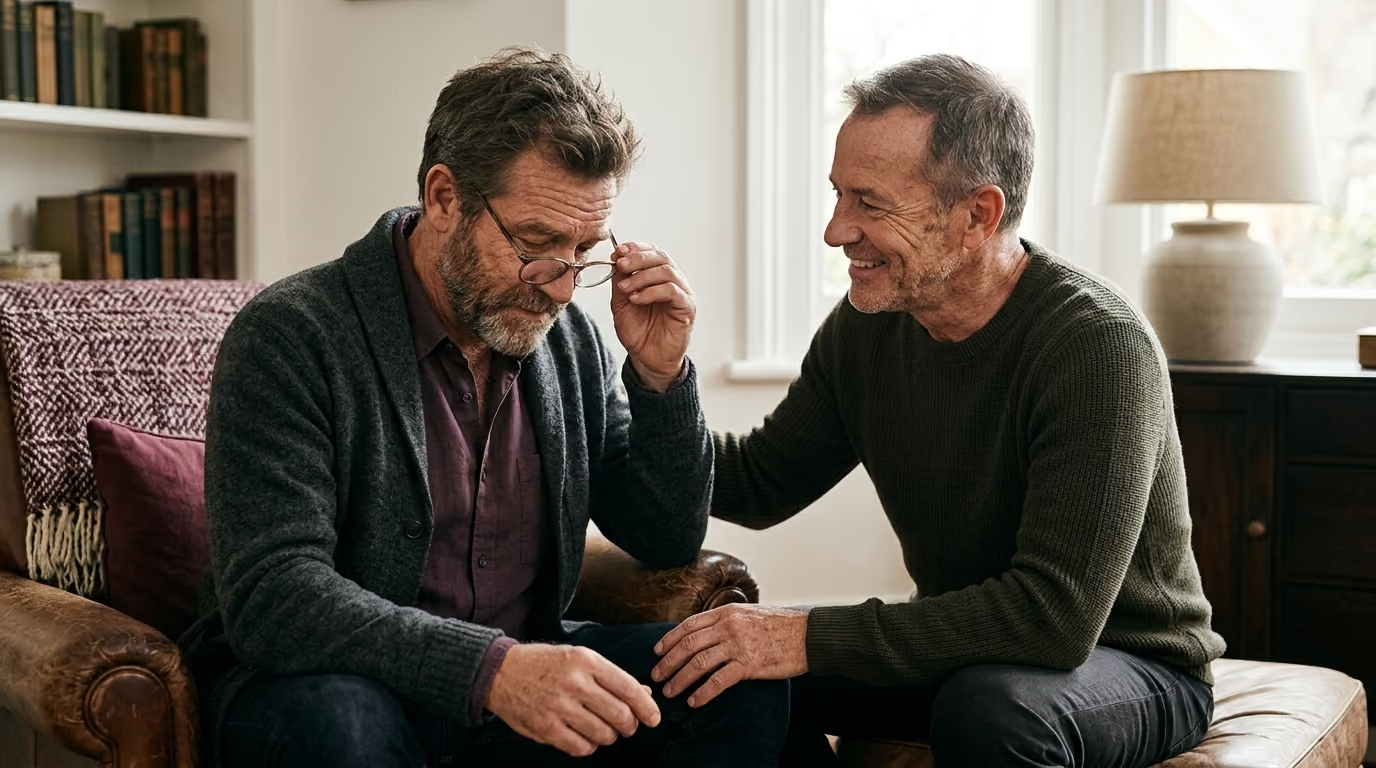

A strong chosen family combines emotional intimacy with practical mutual aid to create a reliable and lasting support network in adulthood.





You wake up with a high fever, a severe respiratory bug, and an empty pantry. You scroll through your phone. You see dozens of contacts from Friday night events, fitness classes, and social messaging threads. Yet, when you ask who would drop off groceries, walk your dog, or pick up a prescription without hesitation, the list narrows down to almost nobody.
Many gay men recognize this gap between social popularity and actual reliability. Building a true chosen family requires moving beyond superficial camaraderie into a structured, durable system of mutual care.
Sociological and psychological research confirms that social ties are fundamental to physical and psychological survival. A family of choice refers to a group of non-biological, non-legal connections selected to provide mutual support, affection, respect, and emotional connection. For sexual-minority populations, these networks frequently step in to perform caregiving, emotional holding, and practical duties that biological kin cannot or do not provide.
Data from the Williams Institute and related public health studies indicate that gay and bisexual men often rely on chosen families within LGBTQ communities more heavily than lesbian or bisexual women do. In community samples, everyday support providers for gay men are frequently peers of the same sexual orientation and shared background. These ties are not merely decorative social circles. They operate as primary safety nets during life disruptions, health events, and periods of grief.
Research on adults between the ages of 40 and 65 highlights a critical distinction between social isolation and subjective loneliness. An analysis of the Midlife in the United States (MIDUS) data found that subjective loneliness, rather than objective structural isolation, serves as the primary driver linking weak social connectedness with psychological distress. Having dozens of acquaintances in your phone does not protect against despair if those bonds lack emotional intimacy and reliability.
National public health surveillance reveals broad deficits in social support. Data from the Centers for Disease Control and Prevention (CDC) across 26 states noted that 32.1% of surveyed adults experienced loneliness, and 24.1% lacked adequate social and emotional support. A broader national study from the U.S. Surgeon General found that only 39% of adults felt very connected emotionally to others. When friendship networks lack operational strength, health outcomes deteriorate over time.
Research into personal network structures shows that network composition matters profoundly. A study on solo-living adults in midlife demonstrated that individuals with diverse networks, characterized by varied ties across age, proximity, and role, experienced significantly lower loneliness than individuals with restricted networks. In older adulthood, strong friendships often exert a more protective influence against loneliness than biological family ties.
Building a dependable network requires deliberate architecture. A chosen family must combine emotional validation, practical aid, and structural stability. Without clear expectations, routines, and boundaries, chosen kinship remains a sentimental ideal rather than an operational safety net.
In early adulthood, friendships are often sustained by passive proximity. Shared college housing, urban nightlife, entry-level workplaces, and activist hubs create natural contact points. Social circles form through continuous, low-effort exposure.
As men pass 35, those built-in environments recede. Professional demands expand, career responsibilities intensify, and domestic routines solidify. Some friends partner up, relocate to different neighborhoods or cities, or turn their focus toward caregiving for aging parents. Spontaneous weeknight plans become rare calendar negotiations.
The transition from ambient community to intentional community is often jarring. Ambient community occurs automatically because people occupy the same physical or social rooms. Intentional community requires conscious logistical effort, personal vulnerability, and active scheduling. When men fail to transition their habits, their social circles quietly atrophy.
Relationship trajectories also diverge during midlife. Some men remain single and live alone. Others enter long-term partnerships, navigate open relationship dynamics, or experience midlife separations. When unspoken expectations about availability clash with shifting personal priorities, friendships strain under the weight of unaddressed changes.
Midlife can also bring changes in social habits, health priorities, and personal values. Men who reduce alcohol consumption or step away from late-night party circuits often realize their friendships were tethered entirely to specific venues. Without the shared backdrop of nightlife, the connection lacks roots.
Many men fall into the all-or-nothing friendship trap. They expect a single best friend or romantic partner to fulfill every emotional, practical, intellectual, and social need. When that person inevitably fails under the burden, frustration sets in. Building resilient community after 35 means building a diversified portfolio of relationships rather than expecting one person to serve as an entire village.
A chosen family functions as a working partnership distributed among committed adults. It differs fundamentally from casual friendship, general community, and simple cohabitation. While friendship can be casual and community can be broad, chosen kinship involves explicit mutual accountability.
To understand how chosen family operates, consider its three core functional layers:
Emotional connection involves mutual vulnerability, honest self-disclosure, and dependable validation. It allows you to speak openly about health anxieties, career doubts, aging, and relationship struggles without fear of judgment. In an emotionally functioning chosen family, members know the details of each other's inner lives. They do not require a polite social performance.
Practical connection covers daily logistical assistance. It includes picking up groceries during an illness, driving someone home from outpatient surgery, looking after pets during travel, or lending physical help during a relocation. Practical support turns emotional goodwill into tangible actions that reduce life friction.
Structural connection includes the concrete frameworks that keep relationships alive. It encompasses standing dinners, shared group communications, co-working sessions, and shared holiday traditions. It also extends into legal designations, such as appointing healthcare proxies, emergency contacts, and powers of attorney.
A durable chosen family requires all three layers to function simultaneously. A group that provides only emotional conversation can leave you stranded during a physical crisis. A group that offers only practical favors lacks the intimacy required to combat deep-seated loneliness.
Reciprocity is the engine that keeps these layers healthy. Reciprocity means support flows bidirectionally over extended periods. It is not rigid transaction tracking, where one favor must immediately match another. Capacity fluctuates with illness, job stress, financial resources, and emotional bandwidth. True reciprocity means all members contribute according to their current capacity while respecting the needs of others.
Reliability is proven through repeated small actions rather than grand pronouncements. A dependable chosen-family member responds to urgent messages within reasonable timeframes, honors commitments, and communicates schedule changes clearly. Trust accumulates through consistency over time.
For many gay men, biological family is not a neutral or universally safe resource. While some enjoy supportive relationships with families of origin, others have experienced rejection, emotional estrangement, or conditional acceptance. Even when biological ties are amicable, relatives often lack insight into the realities of gay life, minority stress, and the nuances of same-sex partnerships.
Chosen family provides identity-specific recognition that mainstream institutions frequently overlook. Within a queer network, men find intuitive understanding around coming out, managing body image standards, navigating HIV prevention or treatment, and coping with cultural ageism. Sharing lived experiences creates an immediate baseline of psychological safety.
Informal caregiving among midlife and older LGBTQ adults is heavily driven by chosen family networks rather than biological relatives. Research demonstrates that older gay adults consistently rely on peers for day-to-day care, recovery support, and advocacy. However, mainstream healthcare and legal systems are built around biological and marital assumptions. Without explicit planning, chosen caregivers can face institutional pushback during hospital visits or medical crises.
Intergenerational chosen kinship offers unique strengths for gay men. Unlike heterosexual family structures that naturally bridge generations through biological reproduction, gay social spaces can become age-segregated. Intentionally cultivating friendships across different age cohorts restores vital community connections.
Older gay men offer historical memory, resilience strategies learned through past crises, and models for navigating healthy aging. Younger men bring fresh perspectives, energy, technological fluency, and cultural awareness. Middle-aged men often serve as logistical anchors, organizing mutual support structures and coordinating community resources.
Intergenerational relationships must remain balanced to stay healthy. Mentorship should never devolve into an uncompensated caregiving burden for younger members or a dynamic where older members are valued only for advice or financial leverage. When mutual respect anchors the connection, cross-generational chosen families offer profound security and continuity. You can learn more about our perspective on adult wellness by visiting the GayFitLab about page or checking our longevity and healthy aging resources.
Creating a functional chosen family requires structured, steady effort. You cannot rush intimacy, but you can build the conditions that allow reliable kinship to develop.
Map out your current social ties across four distinct functional categories:
Review your list to identify critical gaps. You might discover you have many companions for dining out, but nobody within five miles who holds a spare key to your home. Recognizing these deficits allows you to direct your social energy effectively.
Broad social circles provide pleasant camaraderie, but smaller pods provide reliable safety nets. Focus your intentional investments on a small group of three to six individuals.
Invite potential core members into lower-stakes, practical collaborations. Suggest cooking a meal together at home instead of meeting at a crowded restaurant. Offer assistance with a home project or invite someone to join your regular weekly workout routine. Watch how they communicate, handle minor stress, and respect your time.
Routines remove the administrative burden of staying in touch. The CDC recommends embedding social connection directly into existing daily or weekly habits. When gatherings happen automatically, friendships thrive without endless scheduling debates.
Consider establishing structural routines such as:
Misunderstandings often arise from conflicting assumptions about communication. Talk openly with your core circle about how you prefer to communicate.
Establish separate channels for casual social banter and urgent practical requests. A rapid-fire group chat can be fun for humor, but critical requests for help can easily get lost in the noise. Agree on a direct method, such as a phone call or marked message, when immediate support is needed.
Intimacy does not mean unlimited access. Healthy chosen families thrive on clear, compassionate boundaries. Research on friendship communication identifies collaborative boundary setting as the most effective method for preserving trust.
Collaborative communication involves stating what you can offer while being transparent about your current limits. It protects against caregiver burnout and avoids resentment.
Useful communication scripts include:
Viewing boundaries as relationship-preserving tools ensures that care remains sustainable for everyone involved. For deeper exploration of interpersonal dynamics, review our guides in the confidence and relationships category.
Mutual aid transforms chosen kinship from an abstract sentiment into an active support system. Unlike traditional charity, which flows in one direction from donor to recipient, mutual aid is built on shared responsibility and collective resilience.
A practical mutual-aid system within a chosen family covers specific operational needs:
When a group member undergoes medical procedures or faces acute illness, the network mobilizes structured assistance. One member acts as the point person to manage schedules, while others take assigned shifts.
Practical tasks include:
Domestic logistics can collapse quickly during an unexpected personal emergency. Chosen families maintain established backup plans for daily responsibilities.
This includes:
When a member experiences severe grief, relationship breakdown, or career disruption, the group provides stable holding capacity. Mutual aid means offering structured presence rather than unsolicited problem-solving.
Effective emotional aid includes:
Emotional chosen family must be translated into legally enforceable documentation. Without proper paperwork, healthcare systems and legal frameworks default to biological relatives, potentially locking chosen partners and friends out of critical decisions.
Key legal safeguards include:
Securing these documents ensures that your chosen support network can act decisively on your behalf when circumstances require it. To learn more about living well across every stage of midlife, browse our comprehensive GayFitLab lifestyle resources or visit the dedicated confidence, relationships, and community section.
Building a chosen family is an evolving process that requires emotional maturity. Recognizing common traps helps you correct course before relationships suffer damage.
A fast connection often feels exhilarating. Sharing profound personal secrets during early meetings can create the illusion of deep trust. However, emotional disclosure is not the same as practical follow-through.
Reliability is proven over months of ordinary interactions. Do not assign critical emergency roles to someone simply because you share immediate chemistry. Observe how they handle commitments, small promises, and schedule adjustments over time.
Many social groups depend entirely on one individual to plan dinners, check on sick friends, and maintain communication. When that central organizer burns out, moves, or faces a personal crisis, the entire network can fracture.
A healthy chosen family distributes organizational duties. Rotate hosting responsibilities, share communication tasks, and ensure that every member actively contributes to group maintenance.
A close friend who lives in another state can provide exceptional emotional counsel, but they cannot drive you home from a medical procedure. Neglecting nearby connections leaves you structurally vulnerable during daily emergencies.
Maintain a balance between deep long-distance friendships and practical local relationships. Cultivate dependable connections within your immediate neighborhood, apartment building, or city district.
While shared values are fundamental, expecting absolute uniformity of thought within a chosen family creates fragile, exclusionary dynamics. True community requires room for differences in career choices, communication preferences, and personal perspectives.
Focus on core values such as mutual respect, honesty, and accountability rather than demanding identical habits or opinions from every member.
Conflict is an inevitable part of long-term kinship. When disagreements, hurt feelings, or boundary misalignments occur, passive-aggressive withdrawal or sudden estrangement damages the entire group dynamic.
Practice direct, respectful repair conversations. Address tensions early, listen without defensiveness, acknowledge mistakes, and agree on practical behavioral adjustments moving forward.
While existing sociological and psychological literature provides valuable frameworks for understanding chosen kinship, several important limitations exist within current evidence.
Much of the available research on LGBTQ support networks relies on convenience samples, cross-sectional surveys, and qualitative interview studies. While these methodologies capture nuanced personal narratives, they do not establish strict causal pathways between specific chosen-family structures and long-term health outcomes. Longitudinal studies tracking chosen-family interventions across multiple decades remain relatively rare.
Population-level data on loneliness and social support often group sexual and gender minorities into broad categories. Research frequently highlights high loneliness rates among specific subgroups, such as bisexual or transgender populations, without differentiating the unique social trajectories of gay men across diverse racial, socioeconomic, and geographic settings. Findings from large urban centers with established LGBTQ infrastructure may not apply directly to men living in rural or socially conservative environments.
Cultural and economic factors also influence how chosen families are formed and maintained. The resources required to host regular gatherings, live in proximity, or provide emergency financial support vary significantly by income, housing stability, and employment security. Much of the published literature centers on middle-class cohorts, leaving gaps in our understanding of how working-class gay men navigate informal mutual aid under resource constraints.
Legal and institutional recognition of chosen family remains uneven across different global and regional jurisdictions. While theoretical models encourage advance care planning, real-world execution depends on local statutory frameworks, hospital policies, and judicial interpretations. Readers must evaluate practical recommendations within their specific legal, financial, and personal realities.
Revisit this framework whenever you experience a major life transition. Moving to a new city, leaving a long-term relationship, stepping away from familiar social environments, or navigating a new health diagnosis are all moments to reassess your support network. Use these steps periodically to review your relationship portfolio, adjust routines, and ensure your practical safety net remains strong.
A dependable chosen family is not discovered by chance, but constructed through consistent routines, shared mutual aid, and clear boundaries that turn friendship into durable lifelong kinship.
Stay connected for research-led guidance on fitness, body composition, skin, grooming, vitality, sexual wellbeing, relationships and healthy aging. Clear ideas for gay men 35+ who want to look good, feel strong and age with confidence.


Build habits and systems that support clear thinking, steady energy and long term capacity throughout a demanding career.
explore the Blog