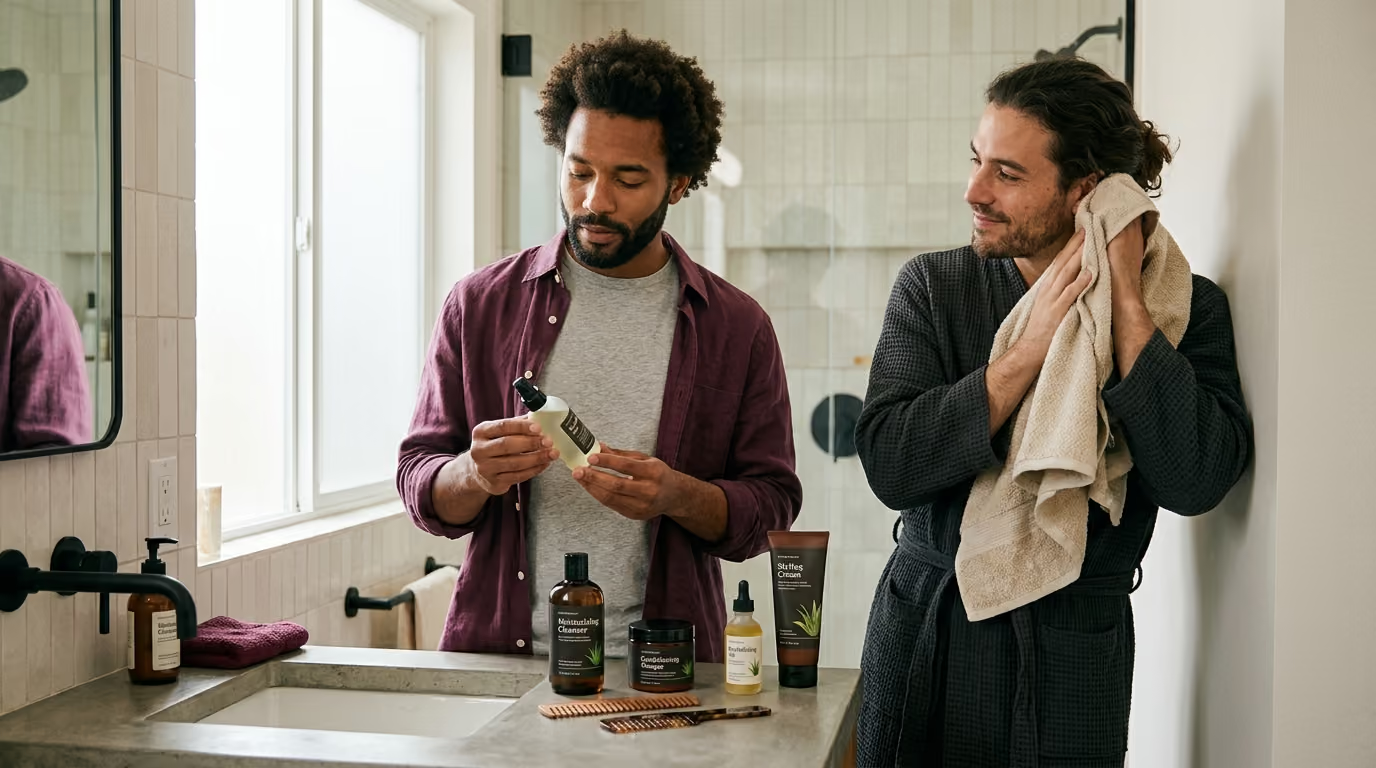

Five core fiber variables guide you in selecting the right cleansers, conditioners, and scalp treatments to build an effective personalized routine.





You step out of the shower, look at the cluster of bottles on your shelf, and wonder why your hair still feels dry by midday or looks flat and greasy before dinner. Most men buy grooming products based on front-label marketing claims like strengthening, thickening, or deep repair. When the formula fails to deliver, the instinct is often to buy another bottle with even louder claims.
Building an effective grooming routine does not require an endless row of specialty bottles. It requires understanding the difference between your scalp and your hair fiber, knowing your strand characteristics, and choosing formulations that match your real daily requirements.
A reliable haircare routine starts by separating two distinct structures. Your scalp is living, metabolic skin that requires hygiene and barrier protection. Your hair fiber is nonliving, keratinized material that cannot biologically heal once it leaves the follicle, according to research on cosmetic trichology from the National Institutes of Health.
Because of this physiological divide, cleansers and medicated treatments primarily target the scalp. Conditioners, leave-in serums, oils, and styling resins primarily coat and modify the hair fiber.
To diagnose your needs accurately, you must evaluate five distinct fiber variables alongside your scalp status:
Your scalp status represents an independent variable. It encompasses daily sebum output, itching, flaking, redness, and sensitivity. Washing cadence must be dictated by scalp oiliness and residue buildup rather than a fixed calendar rule.
Every hair fiber features three concentric zones. The central core is the medulla, which is present primarily in thicker, coarser strands. Surrounding the medulla is the cortex, which contains compacted keratin chains, structural moisture, and melanin granules that give hair its color.
The outermost shell is the cuticle, composed of overlapping, shingle-like scales that protect the interior cortex. In healthy, virgin hair, the cuticle is bonded to a natural lipid barrier called 18-methyl-eicosanoic acid (18-MEA). This lipid layer makes the fiber hydrophobic, meaning it repels water, resists environmental friction, and reflects light smoothly.
When chemical treatments, excessive heat, or harsh detergents strip away this 18-MEA layer, the cuticle scales lift, crack, and separate. This structural weathering makes the strand hydrophilic, causing it to absorb water uncontrollably, swell, lose tensile strength, and break under minor combing tension.
Hair porosity describes how easily moisture, conditioning agents, and styling resins pass through the cuticle into the cortex. Low-porosity hair features tightly packed, flat cuticle shingles that resist water absorption, causing lightweight liquids to bead up on the surface. High-porosity hair features open, damaged, or chemically altered cuticles that soak up liquid instantly but lose that hydration just as fast.
Home demonstrations like floating a strand of hair in a glass of water are notoriously unreliable because surface tension distorts the outcome. Instead, evaluate functional behavior in your daily life. If your hair takes ten minutes under the shower stream to become fully wet and hours to air-dry, it likely has low porosity. If your hair gets soaked instantly, absorbs heavy conditioners without looking greasy, and dries within minutes, it has high porosity.
Density must never be confused with strand diameter. A man can have fine hair strands while possessing exceptionally high follicle density, resulting in a thick, compact head of hair that easily gets weighed down by heavy creams. Conversely, coarse strands can exist on a low-density scalp, where the individual hairs are thick and wiry, but the total hair count is sparse.
Aging is a biological process that alters both follicle output and scalp physiology. Viewing these changes through an objective, scientific lens helps you adjust your daily routine before issues like breakage or chronic dryness set in. Exploring longevity and healthy aging strategies can provide broader context for managing these bodily transitions.
Sebum production naturally declines as androgen levels shift and sebaceous gland output slows. A scalp that required daily washing in your twenties may become increasingly dry, tight, and sensitive in your late thirties and forties. Washing at the same aggressive frequency can strip what little sebum remains, leading to brittle lengths and reactive scalp irritation.
Individual hair fibers also undergo structural shifts over time. The rate of cellular proliferation in the hair matrix decreases, often resulting in strands with a smaller diameter than in earlier decades. As strand diameter shrinks, hair becomes more vulnerable to mechanical friction from combs, towels, and pillowcases.
Grey hair presents distinct mechanical challenges. When melanocytes within the follicle cease producing melanin, the internal structure of the fiber changes. Grey and white hairs often emerge with irregular cross-sectional shapes, thicker cuticles, and reduced natural surface lipids, making them feel wiry, unmanageable, and resistant to moisture.
Cumulative environmental weathering takes a higher toll after 35. Years of ultraviolet radiation, heat styling, urban pollution, and grooming friction compound to thin out the outer cuticle layers. Modern skin, hair, and aesthetic longevity approaches emphasize gentle handling, intentional hydration, and barrier maintenance over aggressive styling habits.
Every product category serves a distinct physical or chemical purpose. Knowing what each formulation does prevents you from buying redundant products or overloading your scalp with unnecessary residue.
Shampoos use surface-active agents, known as surfactants, to trap nonpolar oils, sebum, sweat, dead skin cells, and styling waxes in water-soluble micelles. The primary target for shampoo is the living scalp.
According to guidance from the American Academy of Dermatology, cleansers should be massaged directly onto the scalp tissue, allowing the lather to rinse gently down the hair lengths rather than scrubbing the ends aggressively. Scrubbing the lengths creates mechanical abrasion, strips the cuticle, and promotes tangling.
Surfactants generally fall into distinct chemical groups:
The goal is to use the mildest cleanser that successfully removes excess oil and product buildup without leaving the scalp feeling tight or itchy.
Conditioners do not technically moisturize hair with water. Instead, they deposit cationic surfactants, fatty alcohols, silicones, and hydrolysed proteins onto the negatively charged keratin surface, as detailed in research published in the International Journal of Cosmetic Science.
When hair is washed, wet strands carry a negative electrical charge. Conditioning agents, such as behentrimonium methosulfate and cetrimonium chloride, carry a positive charge. They bond electrostatically to damaged, weathered sites along the cuticle, neutralizing static electricity, smoothing down cuticle shingles, and reducing friction between strands.
Rinse-out conditioners are formulated for quick surface deposition during a normal shower. Deep conditioning masks contain higher concentrations of conditioning agents and fatty lipids. Leaving a deep mask on for ten to fifteen minutes allows thermal energy from the shower to swell the shaft slightly, facilitating deeper surface lubrication.
No conditioner can permanently fuse a split end or reconstruct damaged keratin. They serve as sacrificial cosmetic coatings that reduce mechanical friction, restore temporary softness, and protect the cortex from further degradation.
Leave-in treatments are lightweight aqueous emulsions designed to remain on the hair fiber throughout the day. They provide lasting surface slip, which dramatically lowers the mechanical force required to pass a comb or brush through damp hair.
The American Academy of Dermatology recommends applying leave-in formulas primarily to the mid-lengths and ends of damp hair, deliberately avoiding direct scalp contact. Leaving rich conditioning agents on the scalp can occlude follicles, trap dead skin cells, and trigger inflammatory flaking.
Using a leave-in conditioner is particularly beneficial for thinning, chemically lightened, or textured hair, where minimizing combing friction is vital to prevent mid-shaft snapping.
Plant and mineral oils do not inject hydration into a dry hair fiber. Oils are purely hydrophobic lipids that act as sealants and friction-reducing lubricants.
Water-based moisture must be introduced via water, hydrosols, or water-based leave-in conditioners before an oil is applied. Placing oil onto dry, dehydrated hair creates an occlusive barrier that repels environmental humidity while preventing water from penetrating the shaft during subsequent styling.
A laboratory study published in the Journal of Cosmetic Science evaluated the effects of various wash treatments on hair swatches. The researchers observed that hair swatches treated with coconut-oil cycles exhibited an approximate 30% reduction in surface roughness compared to untreated fibers. This protective effect occurs because certain low-molecular-weight triglycerides can penetrate the outer cuticle layers, reducing protein loss during washing.
However, oils should be used sparingly. Fine or low-density hair easily becomes limp and greasy under heavy oil applications. Applying pure oils directly to the scalp can feed lipophilic yeasts like Malassezia, exacerbating dandruff and seborrheic dermatitis.
Styling formulas use combinations of film-forming polymers, natural waxes, humectants, and texturizing minerals to hold hair fibers in specific positions. Choosing the right category depends entirely on your density, strand diameter, and desired finish.
When the scalp exhibits chronic flaking, itching, or redness, cosmetic hair products are rarely the solution. These symptoms usually point to dandruff or seborrheic dermatitis, driven by an inflammatory response to Malassezia yeast metabolizing scalp sebum.
The American Academy of Dermatology highlights six primary active ingredients recognized for controlling scalp flaking and inflammation:
Active medicated shampoos must be massaged directly onto the wet scalp and left undisturbed for three to five minutes before rinsing. If your lengths are dry or chemically lightened, apply a standard conditioner to the mid-lengths first to protect the fiber from the drying action of medicated active ingredients.
Haircare is deeply connected to personal aesthetic expression, confidence, and grooming identity. Men frequently navigate distinct styling routines that require deliberate maintenance strategies. Discovering practical approaches in gay men’s health and longevity can help you align grooming habits with overall health.
Maintaining sharp fades, clean tapers, and textured crops requires frequent barber visits and daily styling manipulation. Using heavy styling clays, petroleum pomades, and texturizing powders every morning without adequate cleansing causes residue to build up around follicle openings. This buildup can inflame the scalp and lead to follicular irritation along the neckline.
Chemical processing is another common factor in contemporary men's aesthetics. Bleaching hair for platinum blonde, silver, or pastel hues severely disrupts the protective cuticle scales, stripping the internal 18-MEA lipid seal and leaving the cortex porous. Men rocking bleached crops require high-slip leave-ins and sulfate-free cleansers to prevent strand breakage.
Active gym habits also create grooming dilemmas. Sweating heavily during daily strength training or cardio sessions tempts men to wash their hair with harsh shampoos every single day. Daily shampooing with strong surfactants strips natural sebum, resulting in dry, frizzy lengths and a reactive, itchy scalp.
Men navigating androgenetic alopecia or generalized thinning must balance styling volume with gentle hair preservation. Applying heavy pastes, greasy pomades, or thick oils flattens the hair, exposing more scalp and increasing mechanical pulling during application.
A well-crafted aesthetic routine focuses on lightweight, residue-free volume that keeps both the scalp environment healthy and the hair fiber resilient. For deeper guidance on personal grooming strategies, browse our curated skin, grooming, and aesthetics section.
Building an effective daily protocol does not mean copying a multi-step routine from social media. It requires assessing your scalp state, matching products to your strand metrics, and establishing a minimal viable routine.
Examine your scalp in the mirror under direct light and evaluate how it feels throughout the week:
If your scalp shows signs of persistent pain, bleeding sores, severe crusting, or sudden patchy hair loss, consult a board-certified dermatologist immediately rather than experimenting with cosmetic shampoos.
Take a single shed strand and evaluate its physical properties:
A baseline haircare regimen consists of just three essential steps:
Men with fine, straight hair frequently complain that their hair looks limp and greasy within hours of showering. The underlying issue is that fine strands have a narrow diameter, allowing natural sebum from the scalp to travel rapidly down the shaft.
Curly and coiled hair fibers have an elliptical cross-section and an irregular wave geometry that prevents natural scalp sebum from traveling down the strand. As a result, the scalp may remain comfortable while the hair lengths become dry, frizzy, and prone to tangling.
Lightening hair with bleach chemically oxidizes the melanin inside the cortex, strips the external 18-MEA lipid layer, and leaves the cuticle highly porous and fragile.
When hair density declines, protecting the scalp and minimizing mechanical stress on fragile hairs becomes the top priority.
The grooming industry relies heavily on compelling marketing buzzwords that often obscure straightforward cosmetic chemistry. Understanding these common pitfalls helps you save money and protect your scalp health.
A widespread assumption in personal care is that plant-derived, organic, or botanical ingredients are inherently safer than synthetic counterparts. Dermatological research consistently demonstrates the opposite.
According to contact dermatitis reviews published in major clinical journals, natural essential oils, botanical fragrances, and unrefined plant extracts are leading causes of allergic contact dermatitis. Fragrance allergies affect an estimated 1% to 4% of the general population and up to 15% of patients evaluated for contact dermatitis.
Preservatives are necessary in water-based cosmetics to prevent bacterial and fungal contamination. However, certain synthetic preservatives like methylisothiazolinone (MI) and methylchloroisothiazolinone (MCI), alongside hair-dye intermediates like paraphenylenediamine (PPD), are recognized allergens. If your scalp becomes red, itchy, or swollen after introducing a new botanical product, discontinue use immediately.
Bottles promising to permanently reconstruct broken hair bonds, heal split ends, or reverse severe chemical damage make claims that defy the laws of cosmetic chemistry. Hair is biologically dead tissue; it cannot undergo cellular regeneration or metabolic repair.
Bond-building treatments and hydrolysed protein solutions can deposit temporary cross-linking agents inside the cortex, temporarily increasing tensile strength and smoothing the cuticle. However, these cosmetic benefits are temporary and gradually wash away with regular shampooing.
Once a hair fiber splits or develops severe trichorrhexis nodosa (node-like structural fractures along the shaft), no serum can fuse it back together permanently. The only definitive solution for split ends is a clean trim with sharp barber shears.
Heat protectant sprays contain specialized silicones and polymers, such as amodimethicone and polyquaternium-55, that distribute thermal energy more evenly across the strand, slowing heat transfer into the internal cortex.
However, heat protectants provide risk reduction, not complete immunity. High-temperature styling tools, such as flat irons heated above 400 degrees Fahrenheit or continuous high-heat blow drying, vaporize the structural moisture trapped inside the hair cortex. This creates internal steam bubbles that fracture the hair shaft, a condition known clinically as "bubble hair." Always use the lowest effective heat setting and limit passes with hot tools.
In consumer grooming circles, hair problems are often framed as a battle between needing protein or needing moisture. This binary framing oversimplifies actual fiber mechanics.
Using concentrated protein masks too frequently on low-porosity or undamaged hair can leave excess film on the cuticle, making the hair feel stiff, brittle, and prone to snapping. Conversely, repeatedly wetting and air-drying high-porosity hair without adequate conditioning causes hygral fatigue, where the cortex swells and contracts uncontrollably, weakening internal cell-membrane complexes.
The goal is to maintain balanced hydration: provide enough conditioning slip to minimize mechanical combing friction without overloading the fiber with heavy polymer or protein films.
Understanding the boundaries of current scientific knowledge prevents you from falling for unproven marketing claims and expensive wellness trends.
Much of the published literature evaluating hair repair, oil penetration, and conditioner performance relies on in vitro laboratory tests conducted on sanitized hair swatches. While these tests offer valuable insight into surface friction and tensile strength, they do not perfectly replicate how products interact with living human scalps, natural sebum production, exercise sweat, and real-world styling habits.
Marketing buzzwords like "scalp detox," "cellular rejuvenation," and "anti-aging hair serums" lack standardized medical definitions. The scalp does not accumulate mysterious toxins that require physical scrubbing with gritty pastes; your liver and kidneys handle systemic detoxification, while regular, gentle cleansing effectively manages surface sebum and dead skin cells.
Nutritional supplements marketed for hair growth, such as high-dose biotin, collagen gummies, and marine complexes, offer little documented benefit for men who consume a nutritionally adequate diet. Unless blood testing confirms an underlying clinical deficiency in iron, zinc, or specific micronutrients, dietary supplements will not alter strand diameter, halt genetic androgenetic alopecia, or speed up growth rates. To review research-backed nutritional strategies, browse our nutrition and metabolism articles.
Topical peptides, stem cell extracts, and botanical growth serums currently have limited, early-stage clinical backing. While they represent promising areas of cosmetic research, they cannot match the robust, peer-reviewed clinical evidence behind established medical therapies like topical minoxidil and prescription 5-alpha reductase inhibitors for pattern hair loss.
Review this guide whenever you introduce a major chemical service like bleach or color, notice changes in your daily scalp comfort, transition through seasonal weather shifts, or observe changes in hair density.
A healthy haircare routine requires treating your scalp as living skin that needs gentle hygiene, while treating your hair fiber as a nonliving textile that benefits from protective lubrication and minimal physical stress.
Stay connected for research-led guidance on fitness, body composition, skin, grooming, vitality, sexual wellbeing, relationships and healthy aging. Clear ideas for gay men 35+ who want to look good, feel strong and age with confidence.


Build habits and systems that support clear thinking, steady energy and long term capacity throughout a demanding career.
explore the Blog