
Men noticing gradual declines in stamina and erectile quality after age thirty-five can restore performance by combining targeted cardio, resistance training, and pelvic floor recovery.





Exercise for male sexual health is a systematic vascular and neurological stimulus. It is not an overnight hormone shortcut or a simple test of physical discipline. True sexual vitality involves arterial blood flow, smooth muscle reactivity, nervous system balance, metabolic health, and physical stamina.
Many men view gym routines purely through the lens of short-term testosterone spikes. The clinical reality is broader and far more practical. This guide breaks down the clinical research behind cardiovascular conditioning, heavy resistance training, pelvic floor rehabilitation, and recovery protocols. It compares how each training style affects erectile quality, sexual stamina, and long-term health.
Penile erection is fundamentally a cardiovascular event. It relies on rapid arterial inflow, smooth muscle relaxation within the corpora cavernosa, and the temporary restriction of venous outflow. Because the penile arteries are roughly one-third the diameter of the coronary vessels, erectile tissue often acts as an early warning system for systemic arterial health.
The clinical research evaluating physical activity and erectile function shows clear patterns. A comprehensive systematic review and meta-analysis of randomized controlled trials examined the effect of aerobic training on erectile function scores. The authors found that regular aerobic exercise improved scores on the International Index of Erectile Function erectile function domain by a mean difference of 2.8 points compared to non-exercising control groups. Men entering the trials with lower baseline erectile function scores experienced the most pronounced improvements.
An earlier meta-analysis evaluated broader physical activity interventions for men with erectile difficulties. That analysis identified a pooled improvement of 3.85 points on validated erectile assessment scales. The research highlighted moderate-to-vigorous aerobic exercise as the primary driver of these improvements.
Physical activity supports the production of endothelial nitric oxide synthase. This enzyme stimulates nitric oxide release, which signals vascular smooth muscle to relax. When arterial walls remain supple, blood enters the erectile chambers under optimal pressure. Inactivity, chronic inflammation, high blood pressure, and metabolic dysregulation disrupt this mechanism.
When assessing the evidence base across different workout formats, aerobic exercise demonstrates the most robust direct support. Resistance training provides undeniable metabolic and muscular benefits, yet its standalone impact on penile hemodynamics is less definitive in controlled trials. A recent meta-analysis demonstrated that while aerobic exercise achieved a standardized mean difference of 0.81 in improving erectile performance, combined strength and endurance protocols showed smaller, statistically variable effects on erection questionnaires.
Physical fitness should therefore be understood as a foundational vascular intervention. It addresses the systemic causes of arterial stiffness rather than merely offering temporary symptomatic relief.
Reaching 35 is not an abrupt biological cliff. It does, however, mark a period where long-term lifestyle habits and natural physiological changes begin to interact. Arterial elasticity gradually declines over time. The microvascular beds that supply the pelvis become more vulnerable to the effects of resting blood pressure, elevated blood glucose, and dyslipidemia.
Metabolic efficiency also shifts gradually. Resting metabolic rate decreases as active lean muscle mass declines through natural sarcopenia. Visceral fat can accumulate more readily around the midsection when activity levels taper. This visceral adipose tissue is metabolically active and produces inflammatory cytokines that degrade endothelial responsiveness.
Age-related shifts in endocrine balance also occur quietly. Total and free testosterone concentrations drift downward at a modest rate of roughly one percent annually in healthy men. This natural shift rarely causes sudden erectile failure on its own. It can, however, alter baseline recovery speed, libido, sleep architecture, and tissue remodeling after strenuous physical exertion.
Connective tissue recovery and joint resilience also require greater attention. The central nervous system takes longer to recharge after maximal physical stress. Work schedules, relationship commitments, and professional responsibilities often compete with the deep rest required for hormonal balance.
Understanding these physiological shifts removes shame and unnecessary anxiety from the equation. Aging is not a clinical failure. It is a biological context that rewards intentional cardiovascular maintenance, intelligent resistance programming, and structured physical recovery.
Aerobic exercise provides the strongest direct clinical evidence for restoring and protecting erectile quality. A landmark systematic review concluded that supervised moderate-to-vigorous aerobic exercise for 40 minutes, four times weekly, over six continuous months produced significant clinical improvements in men with arterial erectile dysfunction. The target volume identified across multiple trials equates to roughly 160 minutes of weekly aerobic work.
This prescription aligns closely with recommendations from the World Health Organization. The organization recommends 150 to 300 minutes of moderate-intensity activity or 75 to 150 minutes of vigorous aerobic exercise weekly for adult health. Meeting these benchmarks supports microvascular health throughout the pelvis.
Aerobic conditioning lowers resting systemic vascular resistance. It helps reduce arterial stiffness, optimizes blood pressure, and improves glucose management. These adaptations directly improve the arterial pressure gradients needed for firm, sustainable erections.
Several aerobic training modalities deliver these vascular adaptations without requiring extreme athletic ability:
Starting aerobic work requires a gradual, measured progression. A man returning to activity after a sedentary period should begin with 20 minutes of moderate walking or light cycling three times weekly. Over several months, he can systematically build duration toward 40 minutes per session before introducing higher intensities.
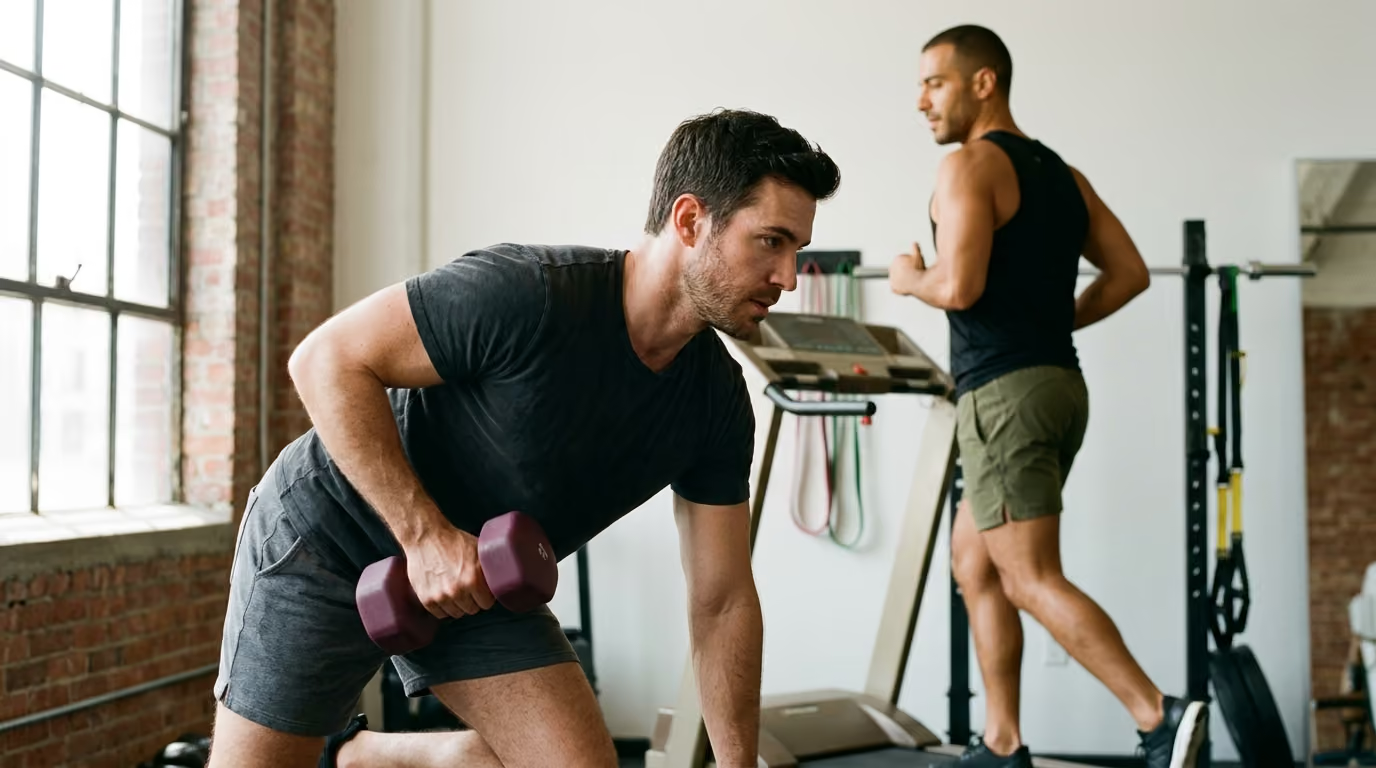
Resistance training plays a vital supporting role in sexual health, even if its isolated impact on erectile scores is less direct than aerobic work. Lifting weights preserves lean skeletal muscle mass, increases resting energy expenditure, and improves insulin sensitivity. Better insulin management protects the endothelial linings of small blood vessels from chronic glycation and oxidative damage.
A structured lifting program also builds functional movement capability and joint stability. Physical strength directly influences pelvic control, core stability, and hip mobility during sexual activity. It provides physical confidence and protects against lower back discomfort or physical fatigue during intimate moments.
The widespread belief that lifting weights acts as a magical cure for low testosterone requires nuance. Heavy resistance training produces acute, short-term elevations in circulating testosterone and growth hormone immediately following a session. These brief hormonal spikes return to baseline levels within an hour or two. They support muscle protein synthesis, but they do not fundamentally rewrite a man's long-term baseline endocrine profile.
Resistance programming should focus on progressive overload across fundamental human movement patterns:
A balanced strength template for sexual vitality does not require grueling daily gym marathons. Two to three full-body sessions per week, performed with moderate volume and clean technique, provide the metabolic and structural stimulus needed to support strength, fitness, and body composition.
Pelvic floor exercises, often called Kegels, target the bulbocavernosus and ischiocavernosus muscles. These muscles surround the base of the penis and actively assist in rigid erection maintenance and venous compression. They also control the rhythm and force of ejaculation.
The scientific evidence regarding pelvic floor training presents an intriguing dynamic. In a randomized controlled trial of 55 men experiencing erectile dysfunction for at least six months, participants received pelvic floor exercises taught by a physiotherapist alongside biofeedback. At the six-month follow-up, 40 percent of the men had regained completely normal erectile function, and an additional 35.5 percent showed substantial improvement.
Broader systematic reviews present a more nuanced picture. Some recent meta-analyses found no statistically significant benefit when pooling pelvic floor interventions across unselected, heterogeneous groups of men. These contrasting findings show that pelvic floor training is an effective clinical rehabilitation tool for specific dysfunctions rather than a universal cure for every erection problem.
Pelvic floor training is most helpful for:
Targeted contractions carry distinct risks if performed incorrectly. Many men suffer from a hypertonic or overactive pelvic floor rather than a weak one. Chronic pelvic floor tightness can compress nerves, restrict local blood flow, and cause chronic pelvic pain syndrome.
Men should never perform repeated, aggressive pelvic contractions while holding their breath. If a man experiences pelvic discomfort, testicular aching, or pain during ejaculation, he should consult a specialized pelvic health physiotherapist rather than attempting unsupervised exercises.
Designing an effective weekly schedule requires balancing cardiovascular conditioning, functional resistance training, and systematic recovery. When total training volume exceeds your capacity to recuperate, resting cortisol rises, sleep quality degrades, and sexual interest rapidly drops.
The European Association of Urology provides useful guidance regarding exercise capacity and sexual activity. Men who can perform light-to-moderate physical effort without chest pain, shortness of breath, or dizziness are considered low cardiovascular risk for sexual activity. Men experiencing unexpected exertional symptoms need formal medical evaluation before intensifying their training.
Here is a sustainable weekly training structure for a working professional over 35:
This template hits the target of 150 to 180 minutes of aerobic work while providing two robust strength sessions. It delivers complete metabolic coverage without exhausting the central nervous system. Explore our comprehensive resources on male vitality and sexual wellbeing to understand how these lifestyle factors interact.
Gay and bisexual men face distinctive cultural, social, and behavioral factors that intersect with sexual health and fitness routines. The gay community frequently places heavy cultural value on physical aesthetics, low body fat, and muscularity. This aesthetic pressure can sometimes push men toward counterproductive training practices that harm their sexual function.
Some men adopt extreme caloric deficits or engage in chronic, excessive training volume to maintain a lean physique. Severe energy restriction down-regulates the hypothalamic-pituitary-gonadal axis, resulting in lowered luteinizing hormone, depressed testosterone production, and reduced libido. A man may achieve a magazine-ready appearance while experiencing sexual fatigue and difficulty maintaining erections.
The use of non-prescribed anabolic-androgenic steroids represents another major clinical consideration. Men sometimes use these substances seeking accelerated muscle growth or aesthetic vitality. Systematic reviews demonstrate that anabolic steroid exposure causes profound suppression of endogenous gonadotropins, severe testicular atrophy, and azoospermia.
Long-term steroid exposure can lead to persistent anabolic-steroid-induced hypogonadism. When men stop or alter these cycles without clinical supervision, they often face prolonged periods of severe erectile dysfunction, depression, and loss of sexual drive.
Substance use patterns, including chemsex or recreational party drugs, also interact directly with cardiovascular conditioning. Stimulants constrict peripheral blood vessels and elevate blood pressure, putting extraordinary strain on the heart during physical or sexual exertion. When combined with sleep deprivation, recovery markers collapse.
Sexual roles and physical preferences also shape functional fitness needs. Versatile, top, or bottom roles require different combinations of pelvic floor control, hip mobility, lower back endurance, and cardiovascular stamina. Maintaining open communication with healthcare providers about sexual practices ensures appropriate cardiovascular screening, STI prevention, and lifestyle guidance.
Understanding these community realities allows men to pursue physical strength and aesthetic confidence without sacrificing their sexual health. Balancing fitness with long-term wellness is central to longevity and healthy aging.
While the evidence linking physical activity to sexual health is compelling, it is critical to recognize where the current research has clear limits. Many published exercise trials evaluating erectile function involve relatively small sample sizes and brief intervention periods lasting between eight and twenty-four weeks. Long-term, multi-decade randomized trials on exercise modalities and sexual outcomes remain rare.
Most clinical trials study men with documented vascular risk factors such as obesity, hypertension, or established metabolic syndrome. The extent to which intense exercise protocols benefit younger, lean men with purely psychogenic or relationship-based erectile difficulties is less clearly defined in the literature.
The research also struggles to establish single, isolated formulas for training. Meta-analyses demonstrate that while aerobic conditioning consistently improves IIEF scores, combined aerobic and resistance programs yield mixed results in pooled statistics. This does not mean lifting weights is harmful for sexual health. It simply illustrates that study protocols vary widely in intensity, participant compliance, and overall volume.
Exercise is not a complete substitute for medical diagnosis. New or sudden erectile dysfunction can serve as an early clinical indicator of occult coronary artery disease, structural vascular blockages, neurological disorders, or severe endocrine failure. The American Urological Association stresses that all men presenting with persistent erectile symptoms require clinical evaluation for underlying systemic disease.
Physical training should be viewed as an indispensable lifestyle pillar that works alongside medical care, not as an ideological replacement for professional medical treatment.
Prolonged cycling on narrow, rigid bicycle saddles can compress the pudendal nerve and perineal arteries, leading to temporary numbness or erectile problems. Using an ergonomic, noseless or split-channel saddle, adjusting handlebar height, and wearing padded shorts largely eliminates this microvascular compression.
Most randomized controlled trials measure significant improvements in erectile function questionnaires after eight to twenty-four weeks of consistent training. Cellular adaptations in endothelial function and capillary density require several months of continuous, progressive stimulus to manifest fully.
Yes. When training volume and intensity outpace nutritional intake and restorative sleep, systemic overtraining syndrome can develop. This state raises chronic cortisol, disrupts nighttime gonadotropin secretion, depresses morning erections, and reduces sexual interest.
Aerobic exercise provides stronger direct clinical evidence for improving erectile rigidity and endothelial nitric oxide release. Resistance training, however, provides essential support for muscle preservation, insulin sensitivity, and physical stamina. A balanced program containing both modalities yields the best overall vitality.
Exercise serves as a powerful, evidence-backed foundation for male sexual health, with regular aerobic training providing the clearest vascular benefits for erectile function. Sustainable vitality after 35 requires balancing cardiovascular conditioning and progressive strength work with deliberate recovery, honest self-assessment, and comprehensive medical care.
Stay connected for research-led guidance on fitness, body composition, skin, grooming, vitality, sexual wellbeing, relationships and healthy aging. Clear ideas for gay men 35+ who want to look good, feel strong and age with confidence.


Build habits and systems that support clear thinking, steady energy and long term capacity throughout a demanding career.
explore the Blog