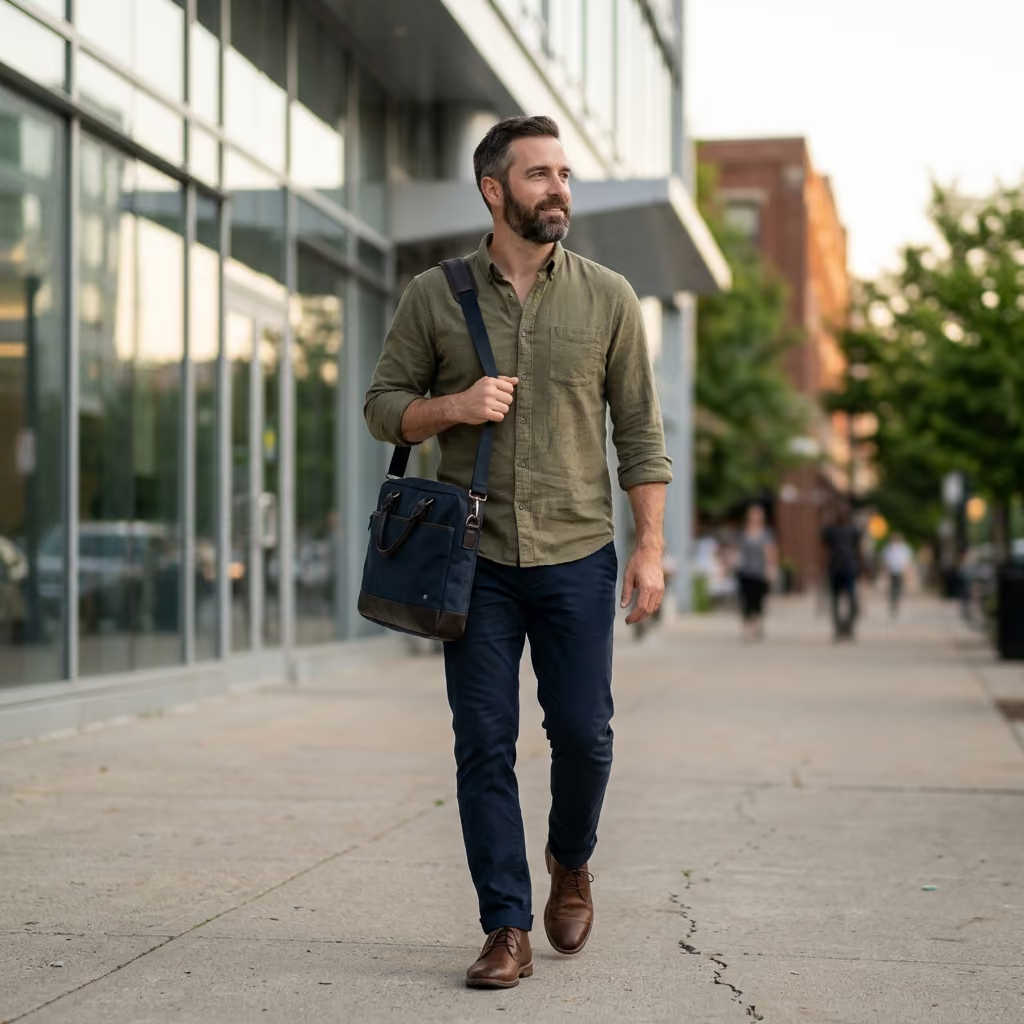

Long travel days often disrupt healthy eating routines, but practical dietary strategies help active men hit protein targets and maintain daily energy.





Most fitness advice treats travel as a moral test. Conventional guides insist that you pack six chilled plastic containers of chicken and broccoli into your carry-on bag, decline every client dinner, and avoid touching restaurant menus. That approach fails almost immediately in the real world.
Rigid dietary perfection collapses under airport delays, late client meetings, and international time differences. When a strict plan breaks, men often swing to the opposite extreme: abandoning deliberate nutrition entirely until they return home.
A resilient travel strategy does not demand a portable kitchen. Instead, it relies on nutritional damage control. You protect your lean muscle mass, support digestive comfort, maintain stable energy, and preserve baseline conditioning while accepting that food choices will vary.
Building a sustainable routine on the road requires clear decision rules rather than restrictive rules. By prioritizing protein, hydration, micronutrient density, and sleep quality, you can travel frequently for business or leisure without compromising your physical progress or vitality.
When you land in an unfamiliar city, your dietary environment shifts completely. You face limited food preparation options, irregular schedules, and higher exposure to ultra-processed foods. Managing this environment requires a hierarchy of nutritional priorities.
Your nutritional choices on the road should follow an explicit order of importance:
The Dietary Guidelines for Americans emphasize limiting foods high in saturated fat, added sugars, and sodium, while moderating alcoholic drinks. At the same time, the World Health Organization recommends building daily intake around vegetables, fruits, legumes, nuts, and whole grains. The WHO specifically advises eating at least 400 grams, or roughly five portions, of fruit and vegetables daily.
Physical activity increases your daily protein needs. The International Society of Sports Nutrition position stand indicates that active individuals benefit from 1.4 to 2.0 grams of protein per kilogram of body weight daily. For an 85-kilogram active man, this target equals approximately 119 to 170 grams of protein each day.
The ISSN also notes that distributing protein into discrete meals of roughly 0.25 grams per kilogram, or 20 to 40 grams of high-quality protein per feeding, effectively stimulates muscle protein synthesis. On travel days, hitting these thresholds protects your metabolic rate and prevents erratic hunger swings.
Targeting 25 to 40 grams of protein across three or four meals creates a predictable framework. This structure works whether you are selecting food at an airport kiosk, a hotel buffet, or a local bistro.
Travel distorts your normal daily energy expenditure. Prolonged sitting on planes, trains, and in conference rooms lowers your baseline energy output. Conversely, navigating extensive transit terminals, walking through foreign cities, and carrying heavy luggage can increase incidental activity.
Sleep loss and circadian shifts frequently disrupt ghrelin and leptin signalling. These hormonal shifts make hyper-palatable, calorie-dense foods far more appealing. Recognizing that fatigue can masquerade as intense hunger prevents unnecessary overeating during transit days.
Active men pursuing evidence-based strength and body composition must learn to differentiate between legitimate energy deficits and the physical exhaustion caused by travel.
Travelling at 38 feels markedly different from travelling at 24. Normal biological changes after 35 alter how your body handles disrupted sleep, irregular meal timing, heavy restaurant meals, and alcohol.
Aging alters gastrointestinal sensitivity and bowel regularity. Prolonged sitting during long-haul transit slows intestinal peristalsis. Combined with low fluid intake and low dietary fibre, this immobility often leads to acute constipation.
Conversely, sudden exposure to unfamiliar oils, rich sauces, or excessive amounts of restaurant sodium can trigger sudden digestive distress. Maintaining steady fluid intake and moderate fibre helps keep your digestion stable across time zones.
As men age, skeletal muscle displays subtle anabolic resistance. Muscle tissue requires a robust leucine trigger and consistent mechanical tension to maintain its mass.
Skipping protein for several days while walking long distances accelerates the breakdown of lean muscle tissue. Active men over 35 cannot afford to spend a week on the road consuming only carbohydrate-heavy pastries and light salads. Hitting the 20 to 40 gram protein threshold per meal becomes increasingly vital as you age.
Hepatic metabolism of alcohol and its toxic metabolite, acetaldehyde, slows with age. Consuming two cocktails at a business dinner past 35 causes far more sleep fragmentation and autonomic disruption than it did a decade earlier.
Alcohol suppresses rapid eye movement sleep and elevates your resting heart rate throughout the night. When you combine this physiological tax with jet lag, your next-day cognitive performance, workout quality, and appetite control decline significantly.
Prioritizing your long-term vitality and healthy aging requires an honest appraisal of how quickly your body recovers from travel fatigue.
You do not need a kitchen scale or a tracking app to eat well on the road. Instead, use a simple mental algorithm at every meal opportunity.
Before ordering or assembling a plate, ask yourself three distinct questions:
This framework applies to any dining setting, from a street cafe in Paris to a terminal grab-and-go kiosk in Atlanta.
When travel options are poor, assemble a minimum viable meal. This is a functional food combination that covers your basic physiological needs without requiring optimal conditions.
Examples of a minimum viable meal include:
A convenience meal is never a failure. It provides essential nutrients, stabilizes your blood sugar, and keeps you from arriving at dinner ravenous.
Trying to eat perfectly in an airport or hotel lobby creates decision fatigue. Instead of overhauling your entire meal, focus on upgrading a single element.
If you are ordering a burger at an airport pub, swap the deep-fried chips for a side salad or sliced fruit. If your breakfast buffet is heavily weighted toward pastries, add three scrambled eggs and a scoop of Greek yoghurt before taking a small pastry. If you are offered a sugary soft drink, choose sparkling water instead.
These single adjustments reduce excessive saturated fat and simple sugars while preserving your enjoyment of travel dining.
Airports are designed to sell hyper-palatable, highly processed foods to stressed, rushed travellers. Navigating transit hubs successfully requires a clear strategy before you enter the departures terminal.
When you clear security, avoid entering the first fast-food queue you see. Take five minutes to walk your terminal concourse to evaluate the full range of food vendors.
Look for outlets that offer customizable bowls, made-to-order sandwiches, or fresh deli options. Japanese sushi counters, Mediterranean salad bars, and traditional delis usually offer better options than standard burger franchises or bakery cafes.
Packing a modest flight kit protects you against flight delays, tarmac holds, and missed connections. You do not need a cooler bag; focus entirely on stable, dry items.
A functional transit kit includes:
This kit occupies minimal luggage space and prevents you from relying on low-nutrient airplane snacks when travel is delayed.
Aircraft cabin air is exceptionally dry, with humidity levels often dropping below twenty percent. Mild dehydration impairs your concentration, alters your appetite signals, and worsens perceived jet lag.
The Centers for Disease Control and Prevention Yellow Book recommends maintaining hydration during flights because fluid depletion worsens the physical symptoms of jet lag. The CDC explicitly warns against consuming excess alcohol during flights.
Drink plain water regularly throughout the flight, responding promptly to thirst. Avoid forcing excessive gallons of water, which only causes frequent trips to the lavatory and disrupts rest. Keep caffeine intake low on long flights, especially if you are flying across several time zones toward an evening arrival.
For deeper insights into metabolic balance during irregular routines, review our guide to nutrition and metabolic health.
Hotel stays and business trips present unique nutritional obstacles. You face expansive breakfast buffets, catered conference lunches, and multi-course client dinners with heavy alcohol consumption.
The hotel breakfast buffet can derail your day or set a strong nutritional foundation. Approach the buffet with a structured plate architecture rather than an open-ended appetite.
Follow this sequence when filling your plate:
Avoid the common habit of drinking two large glasses of commercial fruit juice alongside multiple sweetened coffees. This delivers a massive dose of free sugars with zero satiety, leaving you hungry before your first meeting ends.
A well-stocked hotel room provides a reliable buffer against late-night room service orders. When you check in, inspect your room amenities.
The U.S. Food and Drug Administration advises that perishable foods requiring refrigeration must never remain at room temperature for longer than two hours. If the room temperature is above 32 degrees Celsius (90 degrees Fahrenheit), that safety limit drops to one hour.
Do not store perishable poultry, seafood, or cooked meats in an unverified minibar that only cools beverages to cellar temperatures. Stick to shelf-stable foods like tinned tuna, protein powder, nuts, and whole fruit unless you have a true, verified refrigerator.
Business dinners combine high-calorie foods, social dining pressure, and commercial hospitality. You can navigate these evenings easily without appearing antisocial or overly restrictive.
Begin the meal by ordering a large bottle of sparkling or still water for the table. When ordering your main dish, look for whole food preparations: grilled fish, roasted poultry, or lean steaks accompanied by vegetables and potatoes.
Ask the kitchen to serve rich sauces or dressings on the side so you control the portion. Eat at a measured pace, taking time to converse with colleagues and clients. Stop eating when you feel comfortably satisfied rather than cleaning a massive restaurant plate simply because it is there.
Maintaining an active training routine while travelling supports your physical conditioning, mood, and sleep quality. However, exercising in hotel gyms, running in hot foreign climates, and adjusting to high altitudes changes your fluid and fuel requirements.
Arriving at a workout dehydrated impairs your muscular strength, power output, and heat tolerance. The American College of Sports Medicine recommends initiating hydration several hours before physical activity. This timeline allows your body to absorb fluids and excrete any excess through urine before you start exercising.
An established ACSM position stand provides a practical baseline: consume approximately 500 millilitres (roughly 17 fluid ounces) of fluid about two hours before your workout. This ensures adequate hydration without causing gastrointestinal sloshing during movement.
Short, moderate hotel-gym lifting sessions of 40 to 45 minutes do not require massive carbohydrate loading. A standard meal containing moderate starches eaten two to three hours beforehand provides ample glycogen.
However, prolonged high-intensity exercise demands direct fueling. The International Society of Sports Nutrition position stand on nutrient timing shows that consuming 30 to 60 grams of carbohydrate per hour benefits athletes during extended high-intensity exercise lasting longer than 60 minutes.
If you are running a half-marathon abroad, completing a long cycling tour, or hiking in rugged terrain, pack portable carbohydrates. Bananas, energy gels, sports drinks, or dried fruit maintain your blood glucose and delay central fatigue.
Hydration requires balance. Forcing yourself to drink extreme volumes of plain water during extended exercise in hot weather can cause exercise-associated hyponatremia. This occurs when blood sodium concentrations drop to dangerously low levels.
The ACSM emphasizes that including sodium in beverages during prolonged exercise lasting over an hour aids fluid retention and helps prevent hyponatremia in individuals consuming large fluid volumes.
On standard travel days without heavy sweating, plain water, tea, and water-rich foods meet your needs. Reserve high-dose electrolyte powders and sports drinks for intense workouts, prolonged heat exposure, or recovery from gastrointestinal fluid losses.
Review our comprehensive resources on male vitality and sexual wellbeing to understand how hydration and recovery support overall stamina.
Jet lag is a circadian misalignment between your internal master pacemaker, the suprachiasmatic nucleus, and local solar time. It disrupts your sleep architecture, digestion, immune function, and appetite regulation.
While light exposure is the primary cue for your master biological clock, food timing acts as a potent synchronization cue for peripheral clocks in your liver, stomach, and pancreas.
When you arrive in a new time zone, shift your meals to the local schedule as soon as practical. If you land at 8:00 AM local time feeling like it is midnight, eat a light, protein-rich breakfast rather than going to sleep immediately.
Avoid consuming heavy, high-fat meals late at night in your new time zone. Your gastrointestinal tract exhibits reduced digestive enzyme secretion and slower motility during biological night, making late-night dining a recipe for gastroesophageal reflux and poor sleep.
The CDC jet-lag guidance highlights the importance of destination-time light exposure. Getting outside and receiving natural daylight at appropriate times helps your body clock advance or delay toward the new schedule.
Combine your morning nutrition with outdoor movement. Eating a balanced breakfast followed by a twenty-minute outdoor walk accelerates your circadian adjustment far more effectively than isolated supplement protocols.
Caffeine is a potent tool for masking daytime sleepiness, but its prolonged half-life can undermine your night-time sleep quality. Avoid consuming coffee, energy drinks, or strong teas within six to eight hours of your planned destination bedtime.
Melatonin can help shift your sleep phase when crossing multiple time zones. The CDC notes that product instructions commonly advise taking melatonin before nocturnal sleep in the new time zone.
However, treat melatonin supplements with care. Formulations vary widely in quality, purity, and actual hormone dosage. Men with underlying medical conditions or those taking prescription medications should consult a healthcare provider before using supplemental melatonin.
Travel often involves rich social environments: gay group holidays, international circuit events, nightlife, and exploring foreign culinary traditions. Maintaining your physical health requires balancing social connection with physiological boundaries.
Alcohol is a central feature of many travel environments, but it exacts a clear metabolic cost. Alcohol disrupts your sleep architecture, impairs muscle recovery, increases abdominal fat deposition, and removes dietary inhibitions.
Research published in The Lancet and guidance from the World Health Organization state that there is no level of alcohol consumption that is completely free from health risks, particularly regarding cardiovascular disease and cancer.
You do not have to live as an absolute ascetic to maintain your fitness. However, you should treat alcohol as a deliberate exposure rather than an automatic default.
Apply these operational guidelines when drinking socially:
Developing clear personal boundaries supports your confidence and relationships during high-energy social trips.
Gastrointestinal illness can halt your trip and compromise your conditioning for weeks. Preventing travellers' diarrhoea requires consistent food and beverage discipline in regions with uncertain sanitation.
The CDC Yellow Book outlines critical food-safety guidelines:
CDC guidance notes that food from street vendors carries an increased risk of foodborne pathogens because of limited refrigeration and handwashing facilities. Enjoying local cuisines safely means choosing busy, high-turnover restaurants where food is cooked fresh to order at high temperatures.
If you experience travellers' diarrhoea, shift your primary focus immediately from fitness nutrition to fluid and electrolyte preservation.
Drink clean, bottled water combined with oral rehydration salts to replace lost sodium and potassium. Eat bland, easily tolerated foods like white rice, dry toast, bananas, and clear broths as your appetite returns.
Seek medical attention immediately if you develop high fever, severe abdominal pain, persistent vomiting that prevents fluid retention, or blood in your stool. Consult a travel-medicine physician or qualified clinician regarding appropriate antibiotic or antidiarrhoeal medications.
Nutrition science provides robust broad frameworks, but its findings have clear limits when applied to individual travel scenarios.
Controlled sports nutrition studies typically evaluate healthy young adults in laboratory environments. These trials rarely capture the compounding stresses of international business travel, including sleep deprivation, psychological stress, changing ambient temperatures, and unfamiliar pathogens.
What works for an endurance athlete on a training camp may not work for a corporate executive managing three cross-country flights in four days. You must adjust broad recommendations to fit your specific digestion, schedule, and medical background.
The travel wellness market heavily promotes expensive supplements, from detoxifying greens powders and jet-lag IV infusions to exotic herbal tinctures. Very few of these products are supported by rigorous, peer-reviewed clinical trials.
A stable travel routine relies on basic physiological foundations: adequate high-quality protein, clean water, whole fruits and vegetables, consistent movement, and restorative sleep. No proprietary supplement blend can undo the damage of chronic sleep deprivation, heavy alcohol intake, and complete physical inactivity.
The nutritional strategies outlined in this guide apply to healthy, active adults. They do not replace individualized medical advice or clinical dietetics.
Men managing specific medical conditions, such as type 1 or type 2 diabetes, chronic kidney disease, hypertension, cardiovascular disease, food anaphylaxis, or coeliac disease, require specialized protocols.
Medication schedules, insulin timing across time zones, and therapeutic dietary restrictions must be coordinated directly with your personal physician or a registered dietitian.
Maintaining your health, physique, and vitality while travelling does not require rigid perfection or a portable kitchen; it simply requires executing a few evidence-based fundamentals consistently wherever you land.
Stay connected for research-led guidance on fitness, body composition, skin, grooming, vitality, sexual wellbeing, relationships and healthy aging. Clear ideas for gay men 35+ who want to look good, feel strong and age with confidence.


Build habits and systems that support clear thinking, steady energy and long term capacity throughout a demanding career.
explore the Blog