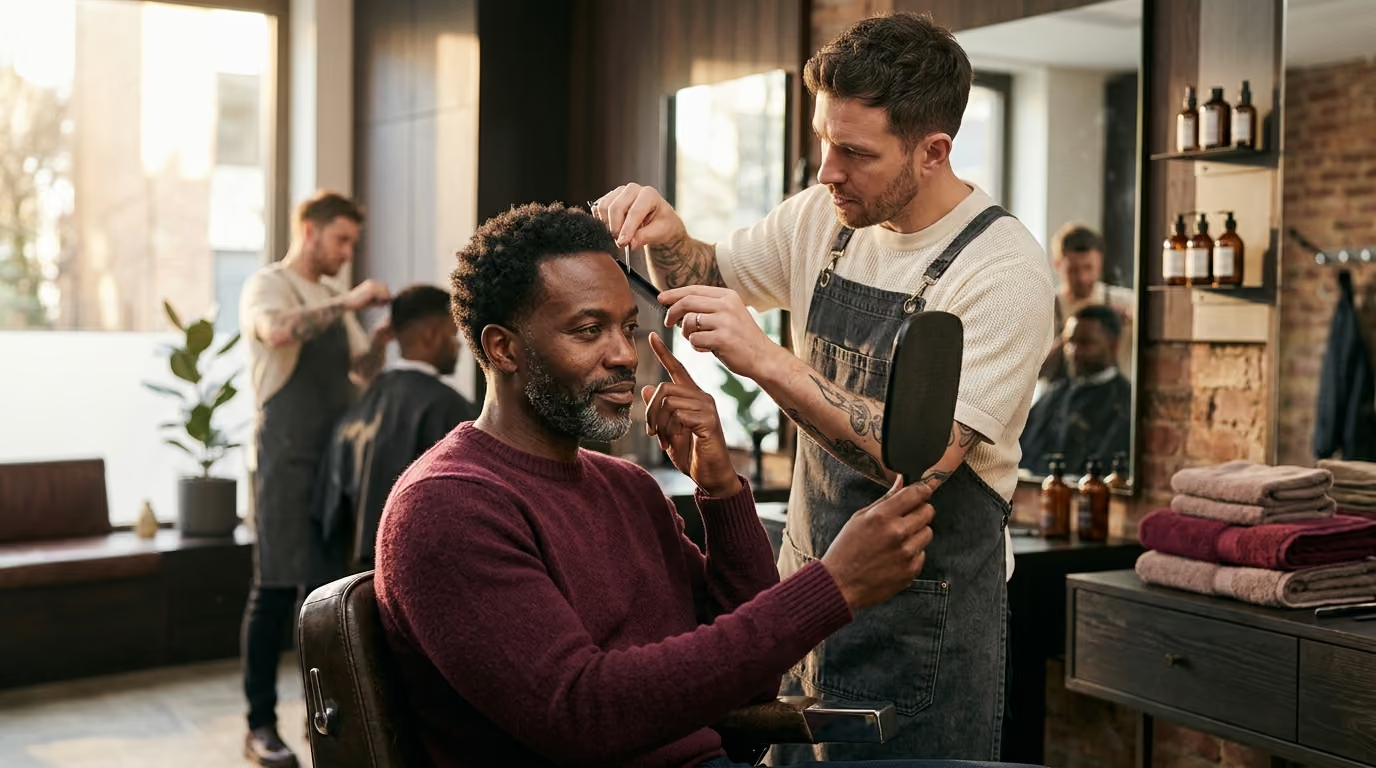

Facing a thinning hairline in your late thirties requires strategic surgical planning, medical stabilization, and age-appropriate geometry to achieve lifelong natural results.





The most common mistake men make when addressing hair loss after 35 is trying to recreate the hairline they had at 18. An adolescent hairline is flat, low, and dense across the forehead. Placing that juvenile shape onto a face that has naturally matured creates an immediate visual mismatch. A restored hairline should not look like a sudden return to adolescence. It should look like an authentic, healthy frame for the face you have today.
Achieving a believable hairline requires understanding facial proportions, follicular density gradients, and the progressive biology of male pattern hair loss. When you evaluate hair restoration or advanced styling, the goal is structural harmony. You need a design that looks sharp right now and continues to look natural at 50, 60, and beyond.
Planning an adult hairline involves technical precision and strict donor budgeting. A hairline positioned too low consumes excessive grafts and cannot be easily undone. A conservative, well-angled hairline frames your features, preserves your donor supply for the future, and leaves room for further refinements as your scalp changes.
Designing a natural hairline is an architectural project that must follow specific anatomical landmarks. Clinical practice guidelines published in the National Library of Medicine emphasize that the anterior hairline is the most scrutinized zone of any restoration. Because it sits at eye level during face-to-face conversation, any artificial straightness or excessive density becomes obvious.
The anterior border consists of distinct structural zones rather than a single solid line. The leading edge is the transition zone, a soft, irregular band measuring roughly one-half to one centimeter in depth. Behind it sits the defined zone, where graft density increases to create visual coverage. Placing thick, multi-hair follicular units directly at the leading edge creates an artificial, plug-like appearance. A natural transition zone requires exclusively single-hair follicular units scattered in an irregular, staggered pattern.
The central anchor of the hairline is the mid-frontal point. It marks the lowest central position of the frontal design. Clinical guidelines stress that the mid-frontal point should never be determined using a rigid, universal measurement. Forehead height, orbital bone structure, and facial length vary significantly between individuals.
Surgeons establish the mid-frontal point by assessing the muscle contours of the forehead. The hairline must always sit above the frontalis muscle to prevent unnatural movement when you raise your eyebrows.
Lateral to the center are the frontotemporal points and angles. Clinical practice guidelines recommend that the lateral frontotemporal points should sit at the same vertical height as the mid-frontal point, or slightly higher. If the temporal corners dip lower than the center, the hairline develops an inverted, unnatural curve. Furthermore, the frontotemporal angle should align roughly with the vertical canthal line, which extends upward from the outer corner of the eye.
Morphological research highlights the natural diversity of male hairlines. A clinical study by Sirinturk and colleagues examined frontal hairline contours in 200 adults. The researchers identified five primary anatomical shapes: round, M-shaped, rectangular, bell-shaped, and triangular. Among male participants, the M-shaped pattern appeared in 46 percent of cases, the rectangular pattern in 31 percent, and the round pattern in 27 percent. The study noted that rectangular and M-shaped designs correspond with mature male facial geometry, whereas rounded patterns are more typical of feminine hairline architecture.
Micro-irregularity is the final anatomical requirement. Natural hairlines never form a straight, continuous line. They feature gentle macro-waves combined with micro-irregularities where individual hairs sprout slightly ahead of or behind the main boundary. Replicating this random distribution prevents the harsh, drawn-on appearance seen in poor restorations.
Understanding the biology of hair loss is essential when planning aesthetic interventions in your late thirties, forties, and fifties. Androgenetic alopecia is a progressive condition driven by genetic sensitivity to dihydrotestosterone (DHT). While the rate of thinning often stabilizes somewhat compared to the rapid shedding seen in the early twenties, hair loss does not permanently stop at 35.
Epidemiological research shows how widespread progressive thinning is across different age cohorts. A systematic review on the prevalence of androgenetic alopecia notes that roughly 30 percent of White men display noticeable thinning by age 30. That number rises to approximately 50 percent by age 50, and reaches nearly 80 percent by age 70. Data from US epidemiological surveys show similar trajectories across diverse populations.
Because thinning continues over time, a hair transplant cannot be treated as a single, permanent cure. The transplanted follicles from the safe donor zone will generally resist DHT, but your native, non-transplanted hair behind them remains vulnerable to ongoing miniaturization. If you place an aggressive, low hairline at 37 and lose the native hair behind it over the next decade, you will be left with an isolated strip of hair across your forehead.
Facial anatomy also changes as you age. Over decades, the skin loses elasticity, facial fat pads subtly shift downward, and minor bone remodeling occurs around the brow and jaw. A mature face naturally carries deeper expression lines and distinct structural angles.
A high, slightly recessed hairline complements these mature proportions. A low, flat hairline compresses the upper third of the face, making the middle and lower thirds appear disproportionately heavy.
Age-appropriate design does not mean settling for thin, unattractive hair. It means choosing an intentional design that looks distinguished and balanced. A refined, mature hairline restores the frame of your face, strengthens your jawline visually, and highlights your eyes without looking like a desperate attempt to erase time. Exploring aesthetic longevity and hair maintenance helps you build a cohesive personal grooming plan that respects these natural biological shifts.
The most critical limiting factor in hair restoration is the finite size of your donor supply. The donor area refers to the band of hair along the back and sides of the scalp that is genetically resistant to DHT. You have a limited number of permanent donor follicles available for harvest throughout your life.
Clinical guidelines report that the total safe lifetime harvest from the scalp ranges from approximately 4,000 to 6,500 follicular unit grafts for most patients. In a single surgical session, extracting between 2,500 and 3,000 grafts represents a safe upper limit to prevent visible thinning, patchy donor scars, or compromised blood circulation.
A common misconception is confusing graft count with individual hair count. A follicular unit graft is a naturally occurring bundle containing one, two, three, or four hairs. A procedure involving 2,000 grafts might yield 3,800 hairs if the surgeon harvests robust multi-hair units, or only 2,600 hairs if the grafts consist mostly of single or double hairs. Understanding this distinction is vital for setting realistic density expectations.
The concept of the safe donor area requires careful clinical evaluation. Clinical guidelines define the average safe donor area as a zone measuring roughly 189 to 203 square centimeters across the occipital and parietal scalp. However, no single donor boundary applies to every man. If a surgeon harvests hair too high toward the crown or too low toward the neck, those extracted hairs may eventually miniaturize and fall out years after being transplanted.
Miniaturization within the donor area itself must be ruled out before any procedure. Conditions like retrograde alopecia cause thinning upward from the nape of the neck and around the ears.
Diffuse unpatterned alopecia can destabilize follicles across the entire scalp. A thorough pre-operative assessment must include trichoscopy to examine hair caliber and verify that donor hairs are truly permanent.
Spending 3,500 precious grafts simply to lower your frontal hairline by two centimeters is poor long-term planning. Those same grafts may be needed later to treat the mid-scalp or crown. Treating your donor area like a non-renewable financial budget ensures you maintain coverage across your entire head as you move through your forties, fifties, and sixties.
A successful hairline design must be evaluated from multiple viewing angles, not just a straight-on mirror reflection. While you view yourself head-on in photographs, other people see you in three dimensions during everyday interactions. A line that looks acceptable from the front can appear completely unnatural from a profile or three-quarter perspective.
The concept of facial thirds provides a foundational aesthetic framework. The face is divided into three vertical segments: from the hairline to the brow, from the brow to the base of the nose, and from the base of the nose to the bottom of the chin.
A natural hairline balances these three sections. Lowering the hairline too far shrinks the upper third, drawing unwanted attention to the middle and lower face.
Lateral temporal framing is just as important as the central forehead. The temporal points and temporal triangles frame the outer corners of your eyes and temples. If you restore a dense frontal hairline but leave severely receded temples, the hairline will project forward like an isolated peninsula. Rebuilding the temporal points creates a cohesive transition, but it requires skilled graft placement and consumes donor supply.
Hair exit angles and directional flow dictate how the transplanted hair moves and styles. Follicles do not grow perpendicular to the skin. At the frontal hairline, hairs emerge at an acute angle of 15 to 30 degrees, pointing forward and slightly outward toward the sides. As you move laterally into the temporal peaks, the hair direction shifts flat against the scalp, pointing downward toward the ear.
Surgeons must replicate these precise angles when creating recipient sites. If grafts are inserted at an incorrect angle, the hair will stick straight up, making natural styling impossible. When hair is placed flat and angled correctly, it layers smoothly over adjacent strands, creating the illusion of greater density with fewer total grafts. Integrating proper scalp care with broader skin and grooming routines keeps the underlying skin healthy and supports hair quality.
Aesthetic considerations often carry distinct social weight for gay men over 35. Urban gay communities frequently place a strong cultural emphasis on physical fitness, active social engagement, and personal style. While this environment encourages proactive self-care, it can also amplify anxiety surrounding normal physiological aging.
Hair loss can feel particularly disruptive when dating, socializing, or navigating professional environments. Online dating apps and image-heavy platforms rely heavily on visual first impressions. This dynamic sometimes drives men to seek aggressive, unrealistic cosmetic fixes. Wanting to look attractive and vibrant is entirely healthy, but chasing an adolescent aesthetic usually backfires.
A well-designed, mature hairline projects vitality, strength, and confidence without looking manufactured. When a restoration looks seamless, nobody questions whether you have had work done; they simply register a well-groomed, handsome man. Conversely, an over-packed, low hairline with blunt temporal angles draws immediate scrutiny.
Cultivating a confident personal aesthetic means aligning your hair, skin, physique, and wardrobe. A sharp haircut that works with your natural hairline, combined with physical conditioning and tailored clothing, creates an appealing look that outperforms an artificial-looking surgical line. Managing these transitions thoughtfully contributes directly to sustained confidence and dating dynamics as an adult gay man.
Hair restoration is not an all-or-nothing surgical choice. A comprehensive aesthetic plan combines medical stabilization, strategic haircut architecture, and effective styling techniques. Surgery should only be considered after exploring medical and styling foundations.
Medical management serves as the primary defense against ongoing androgenetic alopecia. Clinical practice guidelines published in PMC assign a Grade A recommendation to continuing medical treatment after hair transplantation. Medications work to stabilize thinning native follicles and preserve the surrounding hair mass.
Topical minoxidil helps widen miniaturized follicles and prolongs the active anagen growth phase of the hair cycle. Oral finasteride inhibits the 5-alpha reductase enzyme, significantly lowering DHT levels in the scalp and slowing follicular miniaturization. A consensus recommendation published in medical literature suggests evaluating stabilization over a 12-month period before finalizing surgical plans. Any medical regimen requires guidance from a qualified physician to review your medical history and discuss potential side effects.
Non-surgical styling strategies can dramatically improve your appearance without surgical downtime or financial expense. A skilled barber can reshape your silhouette to complement your hairline:
Hairpieces, modern hair systems, and scalp micropigmentation represent additional non-surgical alternatives. Modern custom hair systems use breathable membrane bases and real hair to create natural hairlines without surgery. Scalp micropigmentation uses medical-grade pigment to replicate the look of shaved hair follicles, creating a sharp, intentional buzz-cut aesthetic. Combining these techniques with broader healthy aging strategies allows you to curate an aesthetic that fits your lifestyle.
Every scalp presents a unique set of variables. Examining practical case scenarios illustrates how surgical principles and styling strategies apply to different clinical presentations.
A 38-year-old man presents with moderate recession at the frontotemporal angles (Norwood Stage 2 to 3). His central forelock remains dense, and his occipital donor supply is excellent. He expresses concern that his receding corners make him look tired.
The optimal strategy avoids lowering his central hairline. Instead, the surgeon places roughly 1,200 to 1,500 single- and double-hair grafts into the recessed temporal triangles, creating a soft, slightly curved M-shape. The leading edges feature staggered single hairs. He begins medical therapy to protect his mid-scalp and vertex, preserving the vast majority of his donor reserves for the future.
A 45-year-old man has always had a high forehead. His father and grandfathers maintained full heads of hair into their seventies. Trichoscopic examination confirms no active miniaturization across his scalp.
Because his hair loss is not actively progressive, the planning focus shifts to aesthetic facial proportions. Rather than creating a flat line, the surgeon designs a mature, slightly elevated frontal border using 1,800 grafts. The transition zone features subtle micro-irregularities that blend seamlessly with his coarse, wavy hair texture, balancing his facial thirds without aggressive intervention.
A 52-year-old man presents with significant frontotemporal recession and noticeable thinning across his crown (Norwood Stage 4 to 5). His donor density is moderate, yielding an estimated lifetime pool of 4,500 harvestable grafts.
The surgeon prioritizes the frontal frame over the crown. Rebuilding the frontal hairline and mid-scalp uses 2,500 grafts to restore the primary visual frame of his face. The remaining crown receives a light scattering of grafts combined with topical therapy and scalp concealers. Filling the crown aggressively would have exhausted his donor bank, leaving the crucial frontal hairline weak and unfinished.
A 41-year-old man reports overall thinning across his frontal scalp, top, and donor area. Trichoscopy reveals widespread miniaturization exceeding 20 percent in the occipital scalp, indicating diffuse unpatterned alopecia.
Surgical restoration is contraindicated in this scenario. Harvesting follicles from an unstable donor area would result in transplanted hairs that miniaturize and shed over time. The patient is guided toward medical therapy, blood work to assess nutritional and metabolic markers, and a textured haircut paired with matte styling products.
Hair restoration literature contains clear guidelines alongside areas of clinical uncertainty. Many marketing claims from commercial clinics are not supported by rigorous peer-reviewed evidence. You must understand the risks and limitations before committing to a surgical procedure.
A systematic review and meta-analysis on hair transplantation complications published in Aesthetic Plastic Surgery outlines common adverse events. Post-operative edema, transient numbness, donor-site pain, and localized folliculitis are frequently reported. More serious complications include hypertrophic scarring, poor graft survival, recipient-site necrosis, and telogen effluvium (shock loss of native hair).
Commercial clinics frequently advertise mega-sessions promising 4,000 to 5,000 grafts in a single day. Peer-reviewed guidelines caution against excessive extraction in one sitting. Overharvesting can compromise blood supply to the scalp, lower graft survival rates, and cause visible donor scarring.
Another major limitation in current research is the lack of long-term, multi-decade clinical trials tracking hairline aesthetics over forty years. Most published studies follow patients for 12 to 24 months post-operatively. Because facial aging and androgenetic alopecia progress over decades, clinical expertise and conservative planning remain your best safeguards against an outdated result.
If you decide to consult with a hair restoration surgeon, approach the consultation as an active, informed participant. Do not let a clinic salesperson dictate your surgical design. You are evaluating the surgeon's artistic vision, anatomical knowledge, and medical integrity.
Request a handheld mirror and examine the drawn hairline under bright light. Raise your eyebrows to ensure the lowest point sits well above the frontalis muscle. Look at your profile to confirm that the temporal angles connect naturally with your sideburns without protruding forward.
Ask the surgeon to show unedited before-and-after photographs of patients with your specific hair caliber, ethnicity, age, and loss pattern. Pay close attention to close-up photographs of the hairline transition zone. If the leading edges in their portfolio look solid, dense, or unnaturally straight, look for a different provider.
A reputable surgeon will welcome these detailed questions. They will be candid about donor limitations, realistic about projected density, and cautious about protecting your future options. A conservative design that looks natural will always serve you better than an aggressive line that risks looking artificial over time.
The most successful hairline is not the lowest one you can draw; it is the one that frames your face naturally, preserves your donor reserves, and remains believable throughout your life.
Stay connected for research-led guidance on fitness, body composition, skin, grooming, vitality, sexual wellbeing, relationships and healthy aging. Clear ideas for gay men 35+ who want to look good, feel strong and age with confidence.


Build habits and systems that support clear thinking, steady energy and long term capacity throughout a demanding career.
explore the Blog