
Men often view concealers as noticeable cover-ups, but targeted optical science discreetly corrects acne scars, hyperpigmentation, and visible scalp hair loss.





Most grooming advice tells men to fix their aesthetic flaws through aggressive intervention, medical treatments, or rigid acceptance. Cosmetic camouflage offers a different path. It relies on optical illusion, pigment theory, and texture management to alter how light interacts with skin, hair, and nails.
Cosmetic camouflage is a visual-management strategy. It uses creams, liquids, powders, colour correctors, and keratin fibres to disguise colour or contour irregularities. It does not cure underlying pathology, reverse androgenetic alopecia, or remodel deep scar tissue. It provides immediate control over how you present yourself to the world.
Looking sharp and feeling confident in your skin should not depend entirely on long treatment timelines. When understood properly, cosmetic camouflage bridges the gap between clinical interventions and day-to-day confidence.
Cosmetic camouflage operates across four distinct technical goals. Understanding these distinctions prevents the heavy, artificial look that makes men avoid cosmetic products.
The first goal is simple concealment. This involves reducing the visual contrast between a discoloured area and surrounding tissue. Concealment works on vascular redness, post-inflammatory hyperpigmentation, bruising, and stable scars.
The second goal is colour correction. This technique uses contrasting hues from the colour wheel to neutralise unwanted undertones before applying skin-tone pigments. Placing a thin green corrector over facial redness neutralises the red wavelengths of light. This step eliminates the need for thick, heavy foundation.
The third goal is contour correction. Makeup cannot physically fill a depressed scar or flatten a raised lesion. It alters the perception of depth through highlight and shadow. Darker tones make protrusions recede visually, while lighter tones make depressions look shallower.
The fourth goal is optical density enhancement. This applies primarily to the scalp and eyebrows. Tinted powders and keratin fibres reduce the visual contrast between bare scalp and surrounding hair shafts. This creates the appearance of fuller volume without altering follicle biology.
To use these techniques safely, follow a clear workflow: diagnose, stabilise, correct colour, conceal, set, remove, and monitor.
Clinical research demonstrates measurable psychological benefits from these techniques. A multicentre study evaluated individuals before and after attending a specialized camouflage clinic. Mean Dermatology Life Quality Index scores improved significantly from 9.1 at baseline to 5.8 at one-month follow-up.
Systematic reviews confirm that personalised cosmetic camouflage improves quality of life across pigmentary disorders, scars, and vascular conditions. It provides individuals with greater social comfort and relief from unwanted attention.
The fundamental rule of cosmetic camouflage is that stable, healed conditions can be concealed, but changing, undiagnosed lesions must be assessed by a physician. Using cosmetics to obscure a dangerous pathology delays life-saving medical care.
Nails require strict monitoring. A new, changing, or unexplained dark vertical streak beneath a single nail plate requires prompt dermatological evaluation. Subungual melanoma often presents as longitudinal melanonychia, featuring a brown or black pigmented band.
Warning signs include pigment that widens toward the cuticle, irregular coloration, splitting, lifting, bleeding, or pigment spilling onto adjacent periungual skin. Covering these marks with opaque polish or ridge fillers obscures diagnostic clues. Remove nail coatings periodically to inspect the underlying tissue.
Active dermatological conditions also demand restraint. Avoid applying heavy concealers over open wounds, infected lesions, weeping eczema, or active pustules. Introducing cosmetic pigments and applicators to broken skin increases infection risks and disrupts barrier repair.
Certain medications also cause distinct tissue discoloration. Tetracyclines can cause yellowish nail discoloration, minocycline produces bluish-grey nail bed pigmentation, and hydroquinone can lead to brown staining. Identify these medical causes before attempting aesthetic correction.
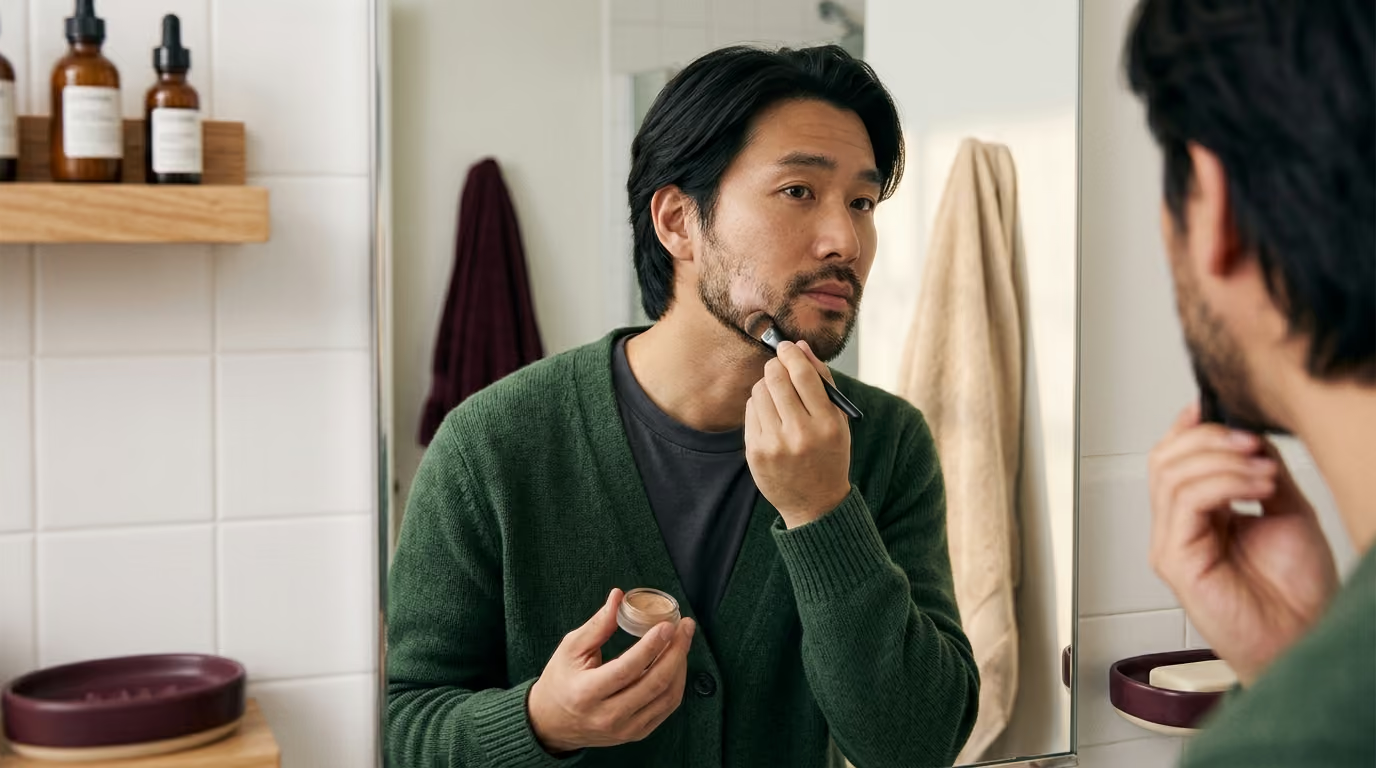
Natural-looking facial camouflage depends on thin application, exact undertone matching, and controlled surface shine. Men often fail with cosmetics by choosing thick, opaque products that settle into fine lines and facial hair.
Achieving a discreet finish requires understanding undertone versus surface tone. Surface tone describes how light or dark your skin looks, which shifts with sun exposure. Undertone is the persistent cool, warm, neutral, or olive tone beneath the surface. Always test concealers along the jawline or on adjacent untreated facial skin in natural daylight.
Targeted colour correction prevents product buildup:
Use a light hand when applying colour correctors. Apply a pinpoint dot of corrector only over the discolouration, tap it until sheer, and apply a skin-tone concealer on top.
Select product formulations that match your skin's requirements:
Building an everyday kit requires choosing compatible finishes. Explore our guide to skin, hair, and nail longevity to understand how skin barrier health influences pigment blending.
Men deal with distinct structural challenges when camouflaging skin imperfections. Facial hair, larger pore sizes, and higher sebum production complicate product application.
Active acne requires non-comedogenic, oil-free formulations. Applying heavy cosmetics over inflamed comedones can induce acne cosmetica, where pore-clogging ingredients worsen breakouts. Treat active papules with clinical topicals, allowing them to dry fully before applying a sheer, sterile dot of mineral concealer.
Scar camouflage requires custom approaches based on tissue architecture:
Learn more about managing skin changes by reviewing our evidence-based skincare resources.
Hair thinning changes how light reflects off the head. As hair density drops, overhead light reflects off the pale scalp below, exaggerating the appearance of hair loss.
Cosmetic hair camouflage reduces this scalp-to-hair contrast. Hair building fibres consist of electrostatically charged keratin or plant-based cellulose particles. When applied to thinning zones, these microscopic fibres cling to existing hair shafts, thickening each strand.
To achieve a natural look with hair fibres, follow this application sequence:
Hair fibres require existing hair shafts to grip and will not work on slick, bald areas. Clinical reviews note that microfibres are safe for regular use, but poor hygiene can cause product buildup. Wash the scalp thoroughly at night to avoid follicular occlusion.
Explore our men's healthy aging and vitality guides for more insights on long-term wellness.
Cosmetic camouflage provides an immediate visual fix, but it does not slow follicle miniaturisation or stimulate new hair growth. Relying solely on camouflage while pattern hair loss advances leads to worse outcomes over time.
Men experiencing androgenetic alopecia should separate short-term cosmetic coverage from clinical medical management.
Topical minoxidil stimulates microcirculation and prolongs the anagen growth phase. Oral 5-alpha reductase inhibitors like finasteride reduce systemic dihydrotestosterone (DHT) levels, targeting the hormonal cause of male pattern hair loss.
Medical therapies require six to twelve months of consistent use to produce visible results. Pairing cosmetic camouflage with proven medical therapies gives you the best of both worlds: immediate visual density while your follicles respond to clinical treatment.
Greying hair and changing nail texture are normal parts of aging. Camouflaging these features is about subtle, intentional grooming rather than creating an artificial look.
Approaching grey hair with solid, dark, permanent box dyes produces an unnatural, helmet-like appearance. As natural melanin production slows, facial skin tone softens. Heavy, opaque black or dark brown dyes create a harsh contrast against mature skin.
Instead of full coverage, choose translucent, semi-permanent glazes or colour-depositing shampoos. These formulas deposit pigment into the cuticle without stripping the hair shaft, turning stark silver hairs into soft highlights.
Beard hair requires its own approach. Facial hair has a thicker cuticle and irregular texture that resists standard hair dye. Use targeted brush-on gels, or tint grey sections with a soft brow pencil to maintain natural dimension. Always perform a patch test 48 hours before using dyes to screen for allergic contact dermatitis from paraphenylenediamine (PPD).
For nail grooming, keep the nail plate clean, uniform, and healthy:
For broader grooming frameworks, check our healthy aging lifestyle resources.
Skin, hair, and nail biology undergoes predictable shifts as men pass their mid-thirties. Understanding these biological changes helps you adapt your camouflage techniques over time.
Dermal fibroblasts produce less collagen and elastin each year, leading to a thinner dermis and reduced skin elasticity. Transepidermal water loss increases as natural ceramide synthesis drops. Heavy, dry concealers that worked at age twenty-five will settle into fine lines and emphasise skin texture after thirty-five.
Hair follicles experience cumulative oxidative stress and hormonal exposure. Anagen growth phases shorten, leading to thinner hair shafts that expose more scalp under direct light. At the same time, melanocyte stem cells in the hair bulb deplete, resulting in grey or silver strands.
Nail matrix turnover slows with age, creating pronounced longitudinal ridges and thicker, more brittle nail plates. These changes are normal aspects of human biology, not signs of failure. Adapting your cosmetic techniques ensures your routine stays natural and undetectable.
Using cosmetic camouflage successfully requires adjusting your routine to fit real-world environments. Lighting, sweat, and physical contact all impact how products look and wear throughout the day.
Indoor office lighting behaves differently than bright sunlight. Fluorescent and cool LED lighting accentuates grey and blue undertones, making under-eye darkness look worse. Outdoor sunlight reveals heavy layers of powder, creating a chalky, visible finish. Keep products sheer and natural.
Use these practical routines for common settings:
Cosmetic camouflage should build your confidence, not create anxiety about whether your makeup is showing. Choose low-maintenance, transfer-resistant formulas that stay locked in place all day.
Within gay communities, appearance and grooming are often tied to social connection, dating, and self-expression. Navigating aesthetic changes after thirty-five can feel intense in urban environments that celebrate youthful aesthetics.
Gay men frequently face cultural pressures to maintain an athletic build, clear skin, and full hair. Normal signs of aging can trigger social anxiety. Cosmetic camouflage provides a practical way to manage your appearance on your own terms, without letting aging dictate your confidence.
Cosmetic camouflage offers a low-risk alternative to invasive cosmetic procedures. It lets you smooth a scar, soften under-eye darkness, or camouflage thinning hair without undergoing surgery or costly clinic treatments.
Grooming is not about chasing an impossible, airbrushed standard of youth. It is about presenting the strongest, most energized version of yourself. Learn more about self-esteem in our guide to self-confidence beyond youth.
While cosmetic camouflage works well in everyday life, we must look honestly at the limitations of the published clinical data.
Most published quality-of-life studies evaluate female patients with visible dermatological disorders, such as vitiligo, lupus erythematosus, and post-surgical scarring. Clinical trials focusing specifically on men are rare. We should not assume male quality-of-life improvements mirror female data, given different grooming habits and social dynamics.
Long-term safety data for hair building fibres remains limited. While keratin and cellulose particles are chemically inert, their impact on follicular occlusion, scalp microflora, and inflammatory conditions like seborrheic dermatitis has not been studied in large clinical trials.
Cosmetic camouflage cannot repair skin architecture. It will not stimulate collagen in atrophic scars, flatten keloids, lower scalp DHT, or clear fungal nail infections. Recognize cosmetic camouflage for what it is: a valuable visual tool that works alongside proven medical care.
Building a functional cosmetic camouflage kit does not require dozens of products. It relies on a few well-chosen, high-performance formulas matched to your features.
Mastering cosmetic camouflage gives you complete control over your personal presentation, letting you look sharp, confident, and natural at any age.
Stay connected for research-led guidance on fitness, body composition, skin, grooming, vitality, sexual wellbeing, relationships and healthy aging. Clear ideas for gay men 35+ who want to look good, feel strong and age with confidence.


Build habits and systems that support clear thinking, steady energy and long term capacity throughout a demanding career.
explore the Blog