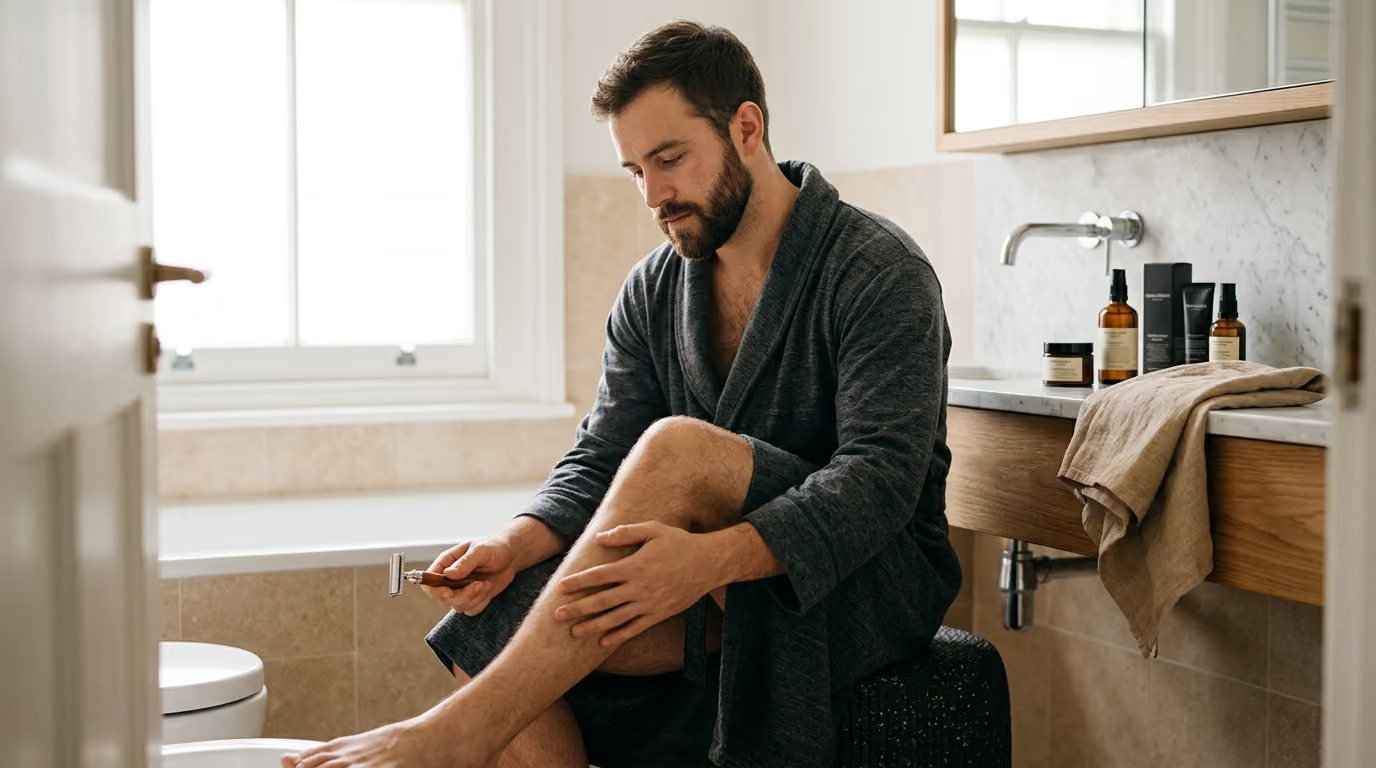

Dealing with frequent regrowth and sensitive skin becomes easier when comparing seven hair removal methods tailored to your age and texture.





You step out of the shower on a Friday evening, inspect your chest or back in the mirror, and notice an uneven mix of razor burn, missed patches, and fast-growing stubble from two days ago. Maintaining body hair often turns into an annoying weekly cycle of irritation, recurring costs, and wasted time. Finding a method that delivers smooth results without damaging your skin barrier requires looking past marketing promises and examining the actual dermatological evidence.
Choosing how to manage body hair is a personal decision about comfort, aesthetics, and practical daily upkeep. Whether you prefer a trimmed look, complete smoothness across your torso, or clean lines for athletic training, every technique comes with distinct mechanical and biological trade-offs. This guide provides an evidence-based comparison of seven major hair removal methods, helping you match your routine to your skin tone, hair texture, pain threshold, and long-term budget.
Medical dermatology categorizes hair removal into two distinct biological mechanisms: depilation and epilation. Understanding this difference clarifies why certain techniques last for days while others last for weeks or months.
Depilation removes the visible hair shaft at or just below the skin surface while leaving the underlying hair follicle intact. Shaving with a bladed razor and applying chemical depilatory creams are standard depilation techniques. Because the living dermal papilla and hair bulb remain completely untouched, cellular growth continues uninterrupted beneath the surface. Visible regrowth appears within hours to several days depending on your natural growth rate.
Epilation removes the entire hair shaft from within the follicle, extracting the bulb along with the root. Waxing, sugaring, mechanical epilators, and light-based technologies function as epilation methods. By clearing the follicular canal, epilation creates a significantly longer interval before new hair emerges past the skin margin. However, extracting hair from the root carries higher risks of follicular inflammation, temporary pain, and mechanical skin trauma.
Clinical literature emphasizes that true permanent removal of every single follicle across a body area is rare. The United States Food and Drug Administration defines professional light-based treatments under the standard of permanent hair reduction. This standard requires a stable, long-term reduction in the total number of regrowing hairs measured at six, nine, and twelve months following a completed treatment regimen.
To evaluate any grooming technique objectively, dermatologists assess six primary decision variables:
No single technique ranks highest across all six variables. The most effective option balances your aesthetic goals against your skin tolerance, daily schedule, and willingness to maintain the routine. Developing a refined routine is a fundamental component of skin grooming and aesthetic longevity, keeping your skin healthy while maintaining your preferred aesthetic.
Body hair and skin biology undergo measurable physiological shifts as you move past your mid-thirties. Normal hormonal fluctuations, gradual reductions in skin moisture, and changes in cellular turnover affect how your skin responds to friction, heat, and hair extraction.
Dermal collagen and elastin production naturally decline with age. The epidermis becomes slightly thinner and loses moisture more quickly, weakening the outer moisture barrier. Techniques that scrape or adhere to the skin, such as aggressive multi-blade shaving or hot waxing, can cause more redness and peeling than they did a decade earlier. Post-treatment recovery takes longer, making proactive hydration and barrier support mandatory.
Hair follicle distribution and pigment also change over time. Many men experience increased hair density on the back, shoulders, ears, and nose, alongside thinning on the lower legs. Androgen-sensitive follicles continue to respond to circulating hormones, often producing coarser individual hairs in new areas. Simultaneously, melanocytes within individual follicles gradually reduce pigment production, creating scattered gray, silver, or white body hairs.
These pigment shifts directly impact technological compatibility. Laser systems rely on melanin within the hair shaft to convert light into thermal energy. When hair loses its pigment, laser treatments lose their primary target. Managing body hair effectively after 35 requires adjusting your strategy before widespread pigment loss restricts your clinical options.
Skin healing dynamics also change with age. Microscopic tears from dull razor blades or chemical irritation from depilatory creams take more time to resolve. Ingrown hairs are more likely to leave lingering dark spots, known as post-inflammatory hyperpigmentation, particularly on medium to deep skin tones. Selecting gentler methods and avoiding harsh, repetitive skin trauma preserves your skin tone and overall texture.
A detailed assessment of each grooming method reveals specific biological mechanisms, benefits, practical limitations, and ideal use cases.
Trimming uses electric clippers, body groomers, or safety scissors to reduce hair length without pulling the root or scraping flush against the epidermis. The hair follicle remains completely untouched beneath the surface.
The primary advantage of trimming is skin safety. Because cutting blades pass slightly above the skin surface, trimming avoids razor burn, nicked tissue, and chemical irritation. It is exceptionally fast, requires minimal preparation, and works across all skin tones and hair types. Trimming is also the standard preparation step before professional waxing or laser sessions.
The limitation of trimming is that it cannot produce completely bare, smooth skin. A short, uniform stubble remains visible and tactile. However, for areas prone to severe ingrown hairs or friction, controlled trimming offers a clean appearance with virtually zero recovery time.
Trimming is ideal when you want:
Wet shaving utilizes a bladed razor to sever the hair shaft right at the level of the skin surface. It remains the most widely practiced manual depilation method due to its low initial cost and universal accessibility.
When executed properly, shaving produces immediate surface smoothness. It works equally well on light, dark, straight, and coarse hair. Modern multi-blade and safety razors allow you to manage the chest, underarms, legs, and neck quickly during your normal shower routine. Shaving also leaves the hair bulb in the follicle, making it the required preparation method before laser appointments.
The main limitation of wet shaving is rapid regrowth. Because the follicle continues growing, visible stubble usually reappears within twenty-four to seventy-two hours. Repeated mechanical scraping can strip the skin barrier, leading to razor burn, micro-abrasions, and bacterial entry.
Shaving curly or tightly coiled hair frequently leads to pseudofolliculitis. As the sharp, beveled edge of a shaved hair grows out, it curves back and pierces adjacent follicular tissue, creating painful, inflamed bumps. Dermatologists recommend softening hair with warm water, using a lubricating shave cream, shaving strictly in the direction of hair growth, and discarding disposable blades after five to seven uses.
Chemical depilatories rely on alkaline formulations, typically containing salts of thioglycolic acid, to break down the disulfide bonds within hair keratin. The treated hair softens into a gelatinous mass that wipes away from the skin surface.
Depilatory creams eliminate mechanical friction and blade scraping. They treat wide, contoured body areas such as the back, shoulders, and chest without requiring complex reach or multiple razor strokes. Because the chemical reaction dissolves hair slightly below the skin opening, regrowth often feels slightly softer than the blunt cut left by a razor.
The primary risk of depilatory creams is chemical irritation. Leaving a product on past the recommended time can cause first-degree or second-degree chemical burns, severe contact dermatitis, and epidermal peeling. Formulations carry a distinctive sulfur odor and require strict adherence to timing protocols.
Depilatories designed for the legs or torso should never be applied to the face, neck, or intimate genital regions unless explicitly labeled for those sensitive zones. Always execute a patch test on a small area forty-eight hours before treating an entire body region.
Waxing applies a heated resin or cold strip to hair-bearing skin, allowing the medium to grip the hair shafts before being pulled off quickly against the direction of growth. This action extracts the hair directly from the follicular bulb.
Because waxing removes hair from the root, it delivers smooth results that typically last three to six weeks. Over months of consistent waxing, some follicles sustain mechanical trauma, resulting in finer and sparser regrowth. Professional salons can clear large surface areas, such as the entire back or legs, in a single efficient appointment.
Waxing involves moderate to high physical discomfort during application and removal. Potential complications include epidermal tearing, bruising, thermal burns from overheated wax, and widespread folliculitis. The American Academy of Dermatology highlights that post-waxing folliculitis often represents a sterile foreign-body reaction to broken hair fragments beneath the skin.
Waxing has strict medical contraindications. You must avoid waxing if you take oral isotretinoin or have used it within the preceding six months. Topical retinoids, such as prescription tretinoin or over-the-counter retinol, thin the stratum corneum and must be stopped five to seven days before waxing to prevent stripping off live skin layers.
Sugaring is an ancient epilation method utilizing a paste made of cooked sugar, water, and lemon juice. The practitioner applies the paste against the direction of hair growth and removes it with a flicking motion following the natural direction of growth.
Advocates often describe sugaring as gentler than traditional waxing because the water-soluble paste adheres primarily to hair shafts rather than live skin cells. The room-temperature application eliminates the danger of thermal burns. Any leftover residue rinses away clean with warm water, eliminating the need for post-wax chemical solvents.
Sugaring remains an aggressive mechanical epilation technique. Pulling hair from the root still triggers substantial discomfort, localized histamine reactions, and potential follicular inflammation. Improper technique can snap hairs off beneath the surface, elevating the risk of deep ingrown hairs.
Sugaring carries the exact same contraindications as traditional waxing regarding oral isotretinoin, topical retinoid use, and compromised skin barriers. It should never be performed over active sunburns, open rashes, or bacterial skin infections.
Mechanical epilators are handheld electric devices featuring rotating motorized discs or micro-tweezers. As the device glides over the skin, the tweezers rapidly close and open, pulling multiple hairs out by the root simultaneously.
An epilator offers the long-lasting smoothness of waxing in a convenient, one-time home investment. It eliminates recurring salon fees, sticky chemical resins, and disposable blade purchases. Modern epilators can capture shorter hairs than wax, allowing you to maintain smooth skin without waiting for extensive regrowth.
The principal drawback is significant physical discomfort, particularly during initial sessions on dense, coarse hair. Treating sensitive areas like the underarms, chest, or bikini line can be exceptionally painful. The repetitive mechanical pulling can also trigger localized swelling and extensive ingrown hairs if the skin is not exfoliated regularly.
Mechanical epilation is best suited for individuals with high pain tolerance who want durable results on their arms or legs without visiting a professional salon.
Professional laser hair removal uses focused wavelengths of light to target melanin within the hair follicle. The pigment absorbs the light energy, converting it into heat that damages the follicular bulb and papilla, inhibiting future growth cycles.
Clinical trials establish that professional laser systems provide significant, long-term hair reduction far superior to temporary methods. A peer-reviewed meta-analysis demonstrated average hair reductions exceeding fifty percent at six months following three clinical treatments using diode, alexandrite, and Nd:YAG systems. Over a full course of six to eight sessions, many individuals experience substantial, lasting hair clearance across treated areas.
Laser requires a substantial upfront financial investment and multiple sessions spaced four to eight weeks apart. It is not an instant single-session fix. Laser energy specifically targets pigment, which means it cannot treat blonde, red, gray, or white hair follicles.
Improper device settings or untrained operators can cause blistering, permanent scarring, or severe hyperpigmentation. Using the wrong laser on melanin-rich skin can burn the epidermal surface. Safe, effective treatment requires selecting an experienced practitioner who understands device calibration for your specific skin tone.
Selecting the right grooming method requires an honest evaluation of your genetics, hair characteristics, and sensory comfort.
Dermatologists classify skin using the Fitzpatrick scale, ranging from Type I (pale, burns easily, never tans) to Type VI (deeply pigmented, never burns). Pigment levels dictate how light-based devices interact with your skin.
For Fitzpatrick Types I through III, traditional alexandrite (755 nm) and diode (810 nm) lasers offer excellent efficacy. The high contrast between pale skin and dark hair allows the laser to target the follicle without overheating surrounding tissue.
For Fitzpatrick Types IV through VI, device choice is critical. Melanin in the epidermis can absorb laser energy intended for the hair bulb, risking burns and pigmentation changes. Long-pulsed Nd:YAG lasers (1064 nm) bypass epidermal melanin by utilizing a deeper wavelength, making them the gold standard for safe, effective hair reduction in deeper skin tones.
If you have a deeper complexion, always ask prospective laser clinics which specific wavelengths they use and request a test patch before treating large areas. Avoid root-removal methods that trigger heavy inflammation, as deep skin tones are biologically more susceptible to post-inflammatory dark marks.
Coarse, dense hair absorbs light energy efficiently, making it an ideal target for laser systems. However, coarse hair creates substantial resistance during waxing, sugaring, and mechanical epilation, increasing immediate pain and follicle inflammation.
Fine or light body hair does not contain enough melanin for laser systems to target effectively. Investing in laser packages for fine, blonde, or gray chest hair leads to disappointment and wasted money. For fine hair, wet shaving, gentle depilatory creams, or light trimming produce predictable results with minimal skin trauma.
Curly and tightly coiled body hair requires careful handling. Shaving too closely cuts the hair at an angle, encouraging the tip to curl back into the skin and create painful pseudofolliculitis bumps. Men with curly hair often achieve better skin clarity by using electric trimmers with a short guard or scheduling professional Nd:YAG laser treatments to permanently reduce hair density.
Your willingness to manage sensory discomfort should guide your hair removal choices:
Pain should never be treated as an indicator of effectiveness. Intense, burning pain during laser or chemical treatments signals potential tissue damage, overheating, or chemical burns, requiring immediate cessation.
Translating hair removal evidence into a practical lifestyle requires assessing how your grooming routine impacts your time, budget, and daily activities.
Maintaining body grooming takes measurable time. Daily or alternate-day shaving requires five to fifteen minutes in the shower, totaling multiple hours each month. Professional waxing or sugaring requires scheduling appointments every four weeks, dealing with transit time, and managing two days of post-treatment redness.
Athletic training introduces unique hygiene and friction considerations. Sweat, tight synthetic athletic wear, and gym equipment create an environment where inflamed follicles can quickly develop bacterial infections. Shaving or waxing immediately before intense workouts or pool sessions exposes open pores and micro-abrasions to sweat and bacteria, sharply raising your risk of folliculitis. Scheduling grooming sessions on rest days gives your skin barrier time to recover before heavy training.
Grooming choices also connect directly to male vitality and sexual wellbeing, shaping personal confidence, body comfort, and intimate satisfaction. Intimate grooming requires extra care, as genital skin is thinner, more vascular, and more prone to mechanical tearing and chemical irritation. Choosing safe, controlled techniques prevents uncomfortable friction, razor bumps, and skin irritation during intimate moments.
The long-term financial calculation varies considerably across methods. Wet shaving and trimming carry low initial costs, but regular purchases of high-quality replacement blades, shaving gels, and soothing balms accumulate over years. Professional salon waxing represents a steady, recurring expense that can cost over a thousand dollars annually for large areas like the back and chest.
Professional laser hair removal requires a higher upfront financial commitment over six to ten months. However, once you achieve your desired permanent reduction, maintenance drops to an occasional touch-up session every year or two. For men seeking long-term clearance across dense areas, laser often proves more economical over a five-to-ten-year horizon than continuous professional salon waxing.
Body hair aesthetics within gay male culture have evolved through distinct eras, shifting from the completely smooth, hairless ideals of the late 1990s to the broader appreciation for natural body hair seen today. Modern grooming is no longer about conforming to a single rigid aesthetic. Instead, it focuses on intentional personal presentation, comfort, and feeling confident in your own skin.
Navigating this landscape means recognizing that body diversity is standard. Some men prefer a fully bare torso to highlight muscle definition developed through strength and body composition training. Others prefer a natural, untrimmed chest paired with clean lines around the neck, shoulders, and back. Many simply want to manage excessive hair density to stay cooler during workouts and feel more comfortable in warmer climates.
Intimate grooming among gay men also involves practical considerations around skin health. Removing pubic or perianal hair through aggressive dry shaving or cheap depilatory creams frequently results in severe chafing, open sores, and localized skin infections. These micro-tears compromise your skin barrier, increasing vulnerability to friction and contact-related irritations.
Choosing a method that preserves skin integrity is far more important than achieving perfect bareness at the expense of chronic inflammation. A well-maintained trim or professional, hygienic epilation supports better skin health, comfort, and intimate confidence than an aggressive close shave that leaves painful bumps.
Understanding these aesthetic and health intersections allows you to approach grooming as an integrated part of skin and grooming aesthetics category, prioritizing healthy skin alongside your personal visual preferences.
Achieving clean, irritation-free results requires following structured dermatological protocols before, during, and after hair removal.
Proper preparation protects your skin barrier and improves hair removal efficacy regardless of your chosen method:
Follow these core mechanical guidelines during hair removal:
Support your skin barrier and reduce inflammation after hair removal with targeted care:
Grooming advice is filled with persistent myths that lead to damaged skin barriers, wasted money, and frustrating results.
A widespread misconception is that shaving causes hair to grow back thicker, darker, and faster. Shaving cuts the hair shaft at a blunt angle across its widest midsection. As this blunt edge emerges past the skin surface, it feels coarse and looks visually darker than a naturally tapered hair tip, but the biological density and growth rate of the follicle remain completely unchanged.
Another mistake is assuming that natural or organic products are automatically gentler on the skin. Sugar pastes, organic waxes, and plant-derived depilatory formulations can still cause severe mechanical trauma, allergic contact dermatitis, and epidermal tearing. Your skin responds to physical force and chemical pH levels regardless of whether an ingredient originated in a laboratory or a kitchen.
Many consumers mistakenly treat home Intense Pulsed Light devices as equivalent to professional clinical lasers. Handheld consumer IPL devices emit broad-spectrum, scattered light at significantly lower energy densities than clinical in-office lasers. While home IPL can temporarily slow regrowth for some individuals, evidence reviews show it lacks the clinical power to produce durable, long-term hair reduction.
Chasing perfect, immediate hairlessness by repeatedly passing a razor blade over the same patch of skin is a primary cause of severe razor burn and infection. Over-treating an area strips away protective epidermal cells, triggering inflammation and increasing the risk of ingrown hairs. Accept a clean single pass rather than demanding absolute perfection at the cost of your skin barrier.
While clinical dermatology provides substantial data on hair removal, several key areas lack definitive, high-powered comparative research.
Long-term comparative trials directly evaluating the efficacy and side-effect profiles of waxing versus sugaring remain sparse. Most claims regarding sugaring causing less pain or fewer ingrown hairs rely on observational studies, practitioner reports, and small sample sizes rather than large, blinded randomized controlled trials.
Evidence regarding consumer-grade home laser and IPL devices remains limited. Independent clinical data measuring hair clearance twelve months after stopping home light-based devices is scarce, as most published studies are funded by device manufacturers with short follow-up windows.
Individual biological variability also creates unpredictable outcomes. Hormonal shifts, genetic receptor sensitivity, and variations in follicular depth mean two people with identical skin tones and hair colors can experience noticeably different reduction rates from the same laser protocol. Clinical science cannot guarantee an exact percentage of permanent clearance for any specific person.
Integrating healthy grooming habits with broader healthy aging and longevity principles ensures your skin remains resilient, healthy, and clear throughout your life.
Revisit this guide if you experience recurring ingrown hairs, chronic razor burn, or notice your current grooming routine takes too much time. You should also reassess your options if you start using retinoid medications, notice gray hair appearing in target areas, or decide to shift from temporary surface maintenance to long-term professional reduction.
Body hair removal is a practical balance between your aesthetic goals, skin sensitivity, daily maintenance time, and financial budget. Choosing a method aligned with your skin tone and hair texture preserves your skin barrier while keeping you comfortable and confident every day.
Stay connected for research-led guidance on fitness, body composition, skin, grooming, vitality, sexual wellbeing, relationships and healthy aging. Clear ideas for gay men 35+ who want to look good, feel strong and age with confidence.


Build habits and systems that support clear thinking, steady energy and long term capacity throughout a demanding career.
explore the Blog