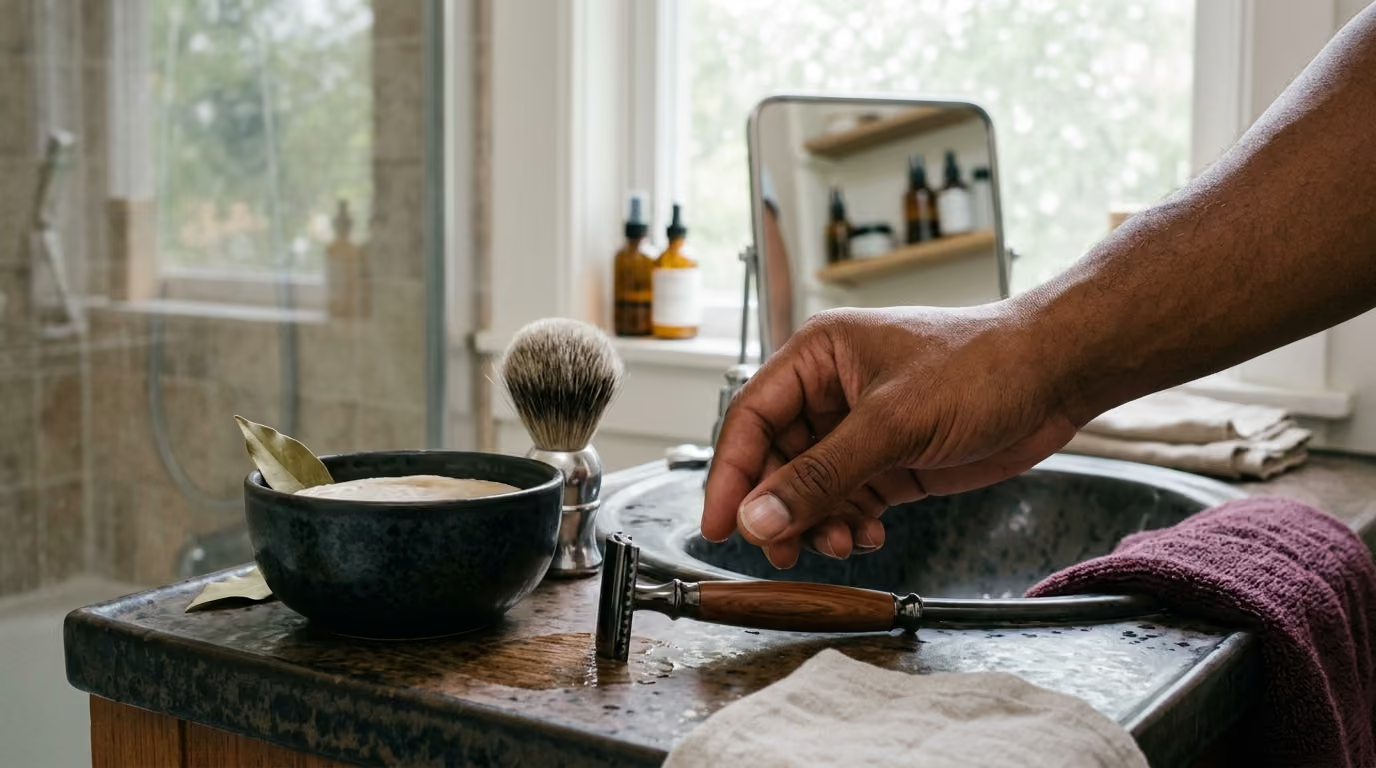

Men facing persistent irritation after shaving can build a healthier personal routine with a tiered framework for skincare, beard shaping, and nail health.





Search queries like "how to stop razor bumps on neck" or "how should men groom body hair" appear millions of times each year. Men look for straightforward answers about how to look sharp, feel comfortable, and manage daily maintenance without friction. This guide provides a definitive, research-based framework for facial hair, body hair, skin health, and nail care that replaces rigid rules with clear, adaptable choices.
Historically, men's grooming advice has oscillated between two extremes. One side pushes hyper-traditional rituals centered on aggression, hard scrubbing, and tests of masculinity. The other pushes multi-step consumer trends that confuse product volume with actual physiological health.
A modern approach begins with a foundational rule: health sets the floor, comfort sets the constraints, and personal style sets the direction. Hygiene requirements protect tissue integrity and prevent infection. Aesthetic decisions belong entirely to the individual. Whether your personal look involves a full beard, a smooth chest, natural body hair, or painted nails, this framework helps you build an intentional routine that supports your skin.
For a broader look at daily personal care routines, review our resources on skin grooming and aesthetics.
Grooming is primarily the management of the cutaneous barrier, the hair follicle unit, and the local microbiome. Skin acts as a biological shield against pathogen entry, chemical absorption, and moisture loss. Hair follicles are complex structures with their own microenvironments, sebaceous glands, and growth cycles. When grooming routines disrupt these systems, the result is inflammation, bacterial infiltration, and tissue damage.
Dermatological research separates biological hygiene from aesthetic grooming. Hygiene involves removing sweat, environmental debris, excess sebum, and pathogenic microorganisms from the skin and nails. It requires cleaning grooming tools before use and maintaining intact skin barriers. Hygiene does not require the complete removal of body, facial, or pubic hair.
Aesthetic grooming alters hair length, hair distribution, skin finish, and nail appearance for personal presentation. When grooming advice conflates hygiene with hair removal, it creates unnecessary confusion. Shaving hair down to skin level does not make tissue cleaner. In many cases, close mechanical shaving introduces micro-abrasions that increase susceptibility to bacterial entry and inflammatory reactions.
Four overlapping dimensions define an effective personal care strategy:
Understanding these distinctions allows you to select methods that protect your skin while achieving your target visual aesthetic.
Grooming needs evolve after age 35. Physiological changes in the dermis, hair follicles, and nail matrices alter how tissues react to mechanical friction, chemical agents, and environmental exposure. Normal aging changes grooming from an aggressive task into a strategic maintenance routine focused on barrier preservation.
Sebaceous gland output decreases as androgen production shifts over time. Skin produces less natural oil, leading to a thinner lipid barrier and increased trans-epidermal water loss. A shaving technique or cleanser that worked without issue at age 22 may cause redness, tightness, and flaking after 35. Coarse facial hair often becomes drier and more brittle, while the underlying facial skin becomes more delicate.
Hair follicles undergo structural changes that affect pigment and growth patterns. Melanin production declines, producing gray or silver hair that possesses a coarser, wirier texture than pigmented strands. This wiry texture changes how blades cut through facial and body hair. A dull blade is far more likely to tug, bend, or tear a coarse gray follicle, which triggers local inflammation around the pore.
Nail plate growth slows with each decade, and the nail bed produces less moisture. This physiological shift can make fingernails and toenails thicker, more brittle, and more prone to vertical ridging or splitting. Cuticles dry out faster, increasing the occurrence of painful hangnails that can become infected if pulled or torn.
Adapting to these changes requires prioritizing hydration, gentler blade mechanics, and dedicated sun defense. Aging is not a medical flaw or an aesthetic failure. It is a biological progression that rewards measured, low-irritation grooming techniques. To explore how physical vitality and aging interact over time, read our guide on longevity and healthy aging.
An adaptable grooming framework accommodates differing schedules, energy levels, and presentation goals. Rather than forcing every man into an identical twelve-step regimen, this system offers three levels of grooming intensity. You can transition between these levels based on your lifestyle, career, and personal aesthetic.
This baseline level is designed for maximum efficiency and fundamental health. It provides a clean, well-cared-for baseline without extensive daily effort:
The Centers for Disease Control and Prevention (CDC) recommends keeping nails short and washing underneath them with soap and water to reduce germ transmission. The CDC also advises leaving cuticles intact, because cuticles form an essential protective seal against fungal and bacterial pathogens.
The second level introduces deliberate design choices. It focuses on visual symmetry, clean boundaries, and uniform lengths:
The objective of this tier is visual intention. Even a natural or rugged aesthetic looks polished when boundaries and lengths are maintained with consistency.
This tier treats grooming as an active canvas for personal style, fashion, and gender expression. It requires greater time investment and strict attention to tool sanitation:
Higher-intervention routines demand greater skin awareness. Procedures like hot waxing carry risks of thermal burns, irritation, and superficial skin tears. The American Academy of Dermatology (AAD) warns that individuals using prescription retinoids, such as topical tretinoin or oral isotretinoin, should avoid waxing because these medications thin the outer epidermal layer and increase tearing risks.
Facial hair management should be determined by skin tolerance and personal preference rather than arbitrary trends. Every style, from a clean shave to a full beard, requires specific mechanical approaches to maintain follicle health.
A clean shave exposes the underlying facial features completely. It also creates the most frequent mechanical contact between sharp steel and living epithelial tissue. The primary challenge is avoiding razor burn, micro-cuts, and follicular inflammation.
According to the AAD, successful wet shaving requires softening the hair and skin first. Shaving immediately after a warm shower is effective because the steam softens coarse hair shafts. Applying a dedicated shaving gel or cream creates a protective glide layer that minimizes friction. For sensitive skin, letting the shaving preparation sit on the face for two to three minutes before making the first stroke softens the hair fibers.
Blade technique governs skin outcomes. Always shave in the direction of hair growth rather than against the grain. Shaving against the grain cuts the hair shaft below the skin surface, which dramatically increases the risk of ingrown hairs. Use light pressure, rinse the blade after every single pass, and avoid stretching the skin tight while shaving. Replace razor blades after five to seven uses to prevent dull edges from pulling and tearing hairs.
Stubble is an intentional, low-maintenance aesthetic that dramatically reduces razor-induced trauma. Leaving short stubble prevents the sharp tips of cut hairs from retracting beneath the follicular ostium. Guidance from the National Health Service (NHS) notes that maintaining at least 1 millimeter of stubble is an effective way to prevent recurring ingrown hairs.
Partial styles like goatees, van dykes, or standalone moustaches offer visual structure for men with uneven hair distribution across the cheeks. Irregular growth is a normal genetic pattern, not a grooming failure. Focusing on the areas where density is naturally high produces a strong, intentional appearance without frustration.
A full beard alters facial proportions and softens angular lines. It requires dedicated care for both the hair fiber and the underlying skin. A common mistake is piling heavy oils onto the beard, which can congest the pores beneath and cause seborrheic dermatitis or acne.
The AAD recommends washing the beard with a gentle cleanser suited to your skin type. After washing, dry the facial hair thoroughly with a clean towel. For dryness or itch, the AAD advises applying a small amount of non-comedogenic beard conditioner or light moisturizer, rather than heavy, pore-clogging oils. Distribute the product evenly from root to tip using a wide-toothed beard comb.
A poorly placed beard line can distort the jawline and neck profile. To find an organic lower boundary, place your index and middle fingers flat against your neck directly above the Adam's apple. The top edge of your fingers marks the lowest point of your beard line.
From this center anchor, curve the line upward toward the back of each earlobe in a soft U-shape. Avoid carving the neckline directly along the underside of the jawbone, which makes the beard look disproportionately small when speaking or chewing. Soften the cheek lines along your natural growth boundary rather than cutting deep, artificial angles into the beard.
Follicular irritation is one of the most frequent dermatological complaints among men who shave. Managing it requires understanding the biological differences between common skin reactions.
An ingrown hair occurs when a cut hair curves around and pierces the surrounding skin, or when a hair fails to exit the pore and grows sideways into the follicle wall. This triggers a foreign-body inflammatory response that creates a tender, red papule.
Folliculitis is an inflammation of the hair follicle caused by mechanical friction, chemical irritation, or bacterial and fungal colonization. It presents as small, superficial pustules clustered around hair shafts.
Pseudofolliculitis barbae, commonly referred to as razor bumps, is a chronic inflammatory disorder caused by curved hairs penetrating the interfollicular skin after shaving. Research from DermNet indicates that pseudofolliculitis barbae predominantly affects men with coarse, tightly curled hair, with an estimated prevalence of 45% to 80% among men of African ancestry.
When tightly curled hair is shaved down to the skin surface, the curved tip naturally directs back into the epidermal layer as it grows. The body treats this penetrating keratin shaft as an invading foreign object, producing painful bumps, hyperpigmentation, and potential keloidal scarring.
For active pseudofolliculitis barbae, the most effective dermatological intervention is to temporarily stop close blade shaving. DermNet advises that discontinuing blade shaving allows the embedded hair tips to grow out, resolving the acute inflammatory cycle. Switch to an electric beard trimmer that leaves hair at a 1 to 2 millimeter length.
If clean-shaving is required, follow these non-negotiable technique adjustments:
For persistent cases that do not respond to modified shaving practices, consult a board-certified dermatologist for specialized topical treatments or professional hair reduction options.
Body hair grooming is an aesthetic continuum. No single standard of body hair removal applies to all men, and hygiene does not dictate hairlessness.
Men navigate four main approaches to body hair:
Each hair removal modality carries specific biological trade-offs:
Choose the least invasive method that achieves your personal presentation goals. If trimming delivers the visual comfort you want, there is no clinical reason to introduce the irritation risks of wet shaving or hot waxing.
Intimate grooming is a common personal care practice among adult men. It should be approached with realistic anatomical awareness and strict safety standards.
Data published in the American Journal of Men's Health indicates that 50.5% of men aged 18 to 65 regularly groom their pubic hair, with participation peaking at 73% among men aged 25 to 34. Men report personal cleanliness, sexual comfort, and aesthetic preference as their primary motivations. A 2024 study examining male depilation patterns found that 46.7% of surveyed men reported lifetime pubic hair removal, with 43.9% of those stating a preference for trimming over complete hair removal.
These peer-reviewed findings confirm that trimming is a preferred, mainstream grooming choice rather than a secondary compromise. Complete hair removal in intimate zones is entirely optional.
The scrotal and inguinal skin is thin, highly vascularized, and elastic, making it uniquely vulnerable to cuts, micro-tears, and bacterial colonization. Follow these safety rules for intimate areas:
If you experience rapidly spreading redness, persistent swelling, severe pain, or localized pustules following intimate grooming, seek medical evaluation promptly.
An effective skin routine does not require an overwhelming collection of cosmetic products. Research consistently shows that long-term skin health rests on three core pillars: gentle cleansing, barrier hydration, and rigorous ultraviolet protection.
Cleansing removes accumulated sweat, environmental particulate matter, excess sebum, and residual grooming products. However, aggressive scrubbing with harsh alkaline bar soaps strips the stratum corneum of essential structural lipids. This causes barrier impairment, leading to compensatory oil overproduction, irritation, and flaking.
Wash the face once or twice daily with a mild, pH-balanced liquid cleanser. Men with full beards must work the cleanser gently through the beard hair down to the underlying skin, rinsing thoroughly with lukewarm water. Hot water should be avoided because it strips away protective intercellular lipids.
Moisturizers support skin comfort by supplying humectants to attract moisture and emollients to seal the epidermal barrier. Apply moisturizer while the skin is still slightly damp from washing. If your skin is oily or prone to blemishes, the AAD recommends selecting products labeled non-comedogenic or oil-free.
Sun protection is the most effective tool available for maintaining skin health and preventing premature structural breakdown. The World Health Organization (WHO) identifies solar ultraviolet radiation as the primary environmental cause of non-melanoma and melanoma skin cancers. WHO reported more than 1.5 million skin cancer diagnoses and over 120,000 associated deaths worldwide in 2020 alone.
The AAD states that daily broad-spectrum sunscreen and daily moisturizer are the two most effective anti-aging products available. Ultraviolet A (UVA) rays penetrate deep into the dermis, degrading collagen fibers and causing deep wrinkling, leathery texture, and hyperpigmented sunspots. Ultraviolet B (UVB) rays cause direct epidermal burns and cellular DNA damage.
For daily exposure, use a broad-spectrum, water-resistant sunscreen with an SPF of 30 or higher on all exposed skin, including the ears, back of the neck, and hands. When spending extended time outdoors for fitness or leisure, reapply sunscreen every two hours or immediately after heavy sweating or swimming.
Explore our collection of articles on skin hair nails aesthetic longevity for further evidence-based skincare protocols.
Nails are specialized keratin plates that protect the distal digits, assist with fine motor tasks, and serve as an element of personal style. Healthy nail maintenance is rooted in clinical infection control, proper clipping technique, and personal design preference.
Pathogens, including bacteria and fungal spores, collect easily beneath the free edge of fingernails. The CDC outlines clear protocols for maintaining healthy nails:
When visiting commercial nail salons for manicures or pedicures, verify that the facility is licensed and uses an autoclave to sterilize reusable metal instruments between clients. Alternatively, bring your own sanitized clippers and files to your appointment.
Beyond infection prevention, nail styling offers a creative avenue for self-expression, color coordination, and gender-fluid presentation. Modern styling choices are personal design statements available to all men:
Choose a nail shape and length that aligns with your daily activities. Men who lift heavy weights, climb, play musical instruments, or perform manual work generally find short, rounded square shapes the most functional and durable.
To examine how aesthetic choices integrate with broader vitality and sexual wellbeing, explore our resources on male vitality and sexual wellbeing.
Grooming within gay communities holds distinct cultural meaning. Historical subcultures have long used facial hair, body hair presentation, and grooming aesthetics to signal belonging, express attraction, and challenge traditional gender norms.
Gay culture contains diverse, self-defined aesthetic subcultures. The bear and otter communities celebrate full beards, natural body hair, and broader body types, pushing back against rigid, hairless archetypes. In contrast, other subcultures value clean-shaven smoothness, athletic definition, or highly polished grooming. In recent years, polished nails, colorful hair treatments, and expressive makeup have become common elements of gay and queer style.
These cultural dynamics can sometimes generate subtle peer pressures. Men may feel expected to maintain dense facial hair to fit one group, or to remove all chest and body hair to fit another. The pressure to conform to shifting subcultural standards can turn daily grooming into an anxious chore rather than an enjoyable ritual.
A healthy grooming mindset prioritizes personal comfort, skin health, and genuine self-expression over rigid group expectations. Authentic confidence comes from choosing a grooming profile that feels right for you, regardless of current dating app trends. If you want to dive deeper into navigating modern relationships and social dynamics with confidence, read our guide on confidence and relationships.
The men's personal care market contains numerous heavily promoted products that lack credible clinical backing. Separating evidence-based care from commercial marketing helps protect both your skin barrier and your wallet.
Many commercial brands market topical oils, biotin sprays, and derma-rollers claiming to activate dormant facial hair follicles and fill in patchy beards. High-quality peer-reviewed evidence proving that cosmetic beard serums stimulate new, permanent hair follicles in healthy men is extremely limited. Facial hair density and distribution patterns are primarily dictated by genetics and androgen receptor sensitivity. While microneedling is used clinically for scalp alopecia under medical supervision, over-the-counter home rollers frequently cause skin micro-tears and localized infections when used without proper sterilization.
Washes and toners frequently claim to shrink or permanently close facial pores. Pores are structural openings for sebaceous glands and hair follicles; they do not possess muscular sphincters that open and close. Cold water, astringents, and witch hazel can temporarily constrict local blood vessels and tighten surface tissue, creating a brief optical smoothing effect. However, they do not change the underlying anatomical size of the pore.
Marketing terms like "clean," "chemical-free," or "all-natural" are commercial branding phrases rather than regulated scientific standards. Natural botanical oils and essential fragrances can trigger allergic contact dermatitis, irritation, and photo-sensitivity just as easily as synthetic compounds. A synthetic, non-comedogenic ingredient tested for stability is often significantly gentler on reactive skin than unrefined plant extracts. Evaluate every grooming product based on formulation stability, skin compatibility, and clinical safety rather than marketing buzzwords.
These illustrative models show how to apply the framework across different lifestyle situations and skin profiles.
Use this practical maintenance checklist to organize your personal grooming routine this week.
Modern men's grooming is not a rigid set of rules designed to prove masculinity. It is an adaptable personal care system that protects your skin, supports daily comfort, and gives you total freedom to express your personal style with confidence.
Stay connected for research-led guidance on fitness, body composition, skin, grooming, vitality, sexual wellbeing, relationships and healthy aging. Clear ideas for gay men 35+ who want to look good, feel strong and age with confidence.


Build habits and systems that support clear thinking, steady energy and long term capacity throughout a demanding career.
explore the Blog