
A September 2026 NYC speed dating event for gay professionals adds a dedicated 38-plus group. Learn how structured mini-dates support offline connection.





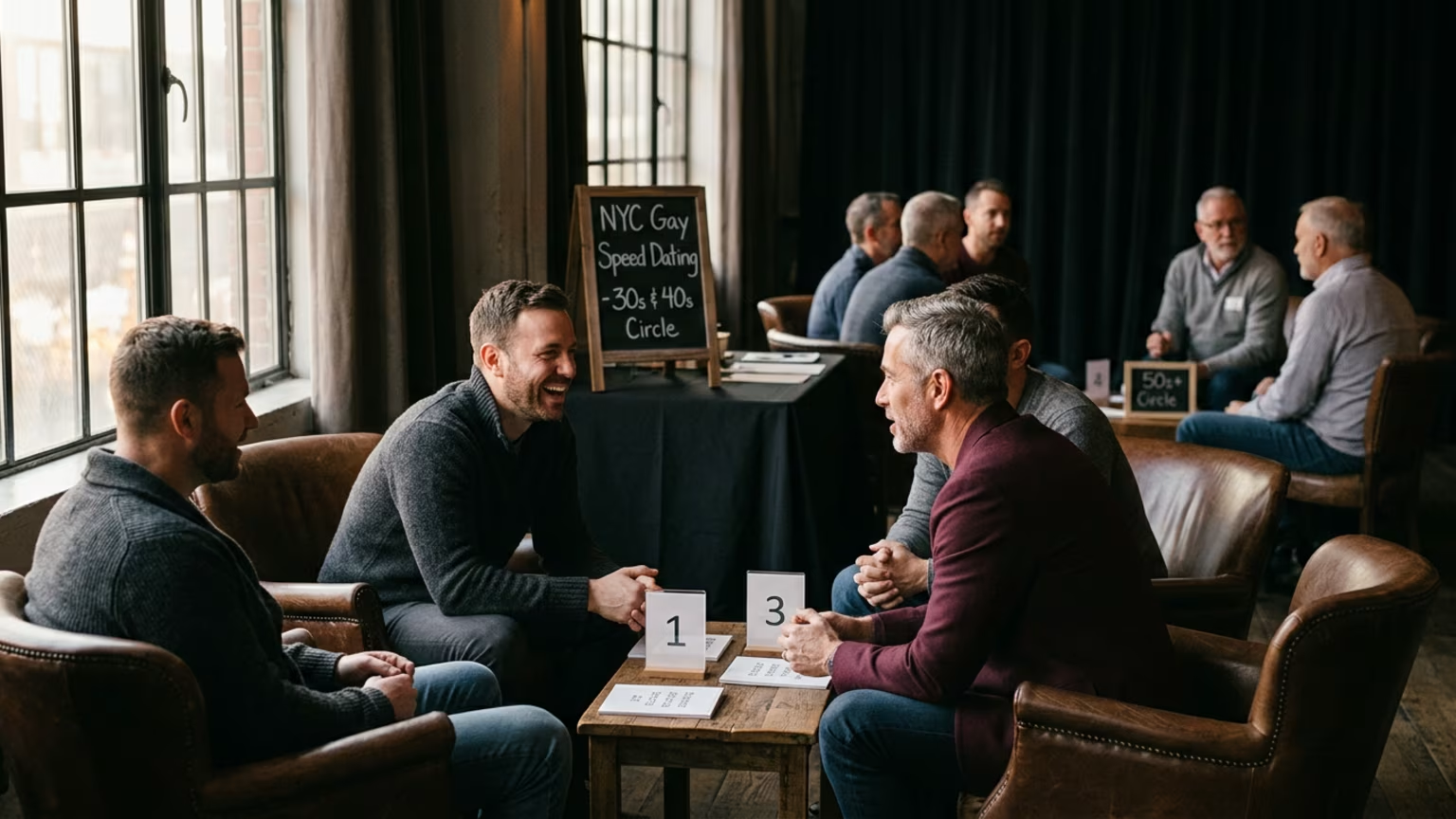
On September 15, 2026, organizer Hugh Hysell hosts "Gay Professionals Speed Dating in NYC: Sept 15," an in-person event for single gay men at John’s Pizzeria of Times Square. The listing explicitly divides participants into two age groups, including a 38-and-over cohort.
General-audience dating apps often force users to sort through vast age differences informally. For a gay man over 35, a dedicated 38-plus cohort makes age relevance part of the structured event design. This setup allows attendees to begin conversations with men closer to their current life stage. It offers a concrete alternative to undifferentiated LGBTQ nightlife venues.
The event is marketed directly as a social evening for gay men with jobs. This explicitly acknowledges that midlife men often seek peers with established careers and similar priorities. Engaging with professionals in a curated environment helps participants bypass the usual small talk found in casual bars. It focuses the interactions on shared adult experiences and mutual career stability.
Many gay men over 35 experience profound dating fatigue from endless swiping on digital platforms. The September 15 event provides a concrete offline alternative designed specifically for the gay community. It shifts the focus away from relying solely on general-audience dating apps. Digital spaces often prioritize extreme youth, leaving mature men feeling marginalized.
An in-person gathering curates a physical room of peers looking for tangible connection. It eliminates the friction of ignored messages and misleading profile photos. Meeting face-to-face immediately establishes baseline attraction and conversational flow. This immediate feedback loop saves time and emotional energy.
Age grouping serves as a helpful baseline filter, but it is not the same as age compatibility. A 38-plus cohort may reduce the likelihood of a massive generational gap. It does not automatically align participants on relationship goals, communication styles, or attraction. True compatibility requires deeper conversations than a birth year can provide.
The threshold is also asymmetrical by design. The listing uses "37 and under" versus "38 and over" for its groups. The older cohort does not have an upper limit, meaning it could include men with widely varying ages. Men attending should treat the age grouping as a starting point rather than a guarantee of instant chemistry.
The event does not enforce the age boundary for the entire evening. The listing says the three bonus mingling sessions remove the age walls completely. This means participants are only age-segmented during the formal rotation of mini-dates. The mixed mingle periods allow attendees to interact across cohorts in a more relaxed setting.
This dual structure gives attendees different ways to approach the evening. Men can use the mini-dates to assess basic fit and the mingle periods to seek broader community connections. It creates space for both focused romantic screening and casual social networking. Sometimes a connection sparks better outside the pressure of the timed rotation.
Marketing copy for local dating events often includes broad promotional claims. The organizer says the event has "already played matchmaker for lots and lots of happy couples." The listing supplies no numerical definition or independent verification for that statement. It also lacks a clear methodology or time frame for tracking relationship outcomes. There is no published match rate available in the public details.
Attendees should view the event as a specific commercial offering. It provides a chance to meet people, but it is not a verified clinical intervention for loneliness. There is no public evidence that attending this specific gathering improves self-esteem, dating confidence, or long-term health. Setting modest expectations helps maintain a grounded, enjoyable approach to the night.
Dating events naturally attract people with varying personal goals. The organizer promotes the gathering as a chance to meet people for possible romantic, sexual, friendship, or professional connections. Men should clarify their own intentions before they arrive at the venue. It is crucial to communicate those goals respectfully without assuming another attendee wants the same outcome.
Building adult relationship confidence often starts with honest communication. A clear approach prevents misunderstandings and reduces the pressure of the initial meeting. Men can appreciate a brief conversation without forcing a romantic agenda on a purely platonic connection. Establishing boundaries early protects both parties from unmatched expectations.
Logistical details heavily influence the flow and success of in-person dating events. The published schedule calls for check-in at 6:15 p.m., with structured dating starting at 7:00 p.m. The entire experience wraps up by 9:00 p.m. Attendees must check in by 6:55 p.m. to participate in the rotation.
The strict cutoff means planning transportation to West 44th Street is critical. Late arrivals cannot be accommodated, which may be a meaningful consideration for men managing work or mobility commitments. Because sales are final with no refunds, attendees must commit to the timeline. Arriving early also allows time to settle in and grab a cocktail before the timer starts.
The available primary listing omits several critical details that some participants might need. It does not provide an attendance cap or ticket-price information in the accessible event details. It also lacks independent expert commentary, academic interpretation, or clinician statements about gay men's dating confidence. The event is purely a social gathering, not a therapeutic space.
The public information fails to establish inclusivity protocols beyond the stated professional male audience. It does not mention accessibility, racial or ethnic representation, trans inclusion, or HIV-status stigma protections. There is also no information on how the organizer handles harassment or consent concerns. Participants must navigate these social boundaries independently during their interactions.
Social connection plays a significant role in overall quality of life. Finding new ways to interact offline supports larger approaches to healthy aging and longevity. Men in their late 30s and beyond often face shifting social circles and changing physical priorities. Balancing fitness, career commitments, and an active dating life requires deliberate effort.
An evening of speed dating provides a structured repetition of basic social skills. Engaging with peers directly can positively impact a man's mental outlook and communication habits. Taking the initiative to attend an offline event demonstrates a commitment to personal growth. It is one small piece of building a fulfilling life after 35.
Meeting new partners in a direct physical setting removes the ambiguity of text-based dating apps. Short face-to-face interactions allow men to read body language and assess physical attraction immediately. Recognizing mutual chemistry supports maintaining sexual wellbeing and vitality as men mature. In-person meetings cut through the curated perfection of online profiles.
The mixed social goals of the event mean some connections might lead to casual encounters rather than serious romance. Participants should stay open to various outcomes while clearly protecting their own boundaries. A low-pressure, respectful conversation is the strongest foundation for any healthy physical connection. Mutual consent and clear interest always dictate the next steps.
The core of the structured rotation relies on brevity and direct communication. With only seven to eight short dates, participants must quickly move past basic pleasantries. Men should view these brief windows as a simple check for conversational flow. You do not need to determine long-term compatibility in five minutes.
Instead, look for shared humor, basic respect, and mutual engagement. Treating the mini-dates as casual introductions keeps the pressure low for everyone involved. Asking about career passions or weekend interests often yields better answers than generic small talk. The transition to open mingling offers a second chance to revisit the most promising interactions.
Approaching speed dating with an all-or-nothing mindset often leads to unnecessary frustration. A practical approach is to set a highly attainable goal for the evening. You might aim to have several warm conversations and identify just one person to follow up with. This frames the gathering as an opportunity to practice connection.
The process of mutual selection creates a natural buffer against immediate, face-to-face rejection. Receiving next-day contact information by email gives participants time to process the experience privately. It allows men to decide if they actually want to pursue a second meeting. Removing the pressure of instant decisions makes the entire process more enjoyable.
Receiving a match email the next day is only the first step in the dating process. Following up requires initiative and clear scheduling to transition the connection into a real date. Men should recognize that a speed-dating match simply indicates mutual curiosity. The real work of building a romantic or platonic bond happens in the subsequent weeks.
Establishing a regular cadence for attending offline social events makes any single night feel less critical. Consistent effort yields better long-term social rewards than treating one event as a final solution. Developing relationship confidence takes practice, patience, and a willingness to meet new people. Expanding your dating pool requires stepping outside familiar digital routines.
Readers should adjust their behavior by setting realistic social intentions and using structured dating events as low-pressure opportunities to practice in-person connection, rather than expecting a guaranteed romantic outcome.
For a gay man in his late 30s or beyond, managing confusion around male vitality, hormones and sexual wellbeing claims often falls entirely on his own shoulders. When GayFitLab takes on the research, men 35 and older gain clear, evidence-led guidance to support healthy aging without medical hype or age panic. We help you separate established facts from marketing noise to maintain strength, sexual wellness and relationship confidence. Explore Resources
Stay connected for research-led guidance on fitness, body composition, skin, grooming, vitality, sexual wellbeing, relationships and healthy aging. Clear ideas for gay men 35+ who want to look good, feel strong and age with confidence.



Build habits and systems that support clear thinking, steady energy and long term capacity throughout a demanding career.
explore the Blog