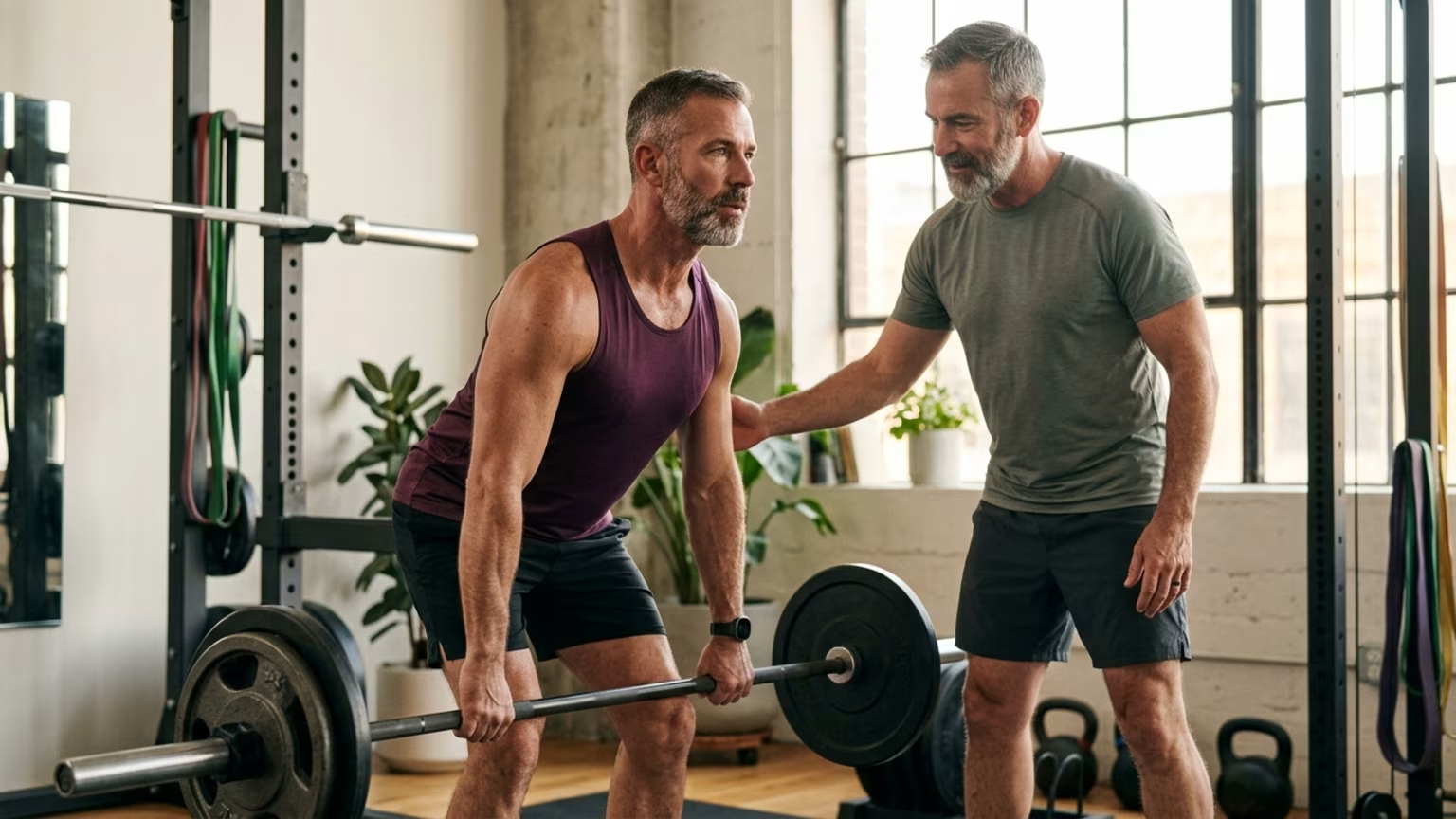

Maintain muscle, physical capability and metabolic health after 35 with a sustainable two-day or three-day full-body resistance training routine.





A physiological review reports substantial age-related declines in muscle strength. This loss occurs between the second and seventh decades of life. The decline heavily impacts fast-twitch Type II fibers. These specific fibers control power and reactive movements. Progressive resistance training can produce meaningful adaptations later in life. Maintaining strength directly supports gait speed, balance and physical function over time. A review of older adults with sarcopenia found meaningful improvements in strength and several functional measures. These measures include handgrip strength, knee-extension strength, gait speed and timed-up-and-go performance.
Muscle preservation after 35 is a capability issue as much as an aesthetic goal. The same physiological review notes a 40 percent reduction in muscle area over five decades. This reduction does not mean a person loses the capacity to add new tissue. A meta-analysis found that resistance training remained effective for improving strength and whole-muscle hypertrophy even in adults aged 75 and older. This finding shows that physical adaptation remains possible well beyond midlife. A man can use this mechanism to actively support longevity and healthy aging over the long term.
The National Council on Aging summarizes research suggesting that muscle-mass decline can begin around ages 30 to 35. This baseline estimates losses varying between roughly 3 percent and 8 percent per decade. The exact rate of decline varies substantially among individuals. Factors like training history, nutrition, sleep and illness influence the exact trajectory. This metric confirms that men should implement a progressive strength routine early to preserve functional tissue.
Strength training provides concrete benefits for metabolic regulation. A meta-analysis of 33 intervention studies found improvements in several glucose-regulation measures and insulin sensitivity after resistance training. The review concluded that hypertrophy did not appear to be the primary driver of improvements in glucose regulation. This supports framing muscle as a metabolically active tissue rather than merely a visual project. Men can target functional muscle creation to support healthy nutrition and metabolism effectively.
International guidance recommends muscle-strengthening activity involving all major muscle groups on at least two days per week. The ACSM position stand identifies at least two weekly sessions, two to three sets, full range of motion and appropriately challenging loads as useful strength-training factors. This public-health baseline simply requires regular strengthening activity at a moderate or greater intensity.
For individuals targeting noticeable hypertrophy, the targets become slightly more demanding. The same ACSM summary identifies at least 10 sets per muscle group weekly as a factor associated with greater gains. This higher weekly volume is a more demanding target than many people require for general health. A sustainable routine balances these higher targets with recovery, daily obligations and personal aesthetic goals.
A two-day full-body plan trains all major muscle groups while satisfying broad public-health recommendations. The movement categories dictate success more than the specific equipment used. The first day should prioritize a squat pattern, a hinge pattern and a horizontal push. The session concludes with a horizontal pull, a carry and core work. A squat pattern might include a goblet squat, a box squat or a leg press. The hinge movement can utilize a Romanian deadlift, a kettlebell deadlift or a glute bridge.
The pressing and pulling movements balance the upper body. A push pattern can incorporate an incline push-up, a dumbbell bench press or a machine chest press. The corresponding pull pattern might use a one-arm dumbbell row, a cable row or a resistance-band row. Loaded carries, such as a farmer carry or a suitcase carry, challenge total-body stability. Core movements like a dead bug, a plank or a Pallof press complete the first session.
The second day introduces variations on the same foundational movement patterns. A single-leg or squat pattern could involve a supported split squat, a step-up or a leg press. The hinge pattern might shift to a hip thrust, a cable pull-through or a lighter Romanian deadlift. Pushing movements move vertically, utilizing an overhead press, a landmine press or an elevated push-up. Pulling movements also shift vertically, incorporating a lat pulldown, an assisted pull-up or a band pulldown.
Carrying and core exercises finish the second full-body session. A suitcase carry or a front-loaded carry builds functional trunk strength. The core segment can use a side plank, a bird dog or a controlled cable anti-rotation press. The ACSM position stand reports that equipment type and complex exercise selection do not consistently determine outcomes. This supports a flexible home-or-gym approach rather than a requirement for specialized machines.
A three-day schedule distributes the identical movement patterns across slightly shorter sessions. The first day can focus on the lower body and carries. This session combines a squat, a hinge, a calf raise and a suitcase carry. The second day isolates the upper body, combining horizontal and vertical pushing and pulling movements. The third day serves as a full-body session utilizing lighter variations like a step-up or a hip thrust.
This frequency is useful when shorter sessions improve consistency. It allows individuals to increase weekly volume without making two workouts excessively long. The third day is not automatically better than a two-day structure. The optimal amount depends on specific goals, training history, recovery capacity and available time. Two days remain an effective baseline for maintaining lasting strength and body composition.
Progression must remain gradual to support joint health and long-term adherence. NHS-related guidance recommends building up over weeks rather than jumping immediately to full intensity. A person returning after a long break can perform movements with a chair or light bands before progressing to heavier resistance. The guidance identifies adding a third set as one possible progression after a person tolerates two sets well.
Progress encompasses multiple measurable factors beyond the weight on the bar. It can manifest as more repetitions, a deeper but pain-free range of motion, slower lowering or a longer carry. A beginner can start with one or two controlled sets per exercise and a repetition range that allows good technique. Persistent pain, neurological symptoms or major asymmetry warrants assessment by a qualified clinician. Regressing an exercise or reducing range of motion is a practical response to instability.
The metabolic benefits of resistance training are clear, but lifting alone does not replace aerobic exercise. In one randomized trial involving sedentary, overweight adults, combined aerobic and resistance training improved insulin-related outcomes more than either form alone. This combined approach produced greater improvements in insulin sensitivity, glucose effectiveness and beta-cell function. Walking, cycling, swimming or dancing should remain part of the wider vitality plan.
Men with diabetes or cardiovascular disease should obtain individualized medical advice before increasing training. This precaution also applies to those with uncontrolled hypertension, significant joint disease or symptoms like chest pain. Resistance training serves as the capability pillar alongside cardiovascular activities. The combination supports systemic energy, glucose control and overall male vitality as men age.
A program built around functional movements trains actions that appear in ordinary life. These actions include rising from a chair, lifting a suitcase, climbing stairs and getting up from the floor. Stronger upper-back, hip and trunk musculature may support more confident positioning and movement. Training can create measurable capability markers without making appearance the sole scoreboard.
Confidence is a plausible lived benefit of regular physical preparation. A masculine presentation, a feminine presentation, a lean physique or a larger body should not determine whether someone receives the benefits of progressive strengthening. This framing accommodates varied body types, aesthetic goals and relationships to gym culture. Men can measure success by the load carried comfortably or the ability to climb stairs without feeling depleted.
Tracking specific metrics like strength benchmarks, muscle area retention and glucose regulation collectively determines overall healthspan. These markers shift the focus from chasing an unrealistic physical ideal to building measurable capability and metabolic resilience. Monitoring a heavier carry, a steadier step-up and stable glucose levels provides a reliable map for healthy aging. This comprehensive approach allows gay men over 35 to maintain physical confidence, independence and social vitality without spending endless hours in the gym.
When a reader builds his own workout schedule from scratch, selecting the correct functional movements often becomes a confusing and scattered process. GayFitLab addresses generic men's health content that ignores relevant gay social and sexual-health context, giving you the objective frameworks needed to maintain lasting physical capability. Explore Resources
Stay connected for research-led guidance on fitness, body composition, skin, grooming, vitality, sexual wellbeing, relationships and healthy aging. Clear ideas for gay men 35+ who want to look good, feel strong and age with confidence.





Build habits and systems that support clear thinking, steady energy and long term capacity throughout a demanding career.
explore the Blog