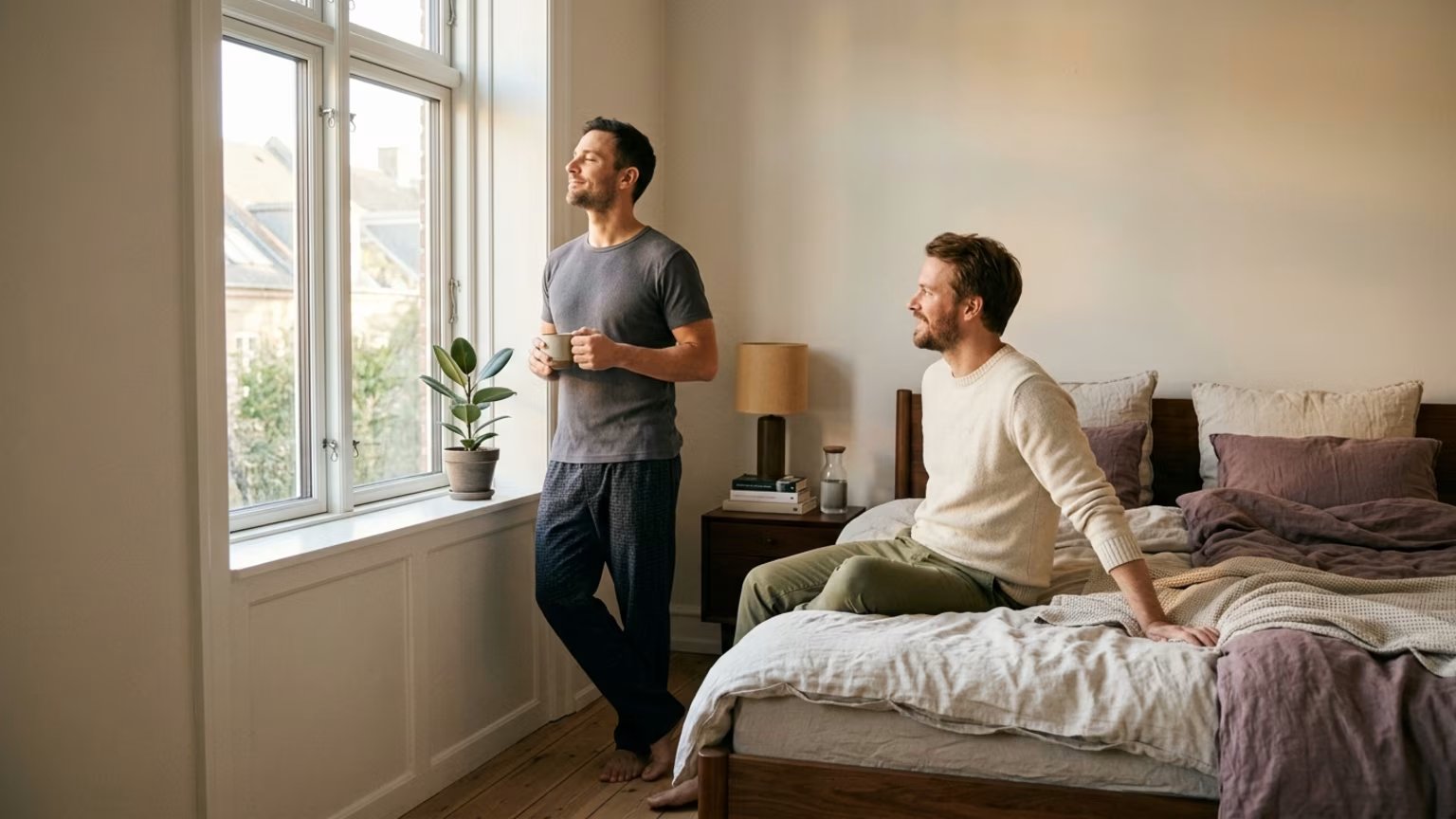

A practical, evidence-led guide for gay men 35+ on optimizing sleep schedules, managing bedroom environments and knowing when to test for sleep apnea.





The American Academy of Sleep Medicine and the Centers for Disease Control and Prevention both recommend that most adults obtain at least seven hours of sleep per night. This seven-hour baseline serves as a foundational target for physical recovery, cognitive performance, and metabolic health.
Sleep is a fundamental requirement that supports overall physical and mental health. The National Heart, Lung, and Blood Institute defines sleep deficiency broadly. This deficiency includes too little sleep, poorly timed sleep, poor sleep quality and untreated sleep disorders. Missing the seven-hour target repeatedly can impair learning, focus, reaction times, and emotional judgment.
These effects matter significantly for dating, maintaining relationships, and feeling confident in social settings. Poor sleep affects your ability to interpret the emotions of other people. This reality makes an effective sleep system a priority for any aging gay man. Establishing a reliable sleep routine provides the absolute foundation for longevity and healthy aging.
A short study of healthy young men found that five-hour nights for one week were associated with a roughly 10 to 15 percent reduction in daytime testosterone. This evidence supports the concept that severe sleep restriction impacts hormones. It does not mean every man over 35 will experience immediate muscle loss or sexual dysfunction from one short night.
Sleep optimization content often exaggerates this single data point to sell supplements. The study involved a specific young population facing extreme short-term sleep restriction. It cannot predict long-term changes for an older demographic. Your baseline hormone production relies on consistent recovery over months rather than the outcome of a single weekend.
Men should view sleep as a supporting pillar for male vitality and sexual wellbeing. It is not a fragile system that breaks instantly after minor disruptions. Persistent sleep deficiency will negatively impact your energy, mood, and gym performance over time. Worrying over an occasional five-hour night is unnecessary and often counterproductive.
You should anchor your schedule around a consistent morning wake time and let your bedtime adjust to genuine physical sleepiness. This practical approach helps regulate your internal clock and accommodates the varying social, work, and training demands of adult life.
Trying to force sleep at an arbitrary hour often leads to frustration and fragmented rest. A consistent morning routine provides a reliable starting point. You can maintain this wake time most days, including after social nights. Repeatedly sleeping late on your days off will make it harder to fall asleep the following night.
The distinction between spending time in bed and obtaining high-quality rest is highly relevant. If you wake up at the same time most days, you can work backward to create at least seven hours of sleep opportunity. This method builds a durable sleep system that can survive weekend variations and busy professional schedules.
Controlled studies and recent work in older adults suggest that daytime light exposure may support circadian timing, sleep, and mood. Sunlight acts as a timing cue for your brain rather than a sedative. It is particularly useful when paired with a stable wake time.
Natural aging subtly reduces ocular light sensitivity over time. This physiological change means older adults often receive less effective light exposure from their indoor environment. Getting bright outdoor light early in the day is a low-cost, highly effective intervention. You should keep daytime surroundings reasonably bright and reduce unnecessarily bright light late at night.
This practice helps synchronize your circadian rhythms and prevents your sleep schedule from drifting later. A man balancing career demands and nightlife can implement this easily. You only need to step outside shortly after waking to reinforce your daily cycle.
Clinical sleep guidance recommends limiting bedtime alcohol. You should limit alcohol particularly when it worsens snoring, reflux, awakenings or next-day function. While alcohol might make falling asleep feel easier initially, it frequently fragments the second half of your night.
This fragmentation prevents restorative recovery. Many men notice that late evening drinks produce early morning waking, restless periods, or a poor training session the next day. The true test of a sleep system is whether your rest remains consolidated and refreshing. You should compare several alcohol-free nights against your usual routine while tracking your morning energy.
This self-experimentation can reveal whether evening drinks are actively undermining your health goals. If you track strength and body composition, you might notice immediate improvements in performance when alcohol is removed. Treat alcohol consumption as a calculated trade-off rather than an effective way to relax before bed.
Cannabis is not an established treatment for primary insomnia or obstructive sleep apnea, according to clinical sleep guidance. Using it to self-medicate for chronic snoring, gasping, or persistent sleep difficulty can delay the diagnosis of a serious underlying medical condition.
The editorial position on cannabis is cautious because individual responses vary drastically by product, dose, and timing. People who use cannabis and experience next-day grogginess, disrupted rest, or increased anxiety should discuss these patterns with a clinician. Treatment claims for sleep disorders require stronger medical evidence than anecdotal reports.
If you find it difficult to sleep without cannabis, you might be masking a deeper physiological issue. Relying on any substance to initiate sleep prevents you from developing natural circadian habits. A sustainable sleep protocol relies on environmental management and behavioral changes instead of chemical dependencies.
You should finish large meals early enough to avoid physical fullness or reflux. There is no universal rule requiring a strict three-hour cutoff before bed. The best approach is highly individualized, requiring you to adjust meal timing based on how your body responds to specific foods.
A late or heavy meal is only a problem if it produces uncomfortable fullness, repeated awakenings, or noticeable indigestion. The available clinical evidence supports limiting bedtime alcohol when it worsens reflux. It does not mandate fasting before sleep for every man. Spicy or high-fat foods are common triggers that deserve careful observation.
Men with different metabolic rates, training schedules, and work hours require flexible nutrition strategies. You should evaluate your own symptoms rather than following arbitrary meal timing laws found online. A meal that digests well and supports overnight recovery without causing disruption is perfectly acceptable.
Keep the bedroom dark, quiet, and comfortably cool or warm according to your own response rather than chasing a universal temperature number. Clinical sleep summaries specifically recommend choosing a temperature based on individual comfort.
The primary goal is removing friction rather than purchasing an expensive sleep technology stack. Environmental noise, screen light, uncomfortable bedding and pets can repeatedly interrupt your rest. You should test these variables one at a time to identify what specifically disrupts your continuity.
Comfort and sleep continuity matter significantly more than creating an aesthetic environment. Your bedroom conditions should support uninterrupted rest rather than stimulate wakefulness. You must reserve the bed primarily for sleep and sex rather than work, scrolling, or prolonged frustration.
As people age, sleep may become lighter and more fragmented. Typical adult sleep needs remain broadly similar at seven to nine hours. The National Institute on Aging indicates that older adults often experience an earlier natural wake time alongside these architectural changes.
This subtle shift in sleep architecture is a normal part of physiological aging. A man in his late 30s or 40s may notice less tolerance for late-night disruptions without actually needing fewer total hours in bed. If your new sleep pattern remains stable, refreshing, and compatible with daytime function, it is likely completely normal.
You should pay attention if these changes are accompanied by severe fatigue, mood swings, or impaired concentration. A modified sleep pattern is not an automatic cause for alarm. You must separate typical aging processes from untreated medical disorders that actively degrade your quality of life.
The standard recommendation of seven hours does not apply universally during periods of intense physiological demand. Hard training blocks, acute illness, high psychological stress, and travel can significantly increase the amount of recovery a person needs. Your baseline sleep target may remain the same on paper, but your body will require extended rest to repair tissue and manage stress.
During these demanding periods, trying to compensate with stimulants or forced wakefulness is counterproductive. The practical response is to protect more opportunity for sleep rather than fighting the fatigue. A rigid adherence to a standard duration can slow your recovery from heavy exercise or sickness. You must adapt your schedule to meet your immediate physiological reality.
Persistent sleep issues should not simply be blamed on age, a demanding career, or a busy social life. You should seek assessment from a healthcare professional if you experience any of the following symptoms:
A clinical sleep study may be required to formally diagnose sleep apnea. A wearable device or a partner’s observation can provide useful context for your doctor. They do not replace a definitive medical diagnosis or formal exclusion test.
Untreated sleep disorders can severely impact your cardiovascular system, relationships, and cognitive health. The commonly used chronic-insomnia threshold is difficulty sleeping at least three nights per week for at least three months, together with daytime impairment. Taking action on these warning signs early provides a safer path than relying on supplements or endless self-optimization.
Once you have established a reliable sleep schedule and ruled out underlying medical disorders, you can begin tracking how this recovery impacts your daily performance. A stabilized sleep routine directly influences your physical capacity, metabolic function, and emotional resilience. You should monitor your energy levels during resistance training and pay attention to improvements in your emotional regulation. Investigating the connection between adequate recovery, confidence, relationships and community provides a practical next step for improving your overall social vitality. Poor sleep profoundly affects your ability to be present with partners and friends, making consistent recovery an absolute necessity for an active adult life.
Building a reliable sleep system requires an aging man to separate genuine recovery metrics from exaggerated lifestyle marketing, a process GayFitLab simplifies by evaluating credible medical evidence. A lack of adult, non-stereotyped coverage of dating, relationships, confidence and community leaves aging men unsupported until GayFitLab provides clear health guidance.
Stay connected for research-led guidance on fitness, body composition, skin, grooming, vitality, sexual wellbeing, relationships and healthy aging. Clear ideas for gay men 35+ who want to look good, feel strong and age with confidence.



Build habits and systems that support clear thinking, steady energy and long term capacity throughout a demanding career.
explore the Blog