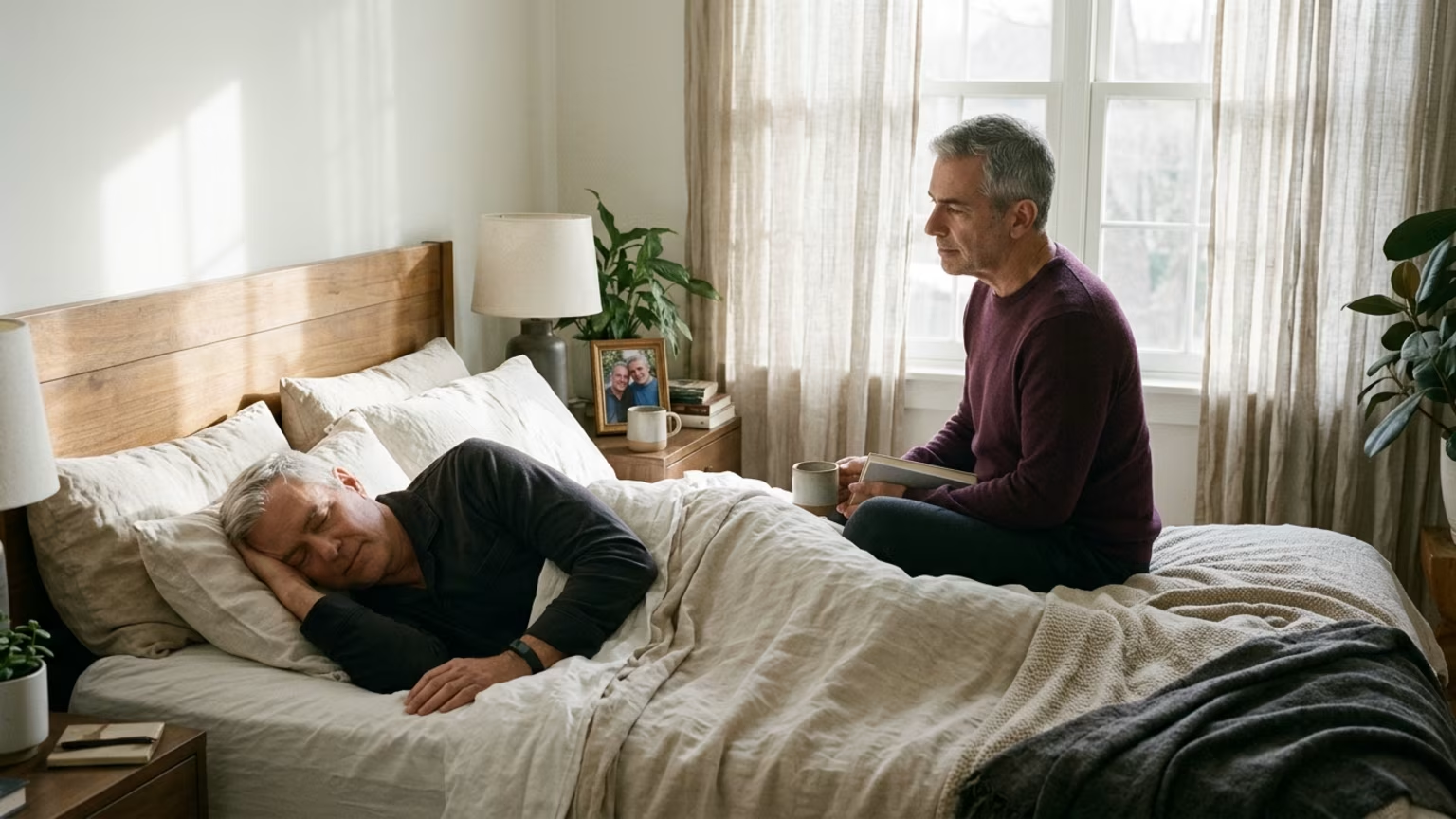

Sleep EEG research linked estimated brain-age gaps with later dementia risk. Learn what the finding means without treating it as a personal forecast.





On October 29, 2026, ScienceDaily reported on a study in JAMA Network Open that used overnight sleep EEG recordings to examine the relationship between estimated brain age and subsequent dementia risk.
According to ScienceDaily’s coverage, the researchers found a relationship between detailed sleep physiology and later dementia diagnoses:
The analysis was longitudinal: researchers related sleep EEG patterns recorded at baseline to dementia diagnoses documented during later follow-up. That sequence is central to the finding. The researchers were studying whether a sleep-based signal was associated with an outcome recorded afterward.
“Brain age” is an attention-grabbing label. Here it refers to an estimate produced by a particular model using particular overnight recordings. The brain-age index expresses how that estimate differs from chronological age.
The approach also goes beyond simply counting time spent in sleep stages or calculating sleep efficiency. According to ScienceDaily, the researchers analyzed more detailed EEG patterns within sleep. Senior author Yue Leng said that broad sleep measures do not fully capture the complexity of sleep physiology.
That distinction is the scientific interest of the work. A familiar summary such as total sleep time describes one aspect of a night. This model combined several features of the recorded brain-wave patterns into a different kind of summary.
For a reader interested in healthy aging, the useful development is the measurement approach rather than the age label alone. Researchers are investigating whether information within sleep recordings offers a meaningful signal about later health.
Yahoo Health also reported the approximately 39% association. That figure describes a relative increase in risk per 10-year brain-age gap, not a 39% probability that someone will develop dementia. It does not supply an individual’s absolute probability of the condition. A group-level relationship is not a personal forecast.
The study also does not establish that an older estimated brain age causes dementia. Nor did it test whether changing sleep patterns reduces the observed risk. A claim that a bedtime routine or supplement reverses this finding would go beyond the research.
The measure remains a research signal rather than a validated diagnostic test or clinical screening rule. ScienceDaily reported that researchers see possible future applications outside traditional clinics. That is a prospective use, not an established service described by this analysis.
There is also an audience boundary. The reporting provides no gay-men-specific result or basis for saying the association works differently for gay men. Participants were 40 to 94, so the study also does not directly represent readers in their late 30s. Its findings should not be assigned a special meaning based on sexual orientation or extended beyond the reported sample.
For a man over 35, the practical response is less about adding another score and more about deciding what deserves attention. The study offers a reason to take sleep physiology seriously within aging research. Daily decisions still need to begin with the question being asked: curiosity about longevity or a concern that is affecting life now?
If sleep or cognitive concerns are affecting daily life, individualized assessment from a qualified healthcare professional is the appropriate next step. The useful starting point is the concern itself rather than an attempt to translate it into an estimated brain age.
For someone noticing changes in energy or recovery, that means keeping the conversation connected to daily functioning. What is happening during work or ordinary responsibilities? What is getting in the way of feeling capable? Those are concrete concerns to bring to care without assigning a diagnosis from a news story.
There is no need to make the concern sound more technical before discussing it. Wanting help with disrupted sleep or a change in cognitive functioning is a different task from interpreting a population-level research association. Keeping those tasks separate makes the next decision clearer.
That distinction also leaves room for the rest of adult life. Strength and appearance can matter alongside mental sharpness and the ability to participate fully in relationships. Health does not need to be reduced to whichever number has the most compelling headline.
The study used overnight EEG recordings from research cohorts. The available evidence does not establish that consumer wearables or at-home brain-age scores reproduce its result. Similar language on a product page is not evidence that the same measurement has been validated for the same purpose.
A practical way to read a commercial claim is to compare it with the actual research:
These questions keep the evidence attached to its original setting. They also help distinguish a scientifically interesting study from a reason to purchase a product. The relevance of a measurement should come before the appeal of its branding.
For related context, GayFitLab’s discussion of putting wearable recovery feedback in perspective addresses another setting where a numerical output can draw more attention than the decision it is meant to inform.
This paper can be worth following without becoming a personal sleep program. It identifies a relationship for researchers to investigate. It does not require readers to build an additional tracking ritual around the finding.
A useful editorial distinction is between learning about a potential marker and acting on an established personal need. Someone reading out of curiosity can take an interest in the research. Someone whose sleep concerns interfere with daily life has a reason to seek care that does not depend on this particular headline.
For broader reading, a discussion of sleep stages and long-term health can sit beside this story. Keep the questions separate: research about a sleep characteristic is not automatically a recommendation to target a particular number on a device.
The same principle applies to longevity coverage more broadly. A finding becomes useful when its meaning matches the decision in front of the reader. Scientific interest and immediate personal action are not the same thing.
For gay men in midlife and beyond, staying capable can include work and training. It can also mean having the energy and confidence for intimacy or time with other people. An experimental age estimate need not become the organizing principle for all of those priorities.
That is an editorial judgment about proportion, not a claim that the study measured these parts of life. The research concerns a specific signal and a specific outcome. Readers are living a much wider set of experiences.
A practical perspective on everyday brain health offers a complementary place to continue reading. The goal is to remain informed without allowing a promising research term to crowd out the reasons health matters in the first place.
Treat sleep-based brain age as a research development rather than a personal forecast, and let sleep or cognitive concerns affecting daily life lead to qualified assessment instead of unvalidated score chasing.
After reading about a sleep-risk marker, the next task is putting it beside everyday questions about vitality and healthy aging, subjects GayFitLab covers through research-led editorial guidance. For gay men 35+ navigating changes in sleep, energy or recovery, its reporting helps separate credible evidence from medical hype while keeping practical concerns in view.
Stay connected for research-led guidance on fitness, body composition, skin, grooming, vitality, sexual wellbeing, relationships and healthy aging. Clear ideas for gay men 35+ who want to look good, feel strong and age with confidence.


Build habits and systems that support clear thinking, steady energy and long term capacity throughout a demanding career.
explore the Blog

