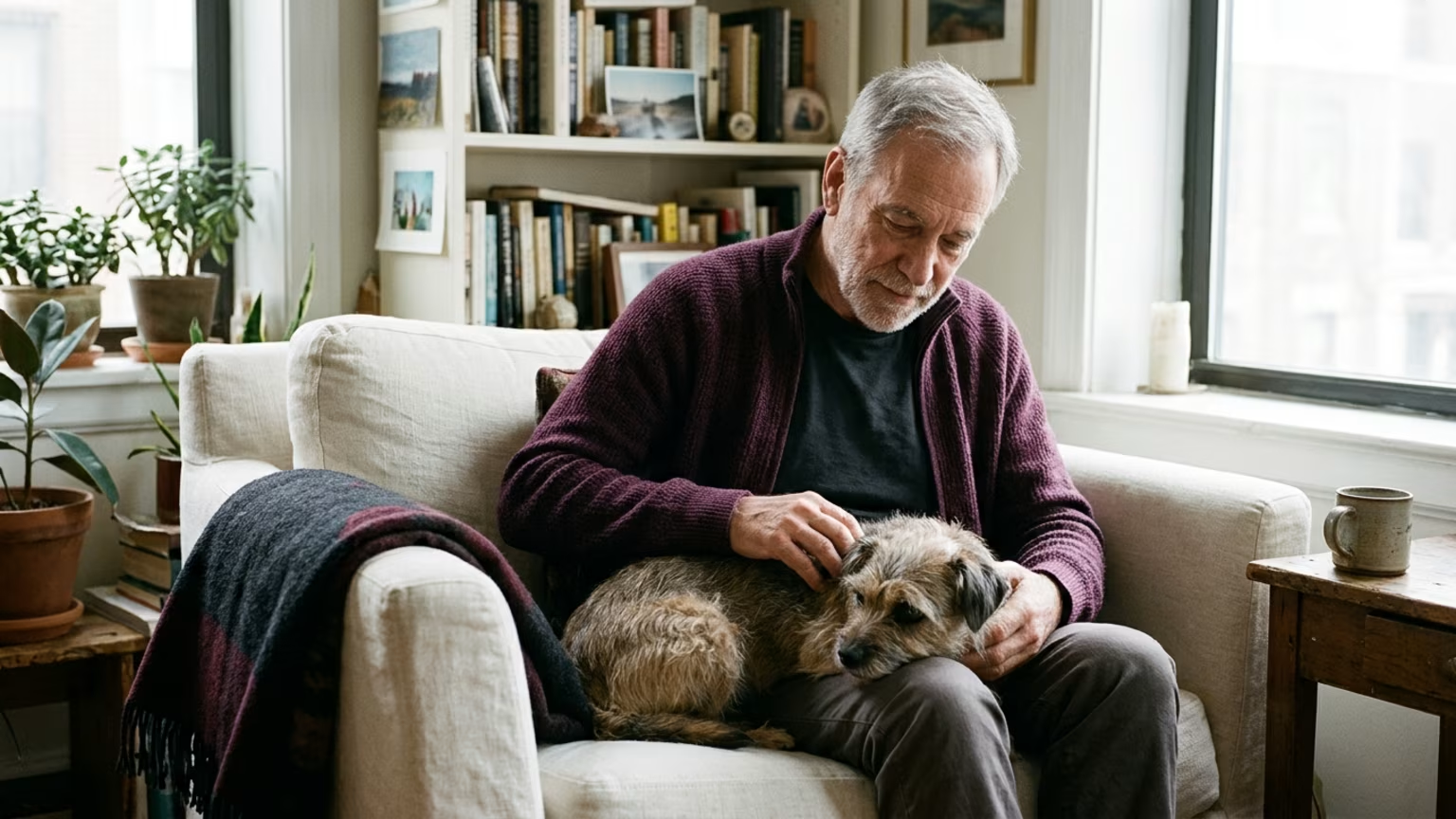

A survey links pets with reported wellbeing in solo agers. Here is how to weigh companionship, daily routines, cost and backup care.





On October 1, 2026, veterinary outlet dvm360 published a report on Mather Institute’s online survey of adults 55 and older who were aging alone. Respondents associated pets with better emotional wellbeing, less stress and more physical activity.
The findings reported in dvm360’s coverage offer a useful starting point:
In Mather Institute’s news release, vice president Jennifer Smith described pets as potentially supporting social connection, purpose and physical activity. That is the institute’s interpretation of the findings rather than a separate demonstration of those benefits.
According to dvm360’s coverage, these were self-reported responses to an online survey. The available account does not identify a peer-reviewed publication or provide detailed methodology. It records associations rather than establishing that pets caused better wellbeing or more activity. It also provides no evidence of longer life or slower biological aging.
The underlying activity scores and pet-group sample sizes were not supplied for the activity comparison. Participants were 55 and older, with no results reported specifically for gay men. The findings should therefore not be generalized to all older adults or treated as evidence about men under 55. Practical suggestions accompanying the release were recommendations rather than tested interventions.
For a man over 35, the useful question is whether caring for an animal belongs in the life he wants. It is not whether a wellbeing headline gives him another task to complete. Companionship deserves a more thoughtful decision than adding something to a health checklist.
Start by separating the parts of the story that interest you. Is it the company of an animal? Is it a more defined daily routine? Is it the possibility of spending more time outside or having casual conversations?
Those are different priorities. Naming yours makes the decision more concrete without turning a survey average into a personal forecast. It also leaves room for the possibility that you value animal companionship but do not want the responsibility of ownership.
If you already have a pet, use the findings as a prompt to review how that relationship fits your day. Think about the parts you value and the responsibilities that feel difficult. There is no need to convert those observations into a score or compare your routine with other owners.
If you do not have a pet, begin with whether you want that relationship. An expected health return is a poor substitute for wanting to care for an animal. Treat that as an editorial judgment about the decision, not a result measured by the survey.
Mather Institute’s release acknowledged the practical concerns respondents associated with ownership. Those details deserve as much attention as the positive findings. They move the discussion from an appealing headline to the reality of providing care.
A useful review can stay close to the concerns the survey actually raised:
These questions do not require a particular income, household structure or relationship status. They ask whether the arrangement is workable for the person and the animal involved. There is no single correct-looking version of that arrangement.
For someone who already owns a pet, the most useful adjustment might be addressing an unresolved care concern. For someone thinking about ownership, it might be deciding that the commitment does not fit right now. Neither decision needs to become a verdict on how well that person is aging.
The activity comparison is the most eye-catching number in the coverage. It is also easy to turn a comparison into a competition: dog ownership becomes the supposedly better choice and every other arrangement starts to look second best.
A more useful reading keeps attention on the everyday experience described by respondents. The practical question is where companionship and activity fit into a workable life. Choosing an animal mainly to pursue a reported activity difference puts the statistic ahead of the relationship.
For an existing dog owner, that can mean reflecting on what walks contribute to an ordinary day. Is the valued part movement or time outside? Is it the company of the dog or conversations along the way? These are questions for personal reflection rather than a new exercise prescription.
For someone whose main concern is physical capability, keep that concern distinct from the ownership decision. Questions about an individual exercise plan belong with appropriately qualified guidance. A pet does not need to become responsible for delivering a training outcome.
The same editorial discipline applies to the wider conversation about male vitality and sexual health. Keep the outcome being discussed specific instead of letting a positive wellbeing story expand into an all-purpose health claim.
Use the study’s definition of solo aging carefully. It concerns living alone without regular support from family or friends. It is not a label to apply automatically to every single gay man or everyone whose household differs from a conventional family model.
For your own planning, distinguish companionship from practical support. Enjoying company and knowing who could help during a health crisis are different questions. The release’s concern about backup pet care makes that distinction particularly relevant here.
A useful conversation with someone you trust can stay specific: would they be willing to discuss helping with animal care if circumstances changed? That is more concrete than assuming a friendly relationship includes an unspoken care arrangement. It also gives the other person room to describe what is realistic.
Keep the animal relationship and human relationships visible without asking either to perform every role. An affectionate companion does not need to stand in for friendship or practical help. Nor does having supportive people around you make wanting a pet less meaningful.
Questions about culture and finding a sense of belonging also deserve their own attention. GayFitLab’s position is that community should not be described through a single model of gay life. The pet decision belongs within that wider respect for different preferences and circumstances.
The headline invites interest in ownership. A more useful response leaves several outcomes open: appreciating a pet you already have or addressing a difficult care arrangement. It can also mean deciding that ownership is not right for your life.
Give companionship and responsibility equal weight. Wanting more routine is a valid starting point for reflection, but the decision still concerns caring for an animal. Keep that relationship at the center rather than making it a project for improving yourself.
For gay men thinking seriously about later life, the strongest takeaway is permission to examine ordinary routines without turning aging into a performance. Looking good and staying capable can matter alongside affection and connection. None of those interests requires the same household or the same choice about pets.
Use this survey to review companionship and daily routines, then judge pet ownership by the relationship and care commitment rather than an expected longevity return.
Making room for a pet means weighing companionship against daily care; GayFitLab brings a research-led perspective to that health decision. Its editorial guidance helps gay men 35+ distinguish supported wellbeing findings from the wider confusion around male vitality, hormones and sexual wellbeing without turning an appealing headline into a medical promise.
Stay connected for research-led guidance on fitness, body composition, skin, grooming, vitality, sexual wellbeing, relationships and healthy aging. Clear ideas for gay men 35+ who want to look good, feel strong and age with confidence.




Build habits and systems that support clear thinking, steady energy and long term capacity throughout a demanding career.
explore the Blog

