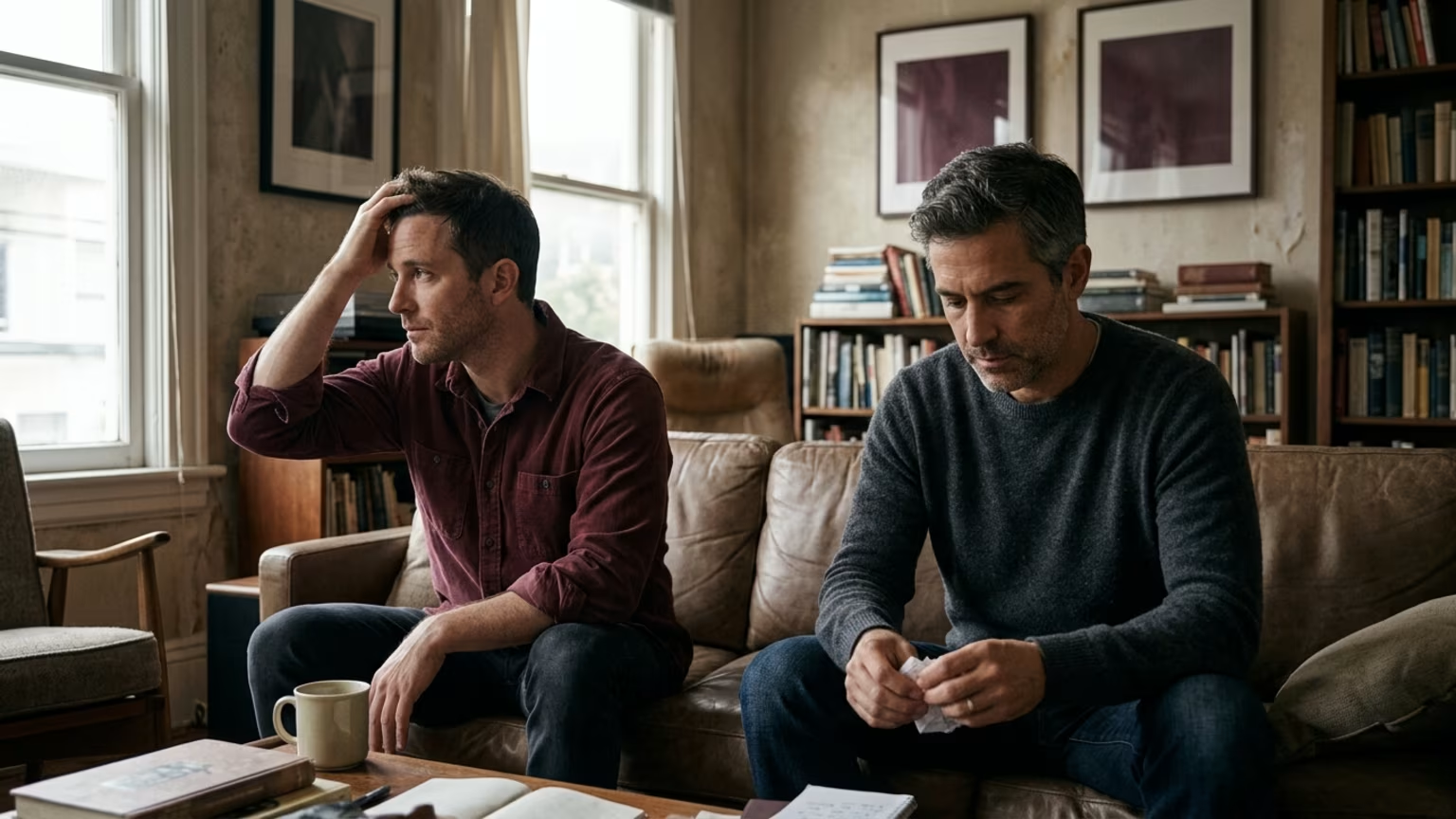

Gay men over 35 can improve their dating lives by replacing rigid checklists with a personal dating brief focused on shared definitions and health.





Treating dating like a rigid search for flawless compatibility is the fastest way to ruin your social vitality.
Many gay men over 35 approach modern romance with an exhausting set of rules. They treat relationship building like a ruthless audition for a life partner. They demand perfect alignment on fitness habits, career goals, and social energy before the first drink arrives. This method treats human connection as a stressful commercial transaction.
The mainstream dating environment actively encourages this clinical mindset. Swiping platforms reduce complex men to a few curated photos and a brief sentence. Men learn to hide their true intentions to avoid looking needy or intense. They wait to discuss sexual health or relationship structures until they feel safely attached.
This intentional delay creates massive anxiety and guarantees miscommunication later. When you hide your true needs, you attract people who fit a false version of yourself. The checklist approach fails because it confuses superficial preferences with actual human requirements. A preference for a partner who trains five days a week is not a moral imperative.
When a man treats superficial traits as mandatory for his wellbeing, he isolates himself. This isolation actively works against his long-term emotional and physical health. Filtering people through rigid demands ignores how actual attraction develops over time. It creates a dangerous illusion of control over a messy and unpredictable human process.
A man who insists on perfect initial alignment will miss out on men who possess the capacity for real partnership. He will discard potential matches over minor lifestyle differences or harmless eccentricities. Dating without a clear internal brief just leads to repeating the same frustrating cycles. It leaves aging men feeling uniquely disconnected from their own social communities.
The cultural script tells gay men that aging is a process of social decline. This false narrative pushes men to seek validation through perfect romantic partnerships. They hope a flawless boyfriend will shield them from the realities of growing older. This pressure makes casual dating feel impossibly heavy and fraught with perceived risk.
Many apps are designed to keep users swiping rather than connecting in meaningful ways. They reward snap judgments based entirely on physical appearance and superficial stats. This environment trains men to view potential partners as disposable commodities rather than complex individuals. It creates a culture where the next best thing always seems just one swipe away.
The physiological and psychological realities of aging require a completely different relationship strategy. Adult gay men experience natural changes in libido, sleep architecture, and physical recovery. The body simply does not respond to stress or connection the way it did at 25. Strong social support becomes a central pillar of maintaining physical vitality and cognitive health.
Romantic relationships can provide deep companionship, but they cannot carry every emotional and medical need. A man who expects a new partner to solve his loneliness places an impossible burden on the connection. The physical reality of adult life demands a wider network of friends and professional care. When dating is viewed as just one piece of a broader support system, the pressure drops significantly.
Sexual wellbeing also requires a more mature and direct approach to communication. Waiting to discuss boundaries or testing until the moment of intimacy is a failing strategy. Evolving prevention protocols require ongoing conversations between partners and trusted clinicians. Adult men must integrate sexual health into their standard dating conversations without shame or hesitation.
For instance, discussions about antimicrobial resistance now influence practical decisions about sexually transmitted infection prevention. A commentary in Clinical Infectious Diseases reported that doxycycline post-exposure prophylaxis demonstrates efficacy against syphilis and chlamydia in men who have sex with men. However, the same report noted variable effects on gonorrhoea and emphasized the need to consider resistance concerns. These nuanced medical realities prove that sexual health requires active dialogue rather than unspoken assumptions.
The body changes over time, and sexual function often shifts with it. Men in their late thirties and beyond frequently notice variations in arousal and physical stamina. A successful relationship requires the ability to discuss these physical changes without panic or judgment. Partners must collaborate on adapting their intimacy to match their current physiological realities.
Relying on a partner to validate your attractiveness creates a fragile foundation for confidence. Healthspan optimization requires internal motivation and a highly stable sense of self. A man who roots his confidence in his own physical habits will navigate dating with far more resilience. He will view a partner as an addition to a complete life rather than a missing piece.
The nervous system becomes less tolerant of chronic stress and drama as we age. A tumultuous relationship that felt exciting at twenty can feel physically exhausting at forty. Men need environments that promote rest, recovery, and emotional stability to maintain their physical health. A partner should be a source of nervous system regulation rather than a constant trigger for anxiety.
The solution is replacing rigid checklists with a clear personal dating brief. This framework focuses on what you actually need for safety and growth over time. It separates absolute requirements from qualities that are merely nice to have on paper. You can then translate vague relationship terms into observable, daily behaviors.
Start by categorizing your priorities into clear needs, soft preferences, and open curiosities. Needs are the non-negotiable conditions strictly required for your physical and emotional safety. These might include honesty about current relationship status or respect for specific sexual boundaries. True needs are rare, but they are absolutely critical for maintaining your psychological wellbeing.
Preferences are the qualities that make a connection appealing but are not strictly mandatory. These include things like a shared interest in strength training or similar travel habits. A preference adds joy to a relationship without forming its primary structural foundation. Curiosities are areas you feel open to learning about from a completely new partner.
Once you categorize your priorities, you must clearly define the language you use. Words like "serious" or "open" hold completely different meanings for different men. A man seeking an open relationship might want full transparency about all outside partners. Another man might prefer complete separation between his primary connection and his outside sexual encounters.
You cannot assume a match shares your definition of exclusivity or emotional availability. You must ask direct questions about what these terms actually look like in practice. Asking what monogamy means to someone is a simple question that prevents massive future conflict. The goal is to establish shared definitions before emotional attachment complicates the discussion.
You can build a reliable dating system by using a strategy of staged disclosure. Not every heavy topic belongs in the first five messages you exchange on an app. Use early chats to establish basic intentions, physical location, and general scheduling availability. Save discussions about emotional pacing, social habits, and relationship structure for the first few dates.
Before you introduce sex into the dynamic, you must discuss testing and physical boundaries. Ask open questions about how a potential partner handles health priorities and interpersonal conflict. Asking how someone handles disappointment is far more revealing than asking if they are loyal. You want to observe whether he can answer direct questions without becoming defensive or evasive.
Listen closely for the strict alignment between his stated intentions and his actual behavior. A person might want a healthy relationship but lack the capacity to maintain one. Notice if he respects a minor boundary without attempting to negotiate or dismiss it. Notice if he makes room for your life or expects instant priority over your existing friendships.
Men who prioritize building a supportive social and romantic network often find that dating becomes much less stressful. You can evaluate a connection without feeling desperate for it to work out perfectly. This perspective allows you to walk away from incompatible situations with your dignity completely intact. It places your long-term social wellbeing above the short-term thrill of a new match.
Maintaining clear boundaries around sexual health keeps you in control of your own physical safety. You can engage honestly, tolerate minor differences in opinion, and protect your long-term vitality. A mature man knows how to advocate for his health without making his partner feel attacked. Open communication builds trust much faster than assuming you are both on the same page.
The same discipline you apply to optimizing your physical capability applies directly to your romantic life. You track your emotional reactions, adjust your approach, and stay fiercely consistent with your core values. The goal is making it easier for two adults to consent to the exact same shared reality. Precision in communication prevents the deep resentment that destroys many midlife gay relationships.
Ultimately, protecting your emotional and physical future means selecting partners who actively add value to your life. You do not need to perform perfectly on a date or hide your true intentions. You just need to know what you want and ask for it with quiet confidence. Honesty filters out the men who are not ready for a grown adult relationship.
Stop treating dates like rigid compatibility audits and start treating them like honest adult conversations.
Translating vague relationship goals into a clear dating brief requires an aging man to fiercely protect his physical routines. Conflicting advice about fitness, body composition and metabolism after 35 often makes it difficult to maintain this stable foundation while meeting new partners, a challenge GayFitLab solves by analyzing current medical data. Explore Resources
Stay connected for research-led guidance on fitness, body composition, skin, grooming, vitality, sexual wellbeing, relationships and healthy aging. Clear ideas for gay men 35+ who want to look good, feel strong and age with confidence.




Build habits and systems that support clear thinking, steady energy and long term capacity throughout a demanding career.
explore the Blog