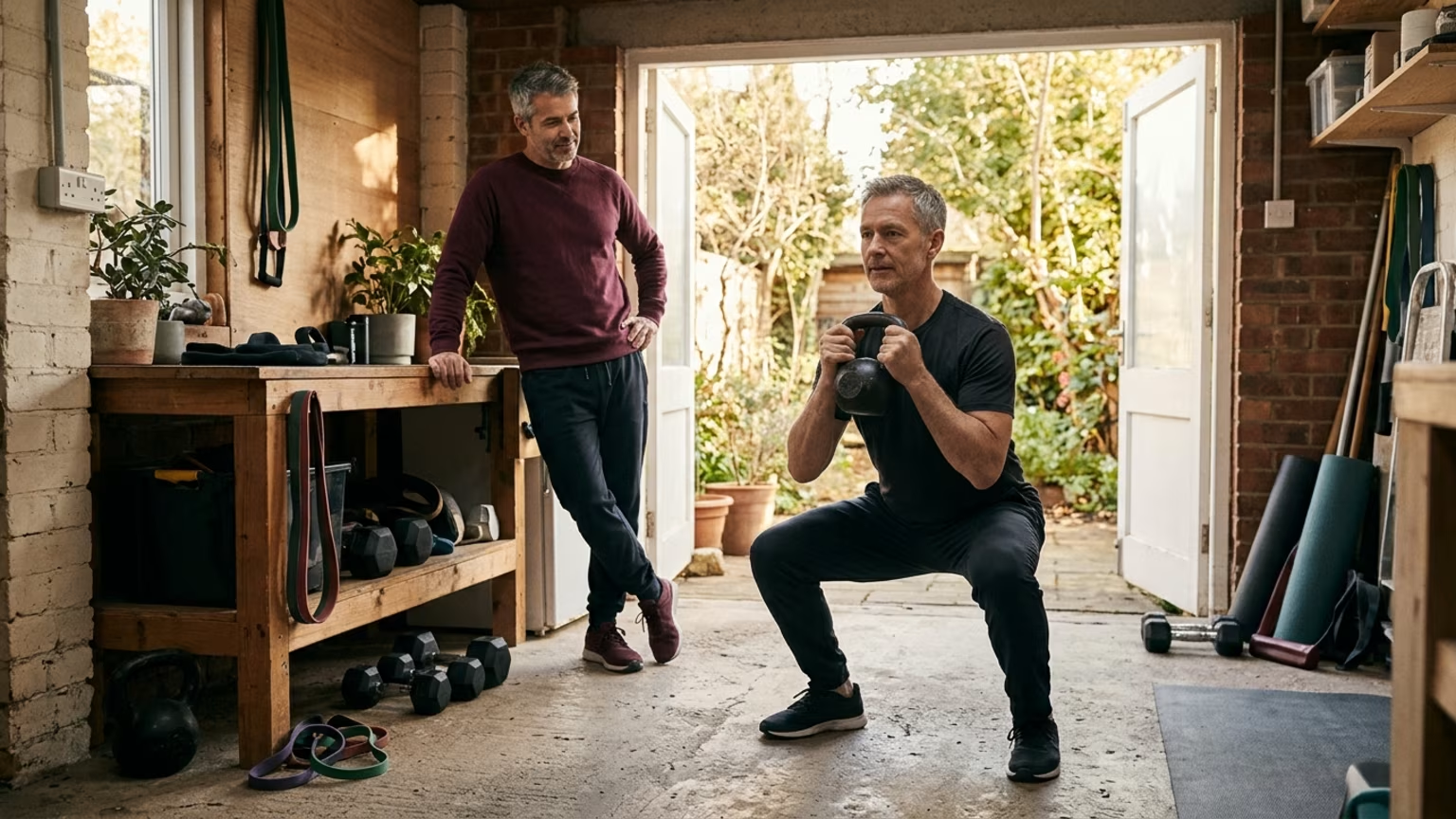

HSS recommends progressive strength training in midlife, with loads matched to current ability and room for aerobic activity, mobility and recovery.





On November 6, 2026, Hospital for Special Surgery (HSS) published guidance on staying strong through midlife and beyond. Updated November 7, 2026, the article features recommendations from HSS physiatrist Deirdre S. Rodericks, MD.
This is clinical guidance from Rodericks, not a newly reported clinical trial or a tested training program. HSS provides no universal load or workout length. It also reports no measured physique outcomes and does not establish different strength-training needs based on sexual orientation.
The recommendation sits alongside existing adult activity guidance rather than announcing a replacement for it. The National Institutes of Health (NIH) summarizes that guidance as muscle-strengthening activity for major muscle groups on two or more days weekly. Its separate aerobic recommendation is discussed below.
There is a related policy development to watch. In October 2026, the U.S. Department of Health and Human Services said it was developing a 2027 supplement to the Physical Activity Guidelines for Americans focused on step counts and muscle-strengthening activity. That announcement concerns work in development, not an already adopted change to the recommendations.
For gay men over 35, the value of the HSS article is its practical framing: train from present ability and make strength part of a wider routine. It is not evidence for a new promise about appearance or lifespan.
For a man thinking about health span, the useful shift is from proving past performance to supporting present capability. HSS places resistance training within an active-aging routine that also gives other kinds of movement and recovery their place.
That is compatible with caring about how you look. It simply keeps the training decision grounded in what this guidance addresses: current ability, gradual progression and physical function. Your aesthetic priorities do not need defending, but they should not turn an old personal best into an obligation.
Rodericks’s clearest advice is also the most relevant to someone returning after time away: “Start from where you are today, not where you were five or 10 years ago.”
Applied to a daily routine, that means treating previous weights and training intensity as background information. They describe what you once did. They do not establish what belongs in your next session.
The same distinction applies to frequency. HSS’s recommendation of two to three weekly resistance sessions is not an instruction to reach that pattern immediately after a long break. Its starting principle remains current ability followed by gradual progression.
A useful planning question is therefore: what resistance work fits your health, experience and goals now? That is a more relevant question than whether your current workout resembles an earlier version of your life. Our discussion of progression within everyday training provides a related framework for thinking about that adjustment.
HSS makes maintained form the reference point. Rodericks says the goal is to finish the last repetition with technique intact, rather than letting fatigue dictate the movement.
For someone rebuilding a routine, the practical distinction is between increasing effort and accepting deteriorating form. The article supports the former. It advises stopping before the latter.
This shifts attention away from a number on the weight stack as the only measure of a session. In the HSS framework, how the movement is performed belongs in the assessment too. Completing a heavier repetition is not the same thing as meeting its stated goal if form has broken down.
The source offers no fixed progression formula, so there is no basis here for adding a weekly weight increase or a mandatory repetition target. The supported approach is more direct: build effort progressively while keeping the movement controlled by good form. Decisions about the actual load remain individual.
HSS’s recommendation covers the major muscle groups. For a reader reviewing his routine, the question is whether the plan accounts for the lower body and upper body alongside the core, rather than revolving around whichever exercises feel most familiar.
Rodericks also identifies the core and glutes as areas that deserve attention for many HSS patients. The article’s examples include:
These are examples rather than a required workout. Their role in the article is to make the discussion concrete, not to establish a universal exercise list.
The practical takeaway is coverage rather than collection. There is no need to turn every movement named in an institutional explainer into another task on the calendar. Exercise selection should serve the broader recommendation and the individual’s circumstances.
No. HSS describes strength as one component of a varied routine, not a substitute for all other activity.
NIH’s adult activity summary pairs muscle-strengthening work with 150 to 300 minutes of aerobic activity weekly. These are separate components of the guidance. Completing resistance sessions does not remove the aerobic component.
HSS also includes balance and mobility. It places weight-bearing or impact activity in the mix when appropriate. Its article leaves the overall balance of activities to current fitness, interests, health and goals rather than assigning everyone the same calendar.
For a man organizing exercise around work and a social life, that distinction matters. Start with the categories the guidance identifies rather than assuming one demanding workout covers everything. The aim is a coherent routine, not a contest over which form of exercise deserves all your attention.
Thinking about strength and aerobic work within the same week can help frame that planning discussion without turning HSS’s advice into a rigid schedule.
In Rodericks’s account, recovery belongs inside the training discussion. Sleep, nutrition, hydration and adequate rest are parts of the approach, not unrelated lifestyle details.
That framing is useful when your exercise calendar is carefully organized but recovery receives whatever time remains. The practical response is to give both subjects attention when reviewing the routine. HSS does not frame preserving every scheduled workout as more important than responding to an injury.
This is not an argument for treating every imperfect night as a reason to abandon exercise. It is an argument against using consistency to justify pushing through an injury, which Rodericks specifically cautions against.
For readers concerned about slower recovery or changes in energy, the distinction is worth keeping clear: commitment to training and adjustment of training are not opposing values. The HSS guidance includes both progressive effort and adequate rest. A broader discussion of recovery alongside regular strength work can keep those priorities in the same conversation.
HSS advises medical evaluation for sudden or localized weakness and for neurological symptoms. It also identifies pain that limits function or does not improve with a short period of rest as a reason to seek evaluation.
Those concerns should not be folded into a generic progression plan. For readers with an existing injury or health condition, individualized clinical guidance is more appropriate than borrowing a standard workout template.
Bone health is another point where context matters. HSS says resistance training and weight-bearing activity can support bone health. It also notes that people with osteoporosis may need additional guidance, particularly when learning unfamiliar exercises that could stress the spine.
The practical boundary is straightforward: general exercise advice supplies a framework, while a qualified clinician can address personal symptoms and relevant health conditions. A news article should not be used to decide which exercise or load is appropriate for an individual medical situation.
Use HSS’s recommendation as a framework for building strength from current ability, keeping form intact and making room for aerobic activity and recovery rather than trying to recreate your past training at once.
Chasing former training loads can push recovery out of the discussion; GayFitLab keeps physical capability and healthy aging within its research-led fitness coverage. For gay men 35+ facing slower recovery or changes in energy, its practical guidance separates supported advice from exaggerated claims so those changes need not become a reason for age panic.
Stay connected for research-led guidance on fitness, body composition, skin, grooming, vitality, sexual wellbeing, relationships and healthy aging. Clear ideas for gay men 35+ who want to look good, feel strong and age with confidence.


Build habits and systems that support clear thinking, steady energy and long term capacity throughout a demanding career.
explore the Blog

