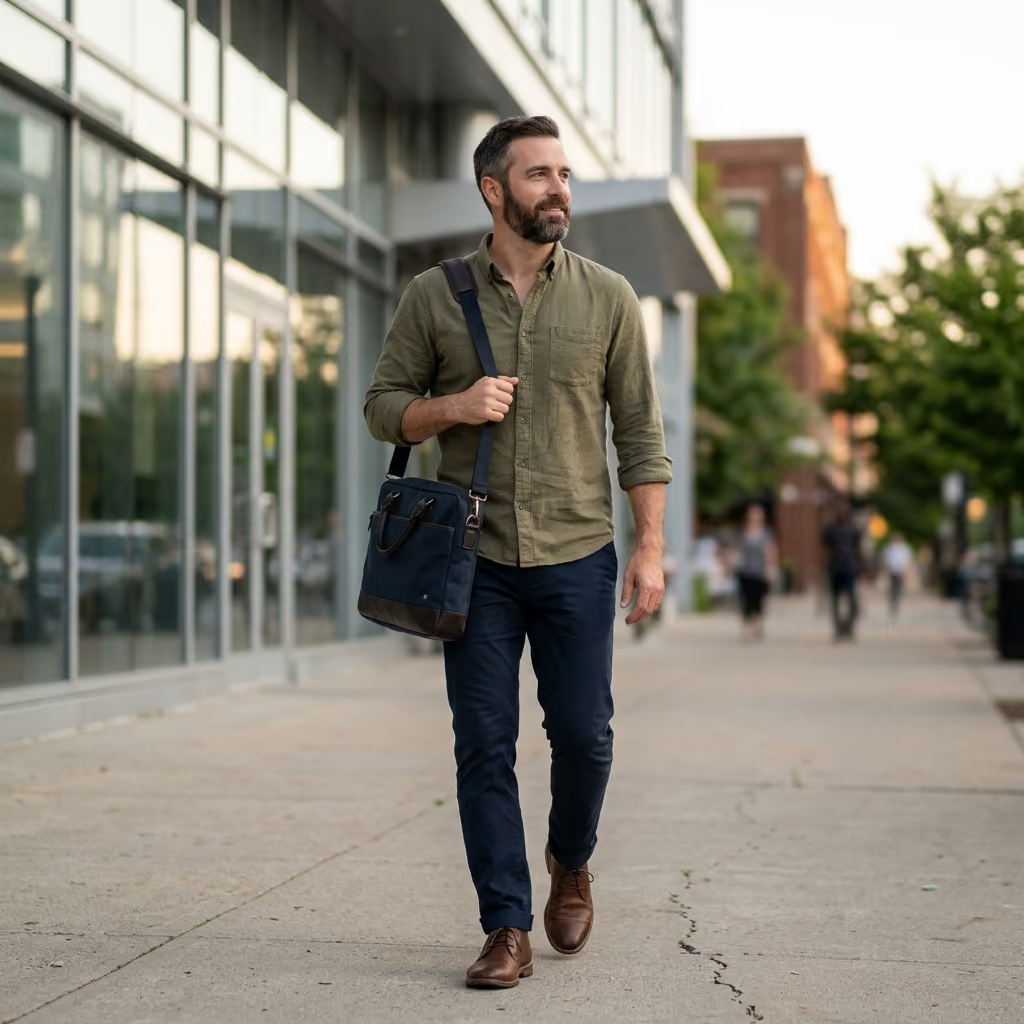
A look at how fear of homophobia and anticipatory hypervigilance shape daily navigation, relationship dynamics and confidence for gay men over 35.





In September 2026, VUB's Mobilise group published an exploratory study in the Journal of Urban Mobility detailing how queer people in Brussels adjust their clothing, posture and transport choices based on perceived safety.
Recent qualitative interviews document the specific lifestyle adjustments queer men make to manage their visibility. The research, led by Charlotte van Vessem and Juliana Betancur Arenas alongside academic partners, identified the following patterns:
The findings from Brussels highlight a persistent tension for gay men building a fulfilling life after 35. Researcher Charlotte van Vessem told The Brussels Times that this continuing anxiety could affect a person's quality of life. For men prioritizing social connection and wellbeing, this hypervigilance represents a hidden daily tax on energy. Managing public visibility is a practical survival skill rather than a reflection of personal courage.
Men aging past 35 frequently want to move through their cities with confidence and authenticity, making the realization that certain environments demand behavioral shifts feel deeply frustrating. A man might feel completely secure in his identity but still choose to alter his posture to avoid harassment. The VUB summary notes that queer men perceived style adjustments as directly affecting their sense of street safety. Recognizing this distinction helps men separate their internal confidence from their situational choices.
The study examines the anticipatory fear surrounding safety rather than focusing solely on incidents of violence. Choosing an Uber over a bicycle simply because of an outfit illustrates how perceived danger restricts ordinary decisions. These minor adjustments accumulate over time and require a persistent mental effort. You can read more about our approach to adult relationships by visiting the GayFitLab blog for further reading.
For gay men focused on healthy aging and daily vitality, the stress from continuous self-monitoring is a heavy burden. Lonbois’s awareness of his crossed legs or flower rings highlights how granular this monitoring can become. Men must process their surroundings continuously to gauge potential threats before they materialize. This reality demands resilience and self-compassion when building a supportive social life.
The psychological energy required to constantly monitor one's appearance takes a toll over time. When Lonbois spoke about becoming conscious of whether he crossed his legs, he highlighted a deeply ingrained behavioral reflex. Crossing one's legs is a completely ordinary movement that suddenly becomes a calculated risk in a public setting. This level of self-surveillance forces men to second-guess their most natural physical habits.
Over decades, this pattern can lead to profound physical and emotional fatigue. This fatigue directly affects a man's overall vitality and engagement with the world. When minor actions like wearing flower rings trigger anxiety, the public sphere becomes a space of labor rather than leisure. The effort spent neutralizing one's homosexuality is effort diverted from enjoying life.
Aging well requires managing stress, yet this specific form of social stress is rarely acknowledged in mainstream health advice. Recognizing this burden is the first step toward mitigating its impact on your daily energy levels. You can read more about maintaining your energy by visiting our Longevity & Healthy Aging resources.
The VUB study emphasizes that street safety is shaped by multiple overlapping factors. While good urban design matters, the researchers highlight the profound role of social encounters. A well-lit street provides little comfort if the people occupying it present a threat. The research documented negative experiences alongside neutral and positive ones to capture this complexity.
This indicates that safety is not a static quality of a neighborhood but a fluid social dynamic. For men over 35, understanding this fluidity is critical for maintaining an active lifestyle. You cannot control whom you encounter, but you can control how you process those interactions. Recognizing that a negative encounter reflects the crowd rather than the location helps prevent men from completely avoiding certain areas.
This mindset preserves a man's access to his city and his community. The VUB summary notes that getting to know neighborhoods is a common motivation for walking or cycling. Men should not have to sacrifice this active lifestyle because of the unpredictable nature of social interactions. Maintaining these physical routines supports long-term health and vitality.
The Brussels findings offer important context for how couples manage public affection today. For men dating or building relationships later in life, public visibility is often complicated by perceived safety. A partner dropping your hand on a crowded street might be a rapid safety calculation rather than a rejection. Understanding this dynamic prevents couples from internalizing contextual fear as a relationship problem.
Couples must navigate these spatial practices together to maintain strong bonds. The VUB study specifically notes that safety is shaped by whom people encounter in public space. Men can support their partners by discussing these boundaries openly and without judgment. Recognizing that each person has a different threshold for perceived risk strengthens relationship communication.
Navigating differing comfort levels is a common challenge for gay men building lasting relationships. When one partner feels unsafe, the other must respect that assessment without demanding immediate explanations. One man might feel comfortable holding hands while his partner might feel exposed and vulnerable. By addressing these fears openly, couples can strengthen their trust and emotional intimacy.
Navigating public spaces as an aging gay man introduces unique social dynamics and challenges. As men reach their late 30s, 40s and beyond, they typically care less about external validation and more about personal comfort. However, the fear of homophobia forces them to remain hyper-aware of how others perceive them. This dynamic creates a frustrating paradox for men who have worked hard to accept themselves.
The Brussels Times reported that a group of young men shouted homophobic insults at Flemish influencer Jonatan Medart and his boyfriend, demonstrating how quickly a neutral walk can become confrontational. When men read about homophobic insults shouted at others, their own anticipatory fear is validated. The Brussels Times noted that this specific event prompted renewed discussion about public safety. These public conversations are necessary but they also keep the threat of violence at the front of men's minds.
The requirement to constantly assess public spaces places an unequal psychological load on queer individuals. The VUB study’s title itself, 'It's not the place, it's the crowd,' highlights the unpredictable nature of this challenge. A street that feels perfectly safe at noon might feel threatening by midnight depending on who is present. Men over 35 who have spent decades refining their personal style may find this ongoing requirement particularly exhausting.
Managing this constant awareness requires deliberate strategies to protect your mental health. Connecting with peers who understand these specific challenges is a highly effective way to build resilience. You can read more about our mission and editorial focus by visiting our About GayFitLab page. Building a life that includes both physical safety and authentic self-expression takes time but it remains an achievable goal.
The ways queer people choose to travel also reflect their broader lifestyle priorities and values. The VUB summary points out that active transport methods support physical health and community engagement. When men feel pushed into private transport to avoid harassment, they lose opportunities for incidental social connection. This loss of community engagement negatively affects long-term wellbeing.
Addressing these barriers requires broader environmental changes rather than just personal adaptation. The VUB press release calls for safer night-time transport and continued bike-sharing options for all residents. Targeted campaigns by transport companies like STIB could help improve the social climate across the city. Until these systemic improvements take effect, men must balance their active community participation with their personal safety needs.
The presence of positive and neutral experiences in the VUB study provides a vital counterweight to the negative encounters. It is entirely possible to navigate a city safely and confidently as a visibly gay man. Men over 35 can cultivate a strong sense of self while remaining observant of their surroundings. This balanced approach protects both physical safety and psychological wellbeing.
Jonathan's account in The Brussels Times illustrates this nuanced navigational strategy perfectly. He noted changing his natural movement to avoid attention without trying to hide his sexual identity. Adjusting behavior for a few blocks does not diminish a man's pride or his commitment to his community. It is simply a practical tool used in an imperfect world.
Connecting with supportive peers can help men process these stressful public experiences. Finding community allows men to share their frustrations and validate their ongoing safety concerns. Recognizing the difference between a genuinely hostile environment and general public indifference takes practice and support. For more on navigating these complex social dynamics, review our insights on Confidence & Relationships for aging men.
Recognize that adjusting your public behavior for safety is a common contextual response rather than a personal failure of confidence.
Building a resilient social network after experiencing public hypervigilance requires an aging man to intentionally cultivate affirming environments, a transition GayFitLab supports by analyzing relevant cultural data. Generic men's health content that ignores relevant gay social and sexual-health context often minimizes the daily stress of public navigation, a gap we fill to help men stay strong, connected and confident as they age. Explore Resources
Stay connected for research-led guidance on fitness, body composition, skin, grooming, vitality, sexual wellbeing, relationships and healthy aging. Clear ideas for gay men 35+ who want to look good, feel strong and age with confidence.




Build habits and systems that support clear thinking, steady energy and long term capacity throughout a demanding career.
explore the Blog