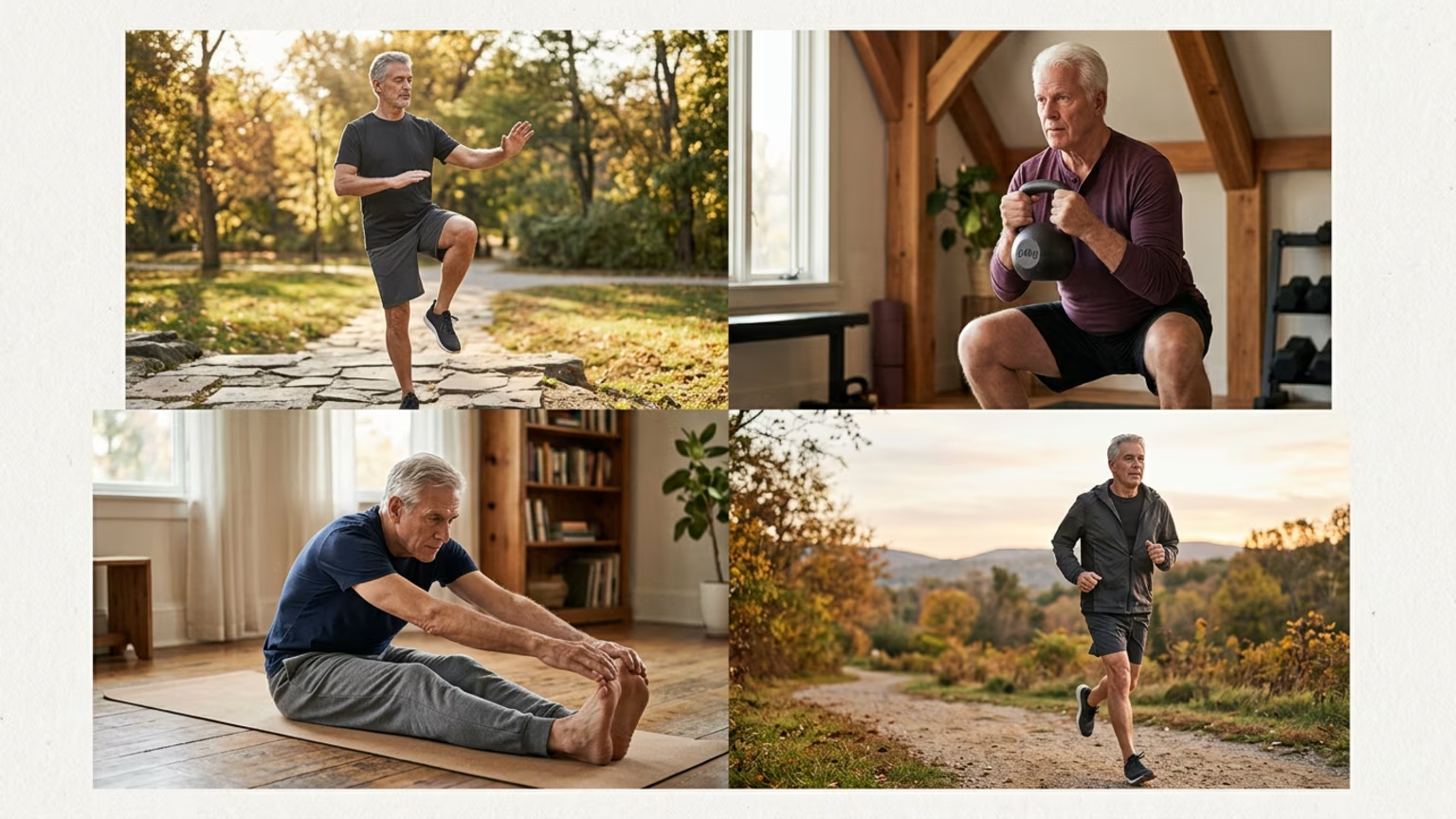

A 2026 study links lower-body strength, balance and aerobic fitness to lower mortality, providing a practical training framework for men over 35.





In August 2026, researchers published a cohort study in JAMA Network Open showing that objectively measured physical fitness across multiple functional domains is associated with lower all-cause mortality among older adults. The research evaluated 13,423 community-dwelling adults aged 65 or older in Taiwan over a median follow-up of approximately seven years.
Traditional gym culture frequently reduces male health to visible muscle size or a heavy bench press. Many training programs prioritize upper-body volume and low body-fat percentages while treating basic movement control as a secondary concern. Fitness marketing often implies that looking lean is a complete proxy for physical capability. This perspective creates a blind spot for men who want to maintain their physical independence and agility as they age.
Gym routines often segment the body into isolated muscle groups. Training might focus heavily on chest volume on one day and back thickness on another. This approach builds muscle size but does not always improve how those muscles work together. Functional fitness requires the body to operate as a coordinated system. A man with a heavy bench press might still struggle to rise from the floor without using his hands.
The JAMA Network Open findings challenge this narrow view of health. The research highlights that true physical capability is multidimensional. It relies heavily on movement quality, lower-body power and cardiovascular endurance. The ability to stand from a chair, balance on one leg or turn quickly often dictates how well a man can navigate his environment. These capacities maintain confidence and physical independence later in life.
Looking muscular or maintaining a lean physique may be personally meaningful goals. Those goals can remain part of a structured routine. However, a training program built solely around appearance leaves critical functional domains unaddressed. The data supports viewing functional fitness as a broad set of physical skills. Prioritizing only the muscles visible in the mirror ignores the strength required to move confidently through the world.
Men approaching or past midlife can use this framework to refine their training habits. The study adds to a broader body of evidence linking objectively measured physical capacity with survival. It provides practical targets for men who want to maintain their capabilities while prioritizing healthy aging.
The research reinforces the practical importance of lower-body strength. Chair-stand and timed mobility tests reflect the ability to rise, walk, turn and control the body. These actions are fundamental to maintaining independence and exercise performance. Men can build this capacity by training their legs and hips consistently.
Squats to a comfortable depth, step-ups, split squats and deadlift variations target these muscle groups when scaled appropriately. Building strength in the lower body provides the power needed for daily movement. It supports a stable foundation for other physical activities. Men seeking better strength and body composition can view lower-body exercises as a primary driver of functional longevity.
Balance and agility showed some of the strongest individual associations with lower mortality in the Taiwanese cohort. The one-leg stance and the 8-foot up-and-go test proved to be powerful predictors of survival. Balance often declines gradually if it is not challenged. Men should practice movement control before a loss of balance becomes a pressing medical issue.
Adding balance work to a routine does not require heavy equipment. Supported single-leg stands, controlled step patterns and heel-to-toe walking provide an effective stimulus. Balance-focused classes can also help practice bodily control in a structured environment. Beginners should use a wall, rail or trainer when needed to maintain safety during practice.
Cardiorespiratory fitness remains a central pillar of physical health. The two-minute step test was associated with a significantly lower mortality risk in the highest-performing group. A multidomain approach that includes aerobic conditioning provides a well-rounded stimulus for the heart and lungs. This integrated focus supports endurance for daily tasks.
Men can build cardiorespiratory capacity progressively through activities they enjoy. Brisk walking, cycling, swimming, dancing and rowing are all effective methods for challenging the cardiovascular system. The choice of exercise can be adapted based on personal preference, current health status and joint tolerance. Regular aerobic conditioning supports energy levels and overall cardiovascular resilience.
Flexibility was one of the measured fitness domains in the study. However, flexibility measures were not among the strongest individual mortality associations reported. Mobility work should absolutely remain part of a rounded fitness program. It helps maintain a comfortable range of motion and supports healthy joints.
Men can include stretching and mobility exercises without overselling them as the primary signal for longevity. Maintaining sufficient flexibility allows for safer execution of strength and aerobic exercises. It is a supporting element of overall strength and fitness rather than the sole focus of a functional routine.
Many men measure their fitness progress through photographs, body weight or waist measurements. While these metrics provide information about body composition, they do not capture physical function. Men can begin using functional capability as a progress marker. Tracking how easily they rise from a chair or how well they tolerate longer walks offers practical feedback.
Noticing improvements in balance or recovery time provides a clearer picture of physical capacity. The study supports the relevance of objective function. However, it did not validate home self-testing as a personal mortality calculator. Men should view these functional tasks as broad indicators of progress rather than absolute diagnostic tools.
The findings offer valuable direction, but the study design carries important limitations. Because it was an observational cohort study, it identifies associations rather than proving causation. The data cannot prove that improving a specific fitness score will directly cause a longer life. The research measured fitness at a single point in time.
It could not fully establish whether changes in fitness over the follow-up period altered a person's risk. The authors noted that reverse causation is possible. People with undiagnosed illness, pain or early functional decline may have performed worse on the tests while already facing a higher risk of death. Residual confounding may also remain even after statistical adjustment.
Factors like smoking, disease severity, nutrition and other health behaviors could influence the outcomes. The participants were older adults in Taiwan who were able to take part in standardized testing. These findings may not generalize perfectly to younger adults or populations with different healthcare conditions.
The reported percentages compare groups at the highest and lowest ends of performance. They do not mean that an individual can reduce his personal mortality risk by exactly 42% or 61% by completing a specific exercise. Men should use the study as motivation to build a well-rounded routine, not as a mathematical guarantee.
Physical fitness must be tailored to an individual's current capabilities. Pain, cardiovascular disease, prior injuries and medication use can change what is safe and appropriate. The study supports the value of fitness assessment, but it does not replace clinical evaluation. Individualized exercise guidance from a professional helps manage specific physical limitations. Men should scale their movements appropriately to challenge themselves without risking injury.
Men optimizing their health span should broaden their training beyond aesthetics by consistently practicing lower-body strength, balance and aerobic conditioning.
Maintaining multidimensional physical capability, from lower-body strength to balance, allows you to stay active without chasing unrealistic anti-aging promises. GayFitLab is a research-led editorial publication for gay men 35+ that solves the problem of conflicting advice about fitness, body composition and healthy aging by translating credible evidence into clear, practical guidance. Explore Resources
Stay connected for research-led guidance on fitness, body composition, skin, grooming, vitality, sexual wellbeing, relationships and healthy aging. Clear ideas for gay men 35+ who want to look good, feel strong and age with confidence.




Build habits and systems that support clear thinking, steady energy and long term capacity throughout a demanding career.
explore the Blog