
A Nature study links extreme sleep durations to older biological aging markers. Learn why men over 35 should prioritize consistent, restorative rest.





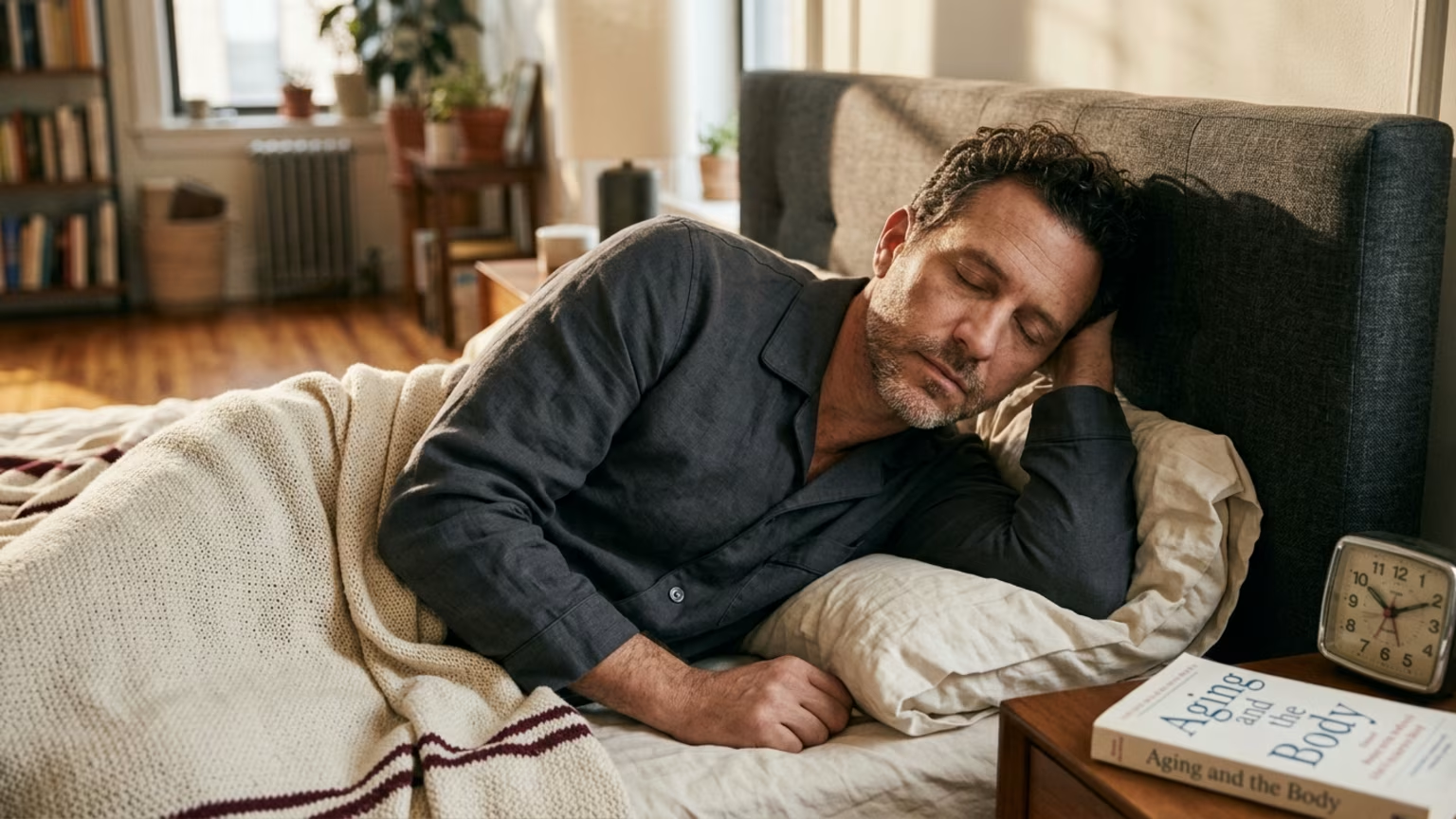
In August 2026, researchers published an analysis in Nature evaluating 23 biological-aging clocks across approximately 500,000 UK Biobank participants. The study reported that both chronically short and chronically long self-reported sleep durations are associated with older biological-age measures.
Fitness culture often promotes extreme mentalities around rest. One popular narrative suggests that high performers can thrive on four hours of sleep to prioritize productivity. Another perspective insists that spending ten hours in bed is the ultimate strategy for muscle recovery and metabolic health. The recent Nature analysis complicates both of these common gym floor assumptions.
The findings suggest a broadly U-shaped relationship where the lowest biological-age gaps appear in the middle range of sleep duration. Forcing excessive rest might be just as counterproductive as running on minimal sleep. The data indicates that sleeping too long is not a harmless recovery strategy. Persistent long sleep patterns carry measurable associations with older biological markers.
The conversation around sleep often focuses heavily on total hours logged. The Times of India reported that the analysis found a 50% higher all-cause mortality hazard for people sleeping under six hours. This was compared with individuals sleeping six to eight hours. The same report noted a 40% higher hazard for those sleeping over eight hours.
These are hazard comparisons from an observational analysis rather than individual predictions of a person’s likelihood of dying. The study identified 153 significant associations between abnormal sleep duration and future disease outcomes. Short sleep was broadly linked with mental-health and metabolic issues in the reported analysis. The data also showed associations with cardiovascular, pulmonary, and digestive diseases.
The researchers utilized a comprehensive approach to estimate biological age across the body. The study included participants aged 37 to 84. The distinct biological-aging clocks covered nine major brain and body systems. The researchers examined the brain, heart, lungs, and liver.
They also evaluated the immune system, skin, and endocrine system. Finally, the analysis included adipose tissue and the pancreas. The findings reinforce that metabolic health and cardiovascular function are deeply interconnected with nightly rest. Men focusing on nutrition and metabolism can appreciate that sleep acts as a foundational pillar for systemic wellness.
A fragmented or extreme sleep schedule impacts cellular function across multiple physiological systems. This widespread impact highlights why managing sleep is critical for healthy aging. Men seeking optimal health should reconsider the idea that more rest always equates to better outcomes.
The researchers examined whether biological-aging clocks helped explain the relationship between long sleep and late-life depression. The biological-aging clocks partially mediated that association in the reported analysis. In contrast, short sleep showed a more direct relationship with late-life depression. This distinction suggests that different sleep extremes might interact with mental health through different pathways.
Protecting your mood and emotional resilience is a central part of healthy aging. The connection between sleep duration and depression highlights why extreme sleep patterns require attention. If you consistently sleep under six hours, you might face a more direct impact on your mental wellbeing. If you consistently sleep over nine hours, the relationship with depression might involve broader biological aging factors.
Dr J. C. Suri is a pulmonary, critical-care, and sleep-medicine specialist quoted by The Times of India. He stressed that sleep quality involves timing, depth, and continuity alongside duration. Suri said there is no single ideal number of hours for everyone. He suggested that consistently sleeping very little or very much may signal non-restorative sleep.
These extremes could also indicate an underlying sleep disorder. Suri linked possible non-restorative sleep and sleep disorders with cardiovascular and metabolic risks. This expert interpretation adds vital context to the observational numbers from the Nature study. The lead researcher was identified in coverage as Junhao Wen of Columbia University’s Vagelos College of Physicians and Surgeons.
This research is part of a broader shift in science. Researchers are moving away from treating sleep as a single nightly variable toward examining organ-specific aging.
A separate prospective UK Biobank analysis provided further insights using objectively measured accelerometer sleep data. This study evaluated 93,249 participants. It reported that deep sleep and REM sleep were associated with lower risks across many aging hallmarks. The favorable sleep features were also linked to lower risks for age-related diseases.
Conversely, sleep irregularity and wake-after-sleep-onset were associated with increased risks. This separate accelerometer study is not interchangeable with the Nature analysis. The Nature analysis relied strictly on self-reported sleep duration. The other study utilized wearable-derived measures to capture objective data.
Together, the wider evidence points toward a nuanced message where multiple sleep dimensions dictate health.
It is crucial to interpret these findings with a measured perspective. The Nature analysis was observational and did not establish that extreme sleep directly causes faster aging. Sleep duration was self-reported rather than measured objectively with actigraphy or polysomnography. The study did not measure sleep quality, interruptions, timing, sleep architecture, or regularity.
The available summary explicitly notes that reverse causality could not be completely excluded. A long-sleep association may partly reflect underlying illness, poor health, or inactivity. People experiencing health issues might simply spend more time in bed trying to recover. Furthermore, the biological-aging clocks are markers or estimates of biological age.
They are not direct measurements of how attractive, cognitively capable, or physically youthful a person will appear. Men trying to optimize skin, grooming and aesthetics should avoid turning this data into a source of anxiety. Missing the ideal sleep window occasionally will not ruin your appearance. The true focus should remain on long-term patterns rather than daily perfection.
The biological clocks help researchers understand population trends rather than individual aesthetic outcomes.
This new data outlines exactly what sleep extremes mean for a man over 35 trying to optimize his health span. You should treat the findings as a reason to avoid chronic sleep extremes. Avoid treating the research as a demand to force your schedule into exactly 6.4 to 7.8 hours. The study was not specifically designed around gay men, dating, sexual wellbeing, or social lives.
It would be inappropriate to claim that the findings are uniquely stronger or different for gay men without subgroup data. For men who care about staying sharp and socially engaged, a practical approach involves tracking sleep duration alongside daily function. You can monitor how restored you feel, your daytime alertness, and your training recovery. The study itself did not test those lifestyle outcomes directly.
This tracking serves as a sensible monitoring strategy rather than a proven clinical intervention. You can align your rest schedule with your longevity and healthy aging goals by listening to your body.
If you regularly sleep under six hours or above eight to nine hours, consider the pattern a health signal. You should investigate this persistent extreme rather than viewing it as a simple lifestyle preference. A clinician or sleep specialist may be appropriate when an extreme sleep pattern is persistent. This step is particularly important if the extreme duration is accompanied by symptoms of disordered or non-restorative sleep.
Persistent long sleep might come with unrefreshing rest, snoring, and breathing pauses. You might also experience daytime sleepiness, low mood, or declining energy. These symptoms require professional attention to rule out underlying medical conditions. Managing these challenges proactively will support your strength and body composition over the long term.
Focusing on sleep quality often requires evaluating your habits leading up to bedtime. Late nights are a normal part of maintaining an active social life. Treating sleep as a rigid medical requirement can lead to unnecessary frustration and social isolation. Instead, aim for consistency where possible while maintaining your social connections.
Protecting restorative rest will support your fitness goals over time. Duration and regularity are key factors for restorative rest. Continuity, depth, and individual health context matter equally. Building a daily routine around these pillars can help maintain physical vitality without unnecessary stress.
Incorporating adequate wind-down time might improve how rested you feel the next day. Checking in on your energy levels will help you understand if your current habits are working.
Protect a consistent, restorative sleep pattern and investigate persistent extremes rather than attempting to sleep exactly seven hours to stay young.
Evaluating how extreme sleep durations influence biological aging often highlights the difficulty separating useful skin, hair and aesthetic evidence from beauty marketing, and GayFitLab provides the objective research necessary to navigate these complex health markers. We translate observational data on sleep schedules into actionable recovery guidelines, helping you maintain systemic vitality without adopting rigid and isolating routines. Explore Resources
Stay connected for research-led guidance on fitness, body composition, skin, grooming, vitality, sexual wellbeing, relationships and healthy aging. Clear ideas for gay men 35+ who want to look good, feel strong and age with confidence.




Build habits and systems that support clear thinking, steady energy and long term capacity throughout a demanding career.
explore the Blog