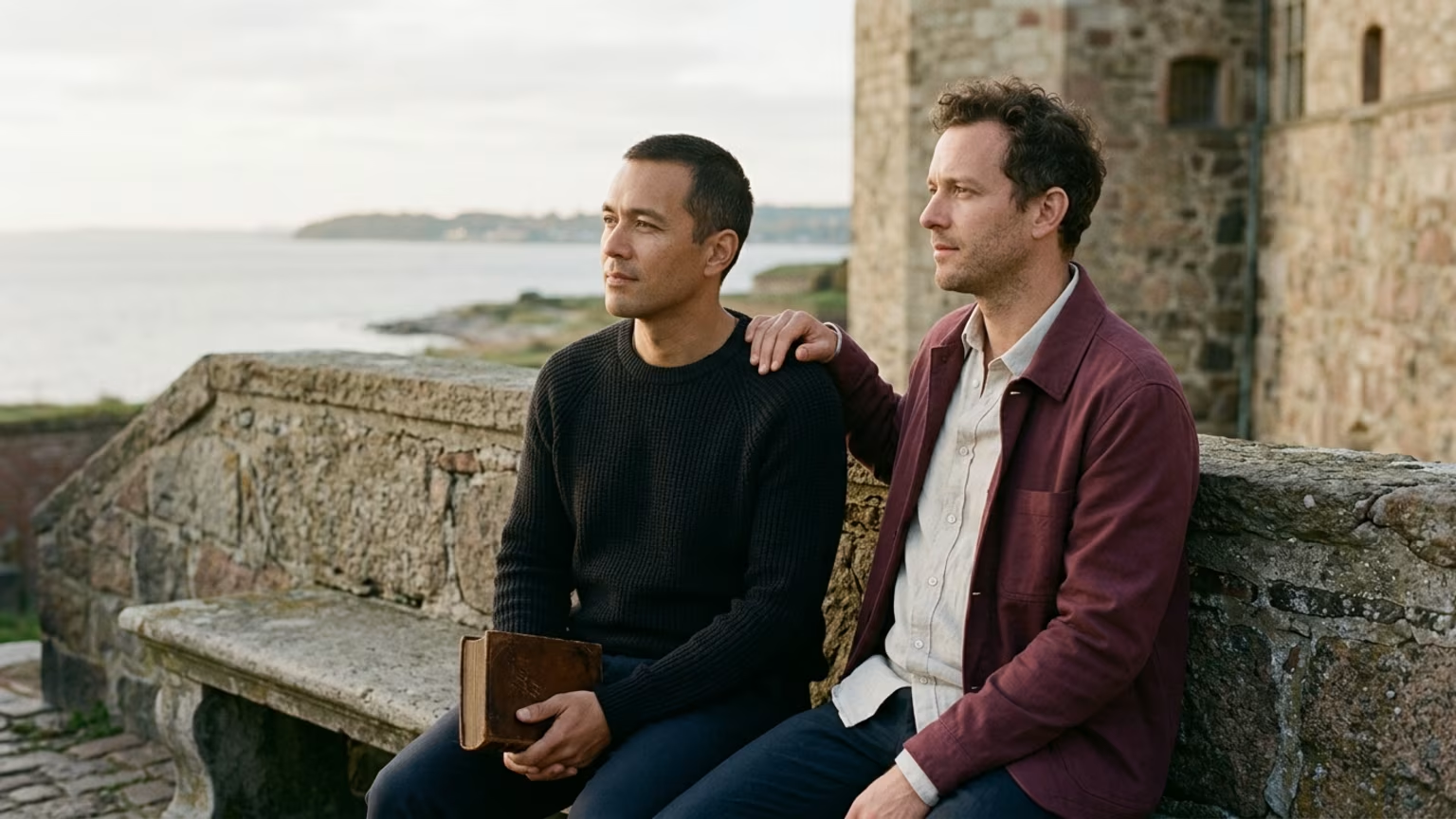

The upcoming release of Elsinore offers gay men over 35 a powerful prompt to reflect on AIDS-era history, collective resilience, and modern intimacy.





Following its 2026 Telluride Film Festival premiere, Focus Features will release the drama Elsinore in selected United States cinemas on November 20, 2026. The film stars Andrew Scott as Scottish actor Ian Charleson and examines his final stage performance while living with AIDS.
The release of this new drama offers a valuable moment for reflection among gay men over 35. For those who lived through the height of the AIDS crisis, the narrative provides a structured reminder of a specific historical period. The Guardian review points out that the script depicts ordinary experiences of body checking, secrecy, friendship, and professional fear. These details often remain abstract in modern conversations about queer history.
Seeing these realities on screen can prompt meaningful conversations about how past stigma continues to influence modern relationship dynamics. Men can use this cultural event to examine their own approaches to trust, intimacy, and vulnerability today. Engaging with this shared history helps build stronger connections within the community. Director Simon Stone notes that the project functions as a rallying cry for acceptance and truth.
Stone points out that the ending serves as a collective affirmation rather than just an individual victory. The final scene features a flashback to what might have been Charleson's last memory. In this quiet scene, people simply tell him that they love him. This creative choice highlights a practical reality for older gay men building a sustainable life.
Resilience often depends heavily on maintaining friendships, chosen family, and inclusive social spaces. Men seeking to improve their relationships can focus on creating environments where vulnerability is supported rather than judged. Cultivating these reliable networks helps insulate individuals from the isolation that often accompanies midlife transitions. Building these ties is a fundamental component of healthy aging and longevity.
The narrative centers on Charleson replacing Daniel Day-Lewis in a production of Hamlet at London's National Theatre. The Guardian review describes the role as an acting peak. Charleson pushes himself to perform while concealing his severe illness from most of his colleagues. The review calls his refusal to accept his physical limitations highly relatable and potentially inspiring.
The publication also points out that this kind of determination has clear boundaries. An unyielding drive to push through physical decline is not a sustainable model for long-term health. Gay men often face pressure to maintain youthful appearances and peak productivity as they age. Conflicting messaging about physical optimization can make normal aging feel like a personal failure.
This story complicates the standard narrative of masculine vitality by showing the stark reality of Charleson's physical condition. Readers should recognize that true vitality requires adaptation, emotional honesty, and proper medical care. A rigid focus on discipline cannot overcome serious biological realities. A balanced approach to physical capability involves accepting physical changes while taking evidence-based steps to maintain functional health.
The film provides a detailed look at how informal peer networks functioned when institutional medical support was limited. The narrative shows Charleson confronting a visible facial lesion and subsequently seeking information from other gay men. The Guardian review points out that he visits a local cruising venue specifically for community advice rather than sexual encounters. This detail illustrates how important these underground spaces were for exchanging critical health information.
Modern health systems provide far more reliable medical data, yet the need for informal community support remains highly relevant. Men navigating complex aging processes often feel isolated when dealing with changing physical capabilities or chronic conditions. Finding spaces to openly discuss physical changes helps normalize the realities of aging. A solid support network complements professional medical advice by providing necessary emotional grounding.
The cultural landscape of 1989 differed drastically from the environment gay men experience today. The Guardian review contextualizes the story by citing the massive scale of the AIDS catastrophe. The review reports that the disease has killed more than 44 million people worldwide. For comparison, the publication notes that COVID-19 has caused just over 7 million deaths.
This historical context is important for understanding the intense health anxiety and professional fear that shaped a generation of gay men. Charleson's experience of navigating his career and sexuality after starring in Chariots of Fire and Gandhi highlights the immense pressure of that era. Contemporary queer storytelling has recently expanded to focus heavily on narratives of joy and chosen family. The Guardian argues that this positive expansion should not erase the memory of the earlier crisis.
Remembering this history can help older gay men process residual trauma that might still affect their current relationships. Modern clinical treatments for HIV differ entirely from the options available in the late 1980s. The emotional legacy of that period often lingers in how men over 35 approach dating, disclosure, and sexual health. By acknowledging this past, individuals can better separate historical fears from current medical realities to support their sexual wellbeing.
The stark historical distance between 1989 and today remains a critical factor for audiences. Stone stated that, outside some parts of the Global South, an HIV diagnosis no longer carries the immediate assumption of fatality that defined the late 1980s. Acknowledging this medical progress allows modern gay men to view the past with respect without internalizing its terror. Understanding this shift is a practical step for individuals seeking to maintain a healthy perspective on their own physical vulnerability.
Elsinore was produced on an unusually compressed timeline. Simon Stone told Variety that roughly 10 months passed between filming and the commercial release. Stone staged the rehearsal sequences live, allowing Andrew Scott to improvise aspects of his performance. The resulting drama generated a strong emotional reaction at the Toronto premiere, where The Guardian reports many viewers cried.
The publication's Benjamin Lee calls Scott's performance raw, tearful, and free of visible artifice. These strong emotional responses suggest that the narrative taps into a deep reservoir of shared feeling. For gay men seeking deeper social connections, small group screenings can serve as a powerful reflective practice. Watching a story that directly addresses marginalization, taboo, and community disagreement provides a structured way to discuss difficult topics.
Groups can discuss which forms of support the story highlights and how the concept of chosen family has evolved. They can also reflect on Stone's view that the project captures the joy people can find during severe adversity. If these discussions become emotionally difficult, individuals should watch with trusted friends and seek professional support if needed. Sharing these cultural experiences is a tangible way to strengthen community bonds and promote healthy confidence and relationships.
The festival journey of this project highlights its broader cultural impact. Before its scheduled United States cinematic expansion, the production built significant momentum at Telluride. Focus Features recognized the potential significance of Scott's performance and quickly moved the project into its autumn schedule. A United Kingdom release is listed for January 29, creating multiple windows for international audiences to engage with the story.
The approach to queer representation here marks a specific evolution in how historical narratives are told. Simon Stone contrasts his work with earlier mainstream projects like Philadelphia. He argues that AIDS had to serve as the absolute central focus of that earlier era of filmmaking. In this new production, the illness acts as one important context among several intertwined narrative strands.
The script equally addresses Charleson's professional ambition, his search for truth, and his relationships within the theatrical world. Stephen Beresford, known for writing Pride, crafted a story that makes room for humor, dancing, and peer support alongside the tragedy. This multifaceted approach offers a more nuanced mirror for modern audiences.
The Guardian review compares Andrew Scott's work here to his role in All of Us Strangers. The publication notes that Charleson is depicted as a more gregarious and socially confident figure. Presenting a character who actively seeks community advice and pursues artistic glory adds critical depth to the memory of the AIDS era.
Stone's interpretation of the theatrical world provides a compelling framework for understanding queer social structures. He describes the theatre scene as a shelter and a safe place for people on the margins. According to Stone, this creative environment provided a crucial outlet for gay young people who could not express their true selves elsewhere. Engaging with these complex portrayals of queer life can help modern gay men build lasting ties and stronger community connections.
Gay men should prioritize honest community reflection and shared social spaces to build long-term relationship resilience, using cultural history to better understand their modern emotional needs.
Using cultural history to better understand modern emotional needs requires an aging man to process past health anxieties, a transition GayFitLab supports by translating credible evidence into practical guidance. Difficulty separating useful skin, hair and aesthetic evidence from beauty marketing often complicates this physical confidence, an obstacle GayFitLab resolves by providing clear aesthetic context without age panic.
Stay connected for research-led guidance on fitness, body composition, skin, grooming, vitality, sexual wellbeing, relationships and healthy aging. Clear ideas for gay men 35+ who want to look good, feel strong and age with confidence.



Build habits and systems that support clear thinking, steady energy and long term capacity throughout a demanding career.
explore the Blog