
Gay men over 35 often mistake social volume for a reliable support system. Here is how to audit your friendships and build resilient, dependable connections.





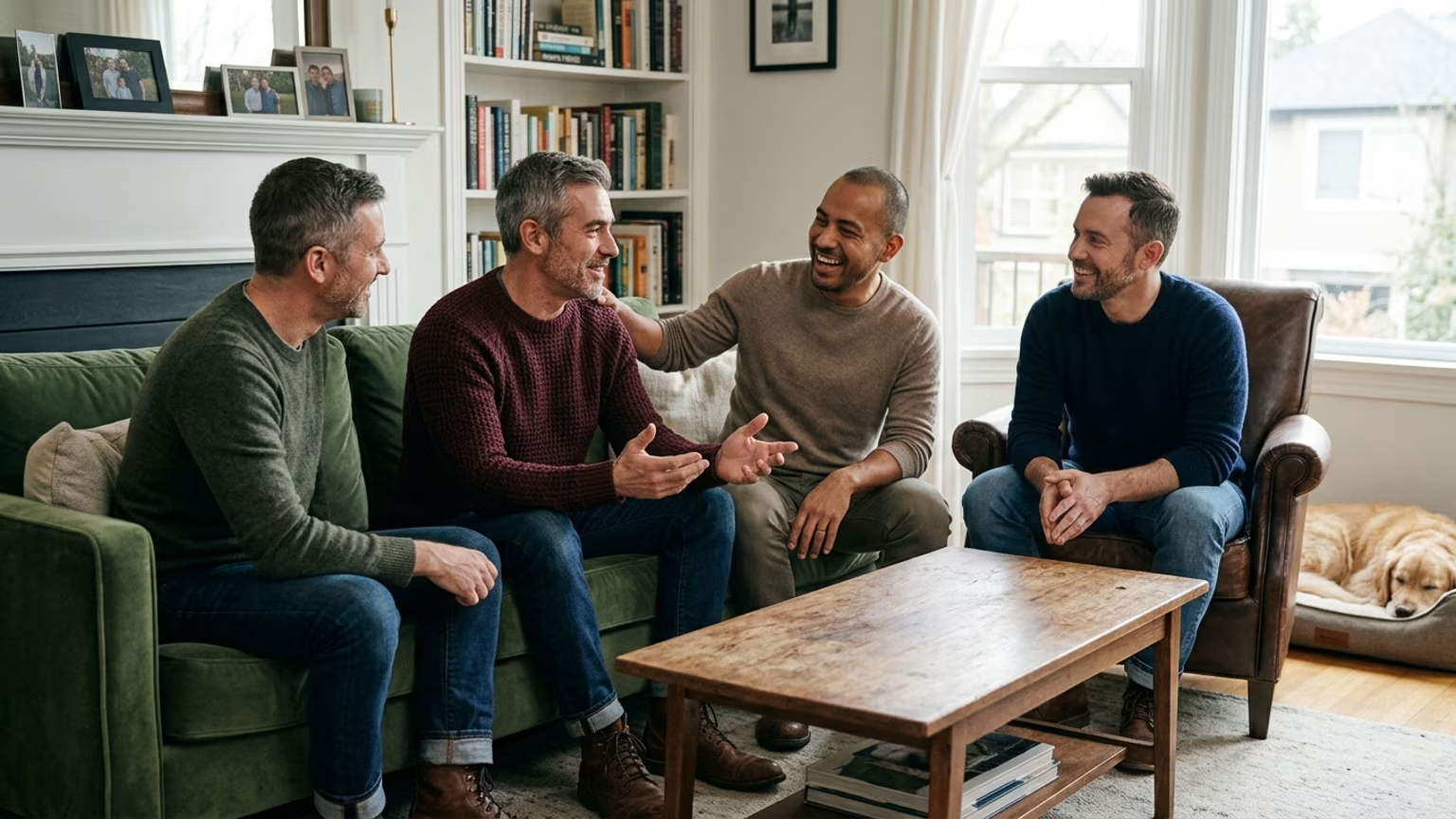
A crowded calendar of social events offers the illusion of connection without the security of actual support.
Mainstream gay culture often measures social success by visibility and sheer volume. Men spend their twenties and thirties accumulating acquaintances, party companions, and digital connections. The prevailing assumption is that a large social network automatically translates to emotional security. This metric completely fails gay men as they transition into midlife.
You can have a packed weekend schedule and still lack meaningful support when a crisis hits. Having fifty guys who will buy you a drink means little when you need someone to pick you up after a medical procedure. The gay social scene rewards superficial volume over deep reciprocity. This creates a dangerous vulnerability for mature men.
Visibility does not equal reliability. A 2026 longitudinal analysis of 4,963 U.S. adults aged 40 to 65 examined social connectedness across several dimensions. The researchers looked at neighbourhood cohesion, social integration, family support, friend support, and community contribution. They reported that loneliness, rather than structural isolation, was the main pathway linking social connectedness with mental health.
This critical distinction proves that you can be surrounded by people and still be fundamentally unsupported. Network size is a structural metric. Loneliness is a subjective experience of profound disconnection. Treating social volume as a proxy for social health is a systemic mistake.
The numbers reveal a quiet crisis beneath the surface of gay social life. In the United Kingdom, the Centre for Ageing Better reports that 39 percent of gay men aged 50 to 64 live alone. This stands in stark contrast to the 17 percent of heterosexual men in the same age group who live alone. The gap widens further as men age.
Among gay and bisexual men aged 65 and over, more than half live alone. This compares with fewer than a quarter of heterosexual men in that older demographic. Living alone does not automatically mean a man is lonely or unhappy. But the same analysis found that only 55 percent of gay and bisexual men aged 50 and over definitely agreed that someone would help them if needed.
Meanwhile, 69 percent of heterosexual men felt confident they had help available. A large contact list cannot replace a dependable support system. The absence of a reliable network creates tangible anxiety about the future. A Canadian government research summary also found that social support is central to helping 2SLGBTQI+ older adults age in place.
Many face this phase with significant apprehension. In Canadian research, 41 percent of survey respondents were not very confident or not confident at all that they would have the social support needed to age in place. For those managing health challenges, the picture is even more stark. Among Canadian respondents with a disability, 30 percent said they had no one they could count on for help with daily tasks as they aged.
The Canadian research also found that 81 percent of respondents planned to age in their current home. This makes the quality of local friendships a critical factor for long-term independence. Finding Resources to navigate these realities is a priority for mature men. Aging in place requires a network of people who can step in when physical mobility falters.
This lack of practical support directly impacts psychological health. A 2026 study of 151 community-dwelling LGB and heterosexual adults aged 50 to 79 examined daily emotional states. The research found that older LGB respondents reported lower happiness and greater negative affect than heterosexual respondents. The daily toll of poor social connection is profound.
The same study reported that the day-to-day relationship between loneliness and wellbeing was stronger among older LGB participants than heterosexual participants. On days when participants experienced more loneliness, they also reported lower happiness and higher negative affect. Poor social connection is not just a weekend inconvenience. It is a chronic stressor that erodes daily quality of life.
This emotional burden drains energy that could be spent on personal development. Men dealing with chronic loneliness often struggle to maintain healthy routines. They may experience fatigue and a lack of motivation to train or cook properly. Resolving this social deficit creates a foundation for all other physical goals.
Readers focused on Longevity & Healthy Aging must treat social connection as a physiological metric. A separate study of 90 older adults examined physiological reactions to stress. The researchers found that greater social support was associated with a lower heart-rate response to stressful tasks among male participants. The evidence is clear that friendship serves as biological armor against stress.
The stress reduction benefits of strong connections are physiologically measurable. Men with high social support handled stressful tasks more efficiently. Their cardiovascular systems showed less strain during challenging moments. A reliable friend does more than listen to your problems.
A sustainable future requires treating friendship as critical personal infrastructure. A recent study of middle-aged gay men in Cebu, Philippines, highlighted a highly intentional approach to aging. The report described participants creating informal safety nets through savings, community goodwill, mentoring, and relationships with younger relatives or friends. This deliberate construction provides a blueprint for gay men looking to build resilience.
The researchers observed that these men intentionally cultivated ties across different generations. They understood that relying solely on peers of the exact same age creates systemic vulnerabilities. By mentoring younger individuals, they built reciprocal bonds that spanned decades. This approach transforms community involvement from a leisure activity into a strategic investment in the future.
Men over 35 must shift their focus from accumulating contacts to cultivating deep reliability. This transition starts by taking an honest inventory of your current relationships. We recommend auditing your circle across four specific dimensions of connection. These are contact, comfort, reciprocity, and reliability.
First, observe who you regularly see or message. This represents your baseline contact pool and structural network. Next, assess comfort by asking yourself who you can speak to honestly about aging, body image, sex or money. True friends allow you to drop the performative mask and discuss the realities of adult life without judgment.
The third dimension of the audit is reciprocity. Notice who asks about your life, remembers details, and makes an effort without being chased. A relationship that requires constant management from one side is a severe energy drain. Finally, evaluate reliability by identifying who would plausibly help with a practical problem.
You do not need one single person to fulfill every role perfectly. One friend might be an excellent gym partner who shares your focus on Strength & Body Composition. Another connection might offer deep emotional honesty. The goal is to identify a few connections with genuine potential for depth.
Once you identify promising connections, introduce a specific rhythm to the relationship. Vague promises to catch up rarely materialize into meaningful bonds. Suggest a recurring Sunday walk, a monthly dinner, or a standing coffee date. Repeated low-pressure contact builds trust far better than waiting for instant intimacy.
Adult friendship thrives on consistency and clear expectations. Test reciprocity gradually by making a concrete plan or asking for a small favor. Observe whether the other person responds with genuine interest and follow-through. You are simply replacing hopeful assumptions with clear evidence of mutual effort.
Direct communication is often the best approach to elevate a friendship. Tell the person that you value the connection and want to establish a more consistent rhythm. Building these bonds requires an active willingness to be vulnerable. You must take the first step in shifting a superficial dynamic toward deeper territory.
A mature support system must include practical planning alongside emotional connection. Identify who could help during an illness, a mental-health crisis, or a period of financial stress. The Canadian research summary noted that participants often relied on friends for practical needs. They described friends helping with errands, home maintenance, and social activities.
In many cases, participants relied on these connections more than on biological family. Pruning superficial relationships is a necessary part of this process. A connection that repeatedly leaves you feeling anxious, ashamed, or depleted deserves less access to your time. Normalizing this boundary management is crucial for your Confidence & Relationships.
Solitude should be framed as a source of restoration and autonomy. Living alone or having a small circle is not automatic evidence of personal failure. The evidence strongly supports taking chronic loneliness seriously, but it does not pathologize time spent alone. Healthy solitude allows you to recharge without the pressure of social performance.
The strongest message for gay men over 35 is preparedness without panic. Start building a dependable circle before a crisis makes the need obvious. Allow friendships to take different forms across fitness, work, and community life. A reliable network acts as a buffer against the inevitable challenges of aging.
True social wealth is measured not by the size of your network, but by the certainty that someone will answer the call when you finally need to make it.
Transitioning a broad social network into a reliable core of supportive friendships forces a reevaluation of personal priorities, a social shift GayFitLab supports by translating credible relationship data into practical guidance. We tackle the conflicting advice about fitness, body composition and metabolism after 35, giving you the objective context required to build resilient health and lasting connections. Explore Resources
Stay connected for research-led guidance on fitness, body composition, skin, grooming, vitality, sexual wellbeing, relationships and healthy aging. Clear ideas for gay men 35+ who want to look good, feel strong and age with confidence.



Build habits and systems that support clear thinking, steady energy and long term capacity throughout a demanding career.
explore the Blog