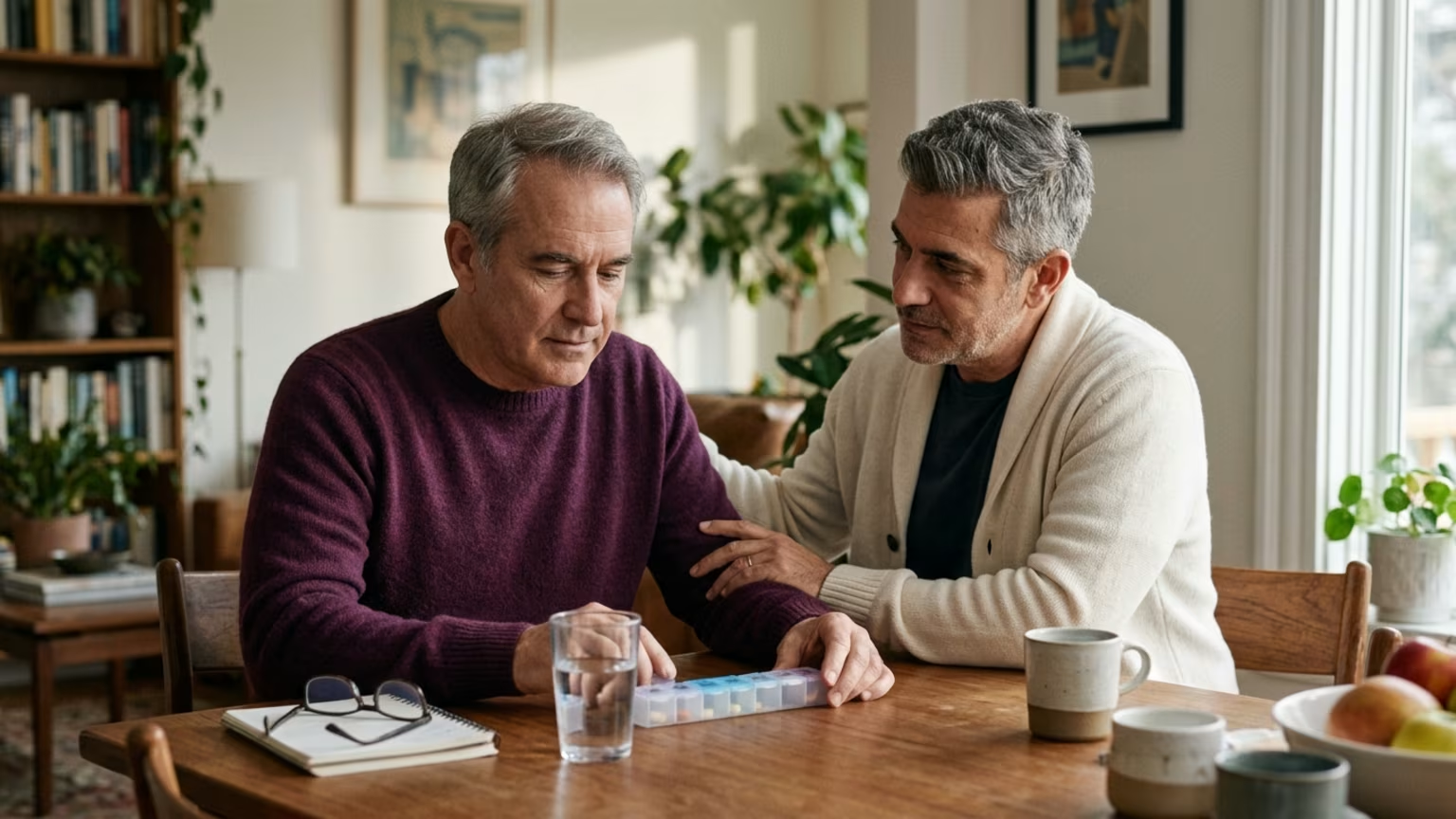

A large U.S. study tracks rising chronic-disease burdens. The midlife takeaway is earlier attention to prevention and coordinated care.





On October 20, 2026, UTMB’s Sealy Center on Aging reported findings from “Sicker at all ages? Two decades of changing disease histories and mortality in the United States.” The study by Neil Mehta and colleagues was published in the International Journal of Epidemiology.
The study’s abstract summary describes a large analysis of disease histories and mortality among U.S. adults:
UTMB summarized the findings as Americans increasingly living with multiple chronic conditions at younger ages. Its report says the authors called for stronger prevention, chronic-disease management and public-health efforts.
The study contains two findings that need to stay separate: changes in how many people belonged to each health profile and changes in survival within those profiles.
According to the abstract summary, the authors’ decomposition found that improving survival within profiles was the main contributor to declining overall mortality. Movement toward less healthy profiles partly offset those gains. Progress in survival and a growing burden of illness were therefore both part of the picture.
The mortality estimates also differed across profiles. For men, estimated five-year mortality was 3.7% in the disease-free profile and 17.8% in the high-burden profile. For women, the corresponding estimates were 2.4% and 12.6%.
The editorial lesson is not that medical progress stopped. It is that living longer and spending adulthood with fewer health problems are different goals. A discussion about longevity that pays attention only to survival misses the disease histories and physical limitations examined here.
The study classified participants using self-reported health histories rather than a clinical examination or medical-record review. Its associations and population trends do not establish that a particular behavior or condition caused the changes. The mortality figures describe research groups rather than an individual reader’s outlook.
The survey period ended in 2018 and mortality follow-up ran through 2019. This is a newly reported analysis of earlier data, not a snapshot of U.S. health in 2026. It does not describe changes during the COVID-19 pandemic.
The available report and abstract also provide no separate estimate for gay men or for men aged 35 and older. The audience-specific guidance below is an editorial application of the findings, not a subgroup result. The study did not test a screening schedule or prevention program.
For a man over 35, the practical response is to give health maintenance a place in the present. Adults entered this analysis from age 30 onward. Its subject was health across adulthood rather than illness confined to old age.
That does not make a birthday a warning sign. It makes “I’ll deal with that when I’m older” a less useful organizing principle. Blood pressure, metabolic health and physical function are reasonable subjects for a clinician conversation now rather than concerns to reserve for a distant version of yourself.
Here, healthspan means keeping the quality and capability of everyday life in view alongside its length. That might include staying active or maintaining independence. It can also mean having room for work, intimacy and a social life without making health management your entire identity.
Our guide to putting capability at the center of longevity goals develops that broader editorial perspective.
A useful appointment agenda can start with the domains represented in the research. The aim is not to request every possible test. It is to understand which questions matter in your circumstances and what follow-up a qualified clinician recommends.
Topics to raise include:
These are conversation prompts, not a universal medical checklist. Decisions about assessment and care belong with a qualified clinician who can address your individual situation.
The useful outcome is clarity: what is already being addressed, what needs discussion and what happens next. Leaving with that understanding is a more concrete response to this research than buying another product marketed around longevity.
It also keeps the focus away from trying to assign yourself to a research category. Your appearance and gym performance are not substitutes for that conversation.
Start with the administrative gap rather than inventing a new health regimen. Keep the questions you want to raise somewhere accessible. Where a clinician has recommended follow-up, make that plan visible in the same calendar or planning system you use for the rest of life.
This is practical organization, not an intervention evaluated by the study. The point is to make an agreed care plan easier to keep track of without turning every day into a health audit.
Physical function deserves a place in those notes. Think about the activities that matter to you and whether there is anything you want to discuss about doing them comfortably. A clinician conversation can include ordinary capability rather than being organized entirely around weight or appearance.
Keep the broader goal proportionate. You do not need to abandon aesthetic ambitions to take healthspan seriously. Wanting to look good can sit beside wanting clear follow-up and a body that supports the life you value.
The findings are not a reason to treat a diagnosis as a personal failure. Nor should a high-burden research profile become a label for someone’s identity. The authors’ call for prevention sits alongside their call for chronic-disease management.
For someone already receiving care, the relevant question may be coordination rather than adding another isolated health goal. Ask how the different parts of your care fit together. Where several clinicians are involved, asking who is following which issue can make the plan more understandable.
That is a discussion about the organization of care. It does not mean changing treatment independently or assuming that more appointments automatically produce a better plan.
A clear conversation can cover which concerns are being monitored and whom to contact about follow-up. It can also leave space to discuss how health management fits around daily responsibilities and personal priorities.
For a wider editorial framework, our guide to building a full life around ongoing health needs keeps chronic-condition management within the larger picture of healthy aging.
A useful health conversation should have room for the life you actually lead. That includes the priorities you bring to it rather than an assumed version of masculinity or a standard gay lifestyle.
Sexual wellbeing and relationship questions can belong beside discussions of energy and physical capability. Some readers will want to raise those subjects. Others will have different priorities. Neither choice makes their interest in long-term health less serious.
The practical editorial recommendation is to seek a conversation in which relevant personal context can be discussed respectfully. You should not have to choose between talking about preventive care and asking a question about intimacy. Our resource on discussing sexual health with clarity and respect offers a related starting point.
The broader goal is adult care that leaves room for attractiveness and pleasure without making either a measure of medical health. A full life is the reason to pay attention to healthspan, not something that must wait until every health concern is resolved.
Treat health maintenance as a present-day priority by bringing blood pressure, metabolic health, physical function and coordinated follow-up into conversations with a qualified clinician.
Earlier attention to chronic illness need not turn midlife into a story of decline, and GayFitLab brings a research-led editorial perspective to that balance. When generic men’s health advice leaves gay social and sexual-health context out, its coverage connects healthy aging with the reader’s interests in vitality and intimacy without assuming one body type or relationship style.
Stay connected for research-led guidance on fitness, body composition, skin, grooming, vitality, sexual wellbeing, relationships and healthy aging. Clear ideas for gay men 35+ who want to look good, feel strong and age with confidence.




Build habits and systems that support clear thinking, steady energy and long term capacity throughout a demanding career.
explore the Blog

